Clading of Metals Overview
Cladding of Metals are materials formed by using various composite technologies to achieve metallurgical combination of metals with different properties at the interface.The bonding zone showed wave-like metallurgical bonding characteristics.
 Clading of Metals
 Advantages
- Cladding of Metals are materials formed by using various composite technologies to achieve metallurgical combination of metals with different properties at the interface.The bonding zone showed wave-like metallurgical bonding characteristics.
- The substrate of the Cladding of Metals meets the mechanical properties of the structure, and the composite plate meets the properties of corrosion resistance or wear resistance, which greatly improves the thermal expansion, good fatigue properties, fracture toughness, wear resistance, corrosion resistance, electrical properties, magnetic properties and many other properties of single metal materials.
-
Cladding allows the use of expensive high-performance alloys only where they are needed—on the surface—while the bulk of the material consists of more economical substrate metals such as carbon steel or stainless steel. This significantly reduces overall material costs without compromising surface performance, making it an economically viable solution for large-scale industrial equipment.
-
The clad layer can be engineered with hard, wear-resistant materials such as carbides or high-alloy steels, providing exceptional protection against abrasive wear, particle erosion, and surface degradation. This is particularly beneficial for mining equipment, slurry pipelines, and material handling systems subjected to severe mechanical wear.
Cladding of Metals Application
Aerospace field: Alloy plates can be used to manufacture structural parts of aircraft, rockets and other aircraft, such as wings, fuselages, etc.
 Application of Clading of Metals
Petrochemical industry: Alloy plates can be used to manufacture corrosion-resistant structural parts in petrochemical equipment, such as reactors, towers, etc.
 Application of Clading of Metals
Electric power and energy field: Alloy plates can be used to manufacture high-temperature reactor structural parts in nuclear power plants, such as pressure shells, pipes, etc.
 Application of Clading of Metals
Automobile manufacturing field: Alloy plates can be used to manufacture automobile bodies, chassis and other structural parts to improve the safety and durability of automobiles.
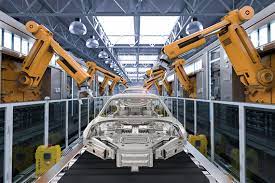 Application of Clading of Metals
Luoyang Trunnano Tech Co., Ltd is professional in cladding of metal solutions for 10 years+, which is a professional company with supply and marketing integration.
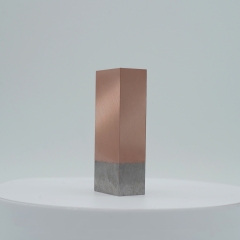
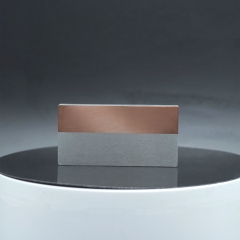
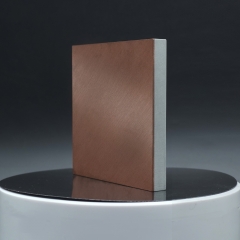
We provides different kinds of cladding of metals, such as nickel series clad plate, stainless steel series clad plate, aluminium series clad plate, copper series clad plate, refractory metal series clad plate,etc
The company has a professional technical department and Quality Supervision Department, a well-equipped laboratory, and equipped with advanced testing equipment and after-sales customer service center.Send us an email or click on the needed products to send an inquiry.
Composable material

5 FAQs of Cladding of Metals
1. What is metal cladding and how does it differ from coating?
Metal cladding is a process that achieves a true metallurgical bond between two different metals at the interface, typically through methods such as explosive welding, roll bonding, or hot pressing. Unlike coatings, which are surface-applied layers that adhere mechanically or chemically, cladding creates an inseparable atomic-level bond that can withstand severe mechanical and thermal stresses without delamination.
2. What material combinations are commonly used in metal cladding?
Common combinations include stainless steel clad on carbon steel for corrosion resistance, nickel alloys clad on steel for high-temperature oxidation resistance, copper clad on aluminum for electrical applications, and titanium clad on steel for marine and chemical environments. The selection depends on the required surface properties and service conditions.
3. What are the main methods used to produce clad metals?
The primary methods include explosive cladding (using controlled detonations to bond metals), roll bonding (passing metals through high-pressure rollers), and hot isostatic pressing (applying heat and pressure in a sealed chamber). Each method has its advantages depending on the materials involved, thickness requirements, and production volume.
4. How is the bond quality of clad metals evaluated?
Bond quality is typically assessed through ultrasonic testing to detect any unbonded areas or voids at the interface. Mechanical tests such as shear strength testing, tensile testing, and bend testing are also performed to verify bond integrity. The characteristic wavy interface pattern observed under microscopy is another indicator of successful metallurgical bonding.
5. What are the main applications of clad metals?
Clad metals are widely used in industries requiring both structural strength and surface performance. Common applications include chemical reactors and pressure vessels (corrosion resistance), heat exchangers (thermal conductivity), shipbuilding and offshore platforms (marine corrosion resistance), power generation equipment (high-temperature protection), and aerospace and nuclear industries (specialized performance requirements).