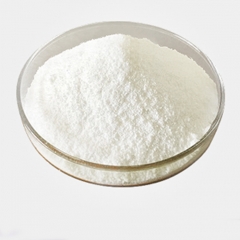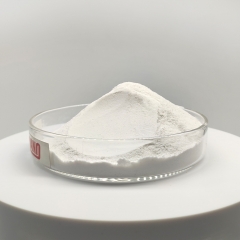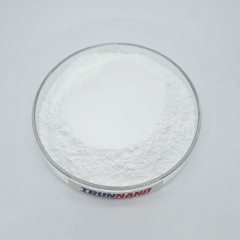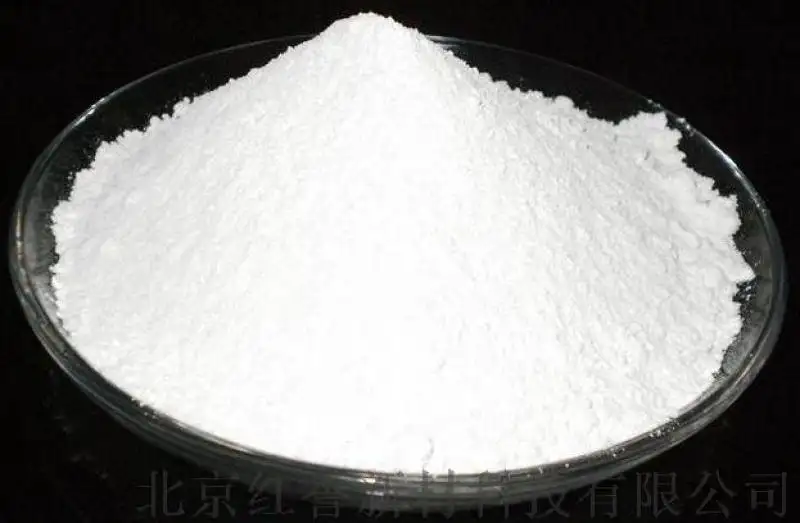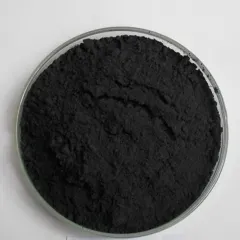
Battery Anode Material
The lithium battery electrode material has high electronic conductivity, and the carbon material is insoluble in the electrolyte.
|
Property |
Typical Value (for Graphite) |
Typical Value (for Silicon-based) |
|---|---|---|
|
Chemical Formula |
C |
Si or SiOx |
|
Appearance |
Solid powder or flakes |
Solid powder or composite |
|
Purity |
≥99.9% |
≥99.0% |
|
Particle Size |
<20 μm |
Varies, typically <50 μm |
|
Density |
~2.2 g/cm³ |
~2.33 g/cm³ (for pure Si) |
|
Specific Capacity |
~372 mAh/g |
Up to 4200 mAh/g (theoretical) |
|
Electrical Conductivity |
High |
Moderate to high |
|
Thermal Stability |
Good up to ~500°C |
Moderate, degrades at lower temperatures compared to graphite |
|
Cycling Stability |
Excellent |
Challenges with volume expansion |
1. Hard Carbon Materials (Mainstream Commercialization Path)
Structural Characteristics: Disordered carbon structure with abundant nanopores and defect sites
Sodium Storage Mechanism: Synergistic sodium storage through multiple mechanisms including intercalation, adsorption, and filling
Performance Parameters:
Specific Capacity: 250-350 mAh/g
First-Cycle Efficiency: 80-85%
Cycle Life: >2000 cycles
Cost Advantage: Widely available precursors (biomass, resin, pitch, etc.), relatively mature preparation process
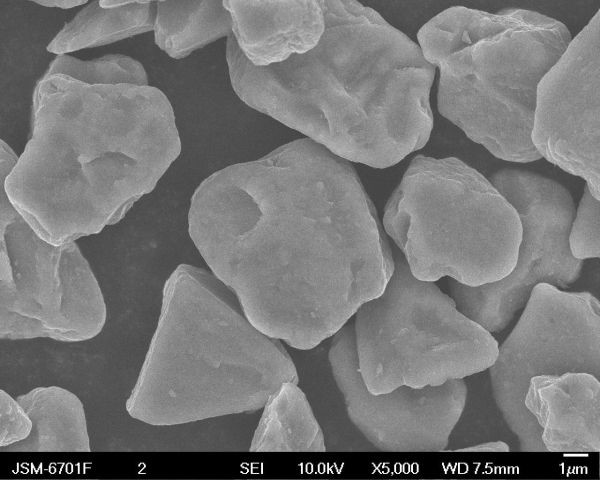
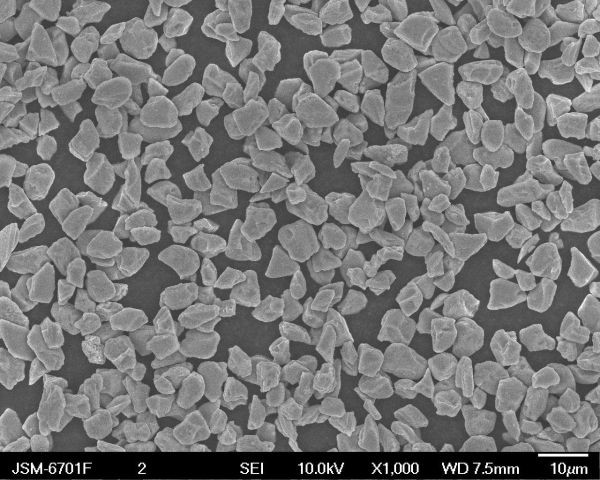
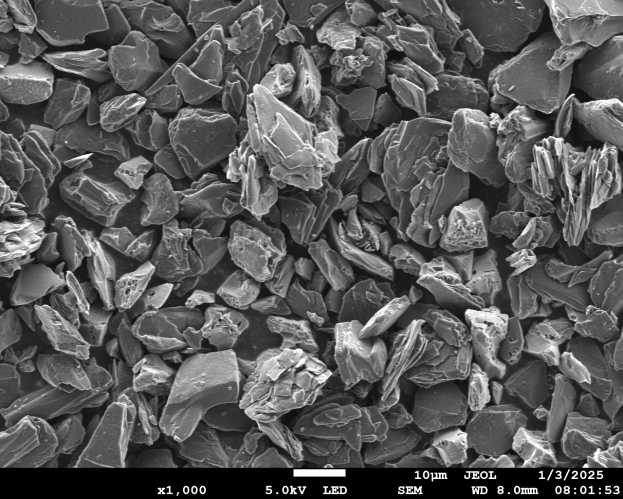
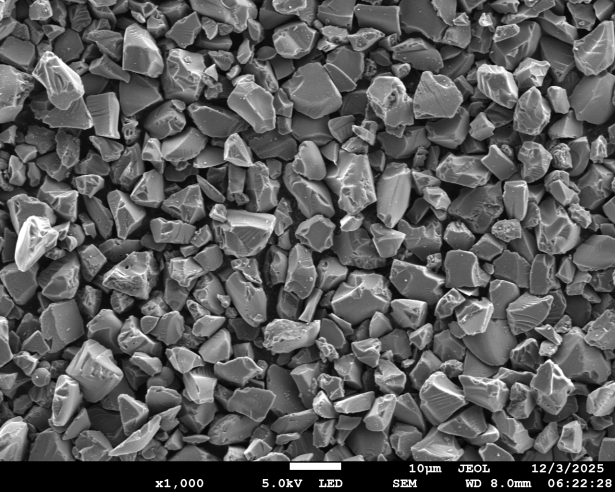
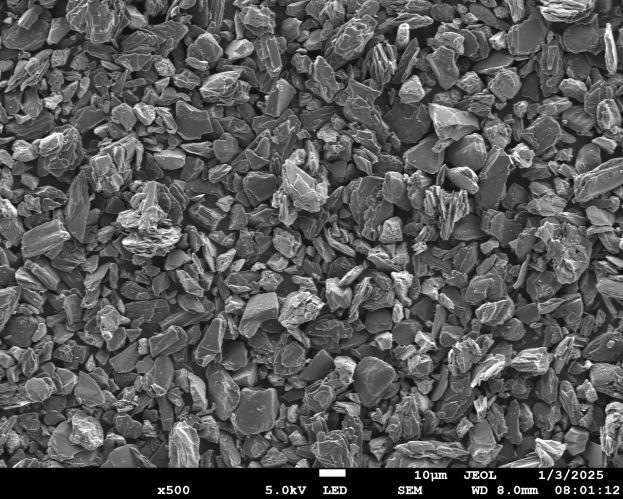
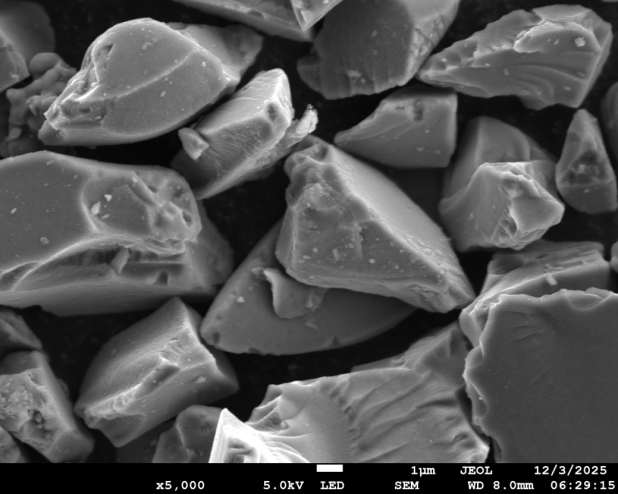
Partly Battery Material SEM:
2. Alloy-Based Anode Materials
Typical Materials: Sn, Sb, P and their alloys and oxides
High Capacity Characteristics:
Tin-based materials: 847 mAh/g (Na₁₅Sn₄)
Antimony-based materials: 660 mAh/g (Na₃Sb)
Phosphorus-based materials: 2596 mAh/g (Na₃P)
3. Transition Metal Compounds
Types include: metal oxides (TiO₂, Na₂Ti₃O₇), sulfides (MoS₂), selenides, etc.
Characteristics: High operating voltage (reducing the risk of sodium dendrite formation), good structural stability
Representative material: Sodium titanate (Na₂Ti₃O₇) has "zero strain" characteristics, with a volume change of <1%.
4. Organic Anode Materials
Material categories: Carboxylates, imides, covalent organic frameworks (COFs)
Advantages: High molecular structure designability, high theoretical capacity, environmentally friendly
Challenges: Low electronic conductivity, easily soluble in electrolytes
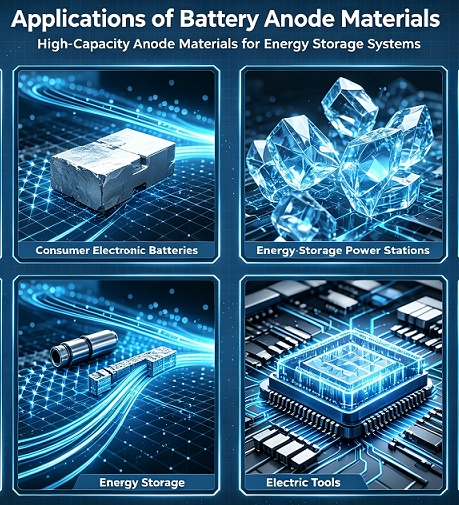
Applications of Battery Anode Materials
1. Cost and Resource Advantages
Abundant sodium resources: Abundance in the Earth's crust is more than 1000 times that of lithium, and it is widely distributed.
Low raw material costs: No need to use copper foil current collectors (cheaper aluminum foil can be used).
Supply chain security: Reduces dependence on scarce resources such as lithium and cobalt.
2. Enhanced Safety Performance
High and Low Temperature Performance: Wider operating temperature range (-40℃~80℃)
Over-discharge Resistance: Can discharge to 0V without damaging battery structure
Thermal Stability: Hard carbon material has a higher thermal runaway temperature, resulting in better safety.
3. Fast Charging and Power Characteristics
Fast Sodium Ion Diffusion: Small Stokes radius, faster migration in electrolyte
Low Interfacial Impedance: Forms a more stable SEI film with the electrolyte
High Power Density: Suitable for high-power applications
4. Environmental Friendliness and Sustainability
Sodium-ion batteries utilize abundant and non-toxic elements, with no reliance on scarce or environmentally harmful metals such as lithium, cobalt, and nickel. The production and recycling processes generate lower environmental burdens, and the entire lifecycle from material extraction to battery disposal offers a more sustainable energy storage solution with a reduced carbon footprint.
5. Compatible Manufacturing Infrastructure
Sodium-ion battery production can leverage existing lithium-ion battery manufacturing lines with minimal modifications, significantly reducing capital investment and accelerating time-to-market. This compatibility allows for rapid industrial scale-up and seamless integration into current battery production ecosystems.

Trunnano Warehouse
Company Profile
Luoyang Trunnano Tech Co., Ltd supply high purity and super fine lithium battery anode materials, such as silicon anode, silicon carbon anode, silicon oxide anode, graphite anode, etc. Send us an email or click on the needed products to send an inquiry.
Payment Term:
T/T, Paypal, Western Union, Credit Card etc.
Shipment Term:
By sea, by air, by express, as customers request.
Storage conditions:
1) Store in a dry environment at room temperature.
2) Avoid damp and high temperature.
3) Use immediately after opening the inner packing bag.
5 FAQs of Lithium Battery Anode Materials
Q1: What are the main differences between sodium-ion battery anodes and lithium-ion battery anodes?
A: The core difference lies in the ionic radius and reaction mechanism. Sodium ions have a larger radius (1.02 Å) than lithium ions (0.76 Å), requiring larger interlayer spacing or channel sizes. Graphite, as the mainstream anode for lithium-ion batteries, has extremely low sodium-ion storage capacity (<35 mAh/g), therefore sodium batteries must develop specialized anode materials such as hard carbon.
Q2: What does "hard" mean in hard carbon anodes?
A: "Hard carbon" refers to carbon materials that are difficult to graphitize after high-temperature treatment (>1000℃), as opposed to easily graphitized "soft carbon." Hard carbon has a highly disordered carbon layer arrangement, abundant micropores, and defect sites; these structural features enable it to efficiently store sodium ions.
Q3: How to solve the volume expansion problem of sodium-ion battery anode materials?
A: Mainly through four strategies:
Nanostructure design: reducing absolute volume change
Void reservation: creating hollow or porous structures to accommodate expansion
Elastic buffer layer: carbon coating provides mechanical support
Binder optimization: using elastic binders to maintain electrode integrity
Q4: When will the energy density of sodium-ion batteries catch up with lithium batteries?
A: In the short term (3-5 years), the energy density of sodium batteries is expected to reach 80-90% of that of lithium batteries; complete overtaking will require a longer period. However, the core competitiveness of sodium batteries lies in cost and safety, not simply energy density competition. In cost-sensitive fields such as energy storage and low-speed vehicles, sodium batteries already have a substitution advantage.