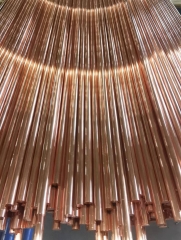
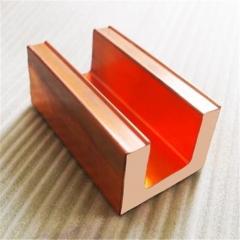
Overview of metallic copper
Copper is a transition element with atomic number 29, chemical symbol Cu. Pure copper is a soft metal, the surface is reddish-orange with metallic luster when first cut, and the element is purple-red. Density 8.92 g/cm³. Melting point 1083.4±0.2 °C, boiling point 2567 °C.

Copper rod
Specifications of Metallic Copper
|
Property |
Typical Value |
|---|---|
|
Chemical Formula |
Cu |
|
Appearance |
Reddish-orange metal |
|
Purity |
≥99.9% (for high-purity copper) |
|
Form |
Sheets, wires, rods, tubes |
|
Density |
8.96 g/cm³ |
|
Melting Point |
1,085°C (1,984°F) |
|
Electrical Conductivity |
100% IACS (International Annealed Copper Standard) |
|
Thermal Conductivity |
385 W/m·K at 20°C |
|
Coefficient of Thermal Expansion |
16.5×10⁻⁶/K at 20-200°C |
|
Tensile Strength |
Varies by form (e.g., wire ~200-400 MPa) |
|
Elongation at Break |
Varies by form (e.g., wire ~20-45%) |
Avantages of copper metal
Copper has good ductility, high thermal and electrical conductivity, and is a non-ferrous metal that is very closely related to human beings.
1. Excellent Electrical Conductivity
Copper possesses the highest electrical conductivity among non-precious metals, second only to silver. This makes it the material of choice for electrical wiring, power transmission cables, busbars, and electronic components, ensuring minimal energy loss and efficient power delivery across various applications.
2. Outstanding Thermal Conductivity
With exceptional heat transfer capabilities, copper is widely used in heat exchangers, radiators, HVAC systems, and heat sinks for electronic devices. Its ability to rapidly dissipate heat improves system efficiency and extends the service life of critical components.
3. Superior Corrosion Resistance
Copper naturally forms a protective patina layer when exposed to the atmosphere, providing excellent resistance to corrosion in marine, industrial, and urban environments. This makes it ideal for plumbing systems, roofing, architectural cladding, and seawater piping.
4. High Ductility and Malleability
Copper can be easily drawn into fine wires, rolled into thin sheets, and formed into complex shapes without fracturing. This excellent workability allows for versatile manufacturing processes, including stamping, forging, extrusion, and deep drawing, facilitating the production of intricate components.
5. Antimicrobial Properties
Copper and its alloys possess inherent antimicrobial properties, effectively killing bacteria, viruses, and fungi upon contact. This makes copper an ideal material for touch surfaces in healthcare facilities, public transportation, and high-traffic areas, contributing to improved hygiene and infection control.
Applications of copper metal
Copper is widely used in electrical, light industry, machinery manufacturing, construction industry, defense industry and other fields, can also be used as building materials, can be composed of a variety of alloys.
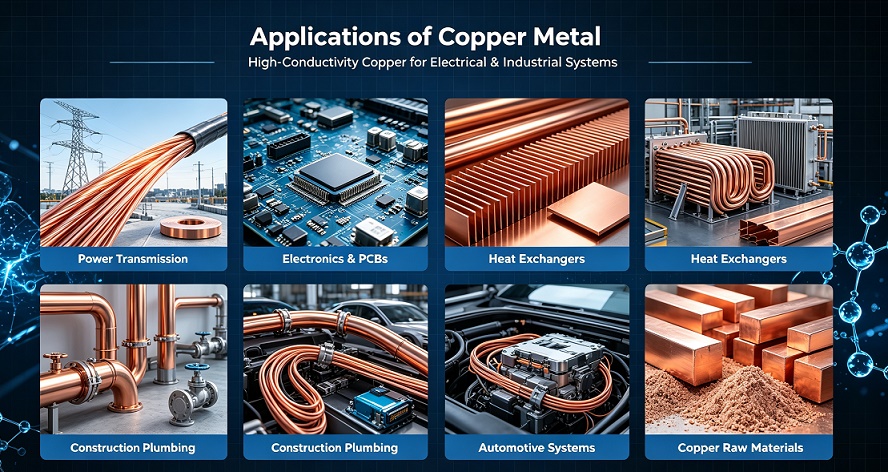
Applications of copper metal
1. Electrical and Electronics Industry
Copper is the predominant material for electrical wiring, power cables, transformers, motors, generators, and printed circuit boards due to its unparalleled electrical conductivity. It enables efficient power transmission and distribution, forming the backbone of modern electrical infrastructure.
2. Construction and Architecture
Copper is widely used in roofing, gutters, downspouts, architectural cladding, and interior design elements. Its natural patina not only provides aesthetic appeal but also offers long-term corrosion resistance, making it a durable and low-maintenance building material with a service life exceeding decades.
3. Transportation and Automotive
In the automotive industry, copper is used in wiring harnesses, electric vehicle motors, battery systems, radiators, and brake tubing. The growing adoption of electric vehicles has significantly increased copper demand, as each EV contains substantially more copper than conventional internal combustion engine vehicles.
4. Industrial Machinery and Equipment
Copper and its alloys are employed in heat exchangers, condensers, pressure vessels, valves, and fittings. Its excellent thermal conductivity and corrosion resistance make it indispensable in chemical processing plants, power generation facilities, and marine engineering applications.
5. Defense and Military Applications
Copper is utilized in ammunition components, naval shipbuilding, radar systems, and communication equipment. Its combination of conductivity, corrosion resistance, and reliability ensures stable performance under extreme conditions, making it a critical material in national defense and security applications.
Company Profile
Luoyang Trunnano Tech Co., Ltd. uses the main raw materials for its products are oxygen-free copper and pure copper.

The product of TRUNNANO has copper busbars, copper extrusions, copper bar, copper rod, copper pole, soft connections,copper sheet. TRUNNANO(aka. Luoyang Tongrun Nano Technology Co., Ltd.) is a trusted global material supplier and manufacturer with more than 12 years of experience in providing ultra-high quality materials. At present, our company has successfully developed a series of metal materials. Provide OEM services. If you are looking for copper, please contact us. Or click on the desired product to send us an inquiry.
Payment Term:
T/T, Paypal, Western Union, Credit Card etc.
Shipment Term:
By sea, by air, by express, as customers request.
Storage conditions:
1) Store in a dry environment at room temperature.
2) Avoid damp and high temperature.
3) Use immediately after opening the inner packing bag.
5 FAQs of Metallic Copper Products
What are the main uses of metallic copper products?
Copper is widely used in electrical wiring, plumbing pipes, roofing, and industrial machinery due to its excellent electrical and thermal conductivity, corrosion resistance, and ductility. It's also used in electronics, telecommunications, and coinage.
How does the purity of copper affect its properties?
Higher purity copper (e.g., electrolytic tough pitch copper) has superior electrical and thermal conductivity compared to lower grades. Impurities can reduce these properties, making high-purity copper ideal for applications requiring high performance in these areas.
Can copper be recycled without losing its properties?
Yes, copper can be recycled multiple times without significant loss in quality or properties. Recycling copper helps conserve natural resources and reduces energy consumption compared to mining and refining new copper.
What are the advantages of using copper over other metals?
Copper offers exceptional electrical and thermal conductivity, good corrosion resistance, ease of fabrication, and aesthetic appeal. These properties make it preferable for applications where reliability and performance are critical, such as in electrical systems and heat exchangers.
How should copper products be stored to prevent oxidation?
To prevent oxidation, copper products should be stored in a dry environment away from moisture and acidic substances. Protective coatings or anti-tarnish treatments can also be applied to enhance corrosion resistance during storage.