
A Comprehensive Parameter-Based Analysis of Silicon Carbide Industrial Ceramics: Types, Properties, and Applications
In the industrial field, ceramic products occupy a vital position due to their unique properties. The varying parameters of different types of silicon carbide-based industrial ceramics (reaction-sintered silicon carbide, recrystallized silicon carbide, silicon nitride, and silicon carbide composites) determine their application. The following provides an in-depth analysis of these industrial ceramic products based on their product parameters.
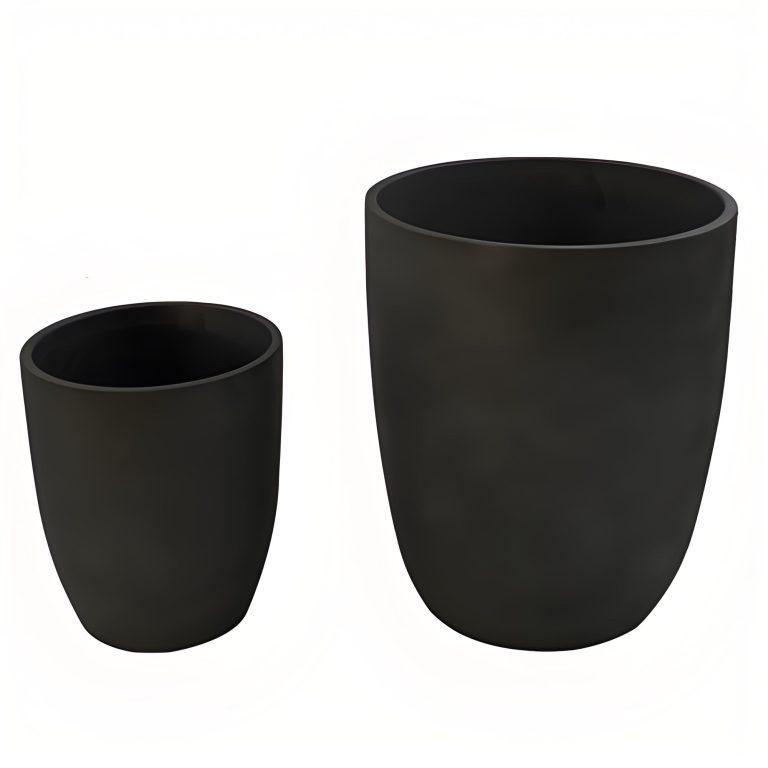
silicon carbide ceramic crucible
1. Composition and Basic Physical Properties
1.1 Content and Density
Reaction-sintered silicon carbide has a 90% content and a density of 3.02 kg/dm³. Recrystallized silicon carbide has an even higher content of 99%, resulting in a significantly higher purity and a relatively low density of 2.7 kg/dm³. Silicon nitride and silicon carbide composites have a 75% content and a density of 2.75 kg/dm³. The content of silicon carbide affects the internal structural integrity and performance foundation of ceramics. High content, such as recrystallized silicon carbide, provides material support for high-temperature stability and other properties. Density differences are related to the product's suitability for lightweight or high-density applications. Low-density recrystallized silicon carbide has potential applications, such as weight-sensitive industrial equipment components.
1.2 Porosity
Reaction-sintered silicon carbide has a porosity of ≤0.1 vol%, and its nearly dense structure makes it excellent for applications requiring high airtightness, such as linings for high-temperature gas pipelines. Recrystallized silicon carbide has a porosity of 15 vol%, while silicon nitride and silicon carbide composites have a porosity of 11 vol%. While a certain porosity reduces density, it can impart certain thermal insulation and cushioning properties to the material, making it a design consideration in some applications requiring thermal insulation, such as industrial furnace linings.
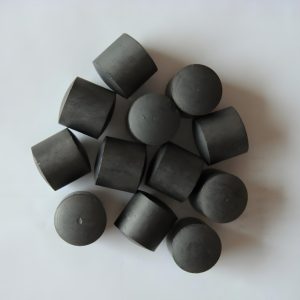
silicon carbide ceramic balls
2. Mechanical Properties
2.1 Hardness
Reaction-sintered silicon carbide has a hardness of 2400 kg/mm², while silicon nitride and silicon carbide composites reach 2500 kg/mm². Both materials have high hardness and offer significant advantages in wear-resistant applications, such as wear-resistant liners for ore crushing equipment, which can withstand strong impact and abrasion. Recrystallized silicon carbide has a slightly lower hardness of 1800-2000 kg/mm², but still offers excellent wear resistance and can be used in components with less demanding hardness requirements, such as conveyor scrapers. The high hardness stems from the material's internal chemical bonds and crystal structure. Silicon carbide's covalent bonds provide resistance to scratches and wear. Differences in crystal development caused by different preparation processes contribute to varying hardness values.
2.2 Flexural Strength
Low Temperature (-20°C): Reaction-sintered silicon carbide has a flexural strength of 250 MPa, demonstrating excellent low-temperature mechanical stability. It can be used in components subject to stress in low-temperature environments, such as some support structures in cold chain equipment. Recrystallized silicon carbide has a flexural strength of 80-100 MPa, but relatively weak low-temperature toughness. Silicon nitride and silicon carbide composites have a flexural strength of 165 MPa, showing some adaptability to low-temperature stress conditions.
High Temperature (1200°C): Reaction-sintered silicon carbide has a flexural strength of 280 MPa, demonstrating its excellent high-temperature mechanical properties and suitability for stress-bearing structures within high-temperature furnaces, such as pusher plates in high-temperature pusher kilns. Recrystallized silicon carbide has a flexural strength of 90-110 MPa, while silicon nitride and silicon carbide composites have a flexural strength of 175 MPa. At high temperatures, thermal motion within the material intensifies, and the effects of crystal defects can lead to changes in flexural strength. The structure formed by the sintering process in reaction-sintered silicon carbide makes it more stable under high-temperature stress.
silicon carbide ceramic plate
2.3 Elastic Modulus and Fracture Toughness
In terms of elastic modulus, reaction-sintered silicon carbide has a value of 330 GPa, recrystallized silicon carbide has a value of 280 GPa, and silicon nitride and silicon carbide composites have a value of 250 GPa. The elastic modulus reflects a material's ability to resist elastic deformation; a higher value indicates a greater resistance to elastic deformation under load. For example, in high-precision industrial measuring equipment, where ceramic components are used as reference structures, the high elastic modulus of reaction-sintered silicon carbide ensures dimensional stability.
In terms of fracture toughness, reaction-sintered silicon carbide has a value of 3.3 MPa/m1/2, recrystallized silicon carbide has a value of 1.8-2.0 MPa/m1/2, and silicon nitride and silicon carbide composites have a value of 4 MPa/m1/2. Fracture toughness reflects a material's ability to resist crack propagation. Silicon nitride and silicon carbide composites have the best fracture toughness. They can slow crack growth and extend component life in conditions subject to impact and alternating stresses (such as in industrial crusher hammers). Reaction-sintered silicon carbide also has good fracture toughness and can be used in applications where conventional loads require a certain degree of crack resistance.
| Category | Unit | Reaction-sintered silicon carbide | Recrystallized silicon carbide | Silicon nitride and silicon carbide composites |
| Content | % | 90 | 99 | 75 |
| Density | kg/dm3 | 3.02 | 2.7 | 2.75 |
| Porosity | Vol% | ≤0.1 | 15 | 11 |
| Hardness | Kg/mm2 | 2400 | 1800 - 2000 | 2500 |
| Flexural Strength (point) - 20°C | Mpa | 250 | 80 - 100 | 165 |
| Flexural Strength (point) - 1200°C | Mpa | 280 | 90 - 110 | 175 |
| Elastic Modulus | GPa | 330 | 280 | 250 |
| Fracture Toughness | MPa/m1/2 | 3.3 | 1.8 - 2.0 | 4 |
| Thermal Conductivity - 20°C | W/(m∗K) | 120 | 100 | 38 |
| Thermal Conductivity - 1200°C | W/(m∗K) | 45 | 35 | 20 |
| Operating Temperature (Air) | ∘C | 1380 | 1650 | 1500 |
| Coefficient of Thermal Expansion (20 - 1200°C) | K−1∗10−6 | 4.5 | 4.6 | 4.7 |
Technical parameters of silicon carbide ceramic
3. Thermal Performance Analysis
3.1 Thermal Conductivity
At low temperatures (-20°C): Reaction-sintered silicon carbide has a thermal conductivity of 120 W/(mK), recrystallized silicon carbide has a thermal conductivity of 100 W/(mK), and silicon nitride and silicon carbide composites have a thermal conductivity of 38 W/(m*K). Reaction-sintered silicon carbide, with its high thermal conductivity, is suitable for applications requiring rapid heat conduction and dissipation, such as heat sinks for electronic chips, where it can efficiently dissipate heat. Silicon nitride and silicon carbide composites have low thermal conductivity and can reduce heat transfer and save energy in insulating components (such as the insulation layer of high-temperature furnace doors).
High temperature (1200°C): The thermal conductivity of reaction-sintered silicon carbide drops to 45 W/(mK), recrystallized silicon carbide to 35 W/(mK), and silicon nitride and silicon carbide composites to 20 W/(m*K). Phonon scattering and other effects within the material at high temperatures reduce thermal conductivity. In high-temperature heat exchange equipment, multilayer structures can be designed using different thermal conductivity properties. For example, an outer layer of low-thermal-conductivity silicon nitride and silicon carbide composites can be used for insulation, while an inner layer of reaction-sintered silicon carbide can quickly dissipate heat, achieving efficient thermal management.
3.2 Operating Temperature (Air Environment)
The operating temperature of reaction-sintered silicon carbide is 1380°C, recrystallized silicon carbide is 1650°C, and silicon nitride and silicon carbide composites is 1500°C. The operating temperature is determined by the material's oxidation resistance and thermal stability. Recrystallized silicon carbide, due to its high purity and unique crystal structure, can remain stable in air environments at higher temperatures, making it suitable for applications such as linings for ultra-high-temperature laboratory furnaces. Reaction-sintered silicon carbide, silicon nitride, and silicon carbide composites are suitable for the temperature ranges of various industrial furnaces and thermal equipment, depending on their upper operating temperature limits.
3.3 Thermal Expansion Coefficient (20-1200°C)
The thermal expansion coefficient of reaction-sintered silicon carbide is 4.5×10⁻⁶ K⁻¹, that of recrystallized silicon carbide is 4.6×10⁻⁶ K⁻¹, and that of silicon nitride and silicon carbide composites is 4.7×10⁻⁶ K⁻¹. A low thermal expansion coefficient minimizes dimensional change with temperature fluctuations, helping maintain structural integrity under high-temperature cycling conditions, such as in high-temperature ceramic heat exchangers. A low thermal expansion coefficient reduces thermal stress and prevents component cracking. Different materials exhibit different thermal expansion behaviors due to differences in composition and phase composition. The introduction of silicon nitride into silicon carbide-based materials, among other factors, results in a slightly higher thermal expansion coefficient for the composite material.

silicon carbide ceramic ring
4. Applications and Suitable Scenarios for Different Ceramic Products
4.1 Reaction-Sintered Silicon Carbide
Due to its high density (low porosity), excellent high-temperature mechanical properties (high high-temperature flexural strength), and medium-to-high thermal conductivity, it performs well in applications requiring high temperatures, high airtightness, and certain loads. For example, combustion chamber components in high-temperature gas turbines must withstand high-temperature gas flow, maintain high airtightness to prevent gas leakage, and withstand combustion pressure. Reaction-sintered silicon carbide can meet these requirements. High-temperature furnace tubes in semiconductor wafer manufacturing also require high-temperature resistance and excellent airtightness, making reaction-sintered silicon carbide a suitable choice.
4.2 Recrystallized Silicon Carbide
High purity (99% content), low density, and high operating temperature (1650°C) are its strengths. In ultra-high-temperature industrial kilns (such as those used to sinter specialty ceramics), kiln furniture (such as slats and supports) can withstand high temperatures while remaining lightweight, facilitating kiln loading and unloading. In weight-sensitive high-temperature filtration equipment, such as high-temperature gas filter elements, low density reduces the overall load on the equipment, while high operating temperatures ensure stable operation in harsh environments.
4.3 Silicon Nitride and Silicon Carbide Composites
Their outstanding fracture toughness and moderate thermal insulation (low thermal conductivity) make them suitable for complex working conditions subject to impact and requiring thermal insulation. For example, in impact crusher impellers used in mining machinery, high fracture toughness prevents cracking under high-speed material impact. In the metallurgical industry, continuous casting mold linings must withstand the thermal shock of molten steel while also providing adequate thermal insulation to reduce heat loss. Silicon nitride and silicon carbide composites are particularly useful. Furthermore, in the new energy sector, high-temperature components in hydrogen energy equipment must adapt to temperature fluctuations and potential stress shocks.
5. Supplier
TRUNNANO is a globally recognized silicon carbide ceramic products manufacturer and supplier of compounds with more than 12 years of expertise in the highest quality nanomaterials and other chemicals. The company develops a variety of powder materials and chemicals. Provide OEM service. If you need high quality silicon carbide ceramic products, please feel free to contact us. You can click on the product to contact us. (sales8@nanotrun.com)
Tags: silicon carbide ceramic,silicon carbide ceramic products, industry ceramic