
By v | 08 November 2026 | 0 Comments
What Makes Silicon Carbide Ceramics Ideal for Extreme Environments?
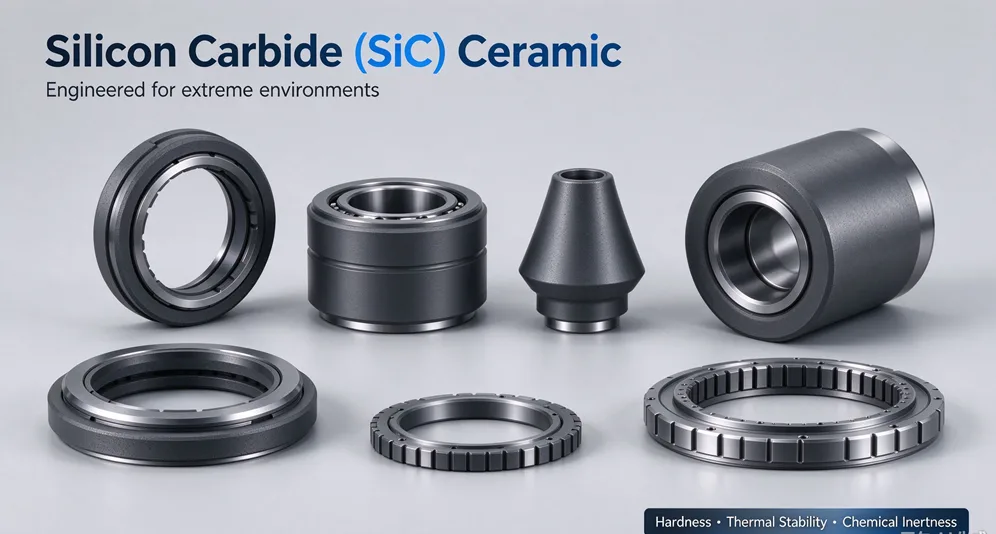
Silicon Carbide (SiC) Ceramic — the ultimate material for extreme environments.
1. Introduction to Silicon Carbide Ceramics
1.1 The Need for Extreme Environment Materials
Modern engineering constantly pushes the boundaries of what is possible. From aerospace components and high-temperature furnaces to chemical processing equipment and semiconductor manufacturing, materials are subjected to extreme heat, severe wear, and highly corrosive chemicals. Traditional metals and alloys often fall short in these conditions, leading to premature failure, frequent maintenance, and safety risks.1.2 Why Silicon Carbide (SiC) Ceramic?
Silicon Carbide (SiC) Ceramic has emerged as a leading solution for these demanding applications. Characterized by its strong covalent bonds, SiC offers an exceptional combination of high hardness, high thermal conductivity, excellent thermal shock resistance, and outstanding chemical inertness. It is a structural ceramic that does not just survive extreme environments—it thrives in them.1.3 The Role of Densification
To fully realize the potential of Silicon Carbide (SiC) Ceramic, the raw powder must be densified into a solid, pore-free body. The densification process determines the material’s final microstructure, which directly dictates its mechanical strength, thermal properties, and resistance to environmental degradation. Understanding how SiC is densified is key to understanding its performance.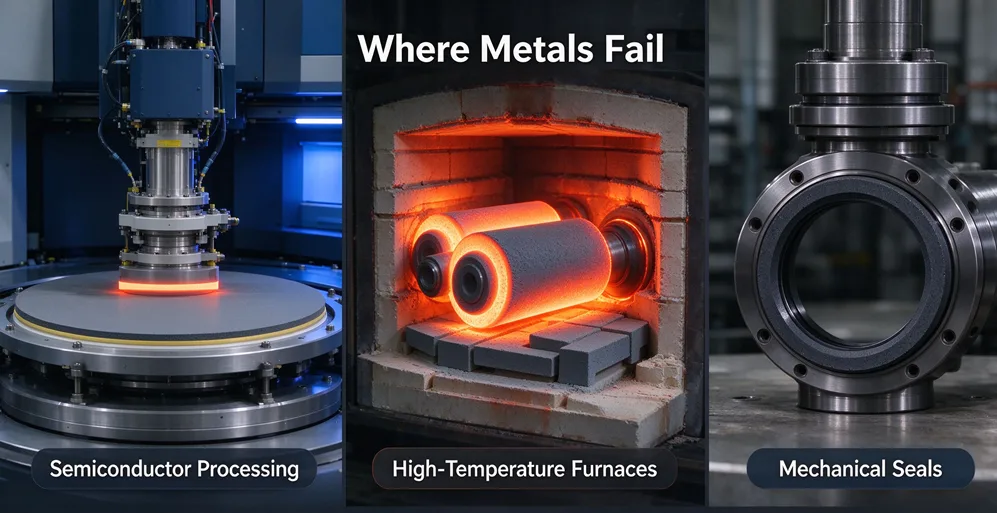
From semiconductor to heavy industry — SiC ceramics perform where metals fail.
2. Understanding the Basics of Silicon Carbide (SiC) Ceramic
2.1 Chemical Composition and Crystal Structure
Silicon Carbide (SiC) Ceramic is a compound of silicon and carbon. It crystallizes in a hexagonal or cubic lattice, depending on the specific polytype (e.g., α-SiC, β-SiC). The strong silicon-carbon covalent bond is the source of its extreme hardness (Mohs 9+) and high melting point.2.2 Key Properties of Silicon Carbide (SiC) Ceramic
Exceptional Hardness and Wear Resistance: Resists abrasion, erosion, and mechanical wear.High Thermal Conductivity: Efficiently dissipates heat, preventing localized overheating.
Excellent Thermal Shock Resistance: Withstands rapid heating and cooling without cracking.
Superior Chemical Inertness: Resistant to acids, alkalis, and molten metals.
High-Temperature Strength: Retains mechanical integrity at temperatures where metals soften.
Low Thermal Expansion: Ensures dimensional stability under thermal cycling.
2.3 Comparison with Other Structural Ceramics
| Property | Silicon Carbide (SiC) | Alumina (Al₂O₃) | Silicon Nitride (Si₃N₄) |
| Hardness | Excellent | Very Good | Good |
| Thermal Conductivity | High | Moderate | Moderate |
| Thermal Shock Resistance | Excellent | Poor | Excellent |
| Wear Resistance | Excellent | Good | Very Good |
| Chemical Inertness | Excellent | Excellent | Good |
3. Why Densification Matters for Structural Ceramics
3.1 The Porosity Problem
Ceramic powders, including Silicon Carbide (SiC) Ceramic, inherently contain pores. If these pores remain in the final product, they act as stress concentrators, drastically reducing mechanical strength, fracture toughness, and thermal conductivity. High porosity also provides pathways for corrosive chemicals to penetrate and degrade the material from the inside.3.2 Densification Routes for SiC
Achieving near-theoretical density in SiC is challenging due to its covalent nature. The main densification routes include:Solid-State Sintering: Uses additives like boron and carbon to promote diffusion and grain boundary bonding.
Liquid-Phase Sintering: Uses oxide additives (e.g., alumina, yttria) to form a liquid phase that aids densification.
Reaction Bonding (SiSiC): Infiltrating molten silicon into a carbon-containing SiC preform.
Hot Pressing / SPS: Applying heat and pressure simultaneously to force densification.
Each route yields a Silicon Carbide (SiC) Ceramic with specific characteristics. Solid-state sintered SiC offers high purity and excellent high-temperature strength, while reaction-bonded SiC allows for complex near-net-shape forming.
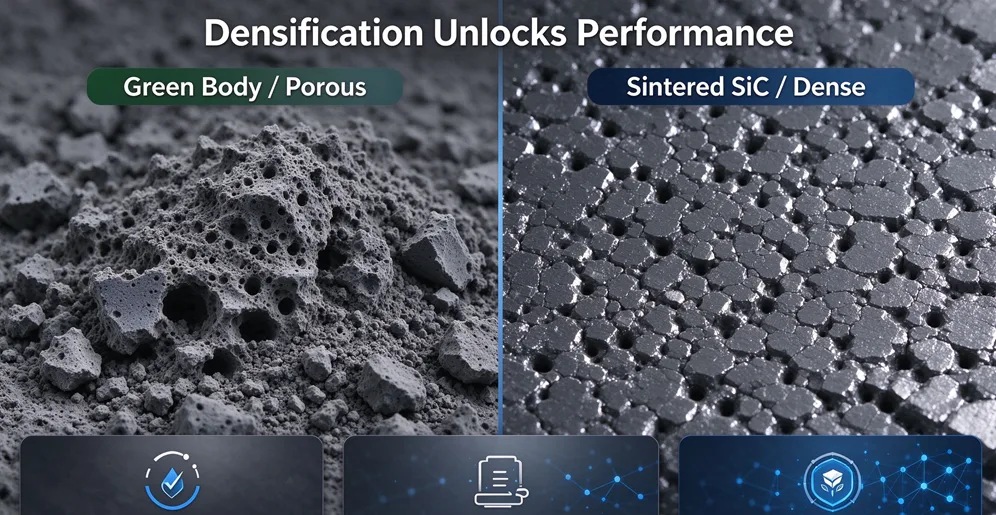
Densification is key — eliminating porosity to maximize strength and durability.
4. How Silicon Carbide (SiC) Ceramic Withstands Extreme Environments
4.1 Extreme Temperature Performance
Silicon Carbide (SiC) Ceramic maintains its mechanical strength and hardness at elevated temperatures. Unlike metals, which soften and creep, SiC retains its structural integrity. This makes it ideal for kiln furniture, heat exchangers, and components in high-temperature furnaces.4.2 Superior Thermal Shock Resistance
The combination of high thermal conductivity and low thermal expansion means that Silicon Carbide (SiC) Ceramic can survive rapid temperature fluctuations. When a material is heated or cooled quickly, thermal gradients create internal stress. SiC’s ability to quickly conduct heat away minimizes these gradients, preventing catastrophic cracking.4.3 Resistance to Wear and Erosion
With a hardness second only to diamond and boron carbide, Silicon Carbide (SiC) Ceramic is incredibly resistant to abrasive wear. It is widely used in slurry pumps, cyclones, and mechanical seals, where it outlasts traditional metal components by a significant margin.4.4 Chemical Inertness
Silicon Carbide (SiC) Ceramic does not react with most acids, alkalis, or molten metals. This makes it an ideal material for chemical reactors, heat exchanger tubes, and components handling aggressive fluids.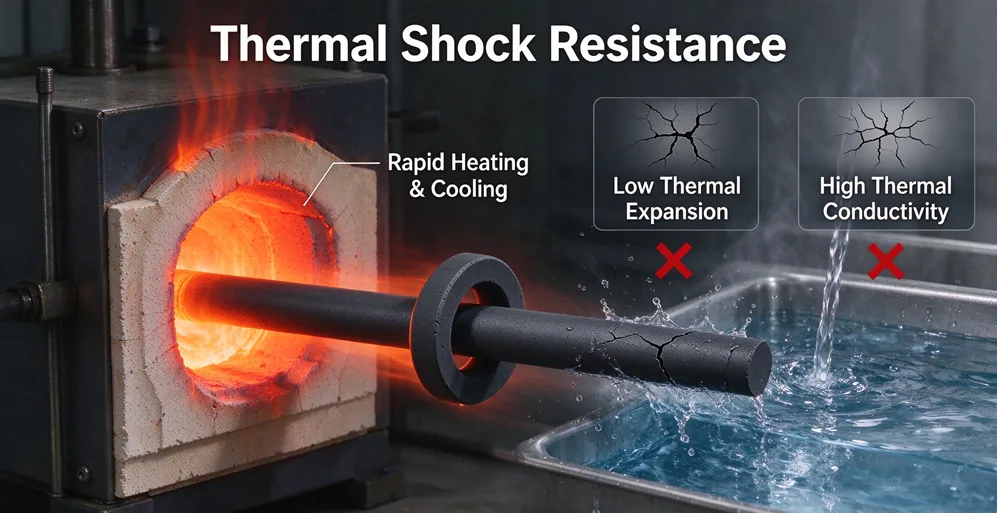
Built for extremes — SiC survives rapid thermal cycling where other ceramics crack.
5. Key Technical Specifications of Silicon Carbide (SiC) Ceramic
| Parameter | Typical Specification |
| Material Composition | Silicon Carbide (SiC) |
| Crystal Structure | α-SiC / β-SiC |
| Density (Sintered) | Typically >3.1 g/cm³ (varies by process) |
| Hardness (Mohs) | ~9.2 - 9.5 |
| Maximum Operating Temperature | Up to 1600°C+ (in inert atmospheres) |
| Thermal Conductivity | High (varies by grade) |
| Thermal Expansion | Low |
| Chemical Resistance | Excellent (resistant to most acids and alkalis) |
6. Matching Silicon Carbide (SiC) Ceramic to Your Application
6.1 Semiconductor Manufacturing
In the semiconductor industry, Silicon Carbide (SiC) Ceramic components (like wafer carriers, focus rings, and susceptors) are used because they do not contaminate the silicon wafers and can withstand the harsh plasma environments used in etching and deposition.6.2 Mechanical Seals and Bearings
Because of its extreme hardness, low friction, and wear resistance, Silicon Carbide (SiC) Ceramic is the material of choice for mechanical seals in pumps handling abrasive slurries or corrosive chemicals.6.3 High-Temperature Furnace Fixtures
Silicon Carbide (SiC) Ceramic is used for kiln furniture, such as setters, beams, and rollers. Its thermal shock resistance and high-temperature strength allow for faster firing cycles and lower energy consumption.6.4 Chemical Processing
Heat exchanger tubes, nozzles, and pump liners made from Silicon Carbide (SiC) Ceramic provide long-term reliability in chemical plants where acids, alkalis, and high temperatures are present.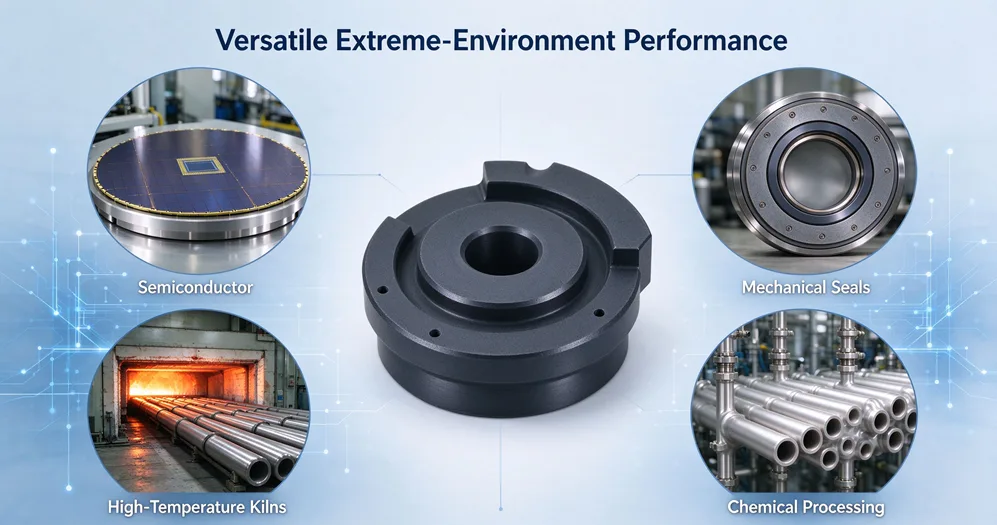
Versatile performance — SiC ceramics across semiconductor, mechanical, and thermal applications.
7. Common Misconceptions About Silicon Carbide
7.1 “All SiC Ceramics Are Identical”
The properties of Silicon Carbide (SiC) Ceramic vary significantly depending on the densification route. Reaction-bonded SiC contains free silicon and has different chemical resistance compared to solid-state sintered SiC. Selecting the right grade is crucial.7.2 “SiC Is Too Brittle for Structural Use”
While ceramics are inherently brittle, advanced densification processes and microstructural engineering have significantly improved the fracture toughness of Silicon Carbide (SiC) Ceramic. It is tough enough for demanding mechanical seals and armor applications.7.3 “SiC Cannot Be Used in Oxidizing Environments”
While SiC oxidizes at very high temperatures in air, it forms a protective layer of silica (SiO₂) that slows down further oxidation. This allows Silicon Carbide (SiC) Ceramic to be used in air at temperatures up to 1500°C or higher.7.4 “SiC Is Electrically Conductive Like Graphite”
While some grades of SiC are semiconductor materials, high-purity Silicon Carbide (SiC) Ceramic can be engineered to be excellent electrical insulators, making them suitable for electronic components.8. Quick Evaluation Checklist
Before selecting Silicon Carbide (SiC) Ceramic, verify:Maximum operating temperature required
Furnace atmosphere (air, inert, vacuum)
Chemical exposure (acids, alkalis, molten metals)
Mechanical load and wear conditions
Required electrical properties (conductive vs. insulating)
Component size and shape complexity
Densification route and specific grade availability
9. Real-World Application Scenarios
9.1 Slurry Pump Mechanical Seals
A mining operation used Silicon Carbide (SiC) Ceramic mechanical seals in their slurry pumps. The seals withstood the highly abrasive mineral slurries and outlasted the previous metal seals by several times, significantly reducing maintenance downtime.9.2 High-Temperature Kiln Rollers
A ceramic tile manufacturer replaced traditional refractory rollers with Silicon Carbide (SiC) Ceramic rollers. The SiC rollers resisted thermal shock and provided smoother transport for the tiles, while also reducing the energy needed to drive the kiln due to their lighter weight.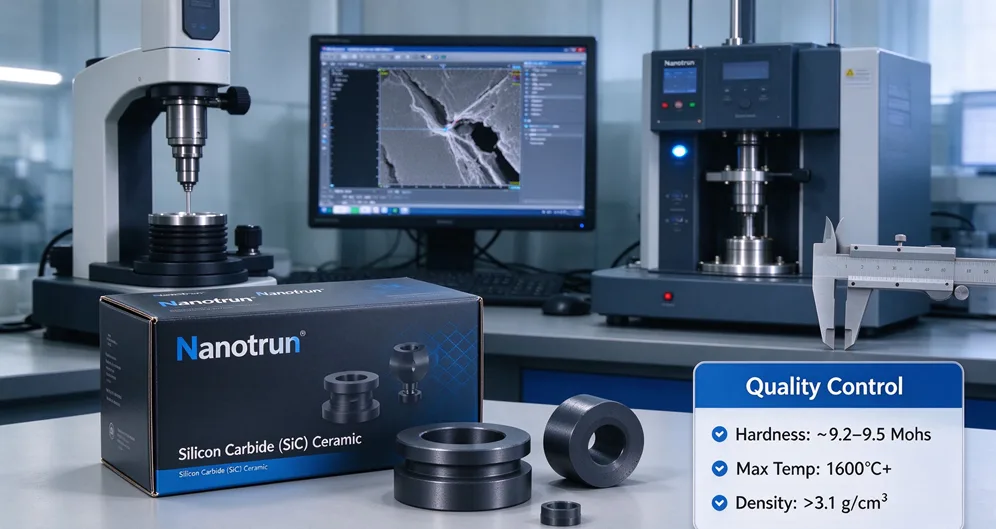
Nanotrun Silicon Carbide (SiC) Ceramic — engineered for the most demanding environments.
10. Frequently Asked Questions (FAQs)
Q1: What is Silicon Carbide (SiC) Ceramic?Silicon Carbide (SiC) Ceramic is a high-performance structural ceramic known for its extreme hardness, high thermal conductivity, and excellent resistance to wear, heat, and chemicals.
Q2: How is SiC Ceramic densified?
SiC is densified through routes such as solid-state sintering, liquid-phase sintering, reaction bonding, or hot pressing. The chosen method significantly affects the final properties of the ceramic.
Q3: Can SiC Ceramic withstand thermal shock?
Yes. Silicon Carbide (SiC) Ceramic has a low coefficient of thermal expansion and high thermal conductivity, allowing it to withstand rapid heating and cooling without cracking.
Q4: Is SiC Ceramic resistant to chemicals?
Silicon Carbide (SiC) Ceramic is highly resistant to most acids, alkalis, and molten metals. However, it can be attacked by strong oxidizing agents or hydrofluoric acid under certain conditions.
Q5: What is the maximum operating temperature for SiC Ceramic?
In inert atmospheres, Silicon Carbide (SiC) Ceramic can operate at temperatures exceeding 1600°C. In air, the practical limit is often around 1500°C due to oxidation.
Q6: Is SiC Ceramic electrically conductive?
It depends on the grade. High-purity SiC is an insulator, while SiC with specific dopants or free silicon can be conductive or semi-conductive.
Q7: What are the primary applications of SiC Ceramic?
Leave a Reply
Your email address will not be published.Required fields are marked. *