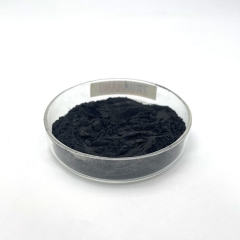
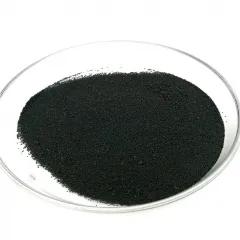
Overview of Sulfide Powder
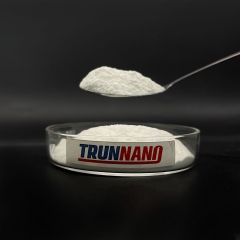
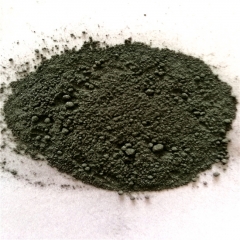
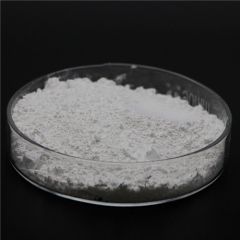
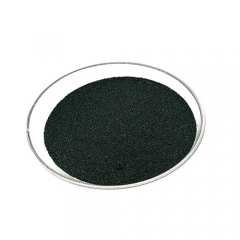
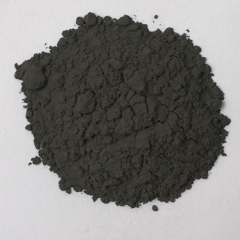
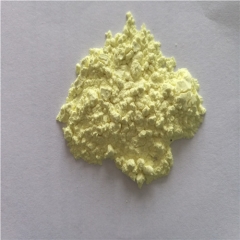
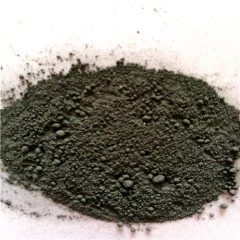
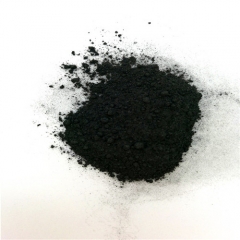
Sulfide powder refers to the chemical compounds powder with large families of inorganic and organic compounds, e.g. copper sulfide, Zinc sulfide, molybdenum disulfide, tungsten disulfide powders and so on.

Sulfide Powder
Zinc sulfide, is also named zinc sulphide, which is with chemical formula ZnS. The molecular weight of zinc sulfide is 97.445, CAS no. 1314-98-3. Zinc sulfide powder is not soluble in water, ZnS melting point 1700℃, the density of ZnS powder is 4.09 g/cm3.
Molybdenum disulfide, is also named molybdenum disulphide, which is with chemical formula MoS2. The molecular weight of molybdenum disulfide is 160.07, CAS no. 1317-33-5. Molybdenum disulfide powder is not soluble in water, MoS2 melting point 2375℃, the density of MoS2 powder is 4.80 g/cm3.
Tungsten disulfide, is also named tungsten disulphide, which is with chemical formula WS2. The molecular weight of tungsten disulfide is 247.97, CAS no. 12138-09-9. Tungsten disulfide powder is not soluble in water, WS2 melting point 1250℃, the density of MoS2 powder is 7.5 g/cm3.
Sulfides and their similar compounds include a series of metals and semi-metallic elements combined with S, Se, Te, As, Sb, Bi minerals.

Sulfide Materials
Specifications of Sulfide Powder
|
Sulfide Powder |
Chemical Formula |
Purity (%) |
Appearance |
Melting Point (°C) |
Density (g/cm³) |
Main Applications |
|
Iron Sulfide |
FeS₂ |
≥ 95 |
Golden-yellow |
500-600 |
4.98 |
Pyrite, catalysts, pigments |
|
Zinc Sulfide |
ZnS |
≥ 99.5 |
White to pale yellow |
~1830 (decomposes) |
4.09 |
Optoelectronics, phosphors, pigments |
|
Copper Sulfide |
CuS |
≥ 98 |
Black |
220-250 |
4.63 |
Batteries, solar cells, pigments |
|
Molybdenum Sulfide |
MoS₂ |
≥ 99 |
Dark gray to black |
1185 (decomposes) |
5.06 |
Lubricants, catalysts, electronics |
|
Lead Sulfide |
PbS |
≥ 99 |
Black |
1114 |
7.46 |
Infrared detectors, semiconductors |
Key Characteristics and Advantages of Sulfide Materials
Sulfides possess a remarkable combination of properties that distinguish them from oxides, nitrides, and other chalcogenides:
Tunable optical properties: Many metal sulfides exhibit direct or indirect bandgaps ranging from visible to near-infrared, enabling applications in phosphors, LEDs, solar cells, and photodetectors. For example, ZnS is a well-known phosphor host, while CdS is widely used in photovoltaic devices.
Excellent solid-state lubrication: Layered sulfides such as MoS₂ and WS₂ function as outstanding dry lubricants due to weak interlayer van der Waals forces, providing low friction coefficients and high load-bearing capacity even in vacuum or extreme temperatures.
High chemical and thermal stability: Most sulfide compounds resist oxidation up to moderate temperatures and maintain structural integrity under harsh chemical environments, making them suitable for corrosion-resistant coatings and refractory applications.
Semiconducting and optoelectronic behavior: Sulfide materials exhibit diverse electronic characteristics—from insulating to semiconducting to metallic—depending on stoichiometry and crystal phase. This versatility supports applications in thin-film transistors, gas sensors, and thermoelectric devices.
Catalytic activity: Many metal sulfides, particularly MoS₂ and CuS, demonstrate excellent catalytic performance in hydrodesulfurization, hydrogen evolution reactions (HER), and photocatalytic degradation of pollutants, positioning them as key players in energy and environmental technologies.
Good electrical conductivity (in certain phases): Unlike oxide ceramics, some sulfides such as CuS and Co₃S₄ exhibit metallic or semi-metallic conductivity, enabling electrode materials for batteries and supercapacitors.
Cost-effectiveness and abundance: Compared to precious metals or complex oxides, many sulfide raw materials are relatively abundant and economically feasible for large-scale industrial production.
Tunable morphology and particle size: Sulfide powders can be synthesized with controlled shapes—nanoparticles, nanorods, nanosheets, or microspheres—to optimize performance for specific applications like drug delivery, energy storage, or catalysis.
These combined advantages make sulfide powders not merely structural fillers but active multifunctional components in electronics, energy conversion, tribology, and environmental remediation.

Applications of Sulfide Materials
Applications of Sulfide powder
Sulfide powders are widely used in industrial field. Molybdenum disulfide is a catalyst in organic synthesis. Since sulfur-containing organic compounds such as thiophene poison the common hydrogenation catalyst, molybdenum disulfide can be used to catalyze the hydrogenation reaction of sulfur-containing organic substances. Cadmium sulfide can be used to make photo-voltaic cells. Lead sulfide is used to make infrared sensors.
Zinc sulfide and cadmium sulfide are used to make phosphors, and high purity cadmium sulfide is a good semiconductor. Tetraphosphorus trisulfide is used to make matches and fireworks. Tetraphosphorus tetrasulfide is used in the manufacture of insecticides, lubricating oil additives and flotation agents. Sodium sulfide is widely used in the manufacture of sulphur dyes, production of organic drugs and pulp, etc. Calcium sulphide and strontium sulfide are used to make luminescent lacquers.
Company Profile
Luoyang Trunnano Tech Co., Ltd provide high purity molybdenum sulfide, tungsten disulfide, cadmium sulfide,bismuth sulfide,stannic sulfide,zinc sulfide, etc.
Payment Term:
T/T, Western Union, Paypal, Credit Card etc.
Shipment Term:
By air, by sea, by express, as customers request.
Storage conditions:
1) Store in a dry environment at room temperature.
2) Avoid damp and high temperature.
3) Use immediately after opening the inner packing bag.

5 FAQs of Sulfide Powder
What are the main uses of sulfide powders?
Sulfide powders have diverse applications ranging from industrial catalysts and pigments to advanced materials like optoelectronics and semiconductors. For example, zinc sulfide is used in phosphors, while molybdenum disulfide serves as an effective lubricant.
How should sulfide powders be stored?
Sulfide powders should be stored in a cool, dry place away from moisture and direct sunlight. Some sulfides may react with air or water, so sealed containers are recommended to prevent degradation.
Can sulfide powders be hazardous?
Yes, some sulfide powders can be hazardous due to their potential to release toxic gases when heated or exposed to acids. Proper handling procedures and personal protective equipment (PPE) are essential.
What is the purity level typically available for sulfide powders?
The purity levels vary depending on the specific sulfide and its intended application. Common commercial grades range from 95% to over 99.9%, with higher purities often required for specialized applications like electronics.
How are sulfide powders produced?
Sulfide powders are typically produced through chemical reactions involving sulfur compounds and metals. Methods include precipitation, reduction, and solid-state reactions. The choice of method depends on the desired product purity and physical properties.