
By Trunnano | 26 August 2026 | 0 Comments
The applications of Molybdenum Disulfide Powder
Overview of Molybdenum Disulfide Powder
Molybdenum disulfide is an inorganic substance with the chemical formula MoS2, which is the main component of molybdenite. Black solid powder with metallic luster, Molybdenum disulfide is an inorganic substance with the chemical formula MoS2, which is the main component of molybdenum ore. Black solid powder, with metallic luster, smooth to the touch. The specific gravity is 4.8, and the Mohs hardness is 1 to 1.5. In general, the friction coefficient is 0.05~0.09. The oil absorption value is 1~1.5. Melting point is 1185℃, sublimation at 450℃. In the atmosphere, the temperature starts to oxidize gradually at around 400°C, and as the particle size becomes finer, the oxidation temperature gradually decreases, and the oxide is molybdenum trioxide. It does not dissolve in dilute acid, alkali, solvent, petroleum, synthetic grease. It can be corroded by aqua regia, concentrated sulfuric acid and boiling concentrated hydrochloric acid. Strong chemical and thermal stability. It does not chemically react with general metal surfaces and does not corrode rubber materials.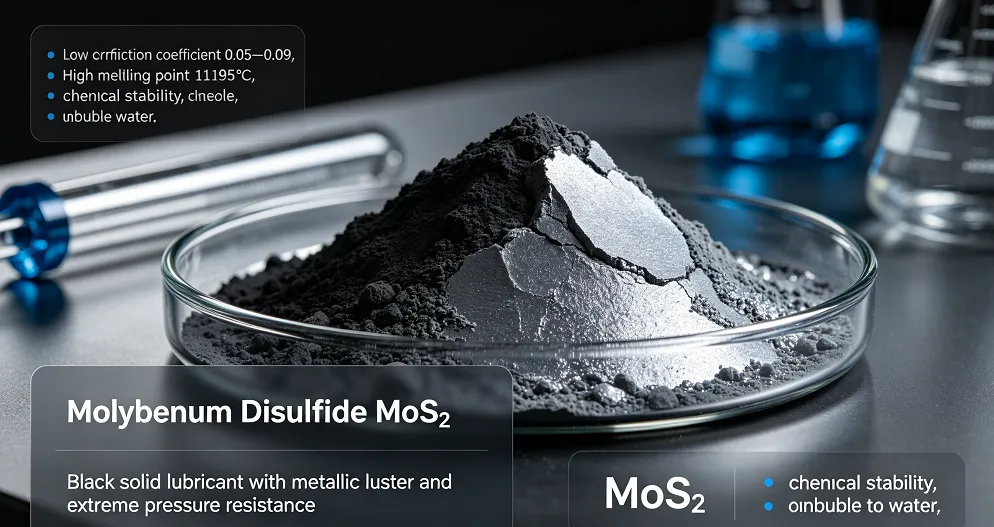
Molybdenum Disulfide MoS₂
Molybdenum disulfide (MoS₂) is one of the most widely used solid lubricants in the world, often referred to as the "King of Advanced Solid Lubricants." Its combination of low friction coefficient, high load-carrying capacity, and exceptional chemical stability makes it indispensable in industries ranging from automotive and aerospace to electronics and energy storage. The compound's layered structure, similar to graphite, enables excellent lubricating performance even under extreme conditions where conventional liquid lubricants would fail. Natural molybdenite is the primary source of MoS₂, but high-purity synthetic grades are also produced for specialized applications requiring controlled particle size and minimal impurities. The relatively low Mohs hardness (1.0–1.5) ensures that MoS₂ does not cause abrasive wear on the surfaces it lubricates. The black color of MoS₂ powder, along with its metallic luster, is indicative of its semiconductor properties and is why it is sometimes referred to as "black gold" in the lubrication industry. The material's high melting point and thermal stability contribute to its excellent high-temperature lubrication performance, with effective lubrication possible up to approximately 400°C in air and up to 1100°C in inert or reducing atmospheres. The chemical inertness of MoS₂ is one of its most valuable properties—its resistance to most acids, alkalis, and organic solvents means that MoS₂-based lubricants can be used in aggressive chemical environments without degradation. The slow oxidation at 400°C to form molybdenum trioxide (MoO₃) is significant because the onset of oxidation is well above the operating temperatures of most mechanical systems. The solubility in aqua regia and boiling concentrated sulfuric acid is exploited in analytical chemistry and recycling processes for the recovery of molybdenum from spent lubricants and waste materials. The oil absorption value of MoS₂ indicates its ability to absorb lubricating oils, which contributes to its effectiveness as a grease additive. The strong chemical and thermal stability of MoS₂ ensures its long-term performance in demanding applications. The non-reactivity of MoS₂ with metal surfaces and rubber materials is an important consideration for its use in various mechanical and industrial applications, as it prevents corrosion and degradation of components. The continued research on the properties and applications of MoS₂ is expected to lead to new innovations and expanded applications in various fields.
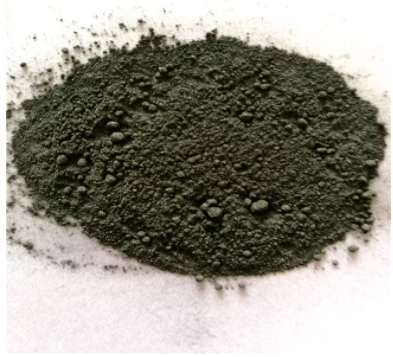
What is the applications of Molybdenum Disulfide Powder
Molybdenum disulfide is an important solid lubricant, especially suitable for high temperature and high pressure.It is also diamagnetic,can be used as a linear photoconductor and a semiconductor showing P-type or N-type conductivity,and has the functions of rectification and energy conversion.Molybdenum disulfide can also be used as a catalyst for the dehydrogenation of complex hydrocarbons.
The versatility of MoS₂ stems from its ability to be applied in various forms—including powders, greases, oils, bonded coatings, and composite materials—each tailored for specific industrial requirements. Its applications span a wide temperature and pressure range, with the lubricating properties enabling long-term service in conditions that would rapidly degrade most metallic and organic materials. As a solid lubricant, MoS₂ excels in applications where conventional liquid lubricants fail due to extreme temperatures, high pressures, or vacuum conditions. The coefficient of friction of MoS₂ typically ranges from 0.05 to 0.1, which is significantly lower than most other solid lubricants, including graphite. The load-carrying capacity of MoS₂ can exceed 300,000 psi, making it suitable for extreme pressure applications such as heavy-duty gears, bearings, and sliding mechanisms. The semiconductor properties of MoS₂ have attracted significant research interest in recent years. The material is a two-dimensional semiconductor with a thickness-dependent direct bandgap, ranging from approximately 1.2 eV in bulk to 1.8 eV in monolayer form. The ability to switch between P-type and N-type conductivity through doping or electrical biasing makes MoS₂ a promising candidate for next-generation electronic devices, including field-effect transistors, photodetectors, and flexible electronics. The rectification and energy conversion capabilities of MoS₂ are being explored for applications in solar cells and energy harvesting devices. As a catalyst, MoS₂ is particularly effective for the hydrodesulfurization of petroleum feedstocks, where it removes sulfur from crude oil fractions to meet environmental regulations. The catalytic activity of MoS₂ is concentrated at the edge sites of the crystal structure, where exposed sulfur atoms provide active sites for chemical reactions. Research is ongoing to develop MoS₂-based catalysts for the hydrogen evolution reaction in water splitting, offering a cost-effective alternative to platinum-based catalysts. The combination of catalytic activity and semiconductor properties makes MoS₂ a versatile material for energy and environmental applications. The diamagnetic properties of MoS₂ contribute to its unique electronic behavior and its potential use in magnetic and spintronic devices. The development of new MoS₂-based materials and devices continues to expand the range of applications for this versatile compound. The ongoing research on the properties and applications of MoS₂ is expected to lead to new innovations and expanded applications in various fields.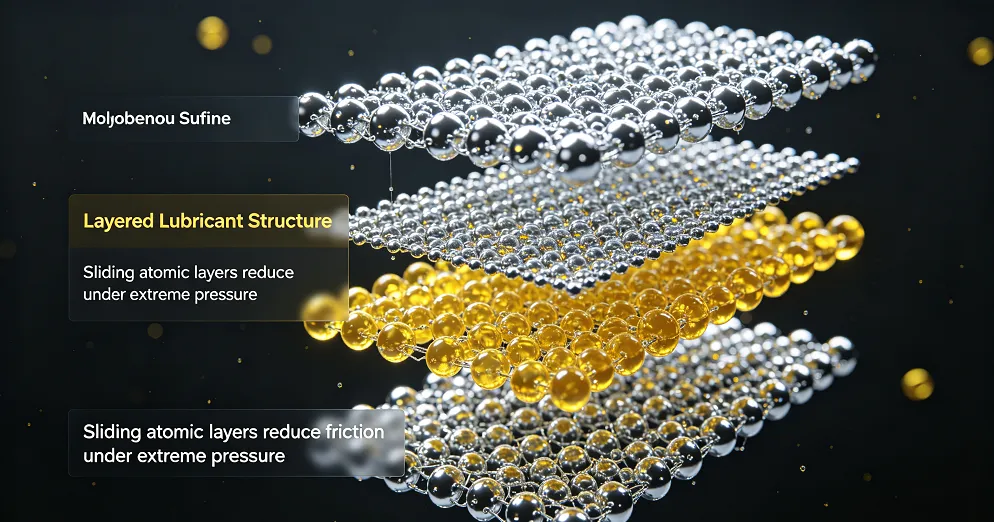
Layered Lubricant Structure
It is also known as the"king of advanced solid lubricants."Molybdenum disulfide is a solid powder made from natural molybdenum concentrate after chemical purification and then changing the molecular structure.This product is black with a slight silver gray,metallic luster,slippery to the touch,and insoluble in water.The product has the advantages of good dispersibility and non-sticking.It can be added to various greases to form a non-sticky colloidal state,which can increase the lubricity and extreme pressure of the grease.It is also suitable for high-temperature,high-pressure,high-speed and high-load mechanical working conditions to extend equipment life.The main function of molybdenum disulfide used in friction materials is to reduce friction at low temperatures, increase friction at high temperatures,and have a small loss on ignition.It is volatile in friction materials.
Anti-friction: Molybdenum disulfide processed by supersonic jet pulverization has a particle size of 325-2500 mesh, micro-particle hardness of 1-1.5,and friction coefficient of 0.05-0.1,so it can reduce friction when used in friction materials;
Increase friction: Molybdenum disulfide is not conductive,and there are copolymers of molybdenum disulfide, molybdenum trisulfide and molybdenum trioxide.When the temperature of the friction material rises sharply due to friction, the molybdenum trioxide particles in the copolymer expand as the temperature rises to increase the friction;
The friction-increasing properties of MoS₂ are particularly valuable in applications where consistent braking performance is required across a wide temperature range. The presence of copolymers containing molybdenum disulfide, molybdenum trisulfide, and molybdenum trioxide provides a unique temperature-responsive behavior. At elevated temperatures, the molybdenum trioxide particles in the copolymer expand, increasing the friction coefficient and providing reliable stopping power. This temperature-responsive behavior ensures consistent braking performance under various operating conditions, including emergency stops and repeated braking. The non-conductive nature of MoS₂ is important for applications where electrical conductivity could cause issues, such as in electrical contacts and certain electronic devices. The use of MoS₂ in friction materials helps to maintain stable friction performance over a wide temperature range, reducing the risk of brake fade and improving safety. The combination of anti-friction and friction-increasing properties makes MoS₂ a unique and valuable additive for friction materials. The development of new MoS₂-based friction materials with improved temperature-responsive behavior continues to be an area of active research. The use of advanced characterization techniques, such as thermal analysis and microscopy, is essential for understanding the behavior of MoS₂-based friction materials under various conditions. The continued research on the friction-increasing properties of MoS₂ is expected to lead to new innovations and improved performance in various mechanical and industrial applications. The ability of MoS₂ to provide consistent friction performance across a wide temperature range makes it an essential component in high-performance brake pads and clutches. The environmental benefits of using MoS₂ in friction materials, including reduced wear and lower emissions, make it an attractive choice for sustainable manufacturing.
Industrial Solid Lubrication
Anti-oxidation: Molybdenum disulfide is obtained through chemical purification and comprehensive reaction.Its PH value is 7-8, which is slightly alkaline. It covers the surface of the friction material to protect other materials and prevent them from being oxidized, especially to make other materials not easy to fall off and enhance the adhesion;
The anti-oxidation properties of MoS₂ are important for extending the service life and maintaining the performance of friction materials and other components. The slightly alkaline nature of MoS₂ (pH 7-8) helps to neutralize acidic products that may form during friction and wear processes, protecting the friction material from degradation. The formation of a protective layer on the surface of the friction material by MoS₂ prevents the oxidation of other materials, preserving their integrity and performance. The protection provided by MoS₂ helps to prevent the detachment of materials from the friction surface, maintaining consistent friction performance and reducing wear. The enhanced adhesion provided by MoS₂ improves the bonding between the friction material and the substrate, ensuring reliable performance and extending service life. The use of MoS₂ in friction materials helps to maintain the integrity of the friction surface, reducing the formation of wear debris and improving the cleanliness of the system. The anti-oxidation properties of MoS₂ are also important for its use in high-temperature applications, where oxidation can degrade the performance of materials. The development of new MoS₂-based formulations with improved anti-oxidation properties continues to be an area of active research. The use of advanced characterization techniques, such as X-ray photoelectron spectroscopy and electron microscopy, is essential for understanding the anti-oxidation mechanisms of MoS₂. The continued research on the anti-oxidation properties of MoS₂ is expected to lead to new innovations and improved performance in various mechanical and industrial applications. The ability of MoS₂ to protect materials from oxidation and enhance adhesion makes it a valuable additive for various applications, including coatings, composites, and lubricants. The environmental benefits of using MoS₂ as an anti-oxidation agent, including reduced wear and extended service life, make it an attractive choice for sustainable manufacturing.
In addition, molybdenum disulfide can also become a new material for making transistors. Compared with graphene, which is also a two-dimensional material, molybdenum disulfide has an energy band gap of 1.8 eV, while graphene does not have an energy band gap. Therefore,molybdenum disulfide may have a broad application space in the field of nano-transistors.Moreover,the electron mobility of a single-layer molybdenum disulfide transistor can reach up to about 500 cm^2/(V•s),and the current switching rate can reach 1×10^8.
Luoyang Trunnano Tech Co., Ltd (TRUNNANO) is a professional sulfide powder supplier with over 12 years of experience in chemical products research and development. We accept payment via Credit Card, T/T, West Union, and Paypal. Trunnano will ship the goods to customers overseas through FedEx, DHL, by air, or by sea.
If you are looking for high-quality boron carbide powder, please feel free to contact us and send an inquiry.
Molybdenum disulfide is an inorganic substance with the chemical formula MoS2, which is the main component of molybdenite. Black solid powder with metallic luster, Molybdenum disulfide is an inorganic substance with the chemical formula MoS2, which is the main component of molybdenum ore. Black solid powder, with metallic luster, smooth to the touch. The specific gravity is 4.8, and the Mohs hardness is 1 to 1.5. In general, the friction coefficient is 0.05~0.09. The oil absorption value is 1~1.5. Melting point is 1185℃, sublimation at 450℃. In the atmosphere, the temperature starts to oxidize gradually at around 400°C, and as the particle size becomes finer, the oxidation temperature gradually decreases, and the oxide is molybdenum trioxide. It does not dissolve in dilute acid, alkali, solvent, petroleum, synthetic grease. It can be corroded by aqua regia, concentrated sulfuric acid and boiling concentrated hydrochloric acid. Strong chemical and thermal stability. It does not chemically react with general metal surfaces and does not corrode rubber materials.
Molybdenum Disulfide MoS₂
Molybdenum disulfide is an important solid lubricant, especially suitable for high temperature and high pressure.It is also diamagnetic,can be used as a linear photoconductor and a semiconductor showing P-type or N-type conductivity,and has the functions of rectification and energy conversion.Molybdenum disulfide can also be used as a catalyst for the dehydrogenation of complex hydrocarbons.
The versatility of MoS₂ stems from its ability to be applied in various forms—including powders, greases, oils, bonded coatings, and composite materials—each tailored for specific industrial requirements. Its applications span a wide temperature and pressure range, with the lubricating properties enabling long-term service in conditions that would rapidly degrade most metallic and organic materials. As a solid lubricant, MoS₂ excels in applications where conventional liquid lubricants fail due to extreme temperatures, high pressures, or vacuum conditions. The coefficient of friction of MoS₂ typically ranges from 0.05 to 0.1, which is significantly lower than most other solid lubricants, including graphite. The load-carrying capacity of MoS₂ can exceed 300,000 psi, making it suitable for extreme pressure applications such as heavy-duty gears, bearings, and sliding mechanisms. The semiconductor properties of MoS₂ have attracted significant research interest in recent years. The material is a two-dimensional semiconductor with a thickness-dependent direct bandgap, ranging from approximately 1.2 eV in bulk to 1.8 eV in monolayer form. The ability to switch between P-type and N-type conductivity through doping or electrical biasing makes MoS₂ a promising candidate for next-generation electronic devices, including field-effect transistors, photodetectors, and flexible electronics. The rectification and energy conversion capabilities of MoS₂ are being explored for applications in solar cells and energy harvesting devices. As a catalyst, MoS₂ is particularly effective for the hydrodesulfurization of petroleum feedstocks, where it removes sulfur from crude oil fractions to meet environmental regulations. The catalytic activity of MoS₂ is concentrated at the edge sites of the crystal structure, where exposed sulfur atoms provide active sites for chemical reactions. Research is ongoing to develop MoS₂-based catalysts for the hydrogen evolution reaction in water splitting, offering a cost-effective alternative to platinum-based catalysts. The combination of catalytic activity and semiconductor properties makes MoS₂ a versatile material for energy and environmental applications. The diamagnetic properties of MoS₂ contribute to its unique electronic behavior and its potential use in magnetic and spintronic devices. The development of new MoS₂-based materials and devices continues to expand the range of applications for this versatile compound. The ongoing research on the properties and applications of MoS₂ is expected to lead to new innovations and expanded applications in various fields.
Layered Lubricant Structure
Anti-friction: Molybdenum disulfide processed by supersonic jet pulverization has a particle size of 325-2500 mesh, micro-particle hardness of 1-1.5,and friction coefficient of 0.05-0.1,so it can reduce friction when used in friction materials;
Increase friction: Molybdenum disulfide is not conductive,and there are copolymers of molybdenum disulfide, molybdenum trisulfide and molybdenum trioxide.When the temperature of the friction material rises sharply due to friction, the molybdenum trioxide particles in the copolymer expand as the temperature rises to increase the friction;
The friction-increasing properties of MoS₂ are particularly valuable in applications where consistent braking performance is required across a wide temperature range. The presence of copolymers containing molybdenum disulfide, molybdenum trisulfide, and molybdenum trioxide provides a unique temperature-responsive behavior. At elevated temperatures, the molybdenum trioxide particles in the copolymer expand, increasing the friction coefficient and providing reliable stopping power. This temperature-responsive behavior ensures consistent braking performance under various operating conditions, including emergency stops and repeated braking. The non-conductive nature of MoS₂ is important for applications where electrical conductivity could cause issues, such as in electrical contacts and certain electronic devices. The use of MoS₂ in friction materials helps to maintain stable friction performance over a wide temperature range, reducing the risk of brake fade and improving safety. The combination of anti-friction and friction-increasing properties makes MoS₂ a unique and valuable additive for friction materials. The development of new MoS₂-based friction materials with improved temperature-responsive behavior continues to be an area of active research. The use of advanced characterization techniques, such as thermal analysis and microscopy, is essential for understanding the behavior of MoS₂-based friction materials under various conditions. The continued research on the friction-increasing properties of MoS₂ is expected to lead to new innovations and improved performance in various mechanical and industrial applications. The ability of MoS₂ to provide consistent friction performance across a wide temperature range makes it an essential component in high-performance brake pads and clutches. The environmental benefits of using MoS₂ in friction materials, including reduced wear and lower emissions, make it an attractive choice for sustainable manufacturing.
Industrial Solid Lubrication
The anti-oxidation properties of MoS₂ are important for extending the service life and maintaining the performance of friction materials and other components. The slightly alkaline nature of MoS₂ (pH 7-8) helps to neutralize acidic products that may form during friction and wear processes, protecting the friction material from degradation. The formation of a protective layer on the surface of the friction material by MoS₂ prevents the oxidation of other materials, preserving their integrity and performance. The protection provided by MoS₂ helps to prevent the detachment of materials from the friction surface, maintaining consistent friction performance and reducing wear. The enhanced adhesion provided by MoS₂ improves the bonding between the friction material and the substrate, ensuring reliable performance and extending service life. The use of MoS₂ in friction materials helps to maintain the integrity of the friction surface, reducing the formation of wear debris and improving the cleanliness of the system. The anti-oxidation properties of MoS₂ are also important for its use in high-temperature applications, where oxidation can degrade the performance of materials. The development of new MoS₂-based formulations with improved anti-oxidation properties continues to be an area of active research. The use of advanced characterization techniques, such as X-ray photoelectron spectroscopy and electron microscopy, is essential for understanding the anti-oxidation mechanisms of MoS₂. The continued research on the anti-oxidation properties of MoS₂ is expected to lead to new innovations and improved performance in various mechanical and industrial applications. The ability of MoS₂ to protect materials from oxidation and enhance adhesion makes it a valuable additive for various applications, including coatings, composites, and lubricants. The environmental benefits of using MoS₂ as an anti-oxidation agent, including reduced wear and extended service life, make it an attractive choice for sustainable manufacturing.
In addition, molybdenum disulfide can also become a new material for making transistors. Compared with graphene, which is also a two-dimensional material, molybdenum disulfide has an energy band gap of 1.8 eV, while graphene does not have an energy band gap. Therefore,molybdenum disulfide may have a broad application space in the field of nano-transistors.Moreover,the electron mobility of a single-layer molybdenum disulfide transistor can reach up to about 500 cm^2/(V•s),and the current switching rate can reach 1×10^8.

Semiconductor and Catalysis
Luoyang Trunnano Tech Co., Ltd (TRUNNANO) is a professional sulfide powder supplier with over 12 years of experience in chemical products research and development. We accept payment via Credit Card, T/T, West Union, and Paypal. Trunnano will ship the goods to customers overseas through FedEx, DHL, by air, or by sea.
If you are looking for high-quality boron carbide powder, please feel free to contact us and send an inquiry.
Leave a Reply
Your email address will not be published.Required fields are marked. *