
By v | 17 August 2026 | 0 Comments
Why Is Aerogel the Ultimate Thermal Insulation Material for Electronics?
Your smartphone gets hot. Your tablet gets warm. Your laptop fan spins faster than it should. As electronic devices get thinner and more powerful, the heat they generate becomes harder to manage. Conventional thermal management solutions—bulky heat sinks, thick insulation pads, or heavy metal plates—simply don't fit in today's ultra-slim designs.
Enter aerogel. Often called "frozen smoke," aerogel is the lightest solid material on Earth. It is also one of the best thermal insulators ever created. A thin layer of aerogel can block heat transfer more effectively than insulation many times its thickness.
But here's the real question: why is aerogel so good at keeping heat out, and how does it work in the tight spaces inside electronic devices? The answer lies in its unique structure—a nanoporous network that traps heat at the molecular level while taking up almost no space. For engineers designing next-generation electronics, aerogel is not just an improvement—it's a fundamental shift in what thermal management can achieve.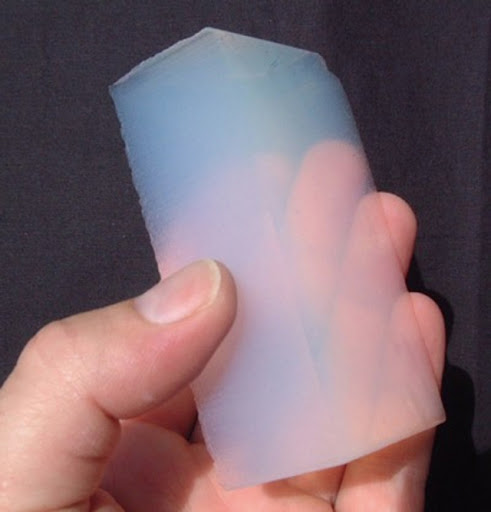
Aerogel
Aerogel is a synthetic porous material derived from a gel where the liquid component is replaced with gas. The result is a solid with extremely low density—up to 99.8% of aerogel is air, yet it maintains structural integrity. The most common form is silica aerogel, which appears translucent with a characteristic bluish tint due to Rayleigh scattering.
Aerogel is available in various forms for practical applications, including flexible sheets or films. This flexibility makes it particularly suitable for use in electronic devices where surfaces are not always flat, and insulation needs to conform to different shapes. Unlike traditional rigid insulation materials, aerogel film can wrap around components and fit into tight spaces without cracking or losing effectiveness.
The material is chemically stable, resistant to corrosion and oxidation. In high-temperature environments, aerogel maintains its structural integrity—a property that makes it valuable not just for consumer electronics but for aerospace, industrial, and energy applications as well. Its chemical inertness means it doesn't react with most substances, adding to its reliability in demanding environments.
Mechanically, aerogel has lower hardness but good toughness and plasticity. It can withstand some mechanical load, and its shock absorption and sound insulation properties make it useful in applications beyond thermal management. The combination of thermal, acoustic, and mechanical properties makes aerogel a multifunctional material—one that can solve multiple problems in a single thin layer.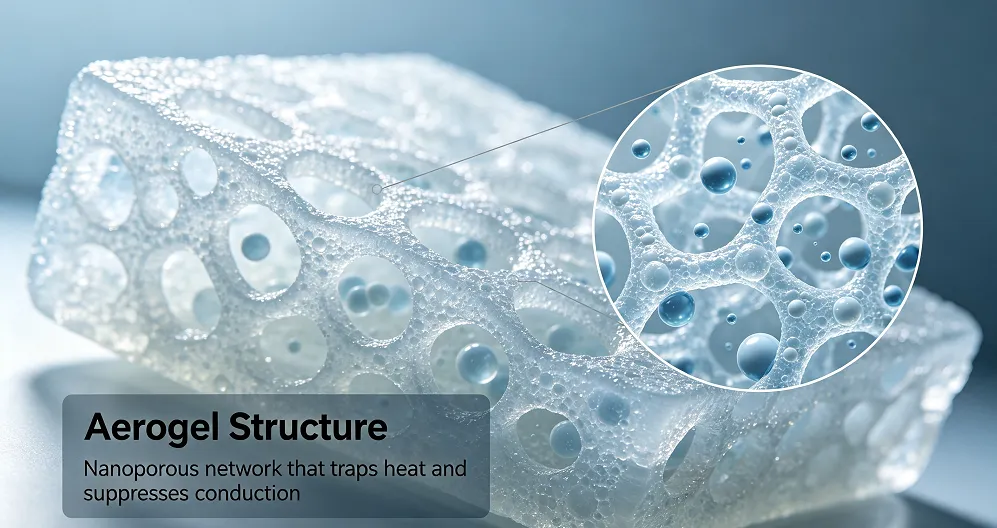
Aerogel Structure
Aerogel's thermal conductivity is among the lowest of any known solid material. This is due to several factors working together.
The Knudsen effect is the primary mechanism behind aerogel's insulation performance. The nanoporous structure—with pore sizes smaller than the mean free path of air molecules at standard pressure—suppresses gas convection and conduction. Air molecules collide with the pore walls more frequently than with each other, limiting the amount of heat they can transfer. In conventional insulation materials, larger pores allow gas molecules to move freely and carry heat, which is why thicker layers are needed to achieve the same insulation performance.
In addition to gas suppression, the solid network of aerogel also limits heat transfer through the material. The tortuous path of the silica network slows down heat conduction through the solid phase, adding another layer of resistance to heat flow. This dual mechanism—suppressing both gas and solid conduction—makes aerogel uniquely effective. Most insulation materials rely on one mechanism or the other. Aerogel combines both, which is why it performs so well.
Doping agents can further reduce radiative heat transfer. By incorporating carbon or other opacifiers, the thermal conductivity can be reduced even further, making aerogel the most efficient solid insulator available. This is particularly important in applications where infrared radiation is a significant factor in heat transfer, such as in high-temperature environments or solar energy systems.
The temperature range of aerogel is also noteworthy. It can withstand temperatures from cryogenic levels up to very high temperatures without significant degradation. This stability means aerogel can be used in applications as diverse as spacecraft thermal protection and building insulation, without the need for different materials for different temperature ranges.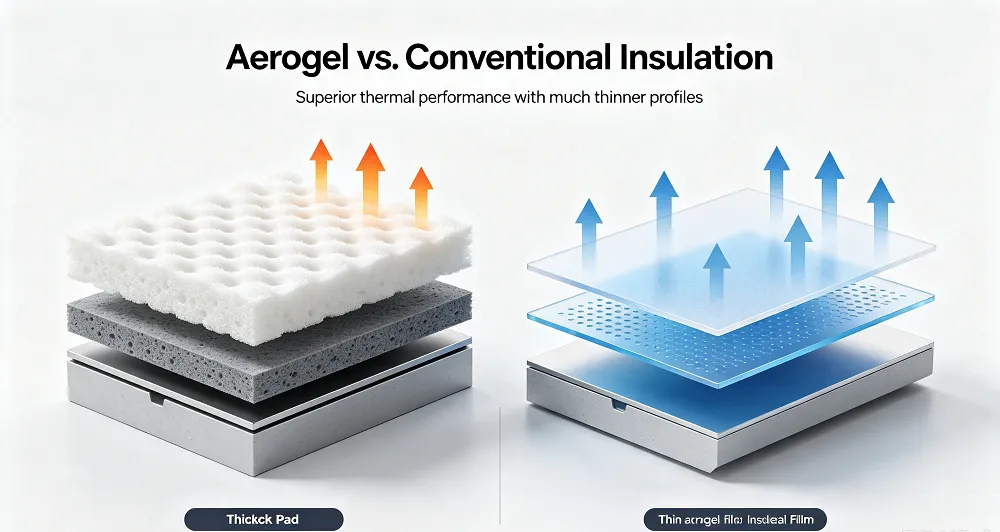
Aerogel vs. Conventional Insulation
The miniaturization challenge is pushing traditional thermal management solutions to their limits. Smartphones, tablets, wearables, and laptops are getting thinner and more powerful. Power density increases, heat accumulates, and conventional solutions take up too much space.
Processors generate more heat per square millimeter than ever before. Batteries need to stay within safe temperature ranges. Displays are sensitive to heat. And users expect devices to be thinner, lighter, and faster with every generation. Traditional solutions—copper heat pipes, graphite sheets, and thermal pads—are reaching their limits. They either can't dissipate enough heat or they take up too much space.
Thin is key. Aerogel insulation film can be extremely thin while still providing significant thermal protection. This is critical for applications where space is at a premium and every millimeter matters. In a smartphone, for example, there may be less than one millimeter of space between the processor and the display. Traditional insulation materials would take up too much of that space or provide insufficient protection. Aerogel fits in that gap and does the job effectively.
Flexible and conformable. Unlike rigid insulation materials, aerogel films can bend, wrap, and conform to the shapes of electronic components. This opens up design possibilities that rigid materials simply cannot offer. Component layouts are not always flat—they curve, stack, and overlap. Aerogel can work with these layouts rather than against them.
Non-conductive and safe. Aerogel is electrically insulating, which means it doesn't short-circuit components. It also has excellent chemical stability and corrosion resistance, making it reliable in demanding environments. In battery applications, where electrical safety is critical, this combination of thermal and electrical properties is especially valuable.
Weight reduction. Aerogel is extremely lightweight—replacing bulkier insulation with aerogel reduces overall device weight. This is especially important for wearable electronics and portable devices where weight directly affects user comfort. A few grams saved here and there can make a noticeable difference in how a device feels and performs.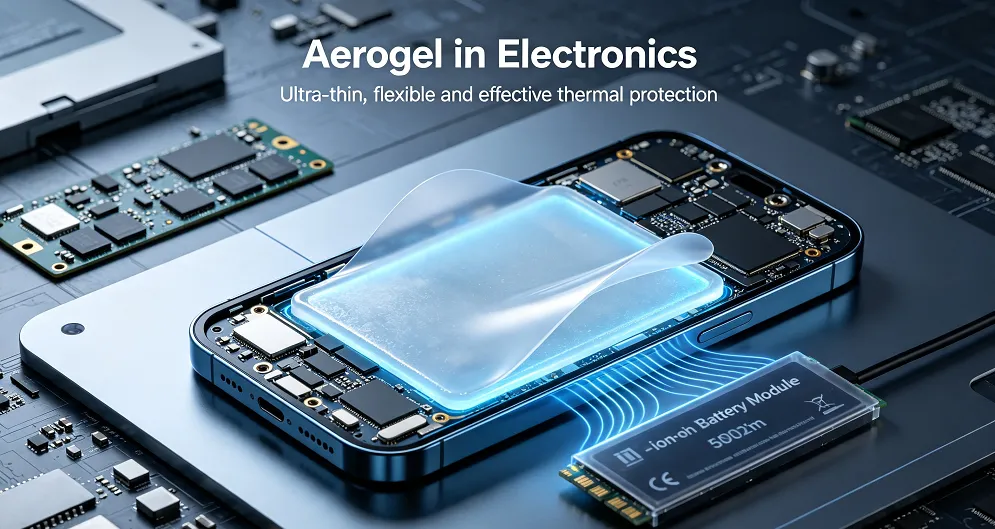
Aerogel is already finding its way into a range of electronic applications where conventional insulation falls short.
In thermal management systems, aerogel sheets are placed between heat-generating components and heat sinks to prevent heat from spreading to sensitive areas. This localized insulation helps maintain component temperature within safe operating limits. Unlike thermal paste, which is designed to conduct heat, aerogel is designed to block it. This makes it useful for isolating hot components from heat-sensitive parts in the same device.
For battery thermal runaway prevention, aerogel serves as an insulating layer in lithium-ion battery packs to prevent heat propagation between cells. If one cell overheats, the aerogel barrier helps contain the heat, reducing the risk of cascading failure. This is critical for electric vehicle batteries, where safety is a top priority. The aerogel layer provides a physical barrier that limits the spread of heat without adding significant weight or bulk.
In display backlight insulation, thin aerogel layers sit behind OLED or LCD screens to isolate heat from backlight drivers. This prevents hot spots from affecting display performance and longevity. OLED displays are particularly sensitive to heat, and thermal management is a key factor in maintaining display quality over time.
Wearable electronics—smartwatches, fitness trackers, and medical monitoring devices—benefit from aerogel's flexibility. The material can conform to curved surfaces and absorb impact, providing both thermal and mechanical protection in a single thin layer. In wearables, where user comfort and device durability are both important, aerogel's combination of properties is particularly valuable.
Mobile devices such as smartphones and tablets are the most obvious beneficiaries. With no extra space to spare, designers can use aerogel where they couldn't use anything else. In the latest thin devices, aerogel is often the only insulation material that fits.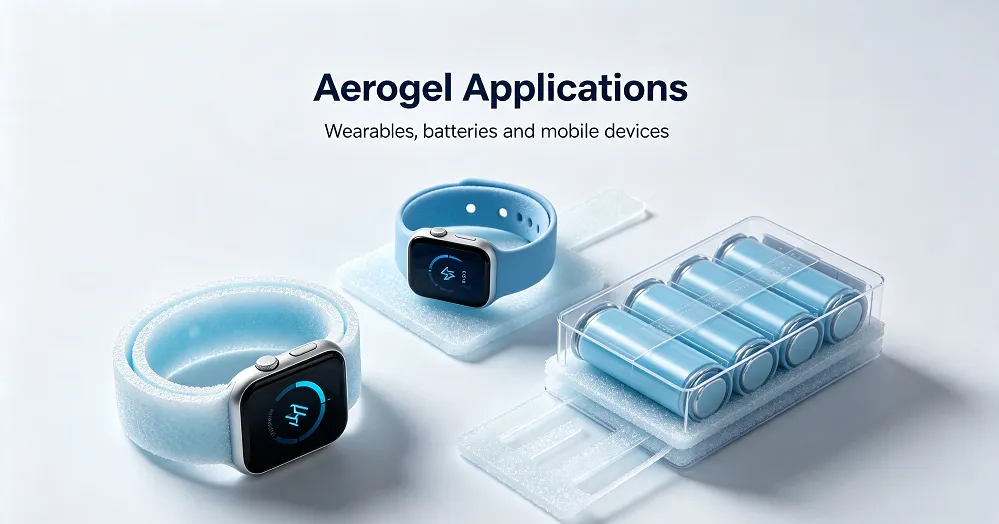
While electronics represent a key growth area for aerogel, the material's unique properties are valuable across many other industries.
In building insulation, aerogel is used for external wall insulation, roof insulation, and window glazing. Its low thermal conductivity and thin profile make it particularly attractive for retrofitting existing buildings where space is limited. In high-performance buildings, aerogel can achieve insulation performance that would require much thicker layers of conventional materials.
The aerospace industry has long been a user of aerogel. Spacecraft thermal protection systems, suit linings, and cryogenic insulation all benefit from aerogel's light weight and exceptional insulating properties. Every kilogram saved in aerospace translates to significant cost savings in fuel and payload capacity. The combination of low density and high insulation performance makes aerogel an ideal choice for applications where weight is critical.
Industrial applications include pipeline insulation, storage tank insulation, and high-temperature furnace insulation. Aerogel's temperature stability—from cryogenic to very high temperatures—makes it suitable for extreme environments where other materials would degrade. In industrial settings, aerogel can reduce heat loss from pipes and tanks, improving energy efficiency and reducing operating costs.
Personal thermal management is another emerging application. Apparel, footwear, and accessory insulation can benefit from aerogel's thinness and flexibility, providing warmth without bulk. Outdoor gear manufacturers are exploring aerogel for jackets, gloves, and footwear, where insulation performance needs to be balanced with flexibility and weight.
In energy systems, aerogel is used for solar energy thermal management, battery insulation, and thermal energy storage. Its ability to withstand high temperatures while providing excellent insulation makes it valuable in both generation and storage applications.
Aerogel also offers acoustic insulation properties. Sound absorption and noise reduction are possible with aerogel's porous structure, adding another layer of functionality beyond thermal insulation. In environments where both thermal and acoustic insulation are needed—such as in automotive interiors or building partitions—aerogel can address both requirements in a single material.
The versatility of aerogel, combined with its unmatched thermal performance, makes it one of the most promising advanced materials available today. As production costs continue to decrease, its applications will likely expand further into mainstream industrial and consumer products.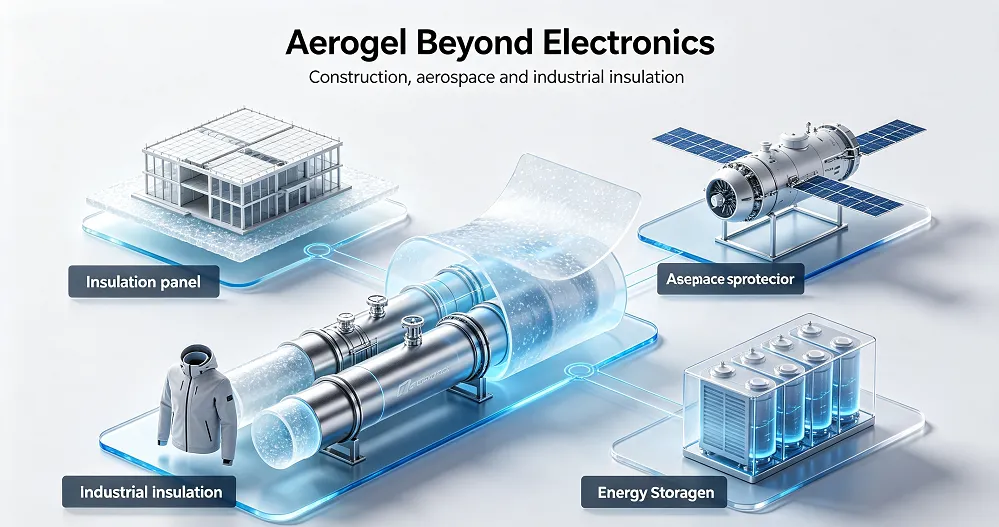
TRUNNANO is a globally recognized chemical material supplier and manufacturer with over 12 years of expertise in providing super high-quality chemicals and nanomaterials. The company has a professional technical department and quality supervision department, a well-equipped laboratory with advanced testing equipment, and a dedicated after-sales customer service center. TRUNNANO supplies high-quality aerogel products in powder, blanket, and film forms for thermal insulation in electronics, construction, aerospace, and industrial applications. The company serves clients across more than 50 countries and offers comprehensive technical support, from material selection to application guidance. If you are looking for high-quality aerogel for your application, please feel free to contact us.
Enter aerogel. Often called "frozen smoke," aerogel is the lightest solid material on Earth. It is also one of the best thermal insulators ever created. A thin layer of aerogel can block heat transfer more effectively than insulation many times its thickness.
But here's the real question: why is aerogel so good at keeping heat out, and how does it work in the tight spaces inside electronic devices? The answer lies in its unique structure—a nanoporous network that traps heat at the molecular level while taking up almost no space. For engineers designing next-generation electronics, aerogel is not just an improvement—it's a fundamental shift in what thermal management can achieve.
Aerogel
What Is Aerogel?
Aerogel is a synthetic porous material derived from a gel where the liquid component is replaced with gas. The result is a solid with extremely low density—up to 99.8% of aerogel is air, yet it maintains structural integrity. The most common form is silica aerogel, which appears translucent with a characteristic bluish tint due to Rayleigh scattering.
Aerogel is available in various forms for practical applications, including flexible sheets or films. This flexibility makes it particularly suitable for use in electronic devices where surfaces are not always flat, and insulation needs to conform to different shapes. Unlike traditional rigid insulation materials, aerogel film can wrap around components and fit into tight spaces without cracking or losing effectiveness.
The material is chemically stable, resistant to corrosion and oxidation. In high-temperature environments, aerogel maintains its structural integrity—a property that makes it valuable not just for consumer electronics but for aerospace, industrial, and energy applications as well. Its chemical inertness means it doesn't react with most substances, adding to its reliability in demanding environments.
Mechanically, aerogel has lower hardness but good toughness and plasticity. It can withstand some mechanical load, and its shock absorption and sound insulation properties make it useful in applications beyond thermal management. The combination of thermal, acoustic, and mechanical properties makes aerogel a multifunctional material—one that can solve multiple problems in a single thin layer.
Aerogel Structure
Why Aerogel Is an Unbeatable Thermal Insulator
Aerogel's thermal conductivity is among the lowest of any known solid material. This is due to several factors working together.
The Knudsen effect is the primary mechanism behind aerogel's insulation performance. The nanoporous structure—with pore sizes smaller than the mean free path of air molecules at standard pressure—suppresses gas convection and conduction. Air molecules collide with the pore walls more frequently than with each other, limiting the amount of heat they can transfer. In conventional insulation materials, larger pores allow gas molecules to move freely and carry heat, which is why thicker layers are needed to achieve the same insulation performance.
In addition to gas suppression, the solid network of aerogel also limits heat transfer through the material. The tortuous path of the silica network slows down heat conduction through the solid phase, adding another layer of resistance to heat flow. This dual mechanism—suppressing both gas and solid conduction—makes aerogel uniquely effective. Most insulation materials rely on one mechanism or the other. Aerogel combines both, which is why it performs so well.
Doping agents can further reduce radiative heat transfer. By incorporating carbon or other opacifiers, the thermal conductivity can be reduced even further, making aerogel the most efficient solid insulator available. This is particularly important in applications where infrared radiation is a significant factor in heat transfer, such as in high-temperature environments or solar energy systems.
The temperature range of aerogel is also noteworthy. It can withstand temperatures from cryogenic levels up to very high temperatures without significant degradation. This stability means aerogel can be used in applications as diverse as spacecraft thermal protection and building insulation, without the need for different materials for different temperature ranges.
Aerogel vs. Conventional Insulation
Why Electronics Need Aerogel
The miniaturization challenge is pushing traditional thermal management solutions to their limits. Smartphones, tablets, wearables, and laptops are getting thinner and more powerful. Power density increases, heat accumulates, and conventional solutions take up too much space.
Processors generate more heat per square millimeter than ever before. Batteries need to stay within safe temperature ranges. Displays are sensitive to heat. And users expect devices to be thinner, lighter, and faster with every generation. Traditional solutions—copper heat pipes, graphite sheets, and thermal pads—are reaching their limits. They either can't dissipate enough heat or they take up too much space.
Thin is key. Aerogel insulation film can be extremely thin while still providing significant thermal protection. This is critical for applications where space is at a premium and every millimeter matters. In a smartphone, for example, there may be less than one millimeter of space between the processor and the display. Traditional insulation materials would take up too much of that space or provide insufficient protection. Aerogel fits in that gap and does the job effectively.
Flexible and conformable. Unlike rigid insulation materials, aerogel films can bend, wrap, and conform to the shapes of electronic components. This opens up design possibilities that rigid materials simply cannot offer. Component layouts are not always flat—they curve, stack, and overlap. Aerogel can work with these layouts rather than against them.
Non-conductive and safe. Aerogel is electrically insulating, which means it doesn't short-circuit components. It also has excellent chemical stability and corrosion resistance, making it reliable in demanding environments. In battery applications, where electrical safety is critical, this combination of thermal and electrical properties is especially valuable.
Weight reduction. Aerogel is extremely lightweight—replacing bulkier insulation with aerogel reduces overall device weight. This is especially important for wearable electronics and portable devices where weight directly affects user comfort. A few grams saved here and there can make a noticeable difference in how a device feels and performs.
Aerogel in electronics — ultra-thin, flexible, and effective.
Where Aerogel Is Used in Electronics
Aerogel is already finding its way into a range of electronic applications where conventional insulation falls short.
In thermal management systems, aerogel sheets are placed between heat-generating components and heat sinks to prevent heat from spreading to sensitive areas. This localized insulation helps maintain component temperature within safe operating limits. Unlike thermal paste, which is designed to conduct heat, aerogel is designed to block it. This makes it useful for isolating hot components from heat-sensitive parts in the same device.
For battery thermal runaway prevention, aerogel serves as an insulating layer in lithium-ion battery packs to prevent heat propagation between cells. If one cell overheats, the aerogel barrier helps contain the heat, reducing the risk of cascading failure. This is critical for electric vehicle batteries, where safety is a top priority. The aerogel layer provides a physical barrier that limits the spread of heat without adding significant weight or bulk.
In display backlight insulation, thin aerogel layers sit behind OLED or LCD screens to isolate heat from backlight drivers. This prevents hot spots from affecting display performance and longevity. OLED displays are particularly sensitive to heat, and thermal management is a key factor in maintaining display quality over time.
Wearable electronics—smartwatches, fitness trackers, and medical monitoring devices—benefit from aerogel's flexibility. The material can conform to curved surfaces and absorb impact, providing both thermal and mechanical protection in a single thin layer. In wearables, where user comfort and device durability are both important, aerogel's combination of properties is particularly valuable.
Mobile devices such as smartphones and tablets are the most obvious beneficiaries. With no extra space to spare, designers can use aerogel where they couldn't use anything else. In the latest thin devices, aerogel is often the only insulation material that fits.
Aerogel applications — wearables, batteries, and mobile devices.
Beyond Electronics: Other Applications
While electronics represent a key growth area for aerogel, the material's unique properties are valuable across many other industries.
In building insulation, aerogel is used for external wall insulation, roof insulation, and window glazing. Its low thermal conductivity and thin profile make it particularly attractive for retrofitting existing buildings where space is limited. In high-performance buildings, aerogel can achieve insulation performance that would require much thicker layers of conventional materials.
The aerospace industry has long been a user of aerogel. Spacecraft thermal protection systems, suit linings, and cryogenic insulation all benefit from aerogel's light weight and exceptional insulating properties. Every kilogram saved in aerospace translates to significant cost savings in fuel and payload capacity. The combination of low density and high insulation performance makes aerogel an ideal choice for applications where weight is critical.
Industrial applications include pipeline insulation, storage tank insulation, and high-temperature furnace insulation. Aerogel's temperature stability—from cryogenic to very high temperatures—makes it suitable for extreme environments where other materials would degrade. In industrial settings, aerogel can reduce heat loss from pipes and tanks, improving energy efficiency and reducing operating costs.
Personal thermal management is another emerging application. Apparel, footwear, and accessory insulation can benefit from aerogel's thinness and flexibility, providing warmth without bulk. Outdoor gear manufacturers are exploring aerogel for jackets, gloves, and footwear, where insulation performance needs to be balanced with flexibility and weight.
In energy systems, aerogel is used for solar energy thermal management, battery insulation, and thermal energy storage. Its ability to withstand high temperatures while providing excellent insulation makes it valuable in both generation and storage applications.
Aerogel also offers acoustic insulation properties. Sound absorption and noise reduction are possible with aerogel's porous structure, adding another layer of functionality beyond thermal insulation. In environments where both thermal and acoustic insulation are needed—such as in automotive interiors or building partitions—aerogel can address both requirements in a single material.
The versatility of aerogel, combined with its unmatched thermal performance, makes it one of the most promising advanced materials available today. As production costs continue to decrease, its applications will likely expand further into mainstream industrial and consumer products.
Aerogel beyond electronics — construction, aerospace, and industrial insulation.
Supplier
TRUNNANO is a globally recognized chemical material supplier and manufacturer with over 12 years of expertise in providing super high-quality chemicals and nanomaterials. The company has a professional technical department and quality supervision department, a well-equipped laboratory with advanced testing equipment, and a dedicated after-sales customer service center. TRUNNANO supplies high-quality aerogel products in powder, blanket, and film forms for thermal insulation in electronics, construction, aerospace, and industrial applications. The company serves clients across more than 50 countries and offers comprehensive technical support, from material selection to application guidance. If you are looking for high-quality aerogel for your application, please feel free to contact us.
Leave a Reply
Your email address will not be published.Required fields are marked. *