
By Vincy | 20 August 2025 | 0 Comments
Calcium Hexaboride (CaB6): A Multifaceted Compound Bridging Fundamental Science and Advanced Technology
The realm of advanced inorganic materials is replete with compounds that exhibit remarkable physical and chemical properties, often serving as cornerstones for technological innovation. Among these, Calcium Hexaboride (CaB6) stands out as a material of immense scientific intrigue and practical utility. With its unique crystal structure, exceptional hardness, and intriguing electronic properties, CaB6 has carved a niche for itself in diverse fields ranging from abrasives and refractory materials to magnetoelectronics and quantum computing research. This article delves into the multifaceted nature of CaB6, exploring its synthesis, structural attributes, electronic behavior, and emerging applications.
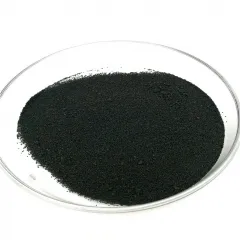
Calcium Hexaboride powder
1. Synthesis and Crystal Structure of Calcium Hexaboride
1.1 Synthesis Methods
The preparation of high-purity CaB6 is crucial for exploiting its full potential in various applications. Several synthesis routes have been developed, each with its own set of advantages and limitations.
1.1.1. Solid-State Reaction: The most common method involves the direct reaction between calcium and boron powders at high temperatures, typically above 1200°C, under an inert atmosphere to prevent oxidation. This approach is straightforward but requires careful control of stoichiometry and reaction conditions to achieve phase purity.
1.1.2. Carbothermal Reduction: Another effective technique is the carbothermal reduction of calcium carbonate (CaCO3) and boron oxide (B2O3) in the presence of carbon. This method allows for better control over particle size and morphology, making it suitable for producing nanoscale CaB6 particles.
1.1.3. Sol-Gel Process: For applications requiring uniform dispersion and fine control over particle size, the sol-gel process offers an attractive alternative. By hydrolyzing and condensing metal alkoxides in the presence of boron precursors, one can obtain a gel that, upon calcination, yields CaB6 with high surface area and porosity.
1.2 Crystal Structure
CaB6 crystallizes in a cubic structure belonging to the space group Pm3m, characterized by a simple cubic lattice of calcium ions (Ca2+) surrounded by an intricate framework of boron octahedra (B62-). Each Ca2+ ion is coordinated to 12 boron atoms, forming a highly symmetric and stable structure.
1.2.1. Boron Framework: The boron atoms are arranged in octahedral clusters, with each cluster sharing edges with adjacent clusters to create a three-dimensional network. This arrangement imparts exceptional mechanical strength and thermal stability to CaB6.
1.2.2. Electronic Configuration: The electronic configuration of CaB6 is particularly interesting due to the presence of partially filled d-orbitals on calcium and the delocalized π-electrons within the boron framework. This combination leads to unique electronic properties, including semiconducting behavior with a narrow bandgap and potential for magnetism under certain conditions.
2. Physical and Chemical Properties of Calcium Hexaboride
2.1 Mechanical Properties
CaB6 is renowned for its outstanding mechanical properties, making it an ideal candidate for applications requiring high hardness and wear resistance.
2.1.1. Hardness: With a Vickers hardness ranging from 27 to 35 GPa, CaB6 surpasses many traditional hard materials like silicon carbide (SiC) and tungsten carbide (WC) in certain aspects. Its hardness arises from the strong covalent bonding within the boron framework and the rigid coordination environment around calcium ions.
2.1.2. Thermal Stability: CaB6 exhibits excellent thermal stability, maintaining its structural integrity up to temperatures exceeding 2000°C. This property, combined with its high melting point (~2200°C), makes it suitable for use in high-temperature environments, such as in aerospace and metallurgical applications.
2.2 Electronic Properties
The electronic properties of CaB6 are equally fascinating, with implications for both fundamental physics and applied electronics.
2.2.1. Semiconducting Behavior: Despite being composed of metallic elements, CaB6 behaves as a semiconductor with a narrow bandgap (~0.5 eV). This semiconducting nature is attributed to the complex interplay between the localized d-electrons on calcium and the delocalized π-electrons in the boron framework, leading to unique charge transport mechanisms.
2.2.2. Magnetic Properties: Under specific conditions, such as doping with magnetic impurities or applying external pressure, CaB6 can exhibit magnetic ordering. This phenomenon has sparked considerable interest in the field of spintronics, where the manipulation of electron spin is exploited for information processing and storage.
3. Emerging Applications of Calcium Hexaboride
3.1 Abrasives and Refractory Materials
Given its exceptional hardness and thermal stability, CaB6 finds widespread use as an abrasive material in grinding and polishing applications. It is also employed as a refractory lining in high-temperature furnaces and reactors, where its resistance to chemical attack and thermal shock is highly valued.
3.2 Magnetoelectronics and Spintronics
The semiconducting and magnetic properties of CaB6 make it an attractive material for magnetoelectronic devices, such as spin valves and magnetic tunnel junctions. These devices leverage the spin of electrons to achieve faster and more energy-efficient information processing compared to traditional charge-based electronics.
3.3 Quantum Computing Research
In recent years, CaB6 has emerged as a potential candidate for quantum computing applications. Its unique electronic structure and the ability to host exotic quantum states, such as topological insulators and superconductors under certain conditions, have prompted researchers to explore its use in quantum bits (qubits) and quantum sensors.
3.4 Neutron Detectors
The high cross-section for neutron capture by boron makes CaB6 an effective material for neutron detection. Neutron detectors based on CaB6 are used in nuclear reactors, security applications, and scientific research to monitor neutron flux and ensure safe operation.
4. Challenges and Future Directions
Despite its promising properties and diverse applications, the widespread adoption of CaB6 faces several challenges.
4.1 Synthesis Challenges
Achieving high-purity CaB6 with controlled particle size and morphology remains a significant challenge, particularly for nanoscale applications. Developing scalable and cost-effective synthesis methods that can produce CaB6 with tailored properties is essential for its broader utilization.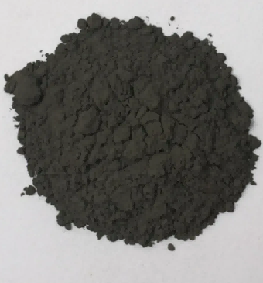
Calcium Hexaboride powder
4.2 Understanding Fundamental Properties
While the basic properties of CaB6 are well-characterized, a deeper understanding of its electronic, magnetic, and quantum behaviors is necessary to unlock its full potential. Advanced theoretical models and experimental techniques, such as angle-resolved photoemission spectroscopy (ARPES) and scanning tunneling microscopy (STM), are crucial for probing the intricate electronic structure of CaB6.
4.3 Integration into Devices
Integrating CaB6 into practical devices poses engineering challenges, particularly in terms of compatibility with existing materials and fabrication processes. Developing robust interfaces and hybrid structures that leverage the unique properties of CaB6 while maintaining device performance is an active area of research.
In conclusion, Calcium Hexaboride (CaB6) is a material of remarkable diversity, bridging fundamental science and advanced technology. Its exceptional mechanical and electronic properties, coupled with emerging applications in magnetoelectronics, quantum computing, and neutron detection, underscore its importance in the modern materials landscape. As research continues to unravel the mysteries of CaB6 and overcome existing challenges, its impact on technology and society is poised to grow significantly, opening new frontiers in science and engineering.
5. Supplier
TRUNNANO is a globally recognized Calcium Hexaboride manufacturer and supplier of compounds with more than 12 years of expertise in the highest quality nanomaterials and other chemicals. The company develops a variety of powder materials and chemicals. Provide OEM service. If you need high quality Calcium Hexaboride, please feel free to contact us. You can click on the product to contact us. (sales5@nanotrun.com)
Tags: Calcium Hexaboride, Calcium Hexaboride powder CaB6 powder
Calcium Hexaboride powder
1. Synthesis and Crystal Structure of Calcium Hexaboride
1.1 Synthesis Methods
The preparation of high-purity CaB6 is crucial for exploiting its full potential in various applications. Several synthesis routes have been developed, each with its own set of advantages and limitations.
1.1.1. Solid-State Reaction: The most common method involves the direct reaction between calcium and boron powders at high temperatures, typically above 1200°C, under an inert atmosphere to prevent oxidation. This approach is straightforward but requires careful control of stoichiometry and reaction conditions to achieve phase purity.
1.1.2. Carbothermal Reduction: Another effective technique is the carbothermal reduction of calcium carbonate (CaCO3) and boron oxide (B2O3) in the presence of carbon. This method allows for better control over particle size and morphology, making it suitable for producing nanoscale CaB6 particles.
1.1.3. Sol-Gel Process: For applications requiring uniform dispersion and fine control over particle size, the sol-gel process offers an attractive alternative. By hydrolyzing and condensing metal alkoxides in the presence of boron precursors, one can obtain a gel that, upon calcination, yields CaB6 with high surface area and porosity.
1.2 Crystal Structure
CaB6 crystallizes in a cubic structure belonging to the space group Pm3m, characterized by a simple cubic lattice of calcium ions (Ca2+) surrounded by an intricate framework of boron octahedra (B62-). Each Ca2+ ion is coordinated to 12 boron atoms, forming a highly symmetric and stable structure.
1.2.1. Boron Framework: The boron atoms are arranged in octahedral clusters, with each cluster sharing edges with adjacent clusters to create a three-dimensional network. This arrangement imparts exceptional mechanical strength and thermal stability to CaB6.
1.2.2. Electronic Configuration: The electronic configuration of CaB6 is particularly interesting due to the presence of partially filled d-orbitals on calcium and the delocalized π-electrons within the boron framework. This combination leads to unique electronic properties, including semiconducting behavior with a narrow bandgap and potential for magnetism under certain conditions.
2. Physical and Chemical Properties of Calcium Hexaboride
2.1 Mechanical Properties
CaB6 is renowned for its outstanding mechanical properties, making it an ideal candidate for applications requiring high hardness and wear resistance.
2.1.1. Hardness: With a Vickers hardness ranging from 27 to 35 GPa, CaB6 surpasses many traditional hard materials like silicon carbide (SiC) and tungsten carbide (WC) in certain aspects. Its hardness arises from the strong covalent bonding within the boron framework and the rigid coordination environment around calcium ions.
2.1.2. Thermal Stability: CaB6 exhibits excellent thermal stability, maintaining its structural integrity up to temperatures exceeding 2000°C. This property, combined with its high melting point (~2200°C), makes it suitable for use in high-temperature environments, such as in aerospace and metallurgical applications.
2.2 Electronic Properties
The electronic properties of CaB6 are equally fascinating, with implications for both fundamental physics and applied electronics.
2.2.1. Semiconducting Behavior: Despite being composed of metallic elements, CaB6 behaves as a semiconductor with a narrow bandgap (~0.5 eV). This semiconducting nature is attributed to the complex interplay between the localized d-electrons on calcium and the delocalized π-electrons in the boron framework, leading to unique charge transport mechanisms.
2.2.2. Magnetic Properties: Under specific conditions, such as doping with magnetic impurities or applying external pressure, CaB6 can exhibit magnetic ordering. This phenomenon has sparked considerable interest in the field of spintronics, where the manipulation of electron spin is exploited for information processing and storage.
3. Emerging Applications of Calcium Hexaboride
3.1 Abrasives and Refractory Materials
Given its exceptional hardness and thermal stability, CaB6 finds widespread use as an abrasive material in grinding and polishing applications. It is also employed as a refractory lining in high-temperature furnaces and reactors, where its resistance to chemical attack and thermal shock is highly valued.
3.2 Magnetoelectronics and Spintronics
The semiconducting and magnetic properties of CaB6 make it an attractive material for magnetoelectronic devices, such as spin valves and magnetic tunnel junctions. These devices leverage the spin of electrons to achieve faster and more energy-efficient information processing compared to traditional charge-based electronics.
3.3 Quantum Computing Research
In recent years, CaB6 has emerged as a potential candidate for quantum computing applications. Its unique electronic structure and the ability to host exotic quantum states, such as topological insulators and superconductors under certain conditions, have prompted researchers to explore its use in quantum bits (qubits) and quantum sensors.
3.4 Neutron Detectors
The high cross-section for neutron capture by boron makes CaB6 an effective material for neutron detection. Neutron detectors based on CaB6 are used in nuclear reactors, security applications, and scientific research to monitor neutron flux and ensure safe operation.
4. Challenges and Future Directions
Despite its promising properties and diverse applications, the widespread adoption of CaB6 faces several challenges.
4.1 Synthesis Challenges
Achieving high-purity CaB6 with controlled particle size and morphology remains a significant challenge, particularly for nanoscale applications. Developing scalable and cost-effective synthesis methods that can produce CaB6 with tailored properties is essential for its broader utilization.
Calcium Hexaboride powder
While the basic properties of CaB6 are well-characterized, a deeper understanding of its electronic, magnetic, and quantum behaviors is necessary to unlock its full potential. Advanced theoretical models and experimental techniques, such as angle-resolved photoemission spectroscopy (ARPES) and scanning tunneling microscopy (STM), are crucial for probing the intricate electronic structure of CaB6.
4.3 Integration into Devices
Integrating CaB6 into practical devices poses engineering challenges, particularly in terms of compatibility with existing materials and fabrication processes. Developing robust interfaces and hybrid structures that leverage the unique properties of CaB6 while maintaining device performance is an active area of research.
In conclusion, Calcium Hexaboride (CaB6) is a material of remarkable diversity, bridging fundamental science and advanced technology. Its exceptional mechanical and electronic properties, coupled with emerging applications in magnetoelectronics, quantum computing, and neutron detection, underscore its importance in the modern materials landscape. As research continues to unravel the mysteries of CaB6 and overcome existing challenges, its impact on technology and society is poised to grow significantly, opening new frontiers in science and engineering.
5. Supplier
TRUNNANO is a globally recognized Calcium Hexaboride manufacturer and supplier of compounds with more than 12 years of expertise in the highest quality nanomaterials and other chemicals. The company develops a variety of powder materials and chemicals. Provide OEM service. If you need high quality Calcium Hexaboride, please feel free to contact us. You can click on the product to contact us. (sales5@nanotrun.com)
Tags: Calcium Hexaboride, Calcium Hexaboride powder CaB6 powder
Leave a Reply
Your email address will not be published.Required fields are marked. *