At the forefront of the exploration of advanced materials, transition metal borides are becoming the core material system driving continuous innovation in high-temperature engineering, efficient energy storage, and advanced manufacturing technology. Among them, vanadium boride powder stands out among numerous candidate materials due to its synergistic advantages in physical properties, chemical stability, and mechanical properties. As an atomic crystal with a regular hexagonal crystal structure, VB ₂ powder exhibits high strength, high hardness, excellent electrical and thermal conductivity, as well as outstanding corrosion and oxidation resistance, enabling it to maintain stable performance under extreme temperature, strong corrosive environments, and high mechanical load conditions. Therefore, it has become an indispensable key material in extreme environmental engineering and cutting-edge technology applications.
This article aims to systematically expound the core advantages of VB ₂ powder, by deeply analyzing its microstructure characteristics, key physicochemical properties, and practical applications in multiple high-tech fields, comprehensively comparing its comprehensive competitiveness with traditional materials and other transition metal borides, and revealing the inherent reasons why it is highly valued in academia and industry, providing scientific references and technical selection basis for researchers and engineering practitioners in related fields.
Among numerous advanced ceramic materials, vanadium boride (VB ₂) powder stands out for its excellent ultra-high temperature performance. Its melting point varies depending on the specific purity and synthesis process, usually between 2450 ° C and 2980 ° C, significantly higher than most common materials. By comparison, the melting point of steel is about 1450 ° C, while the melting point of commonly used advanced ceramics, such as silicon carbide,e is only around 2730 ° C. This characteristic enables VB ₂ to rank among the forefront of ultra-high temperature ceramics (UHTCs), maintaining stable morphology and structural integrity even in extreme environments where the vast majority of metals and alloys have melted or even evaporated.
In addition to its excellent high temperature resistance, VB ₂ also exhibits excellent oxidation resistance at temperatures up to 1000 ° C, with a dense protective oxide layer formed on the surface, effectively suppressing the continuous oxidation and degradation of the material at high temperatures. This unique combination of thermal stability and antioxidant properties makes it an ideal choice for extremely high-temperature applications. At present, VB ₂ powder has been widely used in key fields such as metal smelting, aerospace propulsion systems, and high-temperature furnace core components. It has demonstrated irreplaceable material value in environments that must withstand extreme heat loads for a long time.
The hardness of VB ₂ powder is also outstanding, with a Vickers hardness exceeding 35 GPa (equivalent to about 2800 kg/mm ²), which is higher than common wear-resistant materials such as tungsten carbide (about 20-25 GPa) and boron nitride (about 30 GPa). Therefore, it is very suitable for coatings or components that require high wear resistance.
When used as a coating, VB ₂ can reduce the friction coefficient to between 0.4 and 0.6, significantly reducing wear between moving parts. At the same time, it also has good resistance to molten metal erosion, which is particularly important in scenarios such as casting, high-temperature metal processing, and semiconductor manufacturing.
Unlike organic coatings and soft metal coatings that are prone to softening or aging, VB ₂ - based coatings can maintain high hardness and excellent wear resistance even in high-temperature environments, making them stable and reliable in long-term use under high loads and stresses.
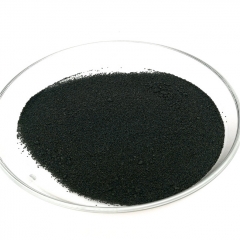
Vanadium Boride VB2 Powder
Compared to most insulating ceramic materials, VB ₂ powder has excellent electrical and thermal conductivity properties. This unique performance combination makes it stand out among numerous specialty materials. Its density is about 5.1 g/cm ³, achieving a good balance between structural density and functional conductivity.
The conductivity of the material originates from the metallic bond characteristics present in the crystal structure, which enables VB ₂ to maintain the typical high hardness and high thermal stability of ceramic materials while still possessing excellent electrical and thermal conductivity. For example, in conductive ceramic composite materials, adding VB ₂ powder can significantly improve the overall conductivity without affecting its mechanical strength. In addition, its excellent thermal conductivity also makes it suitable for thermal management components in high-temperature systems (such as heat exchangers), where efficient heat transfer is crucial for preventing system overheating and ensuring long-term stable material operation.
The unique combination of VB₂ powder’s properties translates to a wide range of applications across diverse industries, from energy storage to advanced manufacturing. Its adaptability to different processing methods—including sintering, coating, and composite fabrication—further amplifies its utility, making it a versatile material for both established and emerging technologies.
When developing higher-performance energy storage systems, VB ₂ powder, as a promising new electrode material, is receiving increasing attention. Used in alkaline batteries, it has a stronger ability to store and release electricity than traditional electrodes because it can undergo multi-electron oxidation reactions.
Unlike traditional electrodes that rely solely on single-electron transfer for energy storage, VB ₂, as an anode, when used in conjunction with a carbon air cathode, can achieve multi-electron level redox reactions, significantly increasing the overall energy storage capacity of the battery. This feature makes VB ₂ a promising alternative to lithium-ion batteries, especially suitable for large-scale energy storage scenarios that require high cost, safety, and cycle life, such as grid energy storage.
As a key ceramic material resistant to ultra-high temperatures, VB ₂ powder is specifically used to create structural components that require operation in extreme environments. It combines high melting point, excellent thermal stability, and strong mechanical strength, making it particularly suitable for use in rocket nozzles, the forefront of hypersonic aircraft, and core components of industrial high-temperature furnaces. After firing VB ₂ into dense ceramic materials or composites with silicon carbide, carbon fiber, etc., the components formed by it can maintain structural integrity even under extremely high temperature and pressure conditions, and their performance far exceeds traditional refractory materials. For example, in the aerospace field, components made of VB ₂ can withstand extremely high temperatures exceeding 2000 ° C during hypersonic flight without deformation or damage, and have very high reliability.
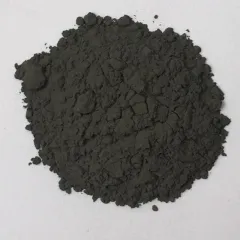
Vanadium VB2
As an important ultra-high temperature ceramic material, VB ₂ powder is used to manufacture structural components in extreme environments. Its high melting point, excellent thermal stability, and mechanical strength make it an ideal choice for applications such as rocket nozzles, hypersonic aircraft leading edges, and high-temperature furnace components. By sintering into dense ceramics or composites with SiC, carbon fibers, etc., VB ₂ - based materials can maintain structural integrity under extremely high thermal and mechanical loads, and their performance far exceeds traditional refractory materials. For example, in the aerospace field, VB ₂ - based components can withstand aerodynamic heating exceeding 2000 ° C without deformation or degradation. Compared with alumina or magnesia-based refractory materials, VB ₂ - based refractory materials have higher thermal efficiency and longer service life in industrial furnaces.
VB ₂ powder is an important raw material for manufacturing conductive ceramics and semiconductor thin films. Because it can conduct electricity and easily fuse with other ceramic materials, it is particularly suitable for improving the performance of electronic ceramics, such as in sensors, actuators, and electronic devices that need to work at high temperatures.
For example, with the addition of VB ₂ ceramic sensors, they can work stably even in high temperature environments of 1000 ° C without affecting measurement accuracy. They can be fully used for monitoring high-temperature processes in factories or in automotive exhaust systems. In addition, VB ₂ powder is also used to prepare semiconductor thin films. With its advantages of high temperature resistance and good conductivity, it can make electronic components more reliable and durable under high temperature conditions.
Compared with other high-performance materials, VB ₂ powder exhibits multiple comprehensive advantages, making it a more competitive choice in many cutting-edge applications:
Compared to tungsten carbide, VB ₂ not only has a higher melting point range (2450-2980 ° C), but also exhibits better oxidation resistance in high temperature environments. Although tungsten carbide has outstanding room temperature wear resistance, it is prone to oxidation softening under sustained high temperature conditions; VB ₂ can maintain structural stability and high hardness in environments exceeding 1000 ° C, making it more reliable in applications such as high-temperature wear-resistant coatings and corrosion-resistant components.
Compared with silicon carbide, VB ₂ compensates for the shortcomings of traditional structural ceramics in terms of conductivity. As a commonly used ultra-high temperature ceramic, silicon carbide has good thermal stability and mechanical strength, but its inherent insulation properties limit its application in conductive scenarios. VB ₂ combines the hardness, wear resistance, and significant electrical and thermal conductivity of ceramic-like materials, which can meet the higher requirements for comprehensive material performance in fields such as electronic devices and high-temperature electrodes.
Compared to metal materials such as high-temperature alloys, VB ₂ maintains similar high-temperature strength while having lower density (about 5.1 g/cm ³) and better resistance to high-temperature oxidation and corrosion. This lightweight and durable feature is of great value in weight-sensitive fields such as aerospace propulsion systems, hypersonic aircraft thermal protection components, and high-efficiency automotive engine components.
Storage and Handling Precautions
Proper storage and handling procedures are crucial to ensure the excellent performance of VB ₂ powder. Due to its sensitivity to moisture, this material is prone to particle aggregation caused by moisture absorption, which in turn affects its dispersion uniformity and subsequent processing performance. Therefore, it must be stored in a vacuum-sealed original packaging and placed in a cool, dry, dust-free environment, strictly isolated from air and moisture. During long-term storage, it is also necessary to avoid mechanical stresses such as vibration and compression to prevent powder from clumping due to pressure.
When operating VB ₂ powder, appropriate personal protective equipment should be worn, including dust masks, goggles, and gloves, to avoid inhaling or coming into contact with fine particles. If transfer or weighing is required, it is recommended to conduct it in a glove box protected by dry air or inert gas to minimize environmental interference.
Through scientific storage and standardized operation, VB ₂ powder can maintain its stable physical and chemical properties for a long time, ensuring consistent and reliable performance in final applications such as coating preparation, ceramic sintering, electrode materials, etc.
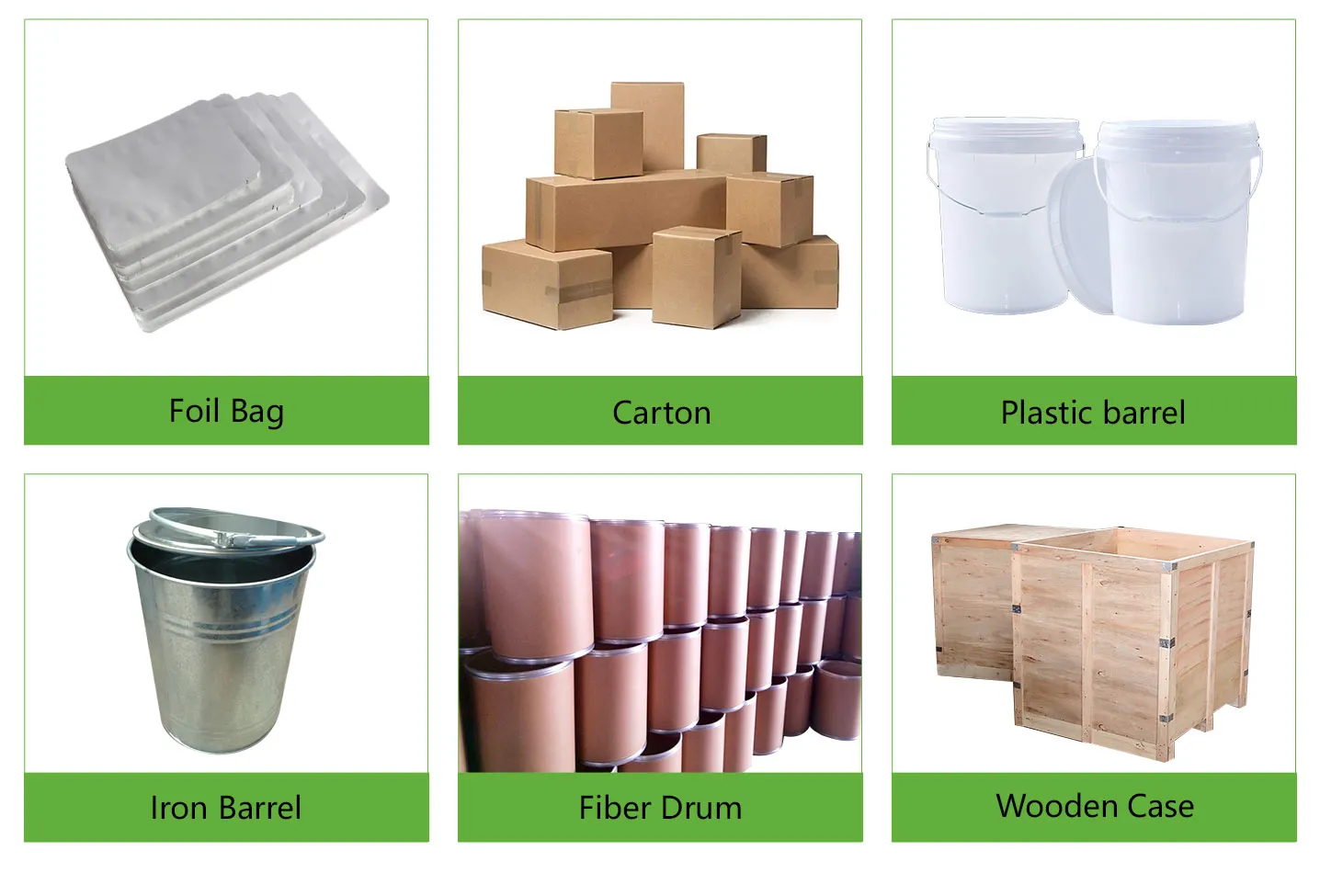
Packing & Shipping of Vanadium Boride VB2 powder
Vanadium boride (VB₂) powder stands out as a versatile, high-performance material that offers a unique combination of ultra-high melting point, superior hardness, excellent conductivity, and corrosion resistance. Its diverse applications across energy storage, advanced coatings, and ultra-high-temperature Vanadium boride (VB ₂) powder are the ultimate material solutions for extreme challenges. It combines ultra-high melting point, ultimate hardness, metalloid conductivity, and excellent chemical stability, breaking the boundaries of traditional material properties.
We provide customizable powder products ranging from high purity to nanoscale, combined with advanced synthesis processes to ensure consistent performance and large-scale supply. Choosing VB ₂ powder is not only about choosing a material, but also about choosing a future-oriented technological path, providing a solid, reliable, and efficient performance foundation for your cutting-edge design and demanding applications.
supplier
Luoyang Tongrun Nano Technology Co., Ltd. (TRUNNANO), Luoyang City, Henan Province, China, is a reliable and high-quality global chemical material supplier and manufacturer. It has more than 12 years of experience providing ultra-high quality chemicals and nanotechnology materials, including Vanadium Boride VB2 Powder, nitride powder, Hexagonal boron nitride powder, sulfide powder, and 3D printing powder. If you are looking for high-quality and cost-effective Vanadium Boride VB2 Powder, you are welcome to contact us or inquirea any time.