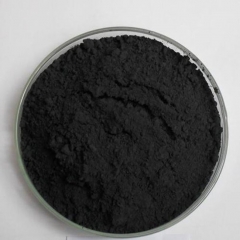
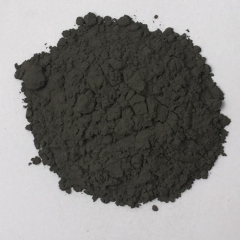
Product name: Vanadium boride
CAS number: 12007-37-3
MDL number:MFCD00049697
EINECS:234-509-6
PubChem:24860374
Molecular formula: VB2
Density: 5.1 g/ml,25/4℃
Melting point: 2450 °C
Hardness: 2800 (kg/mm2)
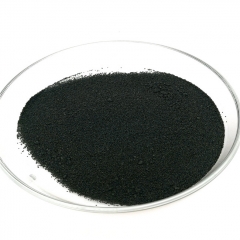
Vanadium Boride VB2 Powder CAS 12007-37-3
About Vanadium Boride VB2 Powder:
Vanadium boride, formula VB2, is a compound consisting of vanadium and boron, usually as a black powder or lump. It is a transition metal boride, belongs to the VB group, and is a kind of high-hardness material.
Vanadium boride oxidizes easily in air, so it must usually be stored in an inert gas or vacuum environment. It has an extremely high melting point and hardness, higher than the hardness of standard ceramic materials like silicon carbide and boron Nitride. The strength and hardness of vanadium boride decrease with the increase in temperature. However, it can still maintain a fairly high hardness at temperatures above its melting point of 200℃.
It has high melting points and hardness, higher than the hardness of other common ceramic materials like silicon carbide and boron Nitride. Due to its high hardness and melting point, it is an ideal wear-resistant material that can manufacture high-temperature bearings, high-speed cutting tools, etc. In addition, vanadium boride can also be used to create protective coatings to enhance the material's corrosion and oxidation resistance.
Feel free to send an inquiry to get the latest vanadium boride price if you would like to buy Vanadium Boride Powder in bulk.
How is Vanadium Boride VB2 Powder produced?
Powder metallurgy process
Powder metallurgy is a commonly used method to prepare vanadium boride. The method is to mix vanadium pentoxide and boron powder according to a certain proportion and then sintering at high temperatures under vacuum or inert gas protection. In this process, vanadium pentoxide reacts with boron to form vanadium boride crystals. At the same time, some unreacted vanadium pentoxide and boron can be completely reacted through diffusion and recrystallization processes and finally obtain dense vanadium boride materials.
The specific steps of powder metallurgy are as follows:
(1) Mixing vanadium pentoxide and boron powder according to a certain proportion to obtain mixed powder;
(2) The mixed powder is loaded into the graphite mold and sintered at high temperature under the protection of vacuum or inert gas, and the temperature is generally controlled between 1000 and 1100℃;
(3) In the process of high-temperature sintering, vanadium pentoxide and boron react to form vanadium boride crystals;
(4) The unreacted vanadium pentoxide and boron are completely reacted through the heat preservation and cooling process, and finally, a dense vanadium boride material is obtained.
Carbothermal reduction method:
Carbothermal reduction is a method to prepare vanadium boride by using the reducibility of carbon. The method uses carbon to reduce vanadium pentoxide to vanadium metal at high temperatures and then react with boron to produce vanadium boride.
The specific steps of carbothermal reduction are as follows:
(1) Vanadium pentoxide and carbon are mixed in a certain proportion and reduced at high temperatures to produce vanadium metal;
(2) Mixing metal vanadium with boron powder and reacting at high temperature to produce vanadium boride;
(3) Vanadium boride products are obtained Through the cooling and crushing process.
Application of Vanadium Boride VB2 Powder:
Abrasive materials and cutting tools
The vanadium boride's high hardness and melting point make it an ideal grinding material and cutting tool. Due to its excellent wear resistance, vanadium boride is widely used to manufacture grinding tools such as wheels, rods, and cutting blades. These tools can maintain sharpness and durability during grinding and cutting and are suitable for various high-hardness materials, such as glass, ceramics, cemented carbide, etc.
Wear-resistant parts
The high hardness and wear resistance of vanadium boride make it an ideal material for manufacturing wear-resistant parts. These wear-resistant parts include bearings, gears, sealing rings, etc., which can maintain good performance in harsh environments such as high temperature, high speed, and high corrosion. Especially in some special occasions, such as aerospace, military equipment, and other fields, the wear resistance of vanadium boride is particularly important.
Protective coating
The hardness and melting point of vanadium boride make it stable in high temperatures and corrosive environments to be used as a protective coating. For example, on the outer surface of some high-temperature pipes and equipment, vanadium boride coating can be used to protect the equipment's corrosion and oxidation resistance. In addition, vanadium boride can be used to manufacture special-purpose coatings, such as optical coatings, electronic device coatings, and so on.
High-power electronic device
Vanadium boride is also widely used in the electronics industry, especially in manufacturing high-power electronic devices. Due to its superior thermal conductivity as well as the chemical stability of vanadium, Boride is a good choice for substrate or heat sink. In the operation of high-power electronic devices, vanadium boride can effectively dissipate excess heat and ensure the normal operation of electronic devices. In addition, vanadium boride can also be used to make high-temperature superconducting materials whose superconducting transition temperature is close to absolute zero.
Composite material
Vanadium boride can be combined with other materials, such as silicon carbide, boron nitride, etc., to form high-performance composite materials. These composites retain the high hardness and melting point of vanadium boride and increase the advantages of other materials, such as good thermal conductivity and electrical properties. These composite materials have wide application prospects in aerospace, military equipment, and other fields.
Structural material
Due to its high melting point and hardness, vanadium boride can be used as a structural material. For example, in high-temperature environments, using vanadium boride as a structural material can effectively resist the erosion of high temperatures and corrosion to ensure the stability and safety of the equipment. In addition, vanadium boride can manufacture high-temperature bearings, high-speed cutting tools, and other structural components to improve the equipment's working performance and service life.
Electron beam evaporation material
Vanadium boride can be used as the source material for electron beam evaporation. In the electron beam evaporation process, vanadium boride can be used as the target material, which can be evaporated into atomic or molecular particles by way of electron beam heating and then deposited on the surface of the substrate to form a coating. This coating has the characteristics of high hardness, high wear resistance, and high melting point and can be used to manufacture various high-performance electronic devices and optical devices.
Storage Condition of Vanadium Boride VB2 powder:
The damp reunion will affect VB2 powder dispersion performance and using effects, therefore, vanadium boride VB2 powder should be sealed in vacuum packing and stored in the cool and dry room, the vanadium boride VB2 powder can not be exposure to air. In addition, the VB2 powder should be avoided under stress.
Packing & Shipping of Vanadium Boride VB2 powder:
We have many different kinds of packing which depend on the vanadium boride VB2 powder quantity.
Vanadium boride VB2 powder packing:vacuum packing, 100g, 500g or 1kg/bag, 25kg/barrel, or as your request.
Vanadium boride VB2 powder shipping: could be shipped out by sea, by air, by express, as soon as possible once payment receipt.
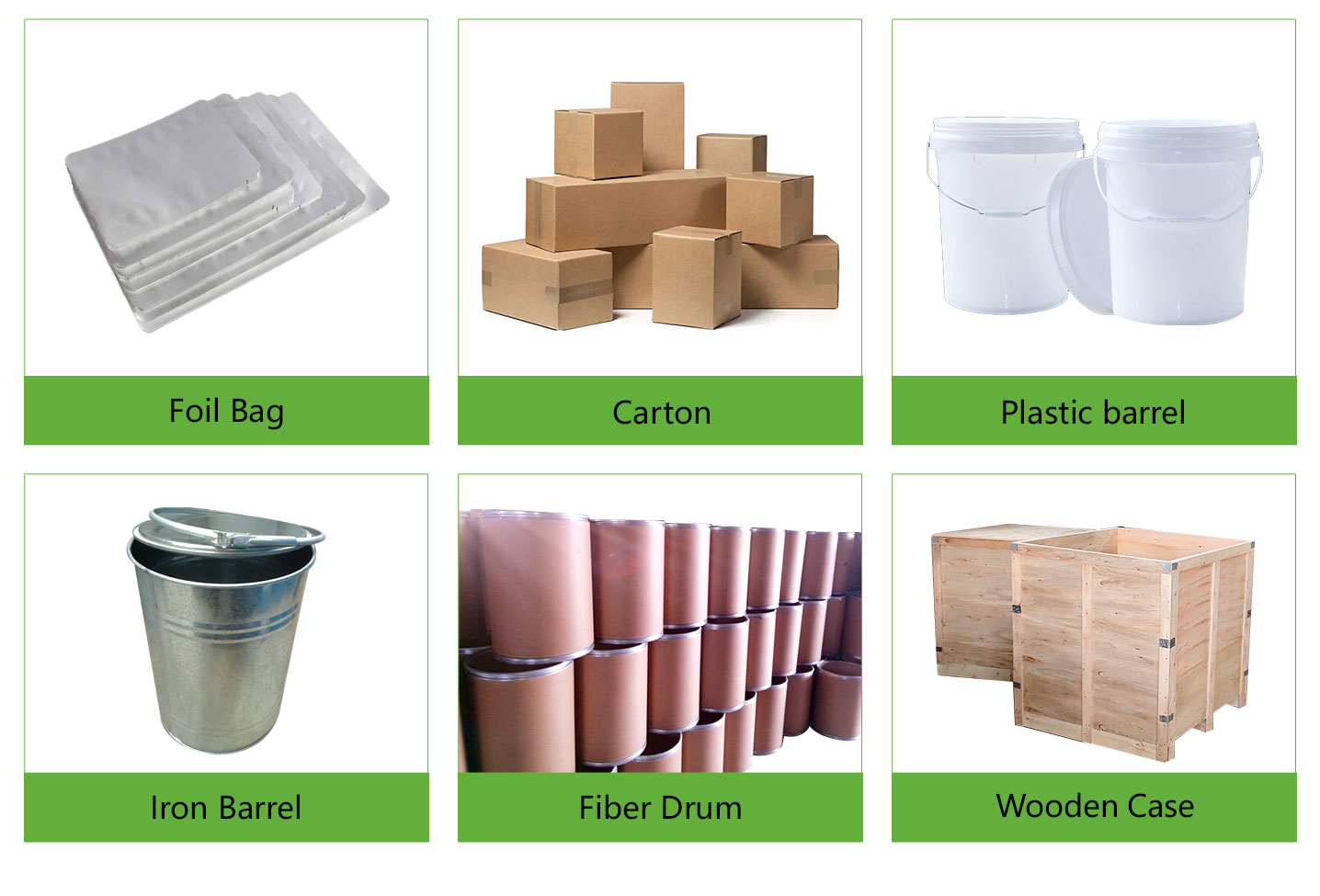
Packing & Shipping of Vanadium Boride VB2 powder
FAQs of Vanadium Boride VB2 Powder:
Q: What is vanadium boride used for?
A: Vanadium boride (VB2) powders are utilized in various high-performance applications due to their unique combination of properties. They are particularly sought after in the production of advanced ceramics and hard materials, where their superior hardness and thermal stability make them ideal for components that must withstand extreme conditions. VB2 can be sintered into solid forms for use in cutting tools, wear-resistant parts, and abrasives, especially in industries like aerospace, automotive, and manufacturing. Moreover, vanadium boride's electrical conductivity and ability to maintain structural integrity at high temperatures have led to its exploration in electrochemical applications, including electrodes for batteries and fuel cells.
Q: Is vanadium boride safe for human exposure?
A: Limited studies exist on the health effects of vanadium boride specifically; however, based on general knowledge about refractory compounds, fine particles of VB2 could potentially cause irritation to the respiratory system, eyes, and skin upon prolonged or repeated exposure. It is recommended to handle vanadium boride powder with appropriate personal protective equipment (PPE), such as gloves, safety glasses, and a respirator if airborne dust is present. Adequate ventilation and adherence to occupational exposure guidelines are crucial to ensure worker safety. Always refer to the Safety Data Sheet (SDS) provided by the manufacturer for detailed handling instructions and any updates on potential health impacts.
Q: What is the chemical formula and structure of vanadium boride?
A: Vanadium boride has the chemical formula VB2, signifying it consists of one vanadium atom (V) and two boron atoms (B). This compound crystallizes in a complex hexagonal crystal structure, which contributes to its exceptional physical properties, such as high hardness and excellent thermal stability. The arrangement of atoms within this crystal lattice facilitates strong bonding between the elements, resulting in a material capable of maintaining its integrity at very high temperatures. The specific structure of VB2 is key to its performance in demanding industrial applications, providing a foundation for its mechanical and electronic characteristics.
Q: Can vanadium boride be integrated into composite materials?
A: Yes, vanadium boride can be incorporated into composite materials to enhance certain properties like hardness, wear resistance, and thermal stability. Composites containing VB2 benefit from the material's inherent qualities while taking advantage of the design flexibility offered by combining different constituents. For example, integrating VB2 into metal matrix composites can significantly improve the mechanical performance of the end product, making it more durable and able to withstand harsh operating conditions. Additionally, when used as a reinforcing phase in ceramic or cermet composites, vanadium boride can contribute to increased toughness and resistance to thermal shock. The development of these advanced composites offers new opportunities for innovation across various sectors, from aerospace and defense to electronics and energy storage.
Luoyang Tongrun Nano Technology Co. Ltd. (TRUNNANO) is a trusted global chemical material supplier & manufacturer with over 12-year-experience in providing super high-quality chemicals and Nanomaterials, including boride powder, nitride powder, graphite powder, sulfide powder, 3D printing powder, etc.
If you are looking for high-quality vanadium diboride powder, please feel free to contact us and send an inquiry. (sales3@nanotrun.com)
Vanadium Boride VB2 Powder Properties |
|
| Other Names | Diborylidynevanadium, Vanadium diboride, vanadium boride (1:2), VB2 Powder, Vanadium Boride |
| CAS No. | 12007-37-3 |
| Compound Formula | VB2 |
| Molecular Weight | 72.564 |
| Appearance | refractory solid |
| Melting Point | N/A |
| Solubility in water | N/A |
| Density | 5.1 g/cm3 |
| Purity | >99% |
| Particle Size | 325 mesh |
| Boling point | N/A |
| Specific Heat | N/A |
| Thermal Conductivity | N/A |
| Thermal Expansion | N/A |
| Young's Modulus | N/A |
| Exact Mass | 72.962 |
| Monoisotopic Mass | 72.962578 |
Vanadium Boride VB2 Powder Health & Safety Information |
|
| Safety Warning | N/A |
| Hazard Statements | N/A |
| Flashing point | N/A |
| Hazard Codes | N/A |
| Risk Codes | N/A |
| Safety Statements | N/A |
| RTECS Number | N/A |
| Transport Information | N/A |
| WGK Germany | N/A |