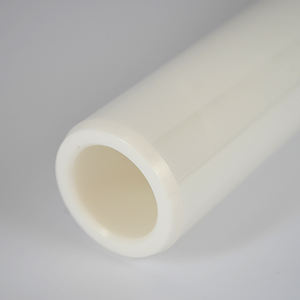
The Hollow Backbone of High-Tech Industry: Unlocking the Potential of the Alumina Ceramic Tube
Views : 149
Author : Vincy
Update time : 2026-02-28 17:00:51
In the vast and often invisible infrastructure of modern industrial technology, specific components serve as the critical linchpins that allow complex systems to function under extreme duress. Among these unsung heroes, the alumina ceramic tube stands out as a versatile and indispensable element. From the searing heat of furnaces to the corrosive flow of aggressive chemicals, and from the delicate environment of semiconductor fabrication to the high-voltage demands of electrical transmission, this cylindrical component provides a unique combination of properties that metals and polymers simply cannot match. As industries continue to push the boundaries of efficiency, temperature, and durability, the reliance on advanced ceramics has grown exponentially. This article delves deep into the science, manufacturing, and application of the alumina ceramic tube, exploring why it remains the material of choice for engineers facing the most challenging environments on Earth and beyond.
Alumina Ceramic Tube
The Atomic Architecture of Aluminum Oxide
To understand the capabilities of the alumina ceramic tube, one must first appreciate the fundamental nature of the material from which it is forged. The core substance is aluminum oxide, chemically represented as Al2O3. In its purest crystalline form, this compound is known as corundum, a mineral renowned for its exceptional hardness, ranking second only to diamond on the Mohs scale. While gemstones like rubies and sapphires are essentially colored varieties of corundum due to trace impurities, industrial applications demand high-purity synthetic alumina to ensure consistent performance. The remarkable properties of the alumina ceramic tube stem from its atomic structure. The material consists of a tightly packed hexagonal lattice of oxygen ions with aluminum ions occupying two-thirds of the octahedral sites. This dense arrangement results in strong ionic bonding, which translates directly into high mechanical strength, a melting point exceeding 2000 degrees Celsius, and outstanding chemical stability. Unlike metals, which rely on a sea of electrons for bonding and thus conduct electricity and heat readily, the ionic bonds in alumina localize electrons, making the material an excellent electrical insulator. The purity of the alumina used in manufacturing these tubes typically ranges from 85% to 99.9%. Lower purity grades often include glassy phases or other oxides that act as sintering aids, lowering the firing temperature and cost but slightly reducing thermal and mechanical performance.On the other hand, high-purity grades, such as 99.8% or 99.9% alumina, offer superior dielectric strength, corrosion resistance, and thermal conductivity. The selection of the specific grade depends entirely on the operational requirements of the application, allowing the alumina ceramic tube to be tailored for everything from basic thermal shielding to high-precision electronic substrates.
Engineering the Perfect Cylinder: Manufacturing Processes
The production of an alumina ceramic tube is a sophisticated process that blends ancient pottery techniques with cutting-edge materials science. It begins with the preparation of fine alumina powder. This powder is meticulously milled to achieve a uniform particle size distribution, which is crucial for preventing defects during the subsequent forming and sintering stages. Binders and plasticizers are added to the powder to create a mixture that can be shaped while maintaining structural integrity before firing. Forming the tubular shape can be achieved through several methods, with extrusion and isostatic pressing being the most prevalent. In extrusion, the prepared clay-like mixture is forced through a die with a central mandrel, creating a continuous length of green tube that is then cut to size. This method is highly efficient for producing long tubes with consistent wall thickness. For applications requiring higher density and more uniform microstructure, isostatic pressing is employed. Here, the powder is sealed in a flexible mold and subjected to high pressure from all directions via a fluid medium. This ensures that the density is homogeneous throughout the wall of the alumina ceramic tube, minimizing the risk of warping or cracking during the intense heat of sintering.
Alumina Ceramic Tube
Sintering is the transformative stage where the green body becomes a hardened ceramic. The tubes are heated in kilns to temperatures between 1600 and 1700 degrees Celsius. During this process, the particles fuse together through diffusion, eliminating porosity and shrinking the tube to its final dimensions. Precise control of the temperature profile is essential; too rapid heating can cause blistering, while insufficient heat results in a porous, weak product. After sintering, the alumina ceramic tube often undergoes precision grinding and polishing. Since sintered alumina is extremely hard, diamond-tipped tools are required to machine the tubes to tight tolerances, ensuring perfect roundness, smooth inner and outer surfaces, and exact lengths required by high-tech industries.
Thermal Resilience and Mechanical Strength
One of the primary reasons engineers specify an alumina ceramic tube is its exceptional ability to withstand extreme thermal conditions. These tubes exhibit high refractoriness, meaning they can maintain their structural integrity at temperatures where most metals would melt or lose significant strength. This makes them ideal for use as furnace muffles, thermocouple protection sheaths, and combustion chamber liners. In these applications, the alumina ceramic tube acts as a barrier, protecting sensitive instrumentation or surrounding structures from direct exposure to searing heat. Furthermore, alumina possesses a relatively low coefficient of thermal expansion. This means the tube does not expand or contract significantly when subjected to temperature fluctuations. This dimensional stability is critical in applications involving rapid heating and cooling cycles, as it reduces the internal stresses that lead to thermal shock failure. While not as resistant to thermal shock as some specialized ceramics like silicon nitride, high-purity alumina offers a robust balance that satisfies the majority of industrial thermal requirements. Mechanically, the alumina ceramic tube boasts impressive compressive strength, far exceeding that of stainless steel. This allows it to support heavy loads or withstand high internal pressures without deforming. Its hardness, derived from the corundum structure, provides excellent wear resistance. In applications where abrasive powders or slurries flow through the tube, the inner walls resist erosion, ensuring a long service life and maintaining flow characteristics over time. Although ceramics are inherently brittle and have lower tensile strength compared to metals, the tubular geometry is naturally efficient at handling compressive and hoop stresses, making the alumina ceramic tube a reliable component in pressurized systems when designed correctly.
Chemical Inertness and Electrical Insulation
In the realm of chemical processing, corrosion is a relentless enemy that degrades equipment and contaminates products. The alumina ceramic tube offers a formidable defense against this threat. It is chemically inert to most acids, alkalis, solvents, and molten metals. Unlike metal pipes that can rust or leach ions into process fluids, an alumina ceramic tube remains unaffected even in highly aggressive environments. This property is vital in the pharmaceutical and food processing industries, where purity is paramount, as well as in chemical synthesis where reactive substances are handled at high temperatures. The non-porous surface of a properly sintered tube prevents the entrapment of bacteria or chemical residues, facilitating easy cleaning and sterilization. Simultaneously, the alumina ceramic tube serves as a cornerstone in electrical engineering due to its superior dielectric properties. High-purity alumina is an excellent electrical insulator, possessing high volume resistivity and dielectric strength. This makes it the material of choice for housing high-voltage components, such as in spark plugs, vacuum interrupters, and laser tubes. In these applications, the tube must prevent electrical arcing while withstanding the heat generated by the current. The ability of the alumina ceramic tube to provide both thermal management and electrical isolation in a single component simplifies design and enhances system reliability.
Alumina Ceramic Tube
Moreover, the dielectric constant of alumina is stable across a wide range of frequencies and temperatures. This consistency is crucial for radio frequency (RF) applications and microwave devices, where signal integrity is essential. Whether protecting a thermocouple in a steel mill or insulating a high-power transmitter, the alumina ceramic tube delivers performance that polymers and glasses cannot match in terms of combined thermal and electrical endurance.
Comparative Analysis with Alternative Materials
When selecting a material for tubular applications, engineers often weigh alumina against other advanced ceramics and metals. Understanding these comparisons highlights the specific niche occupied by the alumina ceramic tube. Stainless steel and other superalloys are common alternatives, primarily due to their toughness and ease of fabrication. However, metals suffer from oxidation and corrosion at high temperatures, and their electrical conductivity can be a liability in insulation applications. While metals can withstand impact better than ceramics, they soften and creep under sustained high-temperature loads, whereas the alumina ceramic tube retains its strength up to its melting point. In corrosive environments, metals often require expensive coatings or frequent replacement, making alumina a more cost-effective solution over the lifecycle of the equipment. Quartz or fused silica tubes are another competitor, particularly in high-temperature and optical applications. Quartz has excellent thermal shock resistance and transparency but lacks the mechanical strength and hardness of alumina. Quartz tubes are fragile and susceptible to devitrification (crystallization) at very high temperatures, which can lead to failure. Additionally, quartz is not as chemically resistant to strong alkalis as alumina. The alumina ceramic tube offers a much tougher and harder alternative, suitable for environments where mechanical abuse or abrasive flow is a concern. Among other advanced ceramics, zirconia (ZrO2) is known for its exceptional fracture toughness, surpassing that of alumina. Zirconia tubes are preferred in applications involving severe impact or where crack propagation must be strictly avoided. However, zirconia has lower thermal conductivity and can undergo phase transformations in certain humid, high-temperature environments, leading to degradation. Silicon carbide (SiC) offers superior thermal conductivity and even higher hardness than alumina, making it ideal for extreme heat exchange applications. Yet, silicon carbide is significantly more expensive and difficult to machine. Furthermore, standard silicon carbide can be electrically conductive, limiting its use as an insulator unless specially processed. In this landscape, the alumina ceramic tube emerges as the "goldilocks" solution. It may not be the absolute toughest or the most thermally conductive, but it offers the best overall balance of hardness, electrical insulation, chemical resistance, and cost-effectiveness. For the vast majority of industrial applications requiring a durable, insulating, and heat-resistant tube, alumina provides the optimal performance-to-price ratio.
Alumina Ceramic Tube
Diverse Applications Across Industries
The versatility of the alumina ceramic tube is evidenced by its widespread adoption across a multitude of sectors. In the semiconductor industry, these tubes are critical components in diffusion furnaces and chemical vapor deposition (CVD) systems. They serve as carrier tubes for silicon wafers, enduring the harsh chemical gases and high temperatures required to fabricate microchips. The high purity of the alumina ensures that no contaminants are released that could ruin the delicate circuitry of the chips. In the field of lighting, high-intensity discharge (HID) lamps, such as those used in street lighting and stadium illumination, utilize alumina ceramic tubes as arc tubes. These tubes contain the plasma arc and must withstand temperatures over 1000 degrees Celsius while remaining transparent to visible light and impermeable to sodium vapor. The unique polycrystalline structure of translucent alumina allows it to fulfill this role, a feat no other ceramic can achieve as effectively. The medical industry also relies heavily on alumina ceramic tubes for surgical instruments, dental implants, and components in diagnostic imaging equipment. Their biocompatibility ensures they do not react with human tissue, while their hardness and wear resistance make them ideal for long-lasting implants. In laboratory settings, alumina tubes are used as crucibles and combustion boats for ashing samples, leveraging their ability to resist chemical attack from molten fluxes. Furthermore, in the energy sector, alumina ceramic tubes are found in fuel cells, battery manufacturing equipment, and nuclear applications. They provide insulation and structural support in environments where radiation or electrochemical corrosion would degrade other materials. As technology advances, new applications continue to emerge, from protective sleeves for sensors in automotive engines to components in aerospace propulsion systems, proving that the alumina ceramic tube is a foundational element of modern innovation. Recent global advancements in nano-engineering and sintering techniques continue to enhance the durability and multifunctional capabilities of the alumina ceramic tube for next-generation industrial applications.
Alumina Ceramic Tube
TRUNNANO CEO Roger Luo said:"Recent global advancements in nano-engineering and sintering techniques continue to enhance the durability and multifunctional capabilities of the alumina ceramic tube for next-generation industrial applications.”
Supplier
TRUNNANOis a globally recognized Alumina Ceramic Tube manufacturer and supplier of compounds with more than 12 years of expertise in the highest quality nanomaterials and other chemicals. The company develops a variety of powder materials and chemicals. Provide OEM service. If you need high quality Alumina Ceramic Tube, please feel free to contact us. You can click on the product to contact us. Tags: Alumina Ceramic Tube, Alumina Ceramic, Ceramic Tube