Silicon carbide (SiC) is a binary compound composed of silicon and carbon, with a covalent bond structure that endows it with a series of excellent physical and chemical properties, such as high melting point (≈2700°C), high hardness (Mohs hardness 9.5), good thermal conductivity, excellent wear resistance, and strong corrosion resistance against most acids, alkalis, and molten metals. These properties make SiC ceramics indispensable in many high-end engineering fields, including aerospace, automotive, energy, electronics, and the chemical industry. With the continuous advancement of material preparation technology, various SiC-based ceramic materials have been developed, among which PLS-SiC and RSiC/Si-SiC are the most representative and widely applied types.
The preparation process is the core factor determining the microstructure and properties of ceramic materials. PLS-SiC and RSiC/Si-SiC adopt completely different preparation routes, which directly lead to their distinct characteristics. This section will elaborate on the preparation principles, key steps, and process characteristics of the two materials, respectively.
PLS-SiC is a type of SiC ceramic prepared by pressureless sintering with the assistance of a liquid phase. The core principle is to add a small amount of sintering aids to SiC powder. During the high-temperature sintering process, the sintering aids melt to form a liquid phase, which wets the surface of SiC particles, promotes the diffusion of atoms between particles, and accelerates the densification process, thereby obtaining high-density SiC ceramics without the need for external pressure. The preparation process of PLS-SiC mainly includes four key steps: raw material preparation, molding, degreasing, and pressureless sintering.
In the raw material preparation stage, high-purity SiC powder (purity ≥99%) with a suitable particle size (usually 0.1-10 μm) is selected as the main raw material. The particle size and particle size distribution of SiC powder have a significant impact on the sintering density and mechanical properties of the final product. Fine powder is conducive to improving sintering activity, but excessive agglomeration of fine powder will affect the uniformity of the green body. Therefore, the SiC powder usually needs to be dispersed by ball milling, and appropriate dispersants are added to prevent agglomeration. The sintering aids are the key to the preparation of PLS-SiC, and their selection and addition amount directly determine the sintering effect and performance of the material. Common sintering aids for PLS-SiC include oxide sintering aids (such as Al₂O₃, Y₂O₃, MgO, CaO) and non-oxide sintering aids (such as B, C). Among them, the Al₂O₃-Y₂O₃ system is the most widely used oxide sintering aid. The additional amount of sintering aids is usually 5%-15% (mass fraction). During sintering, the sintering aids react with impurities in SiC powder (such as SiO₂) to form a low-melting-point liquid phase, which promotes the densification of SiC.
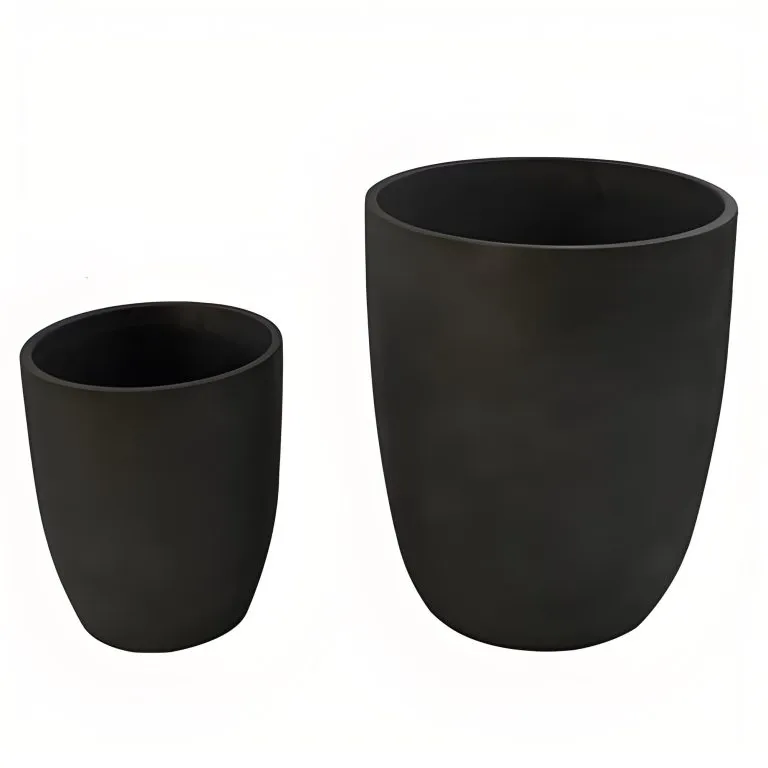
Pressureless sintered silicon carbide Crucible
The molding stage is to shape the mixed SiC powder and sintering aids into a green body with a certain shape and strength. Common molding methods include dry pressing, isostatic pressing, extrusion molding, injection molding, and tape casting. Dry pressing is suitable for preparing simple-shaped products, with the advantages of a simple process and high production efficiency, but the density of the green body is relatively uneven. Isostatic pressing can apply uniform pressure to the powder in all directions, so the green body has uniform density and high strength, which is suitable for preparing complex-shaped and high-performance products. Extrusion molding and injection molding are suitable for mass production of products with complex shapes, such as pipes, rods, and special-shaped parts. After molding, the green body needs to be dried to remove the moisture and volatile components in the binder.
The degreasing stage is to remove the organic binder in the green body before sintering. The organic binder is added during the molding process to improve the plasticity and strength of the green body, but it will decompose and volatilize during sintering, which may cause defects such as cracks and pores in the product if not removed completely. Degreasing is usually carried out in a protective atmosphere (such as argon, nitrogen) or vacuum at a temperature of 400-800°C. The heating rate should be strictly controlled during degreasing to avoid an excessive volatilization rate of the binder, which may lead to the rupture of the green body.
The pressureless sintering stage is the key step in the preparation of PLS-SiC. The degreased green body is placed in a sintering furnace, heated to 1800-2200°C in a protective atmosphere (argon or nitrogen), and kept warm for a certain period of time (usually 1-5 hours). During the sintering process, when the temperature reaches the melting point of the sintering aid system, the sintering aid melts to form a liquid phase. The liquid phase wets the surface of SiC particles (the contact angle is usually less than 90°), and under the action of capillary force, the liquid phase fills the gaps between the particles. At the same time, the atoms of SiC and sintering aids diffuse in the liquid phase, promoting the bonding between particles and the elimination of pores, thereby realizing the densification of the green body. After sintering, the temperature is cooled to room temperature at a reasonable rate to avoid thermal stress-induced cracks. The final PLS-SiC product has a high relative density (usually ≥95%, even up to 99% or more) and uniform microstructure.
The process characteristics of PLS-SiC are: no external pressure is required during sintering, the equipment investment is relatively low, and large-sized and complex-shaped products can be prepared; the sintering aids can significantly reduce the sintering temperature, shorten the sintering time, and improve the production efficiency; the relative density of the product is high, and the performance is stable. However, the addition of sintering aids may introduce impurities into the material, which may affect the high-temperature performance and electrical properties of PLS-SiC. In addition, the control of the sintering process (such as temperature, holding time, and atmosphere) is relatively strict, which requires a high technical level of the operator.
RSiC/Si-SiC, also known as Reaction Bonded SiC (RBSiC) or Siliconized (SiSiC), is a composite material prepared by the reaction sintering method. The core principle is to first prepare a porous preform composed of SiC powder, carbon powder, and a small amount of binder. Then, under high temperature and vacuum or protective atmosphere conditions, molten silicon is infiltrated into the porous preform through capillary action. The molten silicon reacts with the carbon in the preform in situ to generate new SiC (Si + C → SiC), which bonds the original SiC particles together. The unreacted molten silicon fills the remaining pores of the preform, forming a dense composite material composed of SiC (original SiC + in-situ generated SiC) and residual silicon (usually 5%-20% mass fraction). The preparation process of RSiC/Si-SiC mainly includes five key steps: raw material preparation, preform molding, degreasing, silicon infiltration, and post-processing.
In the raw material preparation stage, SiC powder, carbon powder, and binder are the three main raw materials. The SiC powder usually has a particle size of 1-10 μm, and its purity is relatively low (usually 90%-98%) compared with PLS-SiC, which can reduce the production cost. The carbon powder (such as graphite powder, carbon black) is used as a reactant to react with molten silicon to generate new SiC, and its particle size is usually 0.1-1 μm. The amount of carbon powder is determined according to the reaction stoichiometry (Si + C → SiC), and a small amount of excess carbon is usually added to ensure the complete reaction of silicon. The binder (such as phenolic resin, polyvinyl alcohol) is used to improve the plasticity and strength of the preform, and its addition amount is usually 5%-10% (mass fraction). The three raw materials are mixed uniformly by ball milling to form a uniform powder mixture.
The preform molding stage is to shape the mixed powder into a porous preform with a certain shape and porosity. Common molding methods include dry pressing, isostatic pressing, extrusion molding, and casting. The porosity of the preform is a key parameter that directly affects the silicon infiltration effect and the performance of the final product. The porosity of the preform is usually controlled at 20%-40%. If the porosity is too low, the molten silicon cannot fully infiltrate the preform, resulting in insufficient densification; if the porosity is too high, the mechanical strength of the preform is low, and the residual silicon content in the final product is too high, which affects the performance.
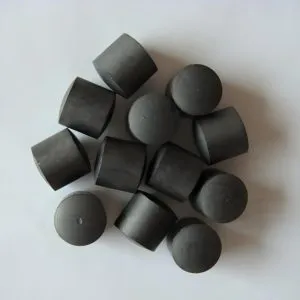
Recrystallized Silicon Carbide Ceramic Product
The degreasing stage is the same as that of PLS-SiC, which is to remove the organic binder in the preform. Degreasing is carried out in a protective atmosphere or vacuum at 400-800°C to avoid oxidation of carbon powder and SiC powder. The heating rate is strictly controlled to prevent the preform from cracking due to rapid volatilization of the binder.
The silicon infiltration stage is the core step in the preparation of RSiC/Si-SiC. The degreased preform is placed in a silicon infiltration furnace, and silicon (in the form of silicon ingot or silicon powder) is placed around or below the preform. The furnace is evacuated or filled with a protective atmosphere (argon, nitrogen), and then heated to 1450-1600°C, which is higher than the melting point of silicon (1414°C). At this temperature, silicon melts into a liquid state. Under the action of capillary force, the molten silicon infiltrates into the porous preform and spreads to all parts of the preform. The molten silicon reacts with the carbon powder in the preform to generate new SiC, which grows on the surface of the original SiC particles and bonds the original SiC particles together. The reaction is exothermic, which can further promote the infiltration of silicon and the progress of the reaction. The silicon infiltration time is usually 1-3 hours, depending on the size and porosity of the preform. After the reaction is completed, the furnace is cooled to room temperature, and the unreacted residual silicon remains in the pores of the material, forming the final RSiC/Si-SiC composite material.
The post-processing stage is to process the silicon-infiltrated product into the required size and surface quality, such as cutting, grinding, and polishing. Since RSiC/Si-SiC has high hardness and brittleness, diamond tools are usually used for processing.
The process characteristics of RSiC/Si-SiC are: the sintering temperature is lower than that of PLS-SiC (1450-1600°C vs 1800-2200°C), which reduces the energy consumption and equipment requirements; the preform has good shape retention, and the product has almost no shrinkage during the silicon infiltration process (near-net shape forming), which can reduce the post-processing amount and improve the production efficiency; the raw material requirements are relatively low, and low-purity SiC powder can be used, which reduces the production cost. However, the residual silicon in RSiC/Si-SiC will affect the high-temperature performance and chemical stability of the material, and the relative density of the product is slightly lower than that of PLS-SiC (usually 90%-95%). In addition, the silicon infiltration process is difficult to control, and it is easy to produce defects such as uneven silicon distribution and residual pores.
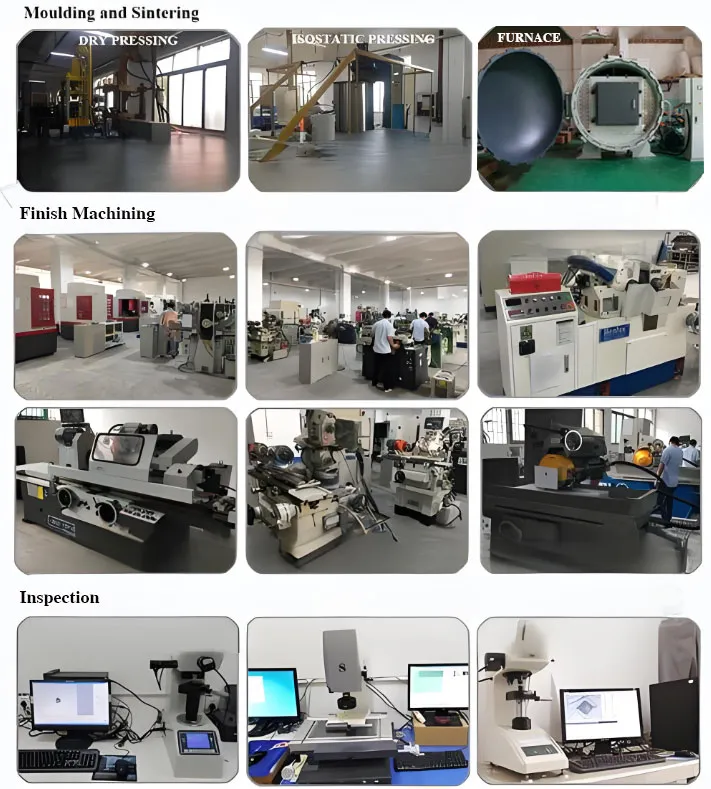
Process of RSiC/Si-SiC
The microstructure of ceramic materials is closely related to their preparation processes, and it directly determines the physical and chemical properties of the materials. Due to the significant differences in the preparation processes of PLS-SiC and RSiC/Si-SiC, their microstructures are also quite different. This section will compare the microstructural characteristics of the two materials from the aspects of phase composition, grain size, porosity, and interface structure.
Phase Composition
The phase composition of PLS-SiC is mainly composed of Sithe C phase and a small amount of secondary phase generated by sintering aids. The main phase is SiC (α-SiC or β-SiC, depending on the raw material and sintering temperature), which accounts for more than 85% (mass fraction). The secondary phase is formed by the reaction of sintering aids with impurities in SiC powder or between sintering aids themselves. For example, when Al₂O₃-Y₂O₃ is used as the sintering aid, the secondary phase is usually Y₃Al₅O₁₂ (yttrium aluminum garnet, YAG) or Al₂O₃-Y₂O₃ solid solution. The secondary phase is usually distributed at the grain boundaries of SiC, which can improve the bonding strength between SiC grains, but if the secondary phase content is too high or the distribution is uneven, it may reduce the high-temperature performance of PLS-SiC. In addition, the phase composition of PLS-SiC is relatively simple, and there is almost no residual silicon phase.
The phase composition of RSiC/Si-SiC is more complex, mainly including three phases: original SiC phase, in-situ generated SiC phase, and residual silicon phase. The original SiC phase is the main framework of the material, accounting for 60%-80% (mass fraction). The in-situ generated SiC phase is formed by the reaction of molten silicon and carbon powder, which is closely bonded to the original SiC phase and plays a role in connecting the original SiC particles. The residual silicon phase is the unreacted molten silicon, which fills the pores of the material and accounts for 5%-20% (mass fraction). The residual silicon phase is distributed in the form of continuous or discontinuous phases in the material, which can improve the toughness of the material to a certain extent, but it will reduce the high-temperature performance and chemical stability of the material. In addition, if the carbon powder in the preform is not completely reacted, a small amount of residual carbon phase may exist in RSiC/Si-SiC, which will affect the mechanical properties of the material.
Grain Size and Morphology
The grain size and morphology of PLS-SiC are mainly affected by the particle size of raw SiC powder, sintering temperature, and sintering aids. The raw SiC powder used in PLS-SiC is relatively fine (0.1-10 μm), and during the liquid phase sintering process, the SiC grains grow uniformly under the action of the liquid phase. The grain size of PLS-SiC is usually 1-20 μm, and the grain morphology is relatively regular, mostly equiaxed grains or slightly elongated grains. The grain size distribution is relatively uniform, which is due to the uniform diffusion of atoms in the liquid phase and the inhibition of grain growth by the secondary phase at the grain boundaries. The uniform grain size and regular morphology make PLS-SiC have excellent mechanical properties.
The grain size and morphology of RSiC/Si-SiC are affected by the particle size of raw SiC powder, the porosity of the preform, and the silicon infiltration conditions. The raw SiC powder used in RSiC/Si-SiC is relatively coarse (1-10 μm), and during the silicon infiltration process, the in-situ generated SiC grains grow on the surface of the original SiC particles. The grain size of the original SiC phase is basically the same as the particle size of the raw powder, while the grain size of the in-situ generated SiC phase is relatively fine (0.1-1 μm), which is distributed between the original SiC particles. The grain morphology of RSiC/Si-SiC is relatively irregular: the original SiC particles are angular, and the in-situ generated SiC grains are fine and irregularly distributed. The residual silicon phase is distributed in the form of small particles or continuous films between the SiC grains. The uneven grain size and irregular morphology make the mechanical properties of RSiC/Si-SiC slightly lower than those of PLS-SiC.
Porosity
Porosity is an important microstructural parameter of ceramic materials, which has a significant impact on their mechanical properties, thermal properties, and chemical properties. The porosity of PLS-SiC is very low, usually less than 5%, and can even be reduced to less than 1% for high-performance products. This is because the liquid phase formed by the sintering aids during the pressureless sintering process can fill the gaps between the SiC particles, and the diffusion of atoms promotes the elimination of pores, resulting in a high-density material. The pores in PLS-SiC are mainly closed pores, which are small in size and uniform in distribution, and have little impact on the material properties.
The porosity of RSiC/Si-SiC is relatively high, usually 5%-10%. Although the molten silicon infiltrates into the preform and fills most of the pores, due to the uneven porosity of the preform and the incomplete infiltration of silicon, some residual pores remain in the material. The pores in RSiC/Si-SiC are mainly open pores or semi-open pores, which are relatively large in size and uneven in distribution. The higher porosity reduces the mechanical strength and thermal conductivity of RSiC/Si-SiC, but it also gives the material certain permeability, which is beneficial for some specific applications (such as filters).
Interface Structure
The interface structure of PLS-SiC is mainly the interface between SiC grains and the secondary phase (sintering aid phase). The secondary phase is uniformly distributed at the grain boundaries of SiC, forming a continuous or discontinuous interface. The interface bonding between SiC grains and the secondary phase is relatively tight, which is due to the mutual diffusion of atoms between the two phases during the sintering process. The tight interface bonding can improve the mechanical strength and fracture toughness of PLS-SiC. However, the secondary phase at the grain boundaries may become a weak link at high temperatures, which may affect the high-temperature stability of the material.
The interface structure of RSiC/Si-SiC is more complex, including the interface between original SiC grains and in-situ generated SiC grains, the interface between SiC grains and residual silicon phase, and the interface between original SiC grains. The interface between original SiC grains and in-situ generated SiC grains is tight because the in-situ generated SiC grows directly on the surface of the original SiC grains, forming a coherent or semi-coherent interface. The interface between SiC grains and residual silicon phase is relatively weak, because the bonding between SiC and silicon is mainly mechanical, and the chemical compatibility between the two phases is poor. The weak interface between SiC and the residual silicon phase is the main reason for the lower mechanical strength and high-temperature performance of RSiC/Si-SiC compared with PLS-SiC.
In practical engineering applications, the selection of PLS-SiC or RSiC/Si-SiC should be based on the specific application requirements, such as working temperature, pressure, corrosive environment, mechanical performance requirements, and cost budget. For applications requiring high performance, high reliability, and high-temperature stability, PLS-SiC is the preferred material; for applications with low performance requirements and high cost sensitivity, RSiC/Si-SiC is more suitable.
supplier