In the world of advanced technical ceramics, Silicon Nitride (Si3N4) and Silicon Carbide (SiC) are the undisputed heavyweights. For engineers and procurement specialists dealing with extreme wear conditions, choosing between these two materials is a critical decision that impacts downtime, maintenance costs, and overall equipment efficiency.
While both materials outperform metals in hardness and heat resistance, they possess distinctly different personalities when it comes to toughness, thermal behavior, and chemical durability. As the global non-oxide engineering ceramics market is projected to reach $7.7 billion by 2032 (growing at a CAGR of 4.97%), understanding these nuances is more important than ever.
This comprehensive guide breaks down the battle of the ceramics, helping you determine which material—Silicon Nitride or Silicon Carbide—is the ultimate performer for your specific wear part application.
Before diving into performance metrics, it is essential to understand what these materials are made of and how their base chemistry influences their mechanical behavior.
Silicon nitride is a high-strength, engineering ceramic known for its excellent **fracture toughness** and **thermal shock resistance**. It is often the material of choice for dynamic loading applications where impact and sudden temperature changes are common.
Key Characteristics: High fracture toughness, low density (lightweight), low coefficient of thermal expansion.
Common Grades: Typically gas pressure sintered or hot pressed.
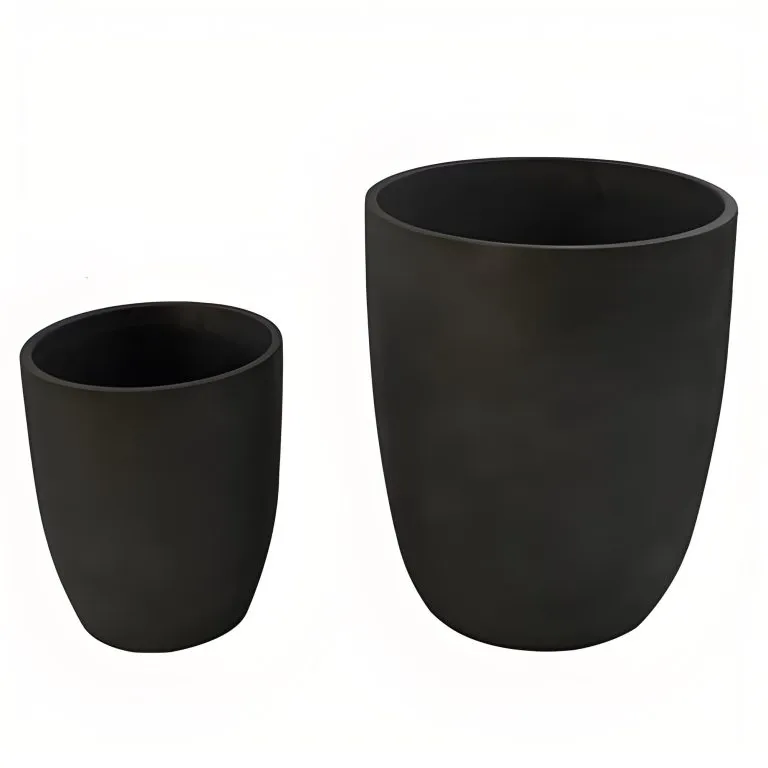
Silicon carbide is renowned for being one of the hardest advanced ceramics available, second only to diamond and boron carbide on the Mohs scale. It is the go-to material for steady-state, high-abrasion environments, particularly those involving chemical corrosion.
Key Characteristics: Extreme hardness, superior chemical corrosion resistance, and high thermal conductivity.
Common Grades: Reaction-Bonded (SiSiC/RBSiC), Sintered (SSiC), and Liquid-Phase Sintered (LPSiC).
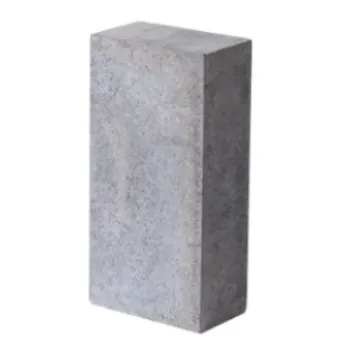
To determine which material "performs better," we must evaluate them across the parameters that matter most in wear part applications: hardness, toughness, friction, corrosion resistance, and thermal properties.
Round 1: Hardness & Abrasion Resistance
The Contender: SiC
When the primary enemy is abrasive wear from hard particles (like in slurry pumps or hydrocyclones), Silicon Carbide takes the crown.
- SiC boasts a hardness ranging from 9 to 9.5 on the Mohs scale. Sintered Silicon Carbide (SSiC), in particular, offers exceptional resistance to grain erosion, making it the ultimate solution for extreme industrial environments.
- Si3N4 is also very hard (typically around 1500 HV), but it generally ranks slightly below SiC in pure abrasion resistance.
Verdict: SiC wins for applications strictly about battling abrasive particle erosion.
Round 2: Fracture Toughness & Impact Resistance
The Contender: Si3N4
If your wear part is subject to impact, vibration, or mechanical shock (such as in high-speed bearings or reciprocating machinery), Silicon Nitride is the undisputed champion.
- Si3N4 has a unique grain structure that provides high fracture toughness, preventing cracks from propagating. This makes it ideal for ceramic ball bearings and engine components where stresses are high and intermittent. It can withstand repeated impact much better than SiC.
- SiC, while hard, is more brittle. In impact-heavy environments, it is more likely to chip or fracture.
Verdict: Si3N4 wins for dynamic loading and impact-prone applications.
Round 3: Friction & Tribological Properties
The Contender: Tie (Application Dependent)
In lubricated sliding conditions, both materials perform exceptionally well. However, in dry friction scenarios, the results diverge.
- SiC often exhibits a lower coefficient of friction when paired against itself in certain conditions. Research indicates that in unlubricated sliding, SiC friction pairs can present better friction and wear properties than Si3N4.
- Si3N4 offers excellent "tribological compatibility with metals," meaning it plays nicely with traditional steel shafts and housings without causing excessive wear on the metal counterpart
Verdict: For dry-running seals, SiC has advantages. For metal hybrid bearings, Si3N4 is superior.
Round 4: Corrosion Resistance
The Contender: SiC
In chemically aggressive environments, material stability is key.
- SiC (particularly SSiC) exhibits superior corrosion resistance across a wide pH range. It is virtually inert and can even withstand attack from strong acids and bases at high temperatures.
- Si3N4 also offers good corrosion resistance, but it may not hold up as well as SiC in highly aggressive hydrofluoric acid or caustic environments over the long term.
Verdict: SiC wins for chemical processing and corrosion-intensive applications.
Round 5: Thermal Shock & Heat Management
The Contender: Tie
Both materials handle heat well, but in different ways.
- SiC has extremely high thermal conductivity (up to 170 W/mK), allowing it to dissipate heat quickly. This prevents hot spots and makes it excellent for high-temperature furnace components .
Si3N4 has a lower thermal expansion coefficient, which means it expands and contracts less during temperature changes. This gives it superior thermal shock resistance, allowing it to survive rapid quenching (moving from hot to cold instantly) better than SiC .
Verdict: Choose SiC for steady-state high heat; choose Si3N4 for rapid temperature cycling.
Understanding the theory is one thing; seeing the materials in action is another. Here is how these properties translate into real-world wear part performance.
Because of its toughness, light weight (60% lighter than steel), and high mechanical strength, Si3N4 is the preferred material for moving parts .
- Hybrid & Full Ceramic Bearings: Their fatigue resistance and low density reduce centrifugal forces at high speeds .
- Engine Components: Used in turbochargers, glow plugs, and valves due to its ability to handle rapid heat-up and cool-down cycles .
- Cutting Tools: For machining cast iron and hard steels, its toughness helps prevent tool breakage.
- Welding Locators & Pin Gauges: In automotive assembly, where pins must endure repeated impact without deforming or wearing down.
SiC dominates stationary wear parts and components exposed to corrosion or extreme abrasion .
- Mechanical Seals: In pumps handling abrasive slurries or corrosive chemicals, SiC seal faces provide leak-free longevity .
- Nozzles: Sandblasting nozzles and spray dry nozzles benefit from S's extreme erosion resistance.
- Hydrocyclones & Slurry Pump Components: SiC liners and apexes outlast metals and other ceramics by orders of magnitude when processing sand and ore.
- Heat Exchangers & Burner Nozzles: Its high thermal conductivity makes it ideal for transferring heat in corrosive environments.
In the initial procurement phase, pricing often drives the conversation. However, smart buyers look at the Total Cost of Ownership (TCO)
Raw Material Cost: Generally, Silicon Nitride is more expensive to produce than Silicon Carbide. The sintering process for Si3N4 is more complex and requires precise atmosphere control, driving up manufacturing costs.
Fabrication Cost: Both materials are hard and require diamond grinding, but Si3N4"s "'sughness can sometimes make it slightly easier to machine than the ultra-hard SiC.
Lifetime Value:If a part fails due to cracking, replacing it with Si3N4 (even though it costs more) provides better value because it solves the mechanical failure mode.
If a part fails due to wearing paper-thin or corroding, paying for SiC is the most economical choice because it extends service life dramatically.
How to Make the Right Choice
So, which advanced ceramic performs better for wear parts?
Choose Silicon Nitride (Si3N4) if:
- Your application involves dynamic loads, vibration, or impact (e.g., bearings, pins, check valves).
- You need a lightweight component to reduce mass in high-speed rotation.
- The part is subject to severe thermal shocks (rapid heating and cooling).
- You require high mechanical strength and fracture resistance.
Choose Silicon Carbide (SiC) if:
- Your primary concern is pure abrasion/erosion from hard particles (e.g., slurry, sand).
- The environment is chemically aggressive (strong acids, caustics).
- You need to manage high heat in a steady-state condition.
- You require a hard, stable surface for a stationary wear liner or seal.
Supplier
Luoyang Tongrun Nano Technology Co. Ltd. (TRUNNANO) Luoyang City, Henan Province, China, is a reliable and high-quality global Si3N4 supplier and manufacturer. It has more than 12 years of experience providing ultra-high quality chemicals and nanotechnology materials, including Hexagonal boron nitride, nitride powder, Si3N4, sulfide powder, and 3D printing powder. If you are looking for high-quality and cost-effective Si3N4, you are welcome to contact us or inquire any time.