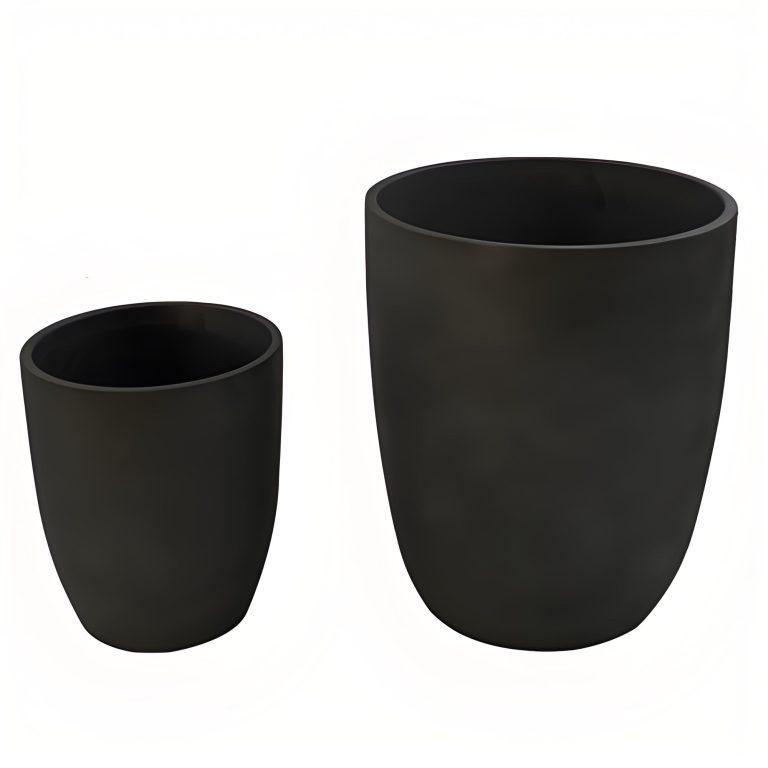
Introduction of Silicon Nitride Bonded Silicon Carbide (Si3N4-SiC)
Silicon Nitride Bonded Silicon Carbide (Si3N4-SiC) is not a simple mixture but an advanced ceramic composite material. It is typically composed of silicon carbide (SiC) particles as the aggregate, firmly bonded together by a silicon nitride (Si3N4) matrix. The microstructure of this composite often features rod-like or columnar β-Si3N4 crystals interlocking and intertwining between the SiC particles. This unique structure effectively provides exceptional toughening and strengthening effects, far superior to those of a single-component material. It ingeniously combines the high hardness and strength of SiC with the excellent fracture toughness and thermal shock resistance of Si3N4, resulting in outstanding performance in a wide range of demanding industrial environments.
Si3N4-SiC Crucible
Features of Silicon Nitride Bonded Silicon Carbide (Si3N4-SiC)
- Superior Hardness and Wear Resistance: With a Mohs hardness of up to 9 (second only to diamond), Si3N4-SiC exhibits exceptional abrasion resistance. This makes it an ideal material for wear-resistant components such as nozzles, slurry pump liners, and cyclones.
- Excellent High-Temperature Performance and Thermal Shock Resistance: This is one of its most prominent advantages. The material maintains high strength and hardness at elevated temperatures. Its low thermal expansion coefficient combined with high thermal conductivity allows it to withstand severe and rapid temperature fluctuations without cracking.
- Outstanding Resistance to Chemical Attack: Si3N4-SiC demonstrates good corrosion resistance against a variety of aggressive media, including molten non-ferrous metals like aluminum, zinc, copper, and magnesium, as well as alkaline solutions and acidic slags.
- High Mechanical Strength at Room and Elevated Temperatures: It possesses high cold crushing strength and, importantly, retains a significant portion of its strength at high temperatures, ensuring strong load-bearing capacity under thermal stress.
- Lightweight and Thermally Efficient: Compared to traditional refractory materials, Si3N4-SiC components are lighter, which helps in reducing the weight of furnace structures and improves heat transfer efficiency, leading to energy savings.
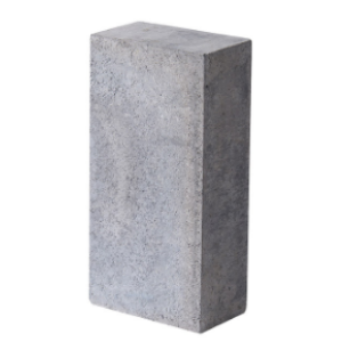
Silicon Nitride Bonded Silicon Carbide
Specifications of Silicon Nitride Bonded Silicon Carbide (Si3N4-SiC)
| Category |
Unit |
Reaction-sintered silicon carbide |
Recrystallized silicon carbide |
Silicon nitride and silicon carbide composites |
| Content |
% |
90 |
99 |
75 |
| Density |
kg/dm3 |
3.02 |
2.7 |
2.75 |
| Porosity |
Vol% |
≤0.1 |
15 |
11 |
| Hardness |
Kg/mm2 |
2400 |
1800 - 2000 |
2500 |
| Flexural Strength (point) - 20°C |
Mpa |
250 |
80 - 100 |
165 |
| Flexural Strength (point) - 1200°C |
Mpa |
280 |
90 - 110 |
175 |
| Elastic Modulus |
GPa |
330 |
280 |
250 |
| Fracture Toughness |
MPa/m1/2 |
3.3 |
1.8 - 2.0 |
4 |
| Thermal Conductivity - 20°C |
W/(m∗K) |
120 |
100 |
38 |
| Thermal Conductivity - 1200°C |
W/(m∗K) |
45 |
35 |
20 |
| Operating Temperature (Air) |
∘C |
1380 |
1650 |
1500 |
| Coefficient of Thermal Expansion (20 - 1200°C) |
K−1∗10−6 |
4.5 |
4.6 |
4.7 |
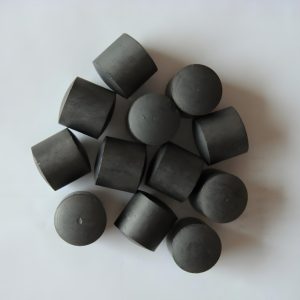
Silicon Nitride Bonded Silicon Carbide Products
Applications of Silicon Nitride Bonded Silicon Carbide (Si3N4-SiC)
- Metallurgical Industry: A traditional and critical application area. It is widely used for blast furnace linings, aluminum reduction cell linings, zinc distillation retorts, and various furnace parts (hearths, arches, covers) due to its exceptional resistance to molten metal and slag corrosion, significantly extending furnace life.
- Ceramics and Refractory Industry: Commonly employed as kiln furniture, including setters, beams, pusher plates, saggers, and support posts. Its use reduces the weight of the kiln furniture, improves heat transfer efficiency, and contributes to energy savings and increased production.
- Environmental Protection and Energy Sector: Suitable for use as inner linings in waste incinerators and components for coal gasification systems, where high temperature and corrosion resistance are required.
- Wear-Resistant Components: Ideal for manufacturing parts subjected to mild to moderate abrasion and impact, such as slurry pump impellers and liners, hydrocyclones, flotation machine parts, and wear-resistant nozzles.
- Other Applications: Includes ceramic radiant tubes, thermocouple protection tubes (especially for temperature measurement in molten aluminum and copper), and various other specialized industrial components.
Silicon Nitride Bonded Silicon Carbide Plate
Company Profile
Luoyang Tongrun Nano Technology Co. Ltd. (TRUNNANO) is a trusted global chemical material supplier & manufacturer with over 12-year-experience in providing super high-quality chemicals and nanomaterials, including boride powder, nitride powder, graphite powder, ceramic products, 3D printing powder, etc.
The company has a professional technical department and Quality Supervision Department, a well-equipped laboratory, and equipped with advanced testing equipment and after-sales customer service center.
If you are looking for high-quality Ceramic Products please feel free to contact us or click on the needed products to send an inquiry.

Storage Condition
The Liquid Lithium Silicate should store in a dry and cool environment in a sealed place, not exposed to the air, to prevent oxidative agglomeration caused by moisture, affecting the dispersion performance and use effect;
Payment Methods
L/C, T/T, Western Union, Paypal, Credit Card etc.
Shipment
By sea, by air, by express as soon as possible once payment receipt.
FAQs of Silicon Nitride Bonded Silicon Carbide (Si3N4-SiC)
Q1: What is the difference between reaction-bonded silicon carbide and silicon nitride bonded silicon carbide?
Re: Reaction-bonded silicon carbide (RBSC) uses silicon metal as the bonding phase, which is infiltrated into a carbon-containing SiC preform. In contrast, Silicon Nitride Bonded Silicon Carbide (Si3N4-SiC) uses silicon nitride (Si3N4) as the bonding phase, formed by the reaction of silicon powder with nitrogen gas during sintering. The Si3N4 bond provides superior toughness and thermal shock resistance compared to a silicon bond.
Q2: What is the maximum operating temperature for Si3N4-SiC materials?
Re: The maximum service temperature in an oxidizing atmosphere (like air) is typically up to approximately 1380°C. In inert or reducing atmospheres, it can withstand even higher temperatures due to the stability of the Si3N4 and SiC phases in the absence of oxygen.
Q3: How does Si3N4-SiC perform against chemical corrosion?
Re: It offers excellent resistance to corrosion from molten non-ferrous metals (Al, Zn, Cu, Mg) and many basic slags. However, its resistance can be degraded by highly oxidizing acidic slags or environments. The specific chemical resistance depends on the exact composition of the corrosive medium and the temperature.
Q4: Why is Si3N4-SiC preferred for wear applications over metals?
Re: Its extreme hardness (Mohs ~9) gives it far superior abrasion resistance than most metals and alloys. This results in a much longer service life for components in abrasive environments, reducing downtime and maintenance costs.
Q5: What are the main advantages of the reaction bonding process used to make Si3N4-SiC?
Re: The key advantage is that the nitridation reaction (3Si + 2N₂ → Si₃N₄) occurs with minimal dimensional change. This allows for the production of complex, near-net-shape components with high precision and without the significant shrinkage associated with many other ceramic sintering methods.