We use cookies to improve your online experience. By continuing browsing this website, we assume you agree our use of cookies.
Advanced Ceramics

Reaction-Sintered Silicon Carbide Crucibles for Batteries SiC Ceramic Crucibles

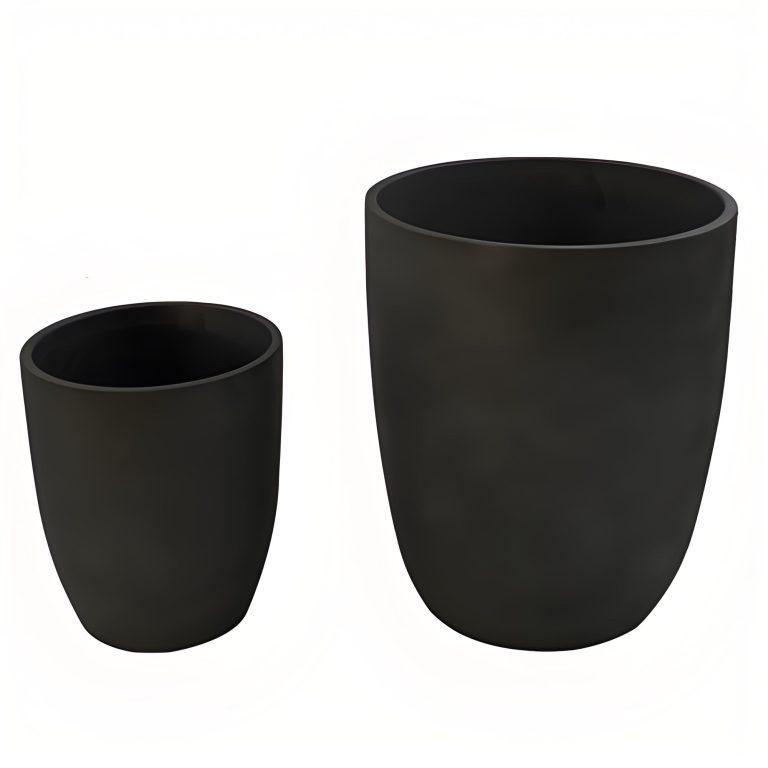
Silicon Carbide Crucible a high-performance ceramic crucible engineered specifically for the high-temperature melting of sodium, lithium, and potassium battery materials.
INQUIRY
Description
Product Introduction:
 
Silicon Carbide Crucible a high-performance ceramic crucible engineered specifically for the high-temperature melting of sodium, lithium, and potassium battery materials. This crucible is designed to meet the extreme demands of synthesizing next-generation battery components, such as layered oxides and polyanionic compounds.

Silicon carbide crucible
 
Key Features & Advantages:
 
Exceptional Alkali Corrosion Resistance: Features a unique rare-earth modified composite oxide protective layer, formed in-situ via a sol-gel process. The incorporation of elements like Yttrium and Lanthanum significantly enhances the layer's intrinsic stability and resistance to penetration by molten alkaline salts at high temperatures, ensuring material purity and crucible longevity.
 
Superior Thermal Shock Resistance: A proprietary pre-oxidation process creates a thin silica transition layer on the silicon carbide (SiC) body. This enables strong chemical bonding between the protective layer and the substrate, resulting in a high critical adhesion load. The crucible maintains integrity and resists cracking or delamination even under severe thermal cycling between rapid heating and cooling.
 
High Thermal Conductivity: The underlying SiC composite ceramic body provides excellent thermal conductivity, promoting uniform heat distribution and efficient reaction kinetics during the material melting process.
 
Robust Mechanical Strength: The SiC-based substrate offers high mechanical strength and structural stability at elevated temperatures, suitable for rigorous industrial application environments.
 
Optimized Coating Process: The protective coating is applied using a controlled spraying technique, followed by a specialized multi-stage heat treatment under a nitrogen atmosphere. This ensures a dense, pore-free, and well-adhered protective layer with consistent performance.
Performance Comparison of Crucibles Made from Different Materials in High-Temperature Melting of Battery Materials:
Properties/Materials TRUNNANO Silicon Carbide Composite Crucible Corundum/Mullite Crucible Alumina Crucible Graphite Crucible Nickel-based crucible
Alkali Resistance Exceptional: Rare earth-modified protective layer delivers superior resistance to molten alkali corrosion General: Prone to corrosion under prolonged exposure to strong alkaline environments Good: Fairly corrosion-resistant, reacts slowly in molten alkali Weakness: Prone to permeation and corrosion by alkali metals after porous oxidation Good: Resistant to corrosion by certain strong oxidizing alkalis
Thermal Conductivity Exceptionally High: Silicon carbide matrix ensures rapid and uniform heat transfer Low: Poor thermal conductivity may cause uneven furnace temperatures Moderate: Average thermal conductivity, relatively high energy consumption Strength: Superior thermal conductivity High: Excellent thermal conductivity due to metallic properties
Thermal Shock Resistance Exceptionally Strong: Unique interface design withstands extreme thermal cycling Good: Low thermal expansion coefficient with decent thermal shock resistance Poor: Highly brittle, sensitive to rapid thermal shock, prone to cracking Strength: Excellent thermal shock resistance Moderate: Good metallic toughness, but cyclic oxidation degrades performance
Material Purity Assurance Exceptionally High: Dense protective layer effectively prevents impurity leaching and material contamination Note: Long-term use may introduce impurities like silicon and aluminum High: High purity, commonly used as a melting vessel High Risk: Prone to burnout in oxidizing atmospheres, contaminating products Extremely high risk: Nickel ions severely contaminate battery materials
Primary Limitations Higher Initial Cost Incapable of withstanding strong alkaline corrosion and exhibiting poor thermal conductivity, limiting its high-end applications Poor thermal shock resistance, susceptible to damage under extreme thermal cycling Extremely susceptible to damage in oxidizing and strongly alkaline environments Introduces metallic impurities, unsuitable for high-purity battery material production
 
Application Fields of the Ceramic Crucible
 
Next-Generation Battery Material Synthesis: It is ideally suited for the high-temperature melting and solid-state synthesis of key cathode and anode materials for sodium-ion (SIB), lithium-ion (LIB), and potassium-ion (KIB) batteries. This includes the processing of layered oxides, polyanionic compounds, and other precursor materials.
 
Advanced Ceramics & Materials Processing: The crucible finds applications in the research, development, and production of other advanced ceramics and specialty materials that require high-purity melting or sintering in challenging atmospheres.
 
High-Temperature Corrosion Research: Serves as a reliable container for laboratory and industrial studies involving molten salts, alkaline chemicals, and other corrosive media at elevated temperatures, where standard materials would rapidly degrade.


Company Profile
 
Luoyang Tongrun Nano Technology Co. Ltd. (TRUNNANO) is a trusted global chemical material supplier & manufacturer with over 12-year-experience in providing super high-quality chemicals and nanomaterials, including boride powder, nitride powder, graphite powder, ceramic products, 3D printing powder, etc.
 
The company has a professional technical department and Quality Supervision Department, a well-equipped laboratory, and equipped with advanced testing equipment and after-sales customer service center.
 
If you are looking for high-quality Silicon carbide crucible please feel free to contact us or click on the needed products to send an inquiry.


Payment Methods
L/C, T/T, Western Union, Paypal, Credit Card etc.

Shipment
By sea, by air, by express as soon as possible once payment receipt.
 
Frequently Asked Questions (FAQs)
 
1. What is the primary innovation of this crucible compared to standard SiC crucibles?
The key innovation lies in its unique multi-layer structure. It features a proprietary Rare-Earth modified composite oxide protective layer, applied via a sol-gel process, which is chemically bonded in-situ to the silicon carbide (SiC) body via a pre-formed silica transition layer. This creates an exceptionally dense, stable, and adherent barrier that offers superior resistance to corrosion from molten alkali salts and enhanced thermal shock resistance, far exceeding the performance of uncoated SiC or crucibles with conventionally applied coatings.
 
2. Why are rare-earth elements like Yttrium and Lanthanum used in the protective layer?
Yttrium (Y) and Lanthanum (La) are incorporated for their synergistic effects. Yttrium primarily promotes the formation of a dense, stable nanocrystalline structure within the protective layer. Lanthanum effectively segregates to grain boundaries, "pinning" them and filling micro-defects. This combination significantly enhances the layer's intrinsic stability and its resistance to penetration by corrosive molten alkalis at high temperatures.
 
3. How does the crucible achieve such strong adhesion between the protective layer and the SiC base body?
Superior adhesion is achieved through a proprietary pre-oxidation process. This process creates a thin, continuous silica (SiO₂) transition layer directly on the SiC surface. During the subsequent high-temperature heat treatment, the sol-gel-derived protective layer forms strong chemical bonds (e.g., Si-O-Si, Si-O-Al) with this silica layer, resulting in an in-situ composite interface with a critical adhesion strength significantly higher than that of traditional sprayed or physically deposited coatings.
 
4. What are the main advantages for battery material production?
For battery material synthesis, this crucible offers three critical advantages:
 
High Purity: The exceptional corrosion resistance prevents the introduction of contaminants from the crucible into the active battery materials, ensuring high product purity and consistent electrochemical performance.
 
Long Service Life: Its resistance to degradation in harsh alkaline environments translates to a longer operational lifespan, reducing downtime and replacement costs.
 
Process Reliability: The excellent thermal shock resistance and high thermal conductivity ensure uniform heating and withstand the rapid temperature cycles common in material synthesis, leading to more reliable and repeatable production processes.
 
5. Can the properties of the protective layer be customized?
Yes, to a significant degree. The sol-gel formulation and processing parameters (such as the Y/La ratio, precursor concentrations, and heat treatment profiles) can be adjusted. This allows for tailoring the layer's thickness, density, and specific surface characteristics to optimize performance for different application requirements, specific alkali environments, or thermal cycling conditions.
 
Inquiry

RNDKOREA | Sodium Silicate | Potassium Silicate | Spherical Alumina | Spherical SiO2 Powder | Zinc Sulfide ZnS Powder | 3D Printing Powder | Concrete foaming agent | Concrete Superplasticizer | Boron Nitride Powder | Nano Silicon Powder | CuO Powder | Cu2O Cuprous Oxide Powder | Cr2O3 Powder