What is a Titanium steel-clad plate titanium aluminium clad plate?
Titanium steel clad plate is a metal clad plate coated with titanium, which has good corrosion resistance, on the surface of ordinary steel plates. There are three main methods of manufacturing titanium-clad steel plates: the explosion cladding method, the thick plate rolling method, and the continuous hot rolling method. The titanium-clad steel sheets produced by the blast cladding method and the thick plate rolling method are thick plates and are mainly used as corrosion-resistant construction materials. The continuous hot rolling method produces thin titanium-clad steel sheets, mainly used in marine civil engineering applications.
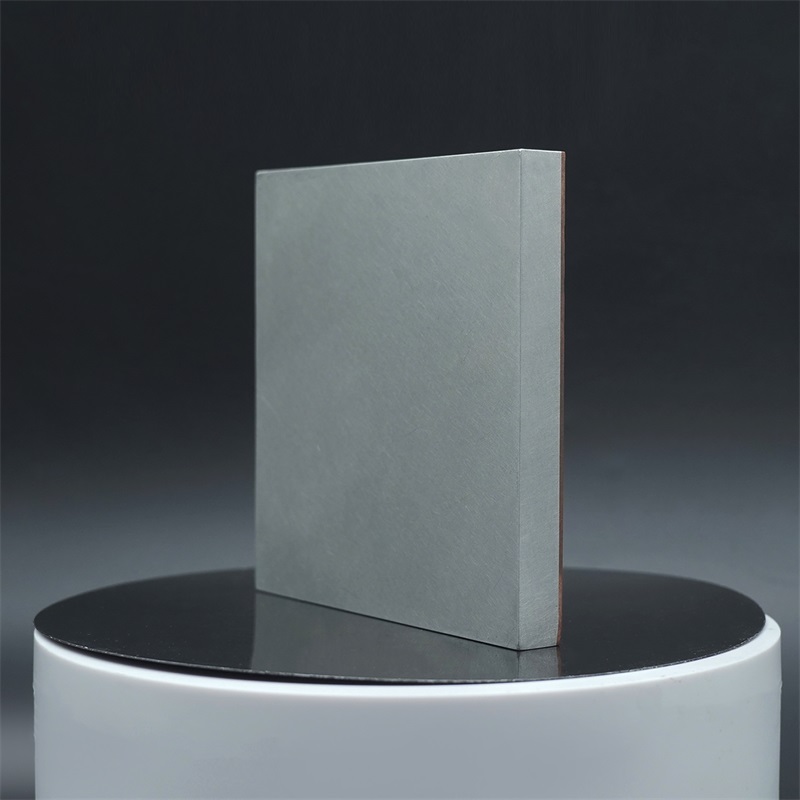
TRUNNANO Titanium Clad Steel Plate
Feature of Titanium steel Clad Plate titanium aluminium clad plate:
Titanium steel-clad plates have many excellent features, such as high strength, corrosion resistance, electrical conductivity, and plasticity. This makes it widely used in many industrial fields, such as electric power, petrochemical, pharmaceutical, food, light industry, and machinery industries. In addition, the titanium steel-clad plate also has superplasticity, which can further improve its performance. Therefore, it is a promising material that will play an increasingly important role in future engineering and industrial applications.
|
Product Name |
Titanium Clad Steel Plate |
|
Cldding Material Scope |
Titanium(Gr1, Gr2, Gr3,Gr5, Gr9,Gr7, Gr11, Gr12, etc),Stainless Steel, Non-ferrous metals (aluminum,copper,nickel,zirconium,tantalum) |
|
Titanium Type of the Clad |
Ti-steel clad plate,Ti-stainless steel clad plate,Ti-aluminum clad plate,Ti-copper clad plate,Ti-nickel clad plate |
|
Technique |
Explosive welding, Hot rolling |
|
Standard |
ASTMB898, NB/T47002.3-2010 |
|
Overall Thickness |
8-120mm |
|
Cladding thickness |
2-15mm |
|
Width |
3000mm or Customizable |
|
Length |
8000mm or Customizable |
|
Surface Treatment |
Polished |
|
Package |
Export sea worthy package + waterproof paper + wooden pallets |
|
Payment |
T/T, Paypal, Credit card |
|
Applications |
Petroleum, Petroleum refining, chemical industry, light industry, electrolytic |
|
|
Aluminium, food, Seawater desalination, Water conservancy |
|
|
Hydropower, Nuclear energy, Marine, Medical |
|
|
Aerospace, Environmental protection field |
Application Fields of Titanium Steel Clad Plate titanium aluminium clad plate:
1. Manufacture of petrochemical and chemical vessel equipment
The manufacture of petrochemical and chemical vessel equipment is a traditional application area for titanium-clad steel sheet material, which has always been the first in consumption. Titanium has good stability in various acids, alkalis and salts in the chemical industry. As a result, titanium-clad steel sheets play an irreplaceable role in petroleum refineries and chemical plants.
The titanium also has a special resistance to bleaching agents such as chlorine dioxide, chlorite and chlorite. Therefore, titanium-clad steel sheets also have important applications in bleaching equipment for the textile printing and, dyeing, and paper industries.
2. Vacuum salt production equipment manufacturing
Titanium and its alloys have good resistance to seawater, chloride solution corrosion, and fluid erosion resistance performance. The evaporation chamber made of titanium-clad steel plate has a good effect on slowing down corrosion, preventing salt scale from forming on the evaporation tank wall, extending the production cycle, and improving the quality of salt, greatly reducing the cost of using salt plant equipment.
3. Desalination field
Titanium and titanium alloy have excellent resistance to seawater, chloride ion solution corrosion, and fluid erosion performance, and titanium is non-toxic and harmless. Therefore, titanium-clad steel plate is the ideal material for desalination equipment.
4. Nuclear power equipment manufacturing
Thick cladding (multi-layer ≥ 8 mm), large plate width (single plate area ≥ 20m) of titanium-clad steel plate is the main material of the condenser tube plate in nuclear power equipment. The demand is very large, and the application prospects are very broad.
In summary, titanium-clad steel plate has good corrosion resistance and strength and is ideal for manufacturing equipment in a corrosion-resistant environment. With the continuous improvement of the production process of titanium-clad steel plate, its application will become more widespread.

Nuclear power equipment manufacturing
Grade of Titanium Steel Clad Plate titanium aluminium clad plate:
TA1, A2, TA3, TA8, TA9, TA10, TA18, Q245R, Q345R, 15CrMoR , 15CrMo, 16Mn, 14Cr1MoR, 16MnDR, 09MnNiDR, 20MnMo, 09MnNiD
Standard of Titanium Steel Clad Plate titanium aluminium clad plate:
NB/T47002.3-2009,GBT8547-2006
Package of Titanium Steel Clad Plate titanium aluminium clad plate:
According to product characteristics and customer needs.
Remark of Titanium Steel Clad Plate titanium aluminium clad plate:
Please provide detailed technical requirements to facilitate communication and determine the solution.
Titanium steel-clad plate titanium aluminium clad plate supplier-TRUNNANO:
Luoyang Tongrun Nano Technology Co. Ltd. (TRUNNANO) is a trusted global chemical material supplier & manufacturer with over 12 years of experience providing super high-quality clad plates, clad rods, clad tubes, etc.
If you are looking for a high-quality Titanium steel-clad plate, please feel free to contact us and send an inquiry.
FAQs of Titanium Steel Clad Plate titanium aluminium clad plate:
How to Plate Steel with Titanium
Plating steel with titanium is not a common process due to the high melting point of titanium (1668°C or 3034°F) and the difficulty in depositing it as a thin layer. However, there are a few methods that can be used to achieve a titanium coating on steel:
Physical Vapor Deposition (PVD): This method involves placing the steel part in a vacuum chamber where titanium is vaporized and then deposited onto the surface of the steel. PVD can produce a very hard, thin, and adherent coating.
Chemical Vapor Deposition (CVD): In CVD, the steel is exposed to a chemical vapor at high temperatures, which reacts to form a titanium coating. This process requires high temperatures and can sometimes alter the properties of the substrate material.
Thermal Spraying: This involves heating titanium to a molten state and spraying it onto the steel surface using a high-velocity gas stream. The molten particles flatten upon impact and cool to form a coating.
Electroless Plating: While electroless plating is more commonly used for metals like nickel, some specialized processes can be adapted to deposit titanium.
Is Titanium Plated Better Than Stainless Steel?
The answer depends on the specific application and the desired properties:
Corrosion Resistance: Titanium has excellent corrosion resistance, often superior to stainless steel, especially in marine environments.
Strength-to-Weight Ratio: Titanium is lighter and stronger than stainless steel, making it ideal for applications where weight is a critical factor.
Durability: Titanium coatings can be very durable and wear-resistant, but they can also be more expensive and harder to apply compared to stainless steel.
Cost: Titanium plating is generally more expensive than using stainless steel due to the complexity of the process and the cost of materials.
Is Titanium Steel Good Quality?
Titanium steel, often referred to as titanium-enhanced steel, is a type of alloy that combines the best properties of both metals. It is designed to offer improved strength, corrosion resistance, and wear resistance over traditional steels. Here are some key points:
Strength: Titanium steel is typically stronger and more durable than conventional steel.
Corrosion Resistance: The addition of titanium can enhance the corrosion resistance of the steel.
Wear Resistance: Titanium steel often has better wear resistance, making it suitable for high-stress applications.
Cost: Titanium steel can be more expensive than regular steel but offers better performance in many applications.
Which is Better: Titanium or Steel Plate?
The choice between titanium and steel plates depends on the specific requirements of the application:
Strength and Weight: Titanium is lighter and stronger than steel, making it ideal for aerospace, automotive, and other weight-sensitive applications.
Corrosion Resistance: Titanium has superior corrosion resistance, especially in marine and chemical environments.
Cost: Steel is generally less expensive and easier to work with, making it a more cost-effective choice for many applications.
Formability: Steel is easier to form and machine compared to titanium, which can be more challenging to work with.