Introduction of Silicon Nitride-Bonded Silicon Carbide Crucible with Nano Boron Nitride Coating
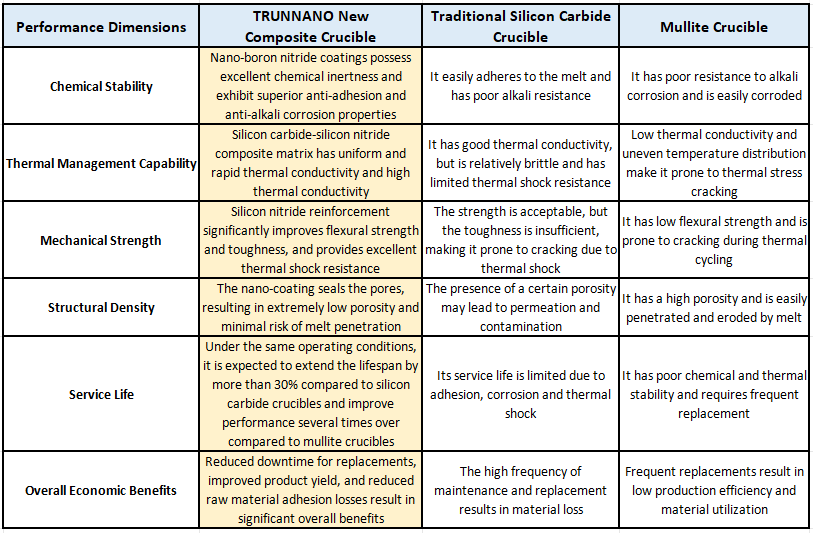
This product is a high-performance ceramic crucible designed specifically for extreme industrial environments. The substrate is made from an advanced silicon nitride-bonded silicon carbide (Si₃N₄-SiC) composite ceramic. This material uses high-hardness, high-strength silicon carbide as the aggregate, with interwoven rod-like silicon nitride crystals serving as the bonding phase, resulting in excellent room-temperature and high-temperature strength, outstanding thermal shock resistance, and good chemical corrosion resistance. On top of this, the inner surface of the crucible is specially coated with a high-purity, dense boron nitride (BN) ceramic coating. This coating further imparts exceptional chemical inertness, excellent demolding performance, and enhanced resistance to melt wetting and penetration. The combination of these two materials creates a premium refractory container capable of withstanding temperatures above 1650°C, severe thermal shocks, and effectively resisting corrosion from various molten metals (such as aluminum, copper, zinc, and their alloys) and corrosive media. It is an ideal choice for demanding processes such as vacuum induction melting, precision casting, crystal growth, and high-temperature sintering.

Silicon Nitride-Bonded Silicon Carbide Crucible with Nano Boron Nitride Coating
Manufacturing Process of Silicon Nitride-Bonded Silicon Carbide Crucible with Nano Boron Nitride Coating
Substrate Preparation (Reaction Sintering): Silicon carbide (SiC) particles with specific size gradations, silicon powder (Si), and a small amount of sintering aids are uniformly mixed. The crucible green body is formed via semi-dry pressing or gel casting. It is then reaction-sintered in a nitrogen atmosphere at 1300-1420°C, where the silicon powder reacts with nitrogen to form silicon nitride (Si₃N₄) in situ, firmly bonding the SiC particles and creating a high-strength substrate.
Precision Machining and Pretreatment: The sintered crucible substrate is mechanically processed to ensure dimensional accuracy. The surface to be coated is meticulously cleaned, dried, and roughened to enhance coating adhesion.
Boron Nitride Coating Preparation and Application: A high-purity boron nitride ceramic slurry is applied using precisely controlled brushing, dipping, or spraying techniques to form a uniform coating on the inner surface of the crucible.
Drying and Programmed Sintering: The coating is thoroughly air-dried, followed by programmed high-temperature sintering in a protective atmosphere. This process strictly controls heating and cooling rates (especially slow heating in critical low-temperature zones to remove moisture), densifying the BN coating and ensuring strong bonding with the substrate. The result is a robust, inert protective layer.

Silicon Nitride-Bonded Silicon Carbide Crucible with Nano Boron Nitride Coating
Specifications of Silicon Nitride-Bonded Silicon Carbide Crucible with Nano Boron Nitride Coating
 Applications of Silicon Nitride-Bonded Silicon Carbide Crucible with Nano Boron Nitride Coating
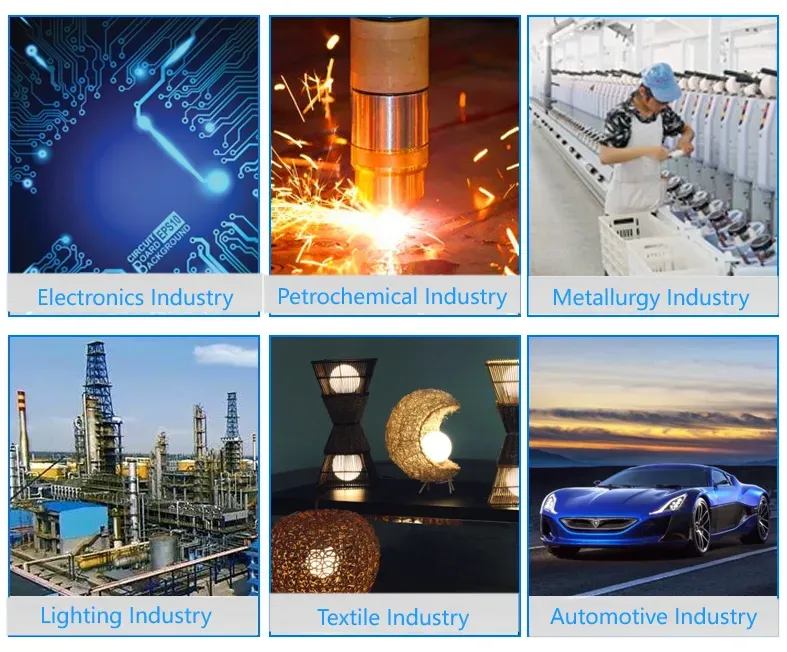
High-End Metal Melting and Casting: Vacuum/atmosphere induction melting of gold, silver, platinum, copper, aluminum, and their specialty alloys; precision casting.
Semiconductor and Crystal Growth: Crucibles or components for single crystal growth of sapphire, semiconductor compounds, etc.
High-Temperature Material Processing: High-temperature sintering (e.g., ceramic powders, hard metals), powder metallurgy.
Special Functional Material Preparation: High-temperature melting and sintering of rare earth permanent magnets (e.g., NdFeB) and magnetic alloys, ensuring material purity and corrosion resistance.
New Energy Battery Material R&D and Production: High-temperature synthesis and sintering of lithium-ion battery cathode materials (e.g., ternary materials, lithium cobalt oxide), purification and preparation of solid electrolytes and battery-related metal compounds, ensuring batch stability and consistency.
Glass and Inorganic Non-Metal Melting: High-purity melting of specialty glass, optical glass, fused quartz, etc.
Analytical Testing and Laboratories: Durable containers for high-temperature chemical analysis, ashing, and sample preparation.
 Company Profile
Luoyang Tongrun Nano Technology Co. Ltd. (TRUNNANO) is a trusted global chemical material supplier & manufacturer with over 12-year-experience in providing super high-qualitychemicals andnanomaterials, includingboride powder, nitride powder, graphite powder, sulfide powder, 3D printing powder, etc.
The company has a professional technical department and Quality Supervision Department, a well-equipped laboratory, and equipped with advanced testing equipment and after-sales customer service center.
If you are looking for high-quality Silicon Nitride-Bonded Silicon Carbide Crucible with Nano Boron Nitride Coating please feel free to contact usor click on the needed productstosend an inquiry.
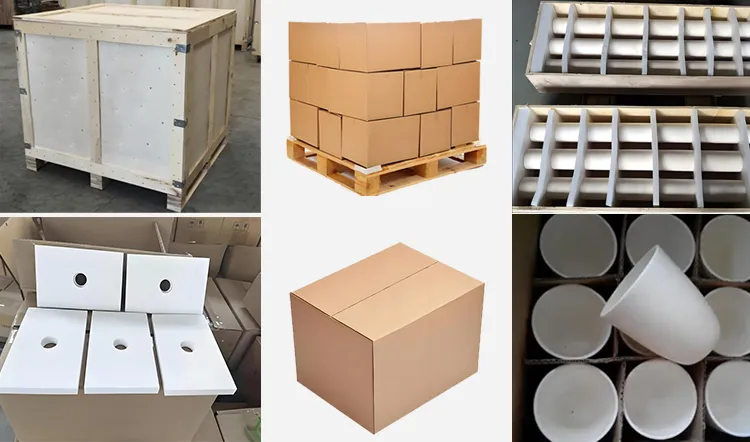
Packing and Storage
 PaymentTerm
T/T, Western Union, Paypal, Credit Card etc.
ShipmentTerm
By air, by sea, by express, as customers request.
FAQs of Silicon Nitride-Bonded Silicon Carbide Crucible with Nano Boron Nitride Coating
Q1: What is the maximum safe operating temperature of this crucible?
A1: The Si₃N₄-SiC substrate can safely operate at approximately 1500°C in oxidizing atmospheres and up to 1650-1750°C in inert or reducing atmospheres. The boron nitride coating remains stable up to 1700°C. The specific operating temperature depends on the actual working atmosphere.
Q2: What is the main function of the boron nitride coating?
A2: The boron nitride coating provides: 1) Excellent demolding properties to prevent melt adhesion; 2) Superior chemical inertness to protect melt purity and prevent reactions with the substrate; 3) An additional barrier against penetration and corrosion, extending the crucible’s service life with corrosive melts.
Q3: Can this crucible be used for melting steel?
A3: Not recommended. Although the material is hard and high-temperature resistant, molten iron has strong erosive properties toward silicon-based materials (SiC, Si₃N₄), which may lead to premature crucible failure. It is more suitable for non-ferrous metals, precious metals, and non-metal melting.
Q4: Will the coating peel off? How should it be maintained?
A4: Through optimized surface pretreatment and strict sintering processes, the BN coating bonds firmly to the substrate. To avoid peeling, adhere to the operating temperature range and avoid mechanical impacts and rapid temperature changes. For post-use cleaning, use soft tools. If the coating is severely damaged, professional recoating services are available.
Q5: What are the advantages compared to ordinary graphite or alumina crucibles?
A5: Compared to graphite crucibles, it offers stronger oxidation resistance (usable without a protective atmosphere), higher mechanical strength, and a longer service life. Compared to alumina crucibles, it provides superior thermal shock resistance (less prone to cracking), higher thermal conductivity, and better resistance to molten metal erosion, especially with melts like aluminum and copper.