Features of Reaction-bonded Silicon Carbide
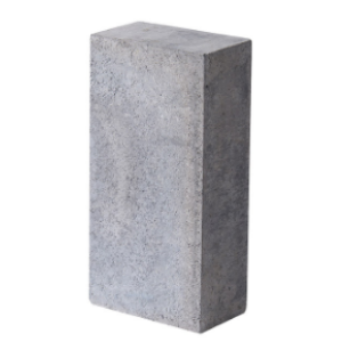
| Property | Unit | Value |
| Silicon Carbide Content | % | 98.5 - 99% |
| Max. Continuous Use Temp (Air) | °C | 1380 |
| Density | g/cm³ | ≥ 3.02 |
| Porosity | % | ≤ 0.1 |
| Flexural Strength | MPa | 250 (20°C) |
| MPa | 280 (1200°C) | |
| Elastic Modulus | GPa | 330 (20°C) |
| Thermal Conductivity | W/m·K | 120 (20°C) |
| W/m·K | 45 (1200°C) | |
| Coefficient of Thermal Expansion | K⁻¹ x10⁻⁶ | 4.5 |
| Mohs Hardness | - | 13 |
The unique combination of features makes RB-SiC indispensable across a wide range of demanding industries.
High-Temperature Kiln & Thermal Equipment: The largest application area. Used for rollers, beams, rails, setters, and saggers in furnaces for ceramics, lithium battery materials, and magnetic materials.
Wear & Seal Components: Ideal for mechanical seal rings, wear-resistant liners, and nozzles in mining, power, and pump industries.
Chemical Industry: Suitable for pumps and valve components that handle corrosive media with particulate matter.
Ballistic Armor: Used in lightweight composite armor due to its high hardness and specific stiffness.
Semiconductor Industry: Employed in high-purity fixtures, paddles, and boats for wafer processing.
Luoyang Tongrun Nano Technology Co. Ltd. (TRUNNANO) is a trusted global chemical material supplier & manufacturer with over 12-year-experience in providing super high-quality chemicals and nanomaterials, including boride powder, nitride powder, graphite powder, ceramic products, 3D printing powder, etc.
The company has a professional technical department and Quality Supervision Department, a well-equipped laboratory, and equipped with advanced testing equipment and after-sales customer service center.
If you are looking for high-quality Ceramic Products please feel free to contact us or click on the needed products to send an inquiry.

FAQs of Reaction-bonded Silicon Carbide
1. What is the main difference between RB-SiC and Sintered Silicon Carbide (SSiC)?
Re: The key difference is the manufacturing process. RB-SiC is densified via a chemical reaction with molten silicon, resulting in minimal shrinkage and containing some free silicon. SSiC is sintered without a chemical reaction, is nearly 100% SiC, and generally offers higher room-temperature strength and better corrosion resistance but is less suitable for large, complex shapes.
2. Why is the maximum use temperature of RB-SiC limited to around 1380°C?
Re: This limitation is due to the residual free silicon (melting point 1414°C) within the microstructure. Prolonged exposure in air above 1380°C can cause the silicon to oxidize or soften, leading to a degradation of mechanical properties.
3. In which chemical environments is RB-SiC not suitable?
Re: RB-SiC is not recommended for use in hydrofluoric acid (HF) or hot, concentrated alkaline solutions, as the free silicon phase will react and corrode.
4. What does "Near-Net-Shape" mean, and what is the benefit?
Re: "Near-Net-Shape" means the final product is formed very close to its desired dimensions. For RB-SiC, the sintering shrinkage is less than 1%, so the final part closely matches the mold. This drastically reduces the need for and cost of extensive final machining.
5. Is RB-SiC a good electrical insulator?
Re: No, Silicon Carbide is a semiconductor. The presence of free silicon, which is metallic, further increases the electrical conductivity of RB-SiC compared to the pure SSiC variety. It is not typically used as an insulator.