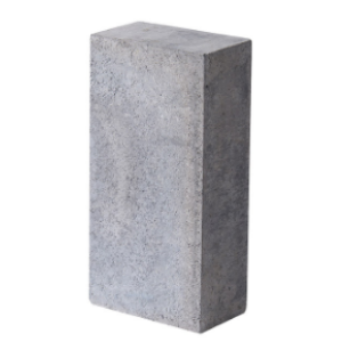
| Property | Unit | Value |
| Silicon Carbide Content | % | 98.5 - 99% |
| Max. Continuous Use Temp (Air) | °C | 1650 |
| Density | g/cm³ | ≥ 2.7 |
| Porosity | % | ~15 |
| Flexural Strength | MPa | 80 - 100 (20°C) |
| MPa | 90 - 110 (1200°C) | |
| Elastic Modulus | GPa | 280 (20°C) |
| Thermal Conductivity | W/m·K | 100 (20°C) |
| W/m·K | 35 (1200°C) | |
| Coefficient of Thermal Expansion | K⁻¹ x10⁻⁶ | 4.6 |
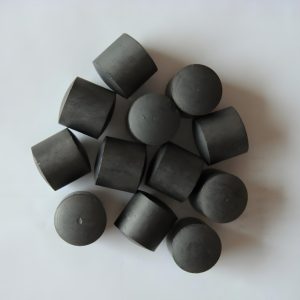
Recrystallized Silicon Carbide Ceramic Product
Applications of Recrystallized Silicon Carbide Ceramic Products
Luoyang Tongrun Nano Technology Co. Ltd. (TRUNNANO) is a trusted global chemical material supplier & manufacturer with over 12-year-experience in providing super high-quality chemicals and nanomaterials, including boride powder, nitride powder, graphite powder, ceramic products, 3D printing powder, etc.
The company has a professional technical department and Quality Supervision Department, a well-equipped laboratory, and equipped with advanced testing equipment and after-sales customer service center.
If you are looking for high-quality Ceramic Products please feel free to contact us or click on the needed products to send an inquiry.

1. What is the key advantage of RSiC over other types of silicon carbide?
Re: Its key advantage is its combination of ultra-high purity (no sintering aids), exceptional high-temperature strength and creep resistance (up to 1650°C in air), and superior corrosion resistance, making it ideal for the most extreme environments.
2. Why does RSiC have a lower room-temperature strength compared to Sintered SiC (SSiC)?
Re: RSiC has an intrinsic porosity (typically 15-20%) due to its unique recrystallization process, which does not fully densify the material. This porosity limits its mechanical strength at room temperature compared to fully dense ceramics like SSiC.
3. Can RSiC be used in oxidizing atmospheres?
Re: Yes. RSiC exhibits excellent oxidation resistance. At high temperatures in an oxygen-containing environment, it forms a protective and self-healing silicon dioxide (SiO₂) layer on the surface that prevents further oxidation.
4. What are the main applications for RSiC?
Re: Its primary application is in high-temperature kiln furniture, such as rollers and beams, where its resistance to sagging (creep) under load at extreme temperatures is critical. It is also widely used in corrosive environments and as a substrate for DPF.
5. When should I choose RSiC over Reaction-Bonded SiC (SiSiC)?
Re: Choose RSiC when your application involves continuous temperatures above 1380°C, requires ultimate corrosion resistance (e.g., against strong alkalis), or demands the absolute best resistance to high-temperature creep. Choose SiSiC for complex-shaped parts that require higher room-temperature strength and where the operating temperature is lower