Overview of Silicon Nitride Slides for Induction Hardening Machines
Silicon Nitride Slide is a mechanical part made of silicon nitride ceramic. Silicon Nitride Slide for Induction Hardening Machines has high hardness, strong abrasion resistance, and can withstand frequent friction and impact, to ensure the long-term stability of the slide work. High temperature resistance, good thermal stability, can be adapted to the high temperature environment in the quenching process, reducing thermal deformation. Good insulation can avoid the current interference during induction quenching. In addition, Silicon Nitride Slide has strong chemical stability and is not easily corroded by quenching liquid, which improves the reliability and service life of the equipment and enhances the precision and efficiency of the quenching process.
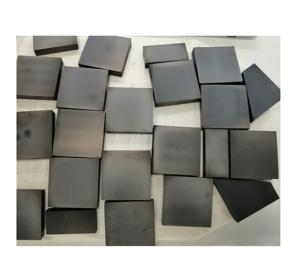
Silicon Nitride Slides for Induction Hardening Machines
Features of Silicon Nitride Slides for Induction Hardening Machines
High Temperature Resistance and Thermal Stability: The induction hardening process generates significant heat. Silicon Nitride Slides can withstand high temperatures with a low coefficient of thermal expansion, maintaining stable dimensions and performance even in rapidly changing thermal environments. This reduces the risk of deformation or cracking due to thermal stress, ensuring the precision and stability of the quenching process.
High Hardness and Wear Resistance: Silicon nitride is extremely hard and offers excellent wear resistance. In induction hardening machines, the slider frequently drives the workpiece, subjecting it to long-term friction and wear. A silicon nitride slider maintains a good surface finish and precision, reducing workpiece positioning errors caused by slider wear, extending the maintenance cycle, and increasing the service life of the equipment.
Good Insulation Properties: During operation, induction hardening machines generate a strong electromagnetic field. Silicon nitride's excellent insulation properties prevent current leakage, avoiding potential safety hazards for both the equipment and operators. This also reduces electromagnetic interference, ensuring the normal operation of the equipment and the stability of the quenching quality.
Strong Chemical Stability: The quenching liquids and other media used in the process can be corrosive. Silicon Nitride Slides exhibit outstanding corrosion resistance, remaining stable in harsh chemical environments and ensuring reliable performance, thereby enhancing the slider's service life.
Specifications Table of Silicon Nitride Slides for Induction Hardening Machines
| Item |
Typical Value |
| Material |
Silicon nitride ceramic |
| Color |
Black or grayish-black7 |
| Density |
\(3.1 - 3.3\ g/cm^3\)4 |
| Hardness |
HRA 90, Vickers hardness (HV50) > 15503 |
| Modulus of elasticity |
280 - 310 GPa8 |
| Flexural strength |
600 - 800 MPa7 |
| Compressive strength |
2000 - 3500 MPa |
| Fracture toughness |
4 - 6 MPa·m\(^{1/2}\)5 |
| Maximum service temperature |
1200 °C in air2 |
| Thermal conductivity |
15 - 20 W/(m·K)3 |
| Thermal expansion coefficient |
\(3.1 - 3.3\times10^{-6}/°\)C |
| Volume resistivity |
> \(10^{12}\) Ω·cm3 |
| Dimensional accuracy |
Up to ±0.003 mm7 |
| Surface finish |
Up to Ra 0.03 |
|
Applications of Silicon Nitride Slides for Induction Hardening Machines
Precise Workpiece Positioning: Induction hardening requires precise position control of the workpiece to ensure the accuracy and consistency of the quenched part. With its high-precision manufacturing process and good dimensional stability, the silicon nitride slider can accurately locate the workpiece and accurately transport it to the induction heating area to ensure the positional accuracy of each quenching, thus improving the stability of product quality.
Workpiece Carrying and Transfer: These slides have high strength and load capacity, enabling smooth and stable transfer of workpieces between stations (e.g., heating and quenching stations). This ensures smooth operation and prevents workpiece shaking or misalignment during the quenching process.
Adaptation to Complex Motions: Induction hardening machines often involve complex motions such as linear and rotary movements. Silicon Nitride Slides can be custom-designed to accommodate these motions, providing accurate trajectories and meeting the diverse needs of the quenching process.
Improved Production Efficiency: By enabling fast and efficient workpiece transfer, reducing equipment runtime and energy consumption, and minimizing downtime due to slider failures, these slides enhance the overall production efficiency of induction hardening machines.
Company Profile
Luoyang Tongrun Nano Technology Co. Ltd. (TRUNNANO) is a trusted global chemical material supplier & manufacturer with over 12-year-experience in providing super high-quality chemicals and nanomaterials, including boride powder, nitride powder, graphite powder, ceramic products, 3D printing powder, etc.
The company has a professional technical department and Quality Supervision Department, a well-equipped laboratory, and equipped with advanced testing equipment and after-sales customer service center.
If you are looking for high-quality Ceramic Products please feel free to contact us or click on the needed products to send an inquiry.
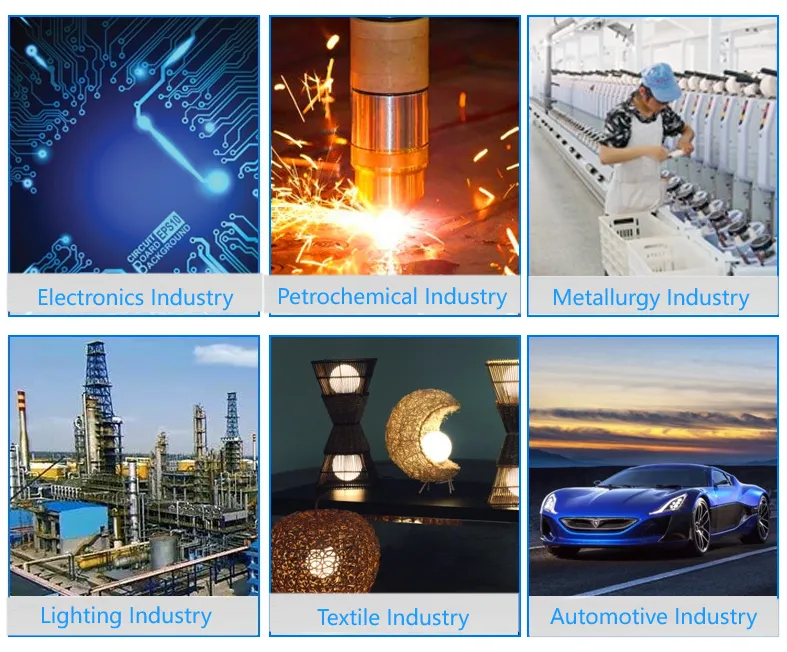
Applications of Ceramic Products
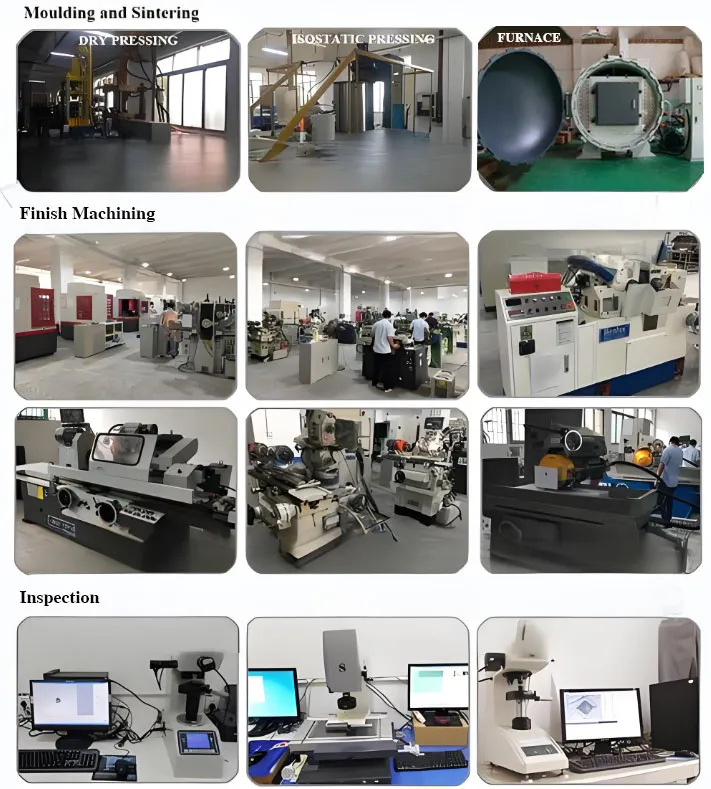
Process of Ceramic Products
Payment Term
T/T, Western Union, Paypal, Credit Card etc.
Shipment Term
By air, by sea, by express, as customers request.
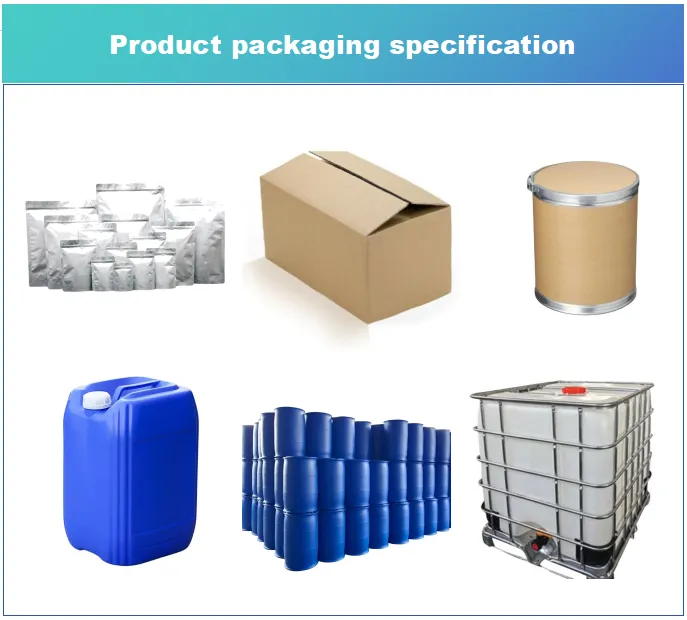
5 FAQs of Silicon Nitride Slides for Induction Hardening Machines
Q1: What types of induction hardening machines are silicon nitride sliders suitable for?
Silicon nitride sliders are suitable for:
Workpieces: Shafts, gears, disks, and other components requiring precision positioning.
Equipment: High-frequency, medium-frequency, and ultra-audio induction hardening machines, particularly for automated production lines.
Industries: Automotive manufacturing, aerospace, machining, semiconductors, and other fields demanding high precision and reliability.
Q2: How does the silicon nitride slider achieve accurate positioning?
High Precision Processing: Precision grinding and polishing achieve surface roughness of Ra0.1μm or less, with rail accuracy up to ±0.005mm.
Dimensional Stability: A Low thermal expansion coefficient minimizes dimensional changes in high-temperature environments, preventing positioning deviations due to thermal deformation.
Structural Design: Customizable structures like dovetail grooves and T-slots closely match equipment rails and reduce clearance errors.
Q3: How to extend the service life of silicon nitride sliders?
Lubrication and Cleaning: Regularly use high-temperature resistant lubricants (e.g., molybdenum disulfide) to prevent wear from dust or quenching liquid residue.
Avoid Overload: Strictly control the load to stay within the slider's rated capacity (usually 50-200N/mm).
Temperature Control: Ensure the working temperature remains within the recommended range to prevent oxidation or softening at high temperatures.
Regular Inspection: Check the slider surface for wear every quarter and replace sliders with more than 0.1mm wear promptly.
Q4: How long is the service life of the silicon nitride slider?
Under normal operating conditions, silicon nitride sliders can last 2-5 years. For example, Zhejiang Shangshi Silicon Polytechnic's silicon nitride lift tube has a service life of over 1 year in aluminum melt, significantly outperforming traditional cast iron or refractory materials. With proper maintenance, some high-precision sliders can last more than 5 years.
Q5: Can silicon nitride sliders replace graphite sliders?
Yes, silicon nitride sliders can completely replace graphite sliders in induction hardening machines, offering several advantages:
Longer Life: Graphite sliders oxidize easily and typically last only 3-6 months, while silicon nitride sliders can last over 2 years.
Higher Precision: Graphite wears easily, leading to positioning deviations, whereas silicon nitride maintains high hardness and precision over long-term use.
No Impurity Contamination: Graphite debris can contaminate workpieces and affect quenching quality, while silicon nitride is chemically stable and does not introduce impurities.