Overview of Silicon Nitride Degassing Rotor Impeller Shafts
Silicon nitride degassing rotor impeller shafts are a key component used in areas such as aluminum treatment. It is usually made of silicon nitride material, which has the characteristics of high strength, high hardness, high temperature resistance, wear resistance and good chemical stability. Their impeller shafts are designed to efficiently remove hydrogen and impurities from liquid aluminum through high-speed rotation, enhancing the quality of the liquid aluminum and extending the equipment's service life.
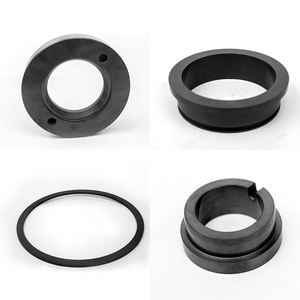
Silicon Nitride Degassing Rotor Impeller Shafts
Features of Silicon Nitride Degassing Rotor Impeller Shafts
Excellent High-Temperature Resistance: With a high melting point and thermal stability, silicon nitride can withstand temperatures above 1600℃, ensuring normal operation under prolonged high-temperature conditions.
High Strength and Hardness: Silicon nitride offers very high strength and hardness (Rockwell hardness up to HRA80-85, bending strength of 800-1000 MPa), making the impeller shaft resistant to wear and fracture from high-speed rotation and aluminum liquid scouring.
Good Corrosion Resistance: Silicon nitride resists corrosion from aluminum liquid and related chemicals, preventing surface degradation and maintaining the shaft's performance and precision.
Low Coefficient of Thermal Expansion: The low thermal expansion coefficient of silicon nitride ensures minimal size change with temperature fluctuations, maintaining a precise fit and efficient operation at different temperatures.
Specifications Table of Silicon Nitride Degassing Rotor Impeller Shafts
| Item |
Unit |
Specification |
| Material |
- |
Silicon nitride |
| Bulk density |
g/cm³ |
3.2 |
| Water absorption |
% |
0 |
| Flexural strength |
MPa |
750 |
| Young's modulus of elasticity |
GPa |
280 |
| Fracture toughness |
MPa·m¹/² |
6.5 |
| Poisson's ratio |
- |
0.28 |
| Vickers hardness |
GPa |
13 |
| Coefficient of linear thermal expansion |
×10⁻⁶/℃ |
3.4 |
| Thermal conductivity |
W/(m·K) |
30 |
| Specific heat |
J/(g·K) |
0.65 |
| Volume resistivity |
Ω·cm |
>10¹⁴ |
| Heat shock resistance |
℃ |
800 |
| Maximum available temperature |
℃ |
1200 |
|
Applications of Silicon Nitride Degassing Rotor Impeller Shafts
In the process of aluminum alloy melting, hydrogen and other gases, as well as some impurities, will be mixed in the aluminum liquid. Silicon nitride degassing rotor impeller shaft, through high-speed rotation, inert gases (such as argon, nitrogen) are dispersed into tiny bubbles, so that they are evenly distributed in the aluminum liquid.
In addition, in some high-end casting fields, such as aerospace, automotive parts, and other industries with extremely high quality requirements for aluminum alloys, the application of a silicon nitride degassing rotor impeller shaft is particularly important. At the same time, due to its good resistance to high temperature, abrasion and corrosion, it can operate stably for a long time under the harsh working environment, reduce the maintenance cost and replacement frequency of the equipment, and improve the production efficiency.
Company Profile
Luoyang Tongrun Nano Technology Co. Ltd. (TRUNNANO) is a trusted global chemical material supplier & manufacturer with over 12-year-experience in providing super high-quality chemicals and nanomaterials, including boride powder, nitride powder, graphite powder, ceramic products, 3D printing powder, etc.
The company has a professional technical department and Quality Supervision Department, a well-equipped laboratory, and equipped with advanced testing equipment and after-sales customer service center.
If you are looking for high-quality Ceramic Products please feel free to contact us or click on the needed products to send an inquiry.

Applications of Ceramic Products
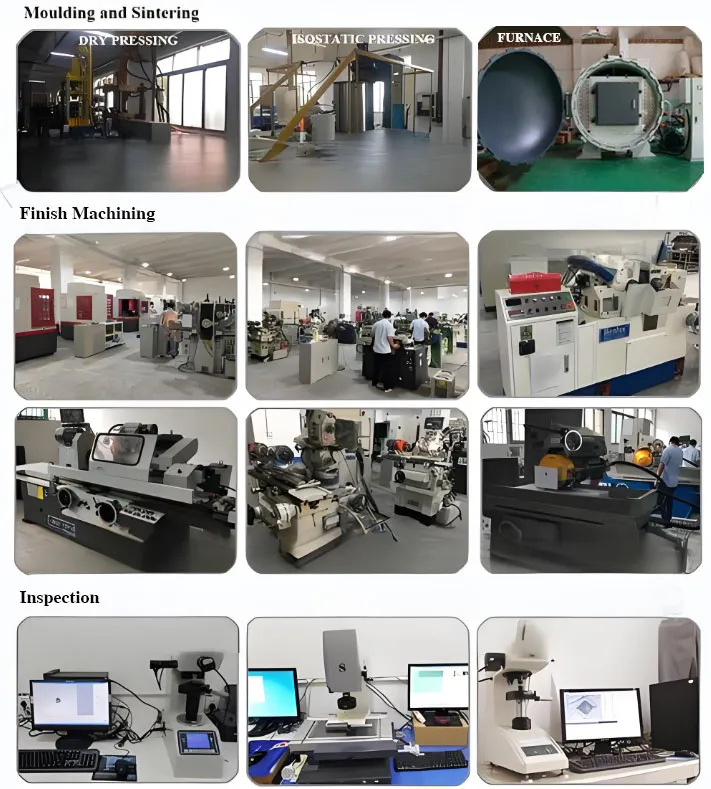
Process of Ceramic Products
Payment Term
T/T, Western Union, Paypal, Credit Card etc.
Shipment Term
By air, by sea, by express, as customers request.
5 FAQs of Silicon Nitride Degassing Rotor Impeller Shafts
Q1: What are the advantages of silicon nitride over traditional graphite rotors?
Longer Life: Graphite rotors oxidize easily and last about 1-2 weeks, while silicon nitride rotors can operate stably for 3-6 months, reducing replacement frequency.
Higher Efficiency: Silicon nitride rotors have a smooth surface and more uniform bubble dispersion, increasing degassing efficiency by 20%-30%.
Low Maintenance Cost: No aluminum sticking or slag accumulation, longer cleaning cycles, and reduced inert gas consumption by 15%-20%.
Q2: How to maintain the silicon nitride rotor correctly?
Avoid Mechanical Shock: Handle gently during installation and disassembly to prevent ceramic cracking.
Cleaning Methods: Use ultrasonic cleaning with deionized water or chemical cleaning with a weak alkaline solution (e.g., sodium carbonate) to remove aluminum slag and avoid acid corrosion.
Periodic Inspection: Check for wear (replace if impeller edge wear exceeds 2mm) and gas channel leaks (replace seals as needed).
Q3: What are the common failures and solutions of the silicon nitride degassing rotor impeller shaft?
Rotor Offset: Caused by misalignment or loose bearings during installation. Re-align the mounting position and replace worn bearings.
Gas Leakage: Caused by seal aging or loose threaded connections. Replace sealing O-rings and tighten connections.
Aluminum Contamination: Caused by rotor surface damage or impure material. Use high-purity silicon nitride and regularly inspect surface integrity.
Q4: What do I need to pay attention to when installing the silicon nitride degassing rotor impeller shaft?
Alignment Accuracy: Ensure concentricity error between the rotor shaft and motor shaft is within ±0.05mm to prevent vibration during high-speed rotation.
Support Structure: Use a triangular support design (e.g., inclined stabilizer bar + connecting rod) to enhance stability and reduce motor shaft wear.
Pre-Heating Treatment: Gradually increase the temperature to 300-500℃ before use to prevent cracking from sudden temperature changes.
Q5: What are the specifications to be observed during the operation of the silicon nitride degassing rotor impeller shaft?
Speed Control: Maintain a speed of 300-500 rpm to avoid excessive centrifugal force that could damage the rotor.
Gas Flow: Adjust the flow of inert gas (e.g., argon) to 5- 15L/min based on the amount of aluminum liquid to prevent excessive bubbles.
Safety Protection: Operators should wear high-temperature resistant gloves and goggles to protect against aluminum splashes.