Overview of Silicon Nitride Ceramic Nails
Silicon Nitride Ceramic Nails is a new type of ceramic product made of silicon nitride as the main raw material. It has high strength, high hardness, high-temperature resistance, wear resistance, corrosion resistance and other excellent properties. At the same time, silicon nitride ceramic nail also has good insulation and chemical stability. Therefore, Silicon Nitride Ceramic Nails are widely used in machinery manufacturing, electronics, aerospace and other fields.
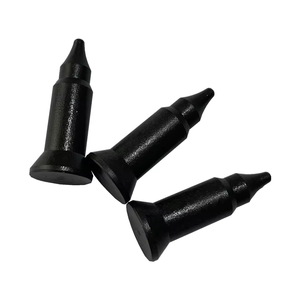
Silicon Nitride Ceramic Nails
Features of Silicon Nitride Ceramic Nails
High Strength and Hardness: With a hardness second only to diamond and a few other materials, these nails can endure significant external forces without deformation or damage. This makes them ideal for high-precision and high-stability connection parts.
Superior High-Temperature Resistance: These nails can maintain their properties at temperatures as high as 1200°C or more, making them suitable for high-temperature industrial applications like metallurgy and glass manufacturing.
Excellent Wear Resistance: silicon nitride ceramic nails have excellent wear resistance, a smooth surface and a small friction coefficient. In frequent contact and friction occasions, such as the connection of mechanical transmission components, silicon nitride ceramic nails can effectively reduce wear and prolong the service life of themselves and related components, reducing maintenance costs.
Strong Corrosion Resistance: They can withstand acids, alkalis, and other chemicals, ensuring stable performance in corrosive environments and maintaining connection reliability.
Good Insulation Performance: Their electrical insulation properties make them suitable for use in electronic devices and other applications with high insulation requirements, preventing short circuits and ensuring safe operation.Electronic industry: due to the good insulating properties and high-temperature resistance of silicon nitride ceramic nails, silicon nitride ceramic nails can be used in electronic equipment such as circuit board fixed and chip encapsulation. It can effectively prevent circuit short-circuits and, at the same time, maintain stable performance in high-temperature environments to ensure the normal operation of electronic equipment.
Aerospace: They connect high-temperature parts of aviation engines and structural components of spacecraft, ensuring stability under extreme conditions and reducing engine weight.
Chemical Industry: They are used to connect reactors and pipelines, resisting chemical erosion and ensuring equipment safety.
Powder Synthesis: High-purity silicon powder (purity > 99.9%) is directly nitrided or reduced to produce α-Si₃N₄ and β-Si₃N₄ mixed powder.
Specifications of Silicon Nitride Ceramic Nails
| Property |
Typical Value |
| Material |
Silicon nitride (Si₃N₄) |
| Color |
Black - gray3 |
| Density |
≥3.2 g/cm³34 |
| Hardness (HV 1) |
14 - 16 GPa34 |
| Bending Strength |
>800 MPa34 |
| Compressive Strength |
>4000 MPa4 |
| Fracture Toughness |
6 - 8 MPa·m¹/²4 |
| Young's Modulus |
300 - 320 GPa34 |
| Poisson's Ratio |
0.283 |
| Thermal Conductivity |
15 - 28 W/m·K3 |
| Coefficient of Thermal Expansion |
2.2 - 3.5×10⁻⁶/℃34 |
| Maximum Service Temperature |
1100 - 1200℃ in air3 |
| Electrical Resistivity |
10⁷ - 10¹² Ω·cm3 |
| Dielectric Constant |
6 |
|
Applications of Silicon Nitride Ceramic Nails
Mechanical Engineering: Silicon Nitride Ceramic Nails are used for the connection of components in high-precision machine tools. Because of its high strength, high hardness and good wear resistance, it can ensure that the machine tool in the high-speed, high-precision machining process, the parts of the connection are stable to ensure the machining accuracy. At the same time, in the automobile engine, it can be used to connect some high-temperature-resistant, wear-resistant parts, such as pistons and connecting rods, etc., to improve the reliability and service life of the engine.
Company Profile
Luoyang Tongrun Nano Technology Co. Ltd. (TRUNNANO) is a trusted global chemical material supplier & manufacturer with over 12-year-experience in providing super high-quality chemicals and nanomaterials, including boride powder, nitride powder, graphite powder, ceramic products, 3D printing powder, etc.
The company has a professional technical department and Quality Supervision Department, a well-equipped laboratory, and equipped with advanced testing equipment and after-sales customer service center.
If you are looking for high-quality Ceramic Products please feel free to contact us or click on the needed products to send an inquiry.
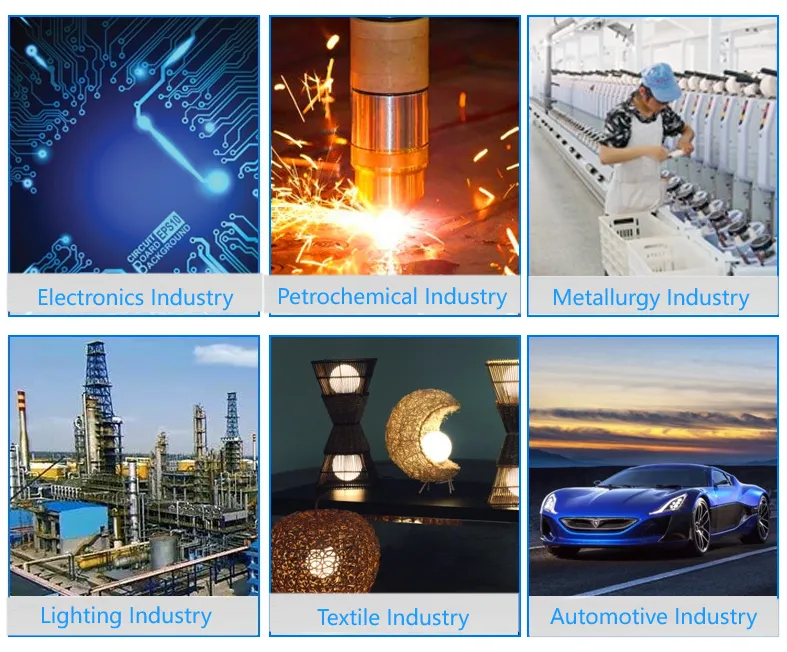
Applications of Ceramic Products
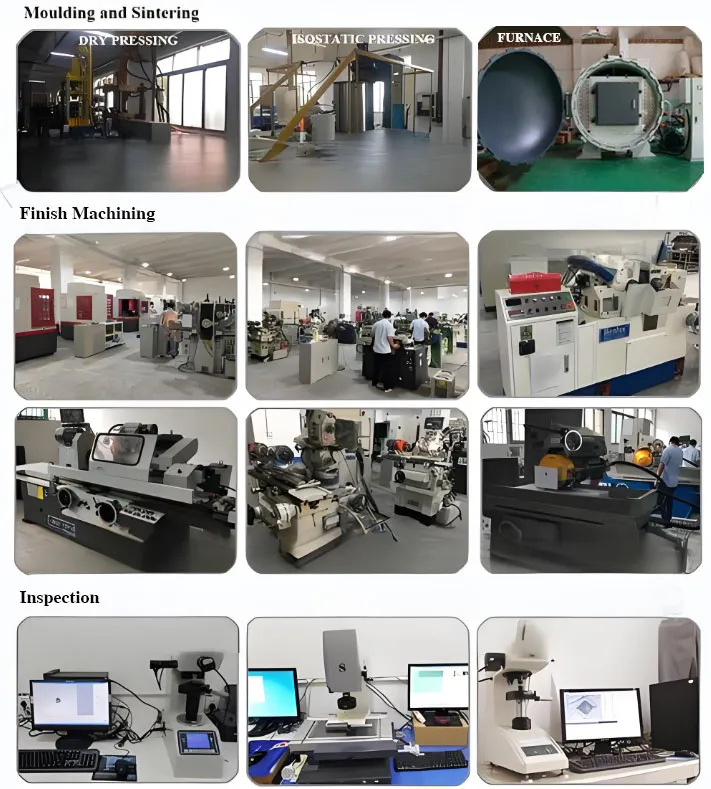
Process of Ceramic Products
Payment Term
T/T, Western Union, Paypal, Credit Card etc.
Shipment Term
By air, by sea, by express, as customers request.
5 FAQs about Silicon Nitride Ceramic Nails
Q1: What is the production process of silicon nitride ceramic nails?
Molding: Billets are formed using dry pressing, injection, or isostatic pressure molding.Reaction Sintering: Low cost, density 2-2.7 g/cm³, suitable for common mechanical joints.Hot Press Sintering: Density > 99%, strength > 850 MPa, used in high-end fields like aerospace.Pressureless Sintering: Sintered in nitrogen at 1-10 MPa, producing a long columnar grain structure to enhance fracture toughness.
Q2: Why are silicon nitride ceramic nails more expensive than metal nails?
Raw Material Cost: High-purity silicon powder (purity > 99.9%) costs about 200 RMB/kg, ten times that of stainless steel.
Processing Difficulty: Diamond tools or laser cutting are required, with a processing efficiency of only 1/5 of metal and high tool loss costs.
Process Complexity: Hot press sintering requires high-temperature and high-pressure equipment, with energy consumption of 3-5 times that of ordinary metal processing.
Long-term Benefits: Despite the high initial cost, their lifespan is 5-10 times that of stainless steel nails, reducing long-term maintenance costs.
Q3: How to choose the right silicon nitride ceramic nail?
Temperature: Reaction sintering for temperatures below 1200°C, pressureless sintering for above 1200°C.
Load: High alternating load requires hot press sintered products with β-phase content > 80%.
Environment: For exposure to hydrofluoric acid or strong alkali, a silicon carbide coating is needed.
Cost: Domestic reaction sintered nails (about 20 RMB/pc) for low-end applications, imported pressureless sintered nails (about 1200 RMB/kg) for high-end applications.
Q4: What should I pay attention to when installing silicon nitride ceramic nails?
Surface Treatment: Apply molybdenum disulfide grease to the threaded part to prevent seizing.
Temperature Control: Reserve an expansion gap in high-temperature environments (e.g., 0.3 mm per meter length at 1000°C).
Non-Destructive Testing: Use ultrasonic flaw detection to detect internal cracks and X-ray diffraction to analyze crystal phase composition.
Q5: How to test the quality of silicon nitride ceramic nails?
Performance Testing: Measure strength with a three-point bending test and evaluate wear resistance with a friction and abrasion tester.
Life Prediction: Utilize Weibull statistical analysis and reliability modeling to predict fatigue life.