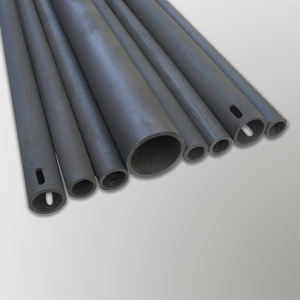
Overview of Silicon Nitride Ceramic Rods
Silicon Nitride Ceramic Rods are a kind of high performance ceramic material products. They are characterized by high strength and high hardness and can withstand large external forces and resist abrasion. At the same time, Silicon Nitride Ceramic Rods have good resistance to high temperatures and corrosion and remain stable in harsh environments. Silicon Nitride Ceramic Rods have excellent insulating properties and a low coefficient of thermal expansion, which makes them a new material with great potential for use in a wide range of mechanical, electronic, and chemical applications.
Silicon Nitride Ceramic Rods
Features of Silicon Nitride Ceramic Rods
Silicon Nitride Ceramic Rods offer several key features:
High Strength and Hardness: With extremely high strength and hardness, second only to super-hard materials like diamond, they excel in wear and impact resistance. This makes them suitable for manufacturing parts used in high-load and high-wear environments.
Excellent High-Temperature Resistance: They can maintain good mechanical properties and chemical stability in high-temperature environments, withstanding temperatures up to 1600℃. This makes them ideal for use in high-temperature fields such as aerospace and metallurgy.
Strong Corrosion Resistance: They are highly resistant to acids, alkalis, and other chemicals, allowing them to work stably for extended periods in harsh chemical environments commonly found in the chemical and electronic industries.
Good Insulation Properties: As an excellent electrical insulator with high resistivity and a low dielectric constant, they can effectively prevent current flow and are suitable for manufacturing insulating components in electronic devices.
Low Coefficient of Thermal Expansion: With a low coefficient of thermal expansion, they exhibit minimal dimensional changes when temperatures fluctuate. This reduces thermal expansion-induced stress when used with other materials in high-temperature environments, enhancing component reliability and stability.
Specifications of Silicon Nitride Ceramic Rods
| Property |
Unit |
Value |
| Color |
- |
Black - gray |
| Density |
g/cm³ |
3.21 |
| Compressive strength |
MPa |
3000 |
| Flexural strength |
MPa |
800 |
| Weibull modulus |
- |
15 |
| Fracture toughness \(K_{Ic}\) |
MPa·m¹/² |
6.5 |
| Young's modulus E |
GPa |
320 |
| Poisson's ratio |
- |
0.28 |
| Vickers hardness (HV 1) |
GPa |
16 |
| Maximum temperature in inert gas |
℃ |
1200 |
| Maximum temperature in air |
℃ |
1100 |
| Thermal conductivity at 20℃ |
W/m·K |
28 |
| Thermal conductivity at 1000℃ |
W/m·K |
16 |
| Thermal expansion coefficient (20 - 100℃) |
10⁻⁶/K |
2 |
| Thermal expansion coefficient (20 - 1000℃) |
10⁻⁶/K |
3.5 |
| Thermal shock parameter \(R_1\) |
K |
600 |
| Thermal shock parameter \(R_2\) |
W/mm |
15 |
| Resistance at 20℃ |
Ω·cm |
10¹² |
| Resistance at 800℃ |
Ω·cm |
10⁷ |
| Dielectric constant (1 MHz) |
- |
6 |
|
Applications of Silicon Nitride Ceramic Rods
Mechanical Industry: Used to manufacture cutting tools and bearings. Their high hardness and wear resistance maintain tool sharpness, extend service life, and improve cutting efficiency. In bearings, they can withstand high loads, reduce friction coefficients, and enhance mechanical system stability and reliability.
Electronic Industry: Ideal for manufacturing integrated circuit substrates and electronic packaging materials. Their excellent insulating properties ensure electrical isolation between electronic components, while high thermal conductivity helps dissipate heat quickly, ensuring stable performance of electronic equipment under high power.
Aerospace Field: Used to manufacture high-temperature components of aviation engines, such as turbine blades and combustion chambers. Their high-temperature resistance, high strength, and low density allow them to withstand high-temperature gas washouts, reduce engine weight, and improve combustion efficiency, thereby enhancing aircraft performance and fuel economy.
Chemical Industry: Silicon nitride ceramic rods are commonly used to make corrosion-resistant pipes and reactor linings. Its excellent corrosion resistance can resist the erosion of various strong acids, alkalis and other chemical media to ensure the safety and stability of the chemical production process and reduce the maintenance and replacement costs of equipment.
New Energy Field: In fuel cells, they serve as bipolar plate materials, leveraging their good electrical conductivity, corrosion resistance, and gas barrier properties to enhance fuel cell performance and lifespan. In the solar photovoltaic industry, they are used to manufacture ceramic wire saws for wafer cutting, improving cutting efficiency and wafer quality.
Company Profile
Luoyang Tongrun Nano Technology Co. Ltd. (TRUNNANO) is a trusted global chemical material supplier & manufacturer with over 12-year-experience in providing super high-quality chemicals and nanomaterials, including boride powder, nitride powder, graphite powder, ceramic products, 3D printing powder, etc.
The company has a professional technical department and Quality Supervision Department, a well-equipped laboratory, and equipped with advanced testing equipment and after-sales customer service center.
If you are looking for high-quality Ceramic Products please feel free to contact us or click on the needed products to send an inquiry.

Applications of Ceramic Products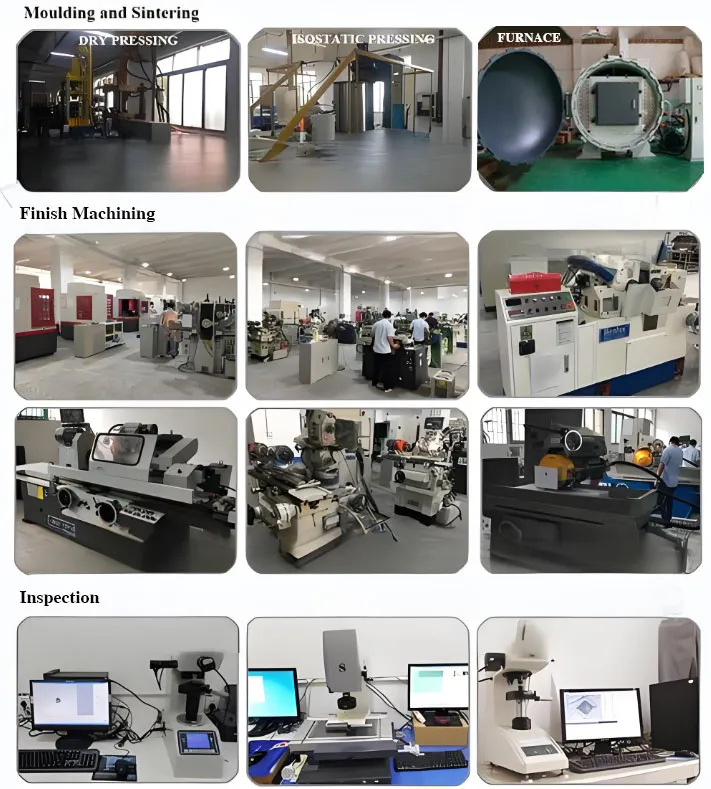
Process of Ceramic Products
T/T, Western Union, Paypal, Credit Card etc.
Shipment Term
By air, by sea, by express, as customers request.
5 FAQs about Silicon Nitride Ceramic Rods
Q1: What is the density of silicon nitride ceramic rods? What are their advantages over metals?
The density of silicon nitride ceramic rods is 3.1-3.3 g/cm³, approximately one-third that of steel and 1.5 times that of aluminum. Their lightweight nature significantly reduces equipment weight and improves energy efficiency in fields such as aerospace and new energy vehicles.
Q2: What is the production process of silicon nitride ceramic rods?
The main production process includes:
Powder Synthesis: Silicon powder nitriding or chemical synthesis to prepare high-purity silicon nitride powder (purity ≥ 99.9%).
Molding: Cold isostatic pressing, injection molding, or hot press molding to ensure uniform and dense blanks.
Sintering: Gas Pressure Sintering (GPSN) or Hot Isostatic Pressing (HIP) with sintering additives (e.g., Y₂O₃) to achieve a density of over 3.2 g/cm³.
Post-treatment: Precision grinding and polishing to achieve dimensional accuracy of ±0.003 mm and surface roughness of Ra ≤ 0.03 μm.
Q3: How difficult is it to process silicon nitride ceramic rods? What are the key considerations?
Silicon nitride is highly hard and brittle, requiring special processing techniques:
Cutting and Grinding: Diamond tools or ultrasonic processing are used to avoid cracks caused by traditional metal processing methods.
Surface Treatment: Rough grinding removes residue, while fine and ultra-precision grinding enhances accuracy. Grinding parameters must be carefully controlled to prevent surface damage.
Cost: Processing costs account for 30%-50% of the total cost, with complex shapes or high precision requirements significantly increasing costs.Conventional Environments: Under temperatures below 1200℃ and in non-corrosive conditions, the service life can be several years.
Q4: What is the service life of silicon nitride ceramic rods?
Extreme Environments: High temperatures (>1200℃) or strong corrosive conditions (e.g., hydrofluoric acid) may reduce the service life to a few months.
Maintenance Tips: Regularly check surface wear and avoid overloading and sudden temperature changes to extend service life.
Q5: What safety precautions should be taken when using silicon nitride ceramic rods?
Temperature Control: Avoid surface temperatures exceeding 1200℃. Ensure good heat dissipation at the package end, with temperatures not exceeding 400℃.
Mechanical Protection: Handle with care, wear gloves to prevent scratches, and avoid collisions with sharp objects.
Chemical Protection: When handling strong corrosive substances like hydrofluoric acid, wear protective clothing and goggles.
Storage Conditions: Store in a dry, dust-free environment, avoiding direct sunlight and humidity.