1. Product Introduction
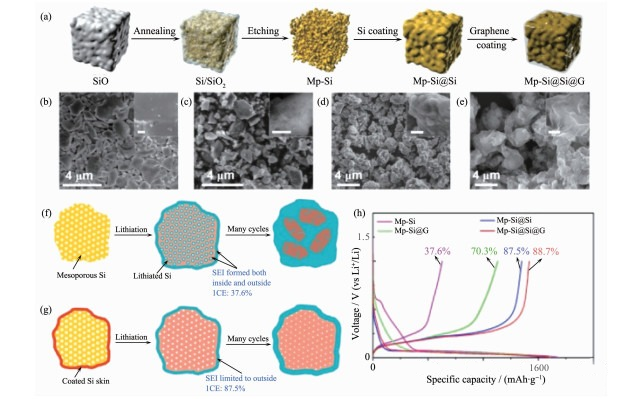
This next-generation anode material is manufactured using silicon monoxide (SiO) as the primary raw material, processed through carbon composite coating and solid-phase pre-lithiation. By introducing extrinsic lithium during synthesis, stable phases such as lithium silicate are formed within the silicon-oxygen structure, effectively compensating for irreversible active lithium loss during the initial charge/discharge cycle. This significantly improves the first-cycle coulombic efficiency (ICE) while delivering excellent specific capacity, making it the premier anode solution for high-energy-density lithium-ion battery systems.
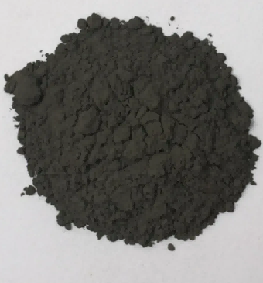
Pre-lithiated Silicon Oxide Anode Material
2. Key Advantages
Substantially Improved Initial Efficiency
Pre-lithiation boosts the first-cycle coulombic efficiency from ~70% (conventional SiO anodes) to 86–92%, minimizing irreversible capacity loss and providing critical support for cell energy density enhancement.
High Specific Capacity
Delivers a reversible capacity of 1500–1600 mAh/g, significantly higher than conventional graphite anodes, directly improving cell-level energy density.
Excellent Cycling Stability
The surface carbon coating effectively suppresses electrolyte attack on the anode, promotes formation of a stable SEI film, and extends cycle life. Some variants retain over 80% capacity after 1200 cycles.
Good Rate Capability
Suitable for high-rate charge/discharge scenarios, meeting the fast-charging demands of power batteries and consumer electronics. Performs effectively in high-energy-density liquid, mixed solid-state, and all-solid-state batteries.
Dual-Function Carbon Coating
The surface carbon layer not only enhances electronic conductivity and protects against electrolyte corrosion but also serves as a buffering layer during the pre-lithiation reaction, resulting in superior electrochemical performance.
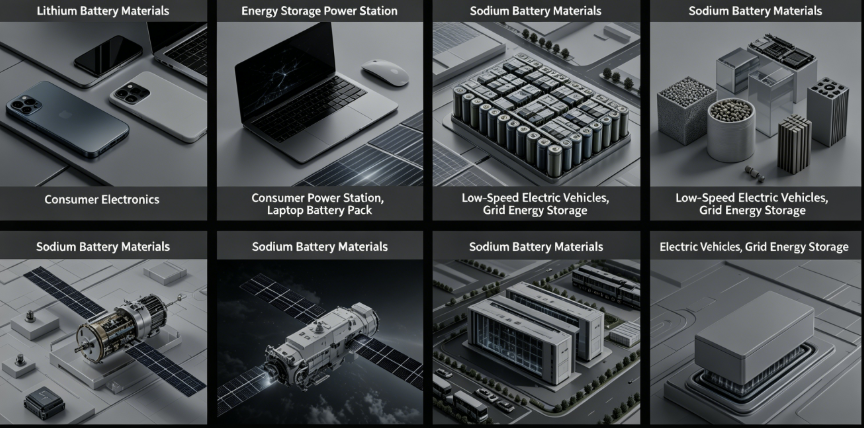
3. Application Scope
Compatible with cylindrical, pouch, and prismatic lithium-ion battery cell formats.
4. Technical Specifications
|
Parameter |
Unit |
Specification |
Test Method |
|---|---|---|---|
|
Moisture Content |
% |
≤ 0.5 |
Electronic Moisture Tester (DHS-16A) |
|
Particle Size (D10) |
µm |
5.0 ± 1.0 |
Malvern Laser Diffraction (Mastersizer 3000) |
|
Particle Size (D50) |
µm |
8.0 ± 1.0 |
Malvern Laser Diffraction (Mastersizer 3000) |
|
Particle Size (D90) |
µm |
14.0 ± 1.0 |
Malvern Laser Diffraction (Mastersizer 3000) |
|
Tap Density |
g/cm³ |
1.15 ± 0.15 |
Tap Density Tester (Bettersize BT-301) |
|
Specific Surface Area |
m²/g |
1.0 ± 0.5 |
BET Surface Area Analyzer (ASAP 2460) |
|
Carbon Content |
% |
4.0 ± 1.0 |
Infrared Carbon-Sulfur Analyzer (HCS-140) |
|
Reversible Capacity |
mAh/g |
≥ 1350 |
Land Battery Test System (CT2001A) |
|
Initial Coulombic Efficiency |
% |
≥ 89.5 |
Land Battery Test System (CT2001A) |
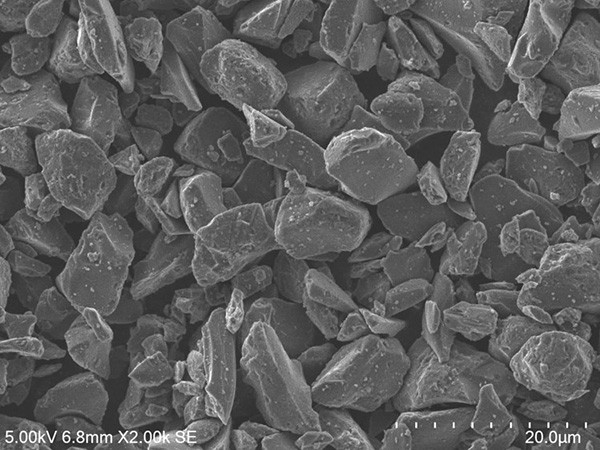
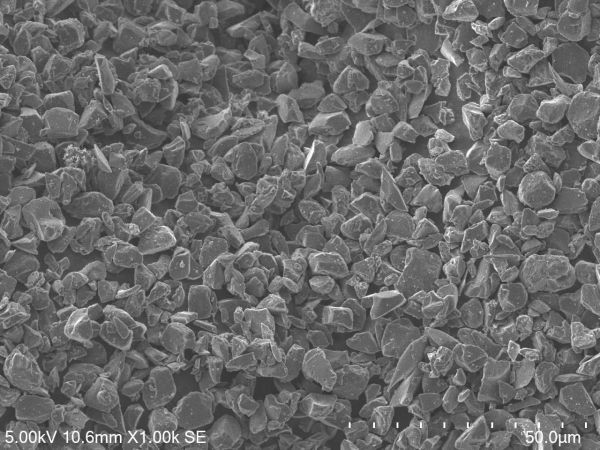
Particle morphology:
5. Coin Cell Preparation & Testing Conditions (CR2032)
Recommended Slurry Formulation (XYGY-3 : Super P : CN1 Binder) = 8 : 1 : 1
Slurry Preparation Procedure:
Weigh 339 g of CN1 binder and add to 1161 g of ultrapure water. Stir at 600 r/min for 300 min until uniformly dispersed.
Weigh 1.728 g of XYGY-3 active material and 0.216 g of Super P into the mixing container. Grind lightly for 10 min.
Add 6.371 g of the prepared CN1 binder solution to the container and seal.
Stir on a magnetic stirrer for 360 min to obtain the final slurry.
Coat the slurry onto copper foil and dry the coated anode sheets in a vacuum oven at 80°C for 12 h.
Recommended Testing Protocol:
Rest for 6 h.
Cycle 3 times:
Discharge at 0.1C to 0.005V → rest 5 min
Discharge at 0.02C to 0.005V → rest 5 min
Discharge at 0.1C to 0.005V → rest 5 min
Charge at 0.1C to 1.5V → rest 5 min
Rate Performance Cycle:
Charge: 0.5C / 1.5V
Discharge: 0.5C / 0.005V → 0.1C / 0.005V → 0.05C / 0.005V
6. Packaging
XYGY-3 is sealed in moisture-barrier bags, then placed in cardboard cartons. Packaging weight can be customized per customer requirements.
7. Transport & Storage
Handle with care during transport to avoid package damage.
Do not use or return material from damaged/broken packaging.
Store in a dry, well-ventilated area. Keep containers tightly sealed at all times.
FAQ
Q1: What is the main advantage of pre-lithiated silicon oxide over conventional graphite anodes?
A: It offers a much higher specific capacity (1500–1600 mAh/g vs. ~350 mAh/g for graphite) and significantly improves the first-cycle efficiency, enabling higher energy density cells.
Q2: How does pre-lithiation improve the initial coulombic efficiency?
A: Pre-lithiation forms stable lithium silicate phases within the material, which compensates for the irreversible lithium loss typically caused by SEI formation and side reactions during the first charge/discharge cycle.
Q3: Is this material compatible with solid-state battery systems?
A: Yes, XYGY-3 performs well in liquid, mixed solid-state, and all-solid-state battery configurations due to its stable structure and excellent rate capability.
Q4: What is the recommended storage condition?
A: Store in a dry, ventilated environment with the packaging tightly sealed. Avoid exposure to moisture or air to prevent performance degradation.
Q5: Can the particle size be customized for specific applications?
A: The standard D50 is 8.0 ± 1.0 µm. For customization requests, please contact our technical sales team for feasibility evaluation.