1. Product Introduction
This product is a next-generation lithium-ion battery anode material, prepared from silicon oxide through pre-lithiation treatment and carbon composite processing. By introducing magnesium during the manufacturing process, stable phases such as magnesium silicate are pre-formed inside the material, significantly improving the initial Coulombic efficiency. Meanwhile, the mechanical support provided by the magnesium silicate phase effectively buffers volume expansion during charge/discharge cycles, extending cell cycle life.
This product belongs to the second-generation silicon-oxygen anode material route. Compared with conventional first-generation SiOx anodes, it achieves a marked breakthrough in first-cycle efficiency, offering a high-performance, process-friendly anode solution for high-energy-density battery systems.

Pre-Magnesium Silicon-Oxygen-Carbon
2. Key Advantages
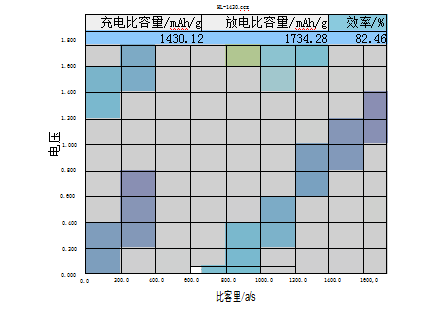
Significantly Improved Initial Efficiency: Pre-lithiation treatment and pre-formed magnesium silicate stable phases minimize irreversible lithium consumption. Initial Coulombic efficiency is notably higher than conventional SiOx anodes, with typical values of 80%–83% and maximum values exceeding 89%.
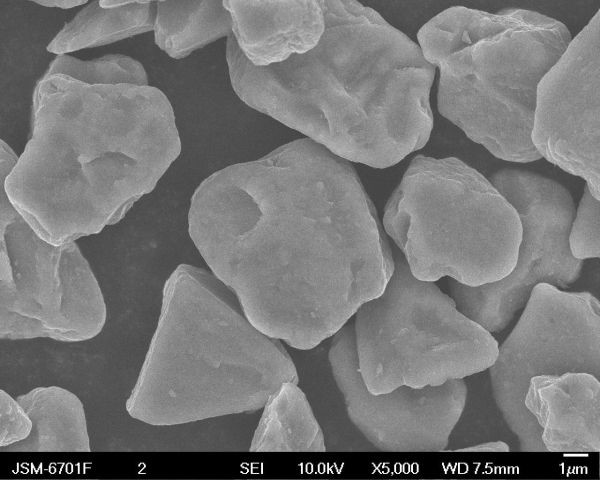
Effective Volume Expansion Buffering: The magnesium silicate phase provides mechanical support, and the open porous structure within the material effectively accommodates volume changes during lithiation, ensuring particle integrity and electrode cohesion.
Enhanced Conductivity via Carbon Coating: The surface carbon coating improves electronic conductivity, suppresses direct electrolyte attack on the anode, promotes formation of a stable SEI film, and enhances cycling stability.
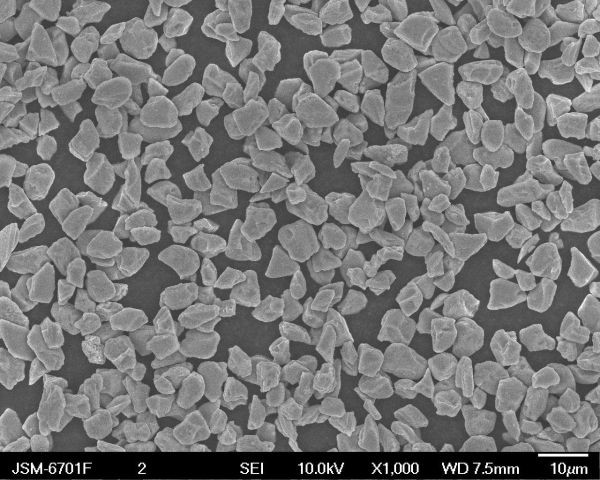
Excellent Processing Compatibility: Uniform particle size distribution and a wide slurry formulation window. Compatible with various binder systems including PVDF, PAA, and CMC/SBR, and works well when blended with graphite anode materials.
3. Applications
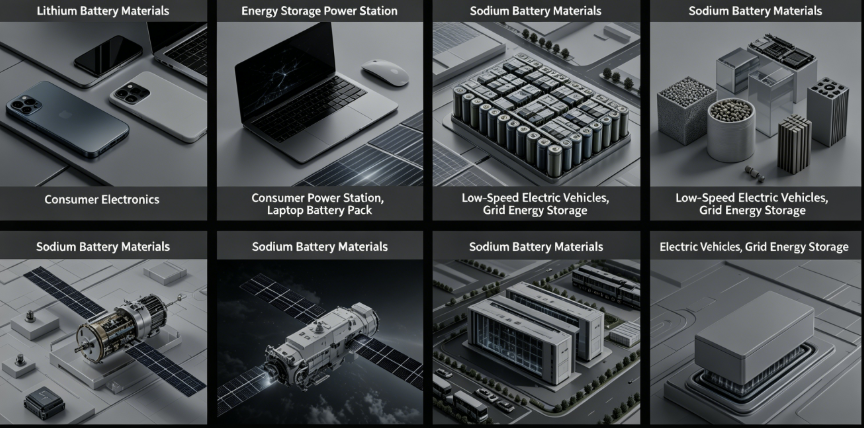
Primarily suited for cylindrical and pouch battery cell formats.
4. Technical Specifications
|
Parameter |
Unit |
Specification |
Test Method |
|---|---|---|---|
|
Moisture content |
% |
≤ 0.5 |
Electronic moisture analyzer (DHS-16A) |
|
Particle size |
D10 (µm) |
3.5 ± 0.5 |
Malvern laser diffraction (Mastersizer 3000) |
|
|
D50 (µm) |
6.0 ± 1.0 |
|
|
|
D90 (µm) |
9.5 ± 1.5 |
|
|
Tap density |
g/cm³ |
1.15 ± 0.15 |
Tap density tester (Bettersize BT-301) |
|
Specific surface area |
m²/g |
3.0 ± 0.5 |
BET surface area & porosity analyzer (ASAP 2460) |
|
Carbon content |
% |
3.0 ± 1.0 |
Infrared carbon-sulfur analyzer (HCS-140) |
|
Reversible capacity |
mAh/g |
≥ 1350 |
LAND battery test system (CT2001A) |
|
Initial Coulombic efficiency |
% |
≥ 82 |
|
Particle morphology:
First charge-discharge curve:
5. Coin Cell Preparation and Testing Conditions
CR2032 coin cell slurry formulation (recommended):
HL-1420 : Super P : CN1 binder = 8 : 1 : 1 (by weight)
CR2032 coin cell slurry preparation (recommended):
Weigh 339 g of CN1 binder and add to 1161 g of ultrapure water. Stir at 600 r/min on a mechanical stirrer for 300 min until the binder solution is uniformly dispersed.
Weigh 1.728 g of HL-1420 active material and 0.216 g of Super P into the slurry mixing jar. Lightly grind for 10 min.
Add 6.371 g of the prepared CN1 binder solution into the jar and seal.
Stir on a magnetic stirrer for 360 min to obtain the final slurry.
Coat the slurry onto copper foil, then dry the coated negative electrode at 80°C under vacuum for 12 h.
CR2032 coin cell testing procedure (recommended):
Formation:
Discharge: 0.1C to 0.005V → 0.05C to 0.005V → 0.02C to 0.005V
Charge: 0.1C to 1.5V
Cycling:
Discharge: 0.5C to 0.005V → 0.1C to 0.005V → 0.05C to 0.005V
Charge: 0.5C to 1.5V
6. Packaging
The product is first sealed in moisture-proof bags, then placed into cardboard cartons. Packing weight can be customized according to customer requirements.
7. Transport and Storage
a) Handle with care during transport to avoid damage to packaging.
b) Do not use material that has spilled due to broken packaging, and do not return it to the container.
c) Store in a dry, well-ventilated environment, and reseal promptly after each use.
About Us
TRUNNANO is a leading supplier of high-performance battery materials for lithium-ion and sodium-ion batteries. Our portfolio includes nano cathodes, silicon-carbon anodes, hard carbon, and specialty additives. With strict quality control and consistent purity, we deliver reliable solutions for 3C electronics, power tools, and energy storage systems. Committed to innovation, TRUNNANO drives the future of energy storage with cutting-edge materials and dedicated customer support.
8. FAQ
Q1: What is the main difference between this Pre-Mg SiOC and conventional SiOx anodes?
A: The key difference is the pre-magnesiation treatment, which forms magnesium silicate phases inside the material. This raises the initial Coulombic efficiency from ~70–75% (conventional SiOx) to ≥82%, while also providing mechanical buffering against volume expansion.
Q2: Can this material be blended with graphite?
A: Yes. It shows good compatibility with graphite anodes and can be blended to balance energy density, cycle life, and processing performance.
Q3: What binder systems are recommended?
A: It works well with PVDF, PAA, and CMC/SBR binders. The coin cell formulation above uses a CN1-type binder as an example.
Q4: What is the recommended storage condition?
A: Store in a dry, ventilated area, tightly sealed. Avoid exposure to moisture and air to prevent performance degradation.
Q5: Is this material suitable for large-format batteries?
A: Yes, it is primarily designed for cylindrical and pouch cell formats and can be adapted to larger battery designs with appropriate formulation optimization.
Q6: What testing standards are used for the technical specifications?
A: All specifications are measured using standard laboratory equipment as listed in the technical data table (e.g., Malvern Mastersizer 3000 for particle size, BET ASAP 2460 for surface area, LAND system for electrochemical testing).