Overview of Polyglycol Oleate
Polyglycol Oleate, polyglyceryl oleate, is an efficient and multifunctional nonionic surfactant. Its molecular structure contains multiple glycerol groups and oleic acid groups, so it is both hydrophilic and lipophilic, and can exert excellent effects in a wide range of applications. Polyglycol Oleate is produced through the esterification reaction of polyglycerol and oleic acid. It usually appears as a light yellow to brown viscous liquid with good solubility and stability. Due to its unique molecular structure, it can act as a bridge between water and oil, allowing the two incompatible phases to be stably mixed together.
Specification of Polyglycol Oleate
| Property |
Specification |
| Appearance |
Pale yellow to amber liquid |
| Color (APHA) |
Max. 100 |
| Active Matter (%) |
98 - 102 |
| pH (1% solution in water at 25℃) |
5.0 - 7.0 |
| HLB Value |
Varies depending on the degree of ethoxylation |
| Ethylene Oxide Content (%) |
Depends on the grade |
| Acid Value (mg KOH/g) |
Max. 1 |
| Saponification Value (mg KOH/g) |
30 - 80 |
| Hydroxyl Value (mg KOH/g) |
Varies depending on EO content |
| Density (g/cm3 at 20℃) |
Approx. 0.95 - 1.05 |
| Flash Point (℃, closed cup) |
> 100 |
Technical Parameter of Polyglycol Oleate
Density: 1.034g/mL at 25°C
Boiling point: >260°C(lit.)
Flash point: 113°C
Solubility: Toluene, ethanol and acetone: soluble (dispersible in water)
Refractive index: n20/D 1.468
Storage conditions: Amber Vial, Refrigerator
Stability: Photosensitive
Appearance: Lubricating oil
Color: Colorless to Light Beige
Application of Polyglycol Oleate
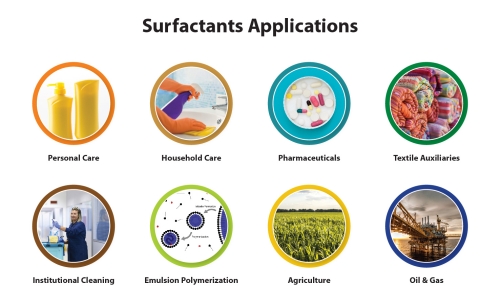
Polyglycol Oleate has the characteristics of low foam and good biodegradability. Due to the existence of ester bonds in the chemical structure, it is not stable to heat, acid, and base. The surfactant is easily soluble in benzene, isopropyl alcohol, and other organic solvents, dedicated to industrial lubricants, industrial degreasing agent, vinyl plastic sol viscosity stabilizer, textile softener, lubricants, dry cleaning agent, oil-based cutting fluid balance emulsifier, plastic antistatic agent, and dispersant.
 Application of Polyglycol Oleate
- It is an antistatic agent for textile processing and synthetic fiber production and has good compatibility.
- In the leather industry, Polyglycol Oleate is a softener and lubricant for tanning leather.
- Polyglycol Oleate is used as an emulsifier in ink manufacturing, used as an emulsifier of cutting oil, emulsifier and dispersant of metal cleaning agent and detergent solvent in metal processing.
Application of Polyglycol Oleate
- Polyglycol Oleate is used as a paper lubricant in the paper industry, used as a dispersant in the rubber industry, used as a plasticizer in plastic industry, and also used as agricultural preparation, glass, paraffin emulsifier.
Application of Polyglycol Oleate
Company Profile
Luoyang Tongrun Nano Technology Co., Ltd. (TRUNNANO) is a confident global supplier and manufacturer of chemical materials with over 12 years of rich experience, focusing on providing ultra-high quality chemicals and nanomaterials. Our product range includes boride powders, nitride powders, graphite powders, sulfide powders, 3D printing powders,and surfactant.
The company has a professional technical team, a quality inspection department, well-equipped laboratories and advanced testing equipment. We have set up a professional after-sales customer service center to ensure our customers get the best product experience.
If you are looking for a high-quality polyglycol oleate supplier, we sincerely invite you to contact us or click on related products to inquire.
Packing of Polyglycol Oleate
We have many kinds of packing, depending on polyglycol oleate quantity.
Polyglycol oleate packing: 100g, 1kg, 10kg, etc.
Payment methods of Polyglycol Oleate
L/C, T/T, Western Union, Paypal, Credit Card etc.
Shipment of Polyglycol Oleate
Once payment is received, by sea, by air or by express as soon as possible.
FAQs of Polyglycol Oleate
What are the primary uses of Polyglycol Oleate?
Polyglycol Oleate is primarily used as an emulsifier in cosmetic and personal care products. It helps stabilize oil-in-water emulsions, improving the texture and consistency of products such as moisturizers, lotions, and cleansers.
Is Polyglycol Oleate safe for use in cosmetics?
Yes, Polyglycol Oleate is generally recognized as safe for use in cosmetics when used within recommended concentrations. However, individual sensitivities can occur, so patch testing is advised if irritation occurs. Always follow good manufacturing practices and consult the Safety Data Sheet (SDS) for detailed safety information.
How does the degree of ethoxylation affect the properties of Polyglycol Oleate?
The degree of ethoxylation influences the hydrophilic-lipophilic balance (HLB) of Polyglycol Oleate. Higher degrees of ethoxylation result in more water-soluble compounds with higher HLB values, which are better suited for aqueous systems. Lower degrees of ethoxylation yield less water-soluble compounds with lower HLB values, making them suitable for oil-based formulations.
Can Polyglycol Oleate be used in natural or organic products?
While Polyglycol Oleate is derived from natural sources like oleic acid, the process of creating this compound involves chemical synthesis. Therefore, whether it qualifies for use in natural or organic products depends on the certification body's criteria. Some organizations may allow it, while others might not.
What factors can affect the shelf life of Polyglycol Oleate?
The shelf life of Polyglycol Oleate can be affected by several factors including storage conditions (temperature, humidity, exposure to air and light), contamination, and the presence of stabilizers or antioxidants. Under proper storage conditions—cool, dry, and away from direct sunlight and sources of heat—the shelf life can typically extend up to 2 years. Always check the expiration date and storage recommendations provided by the supplier.