Copper Extrusion: An Overview
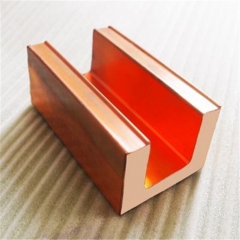
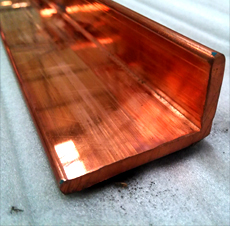
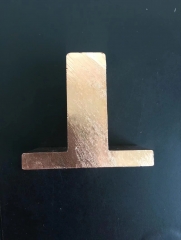
Copper extrusions are plastic processing materials with certain strength and toughness, solid straight bars with certain cross-sectional shapes and sizes. Profiled copper bars are relative to ordinary copper bars. The cross-section shape is not square or rectangular. There are various shapes such as ‘L’, ‘T’, trapezoid, polygon and so on. Most of these shapes are based on the manufacturer's specific product design requirements.

(Customised Decorative Brass Extruded Copper Profiles)
Advantages of Copper Extrusions
Copper extrusions have good electrical conductivity, thermal conductivity, corrosion resistance and processability, smooth surface without drawing, precise dimensions, high mechanical properties, high copper content, low oxygen content, dense structure and free supply length.
Strong corrosion resistance: copper profiles have a layer of antioxidant and corrosion-resistant copper layer on the surface, which can maintain a stable structure during the application process and is not easy to corrode.
Good mechanical and physical properties: Copper profiles have good mechanical and physical properties, which can meet the needs of different applications.
Stable price: the price of copper extrusion is determined by the market, which reflects the value of copper extrusion as a tangible commodity related services. Copper can bring great benefits to people's life in the market, and the cost of its services is becoming more and more obvious, so the price is becoming more and more reasonable.
Applications of Copper Extrusions
Copper extrusions have a wide range of applications in several fields.
In the field of electricity, copper extrusions are used as conductors for cables and wires because of their good electrical conductivity and corrosion resistance. In the field of light industry, copper and its alloys are used in the manufacture of a variety of light industrial products, such as brass, nautical brass, bronze, phosphor bronze, and white copper. In the field of machinery manufacturing, copper and its alloys are used in the manufacture of various machine parts, such as bearings, gears, pistons, pumps, and so on. In the field of construction industry, copper and its alloys are used in the manufacture of various architectural decorative materials, such as copper plates, copper pipes, copper windows, etc. In the field of defense industry, copper and its alloys are used in the manufacture of various military equipment and weapons, such as tanks, fighter jets, warships, and so on.
In addition, copper extrusions are also used as a variety of guide raw materials, such as cable rolled steel, etc., as well as used as resistance welding raw materials.
In short, the copper profile is a versatile material in different fields that can play its unique advantages.

| Item | T1 | C11000 | C10200 | C10300 | C12000 | C12200 | |
| Element content | Cu+Ag(≥) | 99.95 | 99.9 | 99.97 | 99.95 | 99.9 | 99.9 |
| P(≤) | 0.001 | 0.002 | 0.002 | 0.004-0.012 | 0.015-0.04 | ||
| Bi(≤) | 0.001 | 0.001 | 0.001 | 0.001 | 0.002 | 0.002 | |
| Sb(≤) | 0.002 | 0.002 | 0.002 | 0.002 | 0.002 | 0.002 | |
| As(≤) | 0.002 | 0.002 | 0.002 | 0.002 | 0.002 | 0.005 | |
| Fe(≤) | 0.005 | 0.005 | 0.004 | 0.004 | 0.01 | 0.05 | |
| Ni(≤) | 0.002 | 0.005 | 0.002 | 0.002 | 0.005 | 0.01 | |
| Pb(≤) | 0.003 | 0.005 | 0.003 | 0.004 | 0.005 | 0.005 | |
| Sn(≤) | 0.002 | 0.002 | 0.002 | 0.002 | 0.002 | 0.01 | |
| S(≤) | 0.005 | 0.005 | 0.004 | 0.004 | 0.005 | 0.005 | |
| Zn(≤) | 0.005 | 0.005 | 0.003 | 0.003 | 0.003 | 0.003 | |
| O(≤) | 0.02 | 0.06 | 0.002 | 0.003 | 0.01 | 0.01 | |
| Item | Characteristic | Fields of application |
| C11000 | It has good electrical conductivity, thermal conductivity, corrosion resistance and processing properties, and can be welded and brazing. Impurities containing reduced electrical and thermal conductivity are small, and trace amounts of oxygen have little effect on electrical conductivity, thermal conductivity and processing properties, but it is easy to cause "hydrogen disease", and it is not easy to process (annealing, welding, etc.) and use in a high temperature (such as 370 °C) reducing atmosphere. | Used in electrical, thermally conductive and corrosion-resistant equipment. Such as: wires, cables, conductive screws, detonators for blasting, chemical evaporators, storage devices and various pipelines |
| C10200、C10300 | It has high purity, excellent electrical and thermal conductivity, no "hydrogen disease" or very little "ammonia disease" (no hydrogen embrittlement), good processing performance and welding, corrosion resistance and cold resistance | It is mainly used as electric vacuum instrumentation devices, various hardware products, lamps, pipe fittings, zippers, plaques, rivets, springs, settlement filters, etc |
| C12000 | Its welding performance and cold bending performance are good, generally no "hydrogen disease" tendency, can be processed and used in a reducing atmosphere, but not suitable for processing and use in an oxidizing atmosphere. The residual phosphorus content of C12000 is less than that of C12200, so its electrical and thermal conductivity is higher than that of C12200. | It is mainly used in pipes, but can also be supplied as plates, strips or rods and wires. Used as gasoline or gas transmission pipes, drain pipes, condensation pipes, mine pipes, condensers, evaporators, heat exchangers, train car parts. |
| C12200 |