Alumina Ceramic Shaft Overview
Alumina ceramic shafts are high-performance ceramic components based on alumina (Al₂O₃), which has become a core transmission component in the industrial field due to its ultra-high hardness (Moh's hardness grade 9), abrasion and corrosion resistance, and high-temperature stability. Its performance depends directly on the purity of alumina (95%-99.7%); the higher the purity, the higher the high-temperature strength and insulation; typical applications include high-load mechanical transmission, high-temperature corrosion-resistant environments and precision electronic equipment.
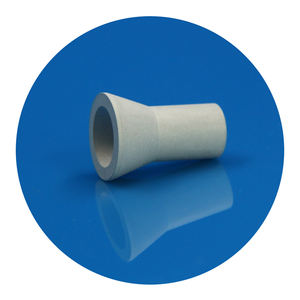
alumina ceramic shafts
Hardness and wear resistance: 95% of alumina shaft Vickers hardness 13.7 GPa, 99% of alumina shafts up to 15.2 GPa, the wear rate of only 1/10 of the metal shaft, suitable for high-speed rotary bearings (such as 30,000 rpm motor shafts); compressive strength: 2,000-4,000 MPa (metal shafts are usually <1,000 MPa), can withstand axial heavy loads, but need to avoid the transverse impact ( Fracture toughness 3-4.5 MPa・m¹/²).
Thermal properties
Temperature limit: long-term working temperature without load 1500-1750 ° C (with the purity of the increase), 99% alumina shaft can be in 1750 ° C in the air atmosphere to maintain structural stability; thermal compatibility: coefficient of thermal expansion of 7-8 × 10-⁶ / ° C, and steel (11 × 10-⁶ / ° C) is close to the suitable for metal-ceramic composite assembly. Thermal conductivity: 20-32 W/(m・K), better than zirconia ceramics (2-3 W/(m・K)), suitable for high-temperature motor shafts that require heat dissipation.
Alumina ceramic shaft specification table
| Specification |
Details |
| Material |
Alumina, with purity levels of 95%, 96%, 99%, 99.5%, 99.7% etc. |
| Appearance |
White, smooth surface, no visible defects |
| Diameter |
Usually ranges from 1 mm to 50 mm or even hundreds of millimeters, with some special requirements allowing for larger diameters |
| Length |
Generally 10 mm to 1000 mm, can also be customized to longer lengths |
| Hardness |
8-9 Mohs hardness, with 99% alumina ceramic shafts having a hardness of about 91 HRA and 95% alumina ceramic shafts about 89 HRA |
| Density |
3.6-3.92 g/cm³, such as 95% alumina ceramic shafts at 3.7 g/cm³ and 99.7% alumina ceramic shafts at 3.92 g/cm³ |
| Compressive Strength |
≥2000 MPa, like 95% alumina ceramic shafts at ≥2000 MPa and 99% alumina ceramic shafts at ≥2500 MPa |
| Bending Strength |
≥280 MPa, for example, 95% alumina ceramic shafts at ≥280 MPa and 99% alumina ceramic shafts at ≥300 MPa |
| Thermal Conductivity |
20-32 W/m·K, such as 95% alumina ceramic shafts at 20 W/m·K and 99% alumina ceramic shafts at 30 W/m·K |
| Coefficient of Thermal Expansion |
7-8×10⁻⁶/℃, for instance, 95% alumina ceramic shafts at 7.5×10⁻⁶/℃ and 99% alumina ceramic shafts at 7.8×10⁻⁶/℃ |
| Maximum Operating Temperature |
1500°C-1750°C, such as 95% alumina ceramic shafts at 1500°C and 99% alumina ceramic shafts at 1750°C |
| Volume Resistivity at 20℃ |
≥1×10¹⁴ Ω·cm |
| Dielectric Strength |
≥15 KV/mm, for example, 95% alumina ceramic shafts at ≥15 KV/mm and 99% alumina ceramic shafts at ≥20 KV/mm |
| Dielectric Constant at Room Temperature |
9-11.5, such as 95% alumina ceramic shafts at 11 and 99% alumina ceramic shafts at 10 |
| Linear Dimensional Accuracy |
Depending on the product's specific shape and process requirements, generally cylindrical degrees can reach 0.003 mm, coaxiality 0.002 mm |
| Surface Roughness |
Can reach Ra0.02-0.04 μm |
|
Applications of Alumina Ceramic Shafts
High-end machinery manufacturing
Precision bearing shaft: used in semiconductor wafer cutting machine, high hardness and small thermal deformation (coefficient of thermal expansion 7.5×10-⁶/°C), ensuring cutting accuracy ±2 μm; chemical pump shaft: replacing titanium alloy shaft in hydrochloric acid conveying pumps, with the life span extended from 3 months to 5 years, and the maintenance cost reduced by 60%.
Aerospace and Energy
Engine turbine shafts: 99.7% alumina shafts are used in aero-engine accessory drive systems, with a temperature resistance of 1,650°C and a weight reduction of 40% compared with nickel-based alloys; nuclear energy equipment: used as drive shafts for control rods in nuclear reactors, they are resistant to radiation (≥10⁶ Gy) and chemically inert, avoiding the risk of neutron activation.
Electronics and semiconductors
Photolithography spindle: nano-scale surface roughness (Ra 0.02 μm) and high insulation to prevent electrostatic dust adsorption, suitable for EUV lithography precision positioning system; high-frequency electron tube shaft: dielectric constant 9-10, used as a support shaft in the RF components of the 5G base station to reduce the loss of signal transmission.
Medical and Food Industry
Surgical robot joint shafts: biocompatibility certified by ISO 10993, wear life >100,000 cycles, better than stainless steel joints; food processing shafts: no risk of metal ion migration, used as drive shafts in chocolate grinding machines, compliant with FDA 21 CFR 177.2600 standards.
Special Environmental Applications
Deep-sea exploration equipment: in the 6000 m deep-sea pressure chamber, compressive strength>4000 MPa, resistance to seawater corrosion and biological attachment; molten metal transportation: aluminum casting machine shafts, resistant to 700 ℃ aluminum water erosion, the surface of the phenomenon of non-stick aluminum, improve casting efficiency by 30%.
Company Profile
Luoyang Tongrun Nano Technology Co. Ltd. (TRUNNANO) is a trusted global chemical material supplier & manufacturer with over 12-year-experience in providing super high-quality chemicals and nanomaterials, including boride powder, nitride powder, graphite powder, ceramic products, 3D printing powder, etc.
The company has a professional technical department and Quality Supervision Department, a well-equipped laboratory, and equipped with advanced testing equipment and after-sales customer service center.
If you are looking for high-quality Ceramic Products please feel free to contact us or click on the needed products to send an inquiry.

Applications of Ceramic Products
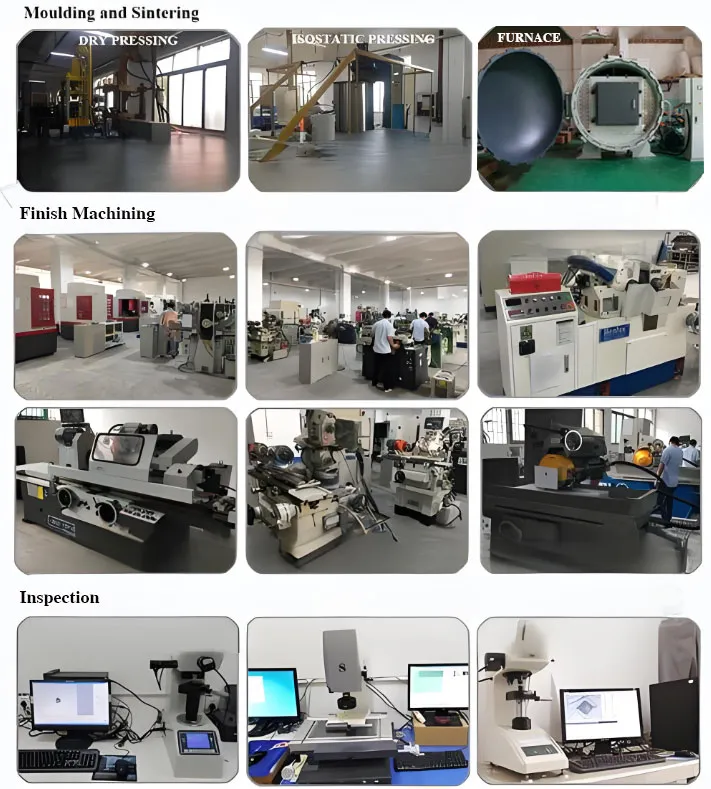
Process of Ceramic Products
Payment Term
T/T, Western Union, Paypal, Credit Card etc.
Shipment Term
By air, by sea, by express, as customers request.
5FAQs of Alumina Ceramic Shafts
Q1: Why is the processing cost of the alumina ceramic shaft high?
Tool loss: need to use a diamond grinding wheel (life is only 1/20 of metal processing tools), single processing cost is 3-5 times of metal shaft; low yield: precision shaft (tolerance ±0.005 mm) processing yield is usually <70%, need to be corrected by multiple grinding.
Q2: How can to improve the impact resistance of ceramic shafts?
Structural design: using stepped shaft transition arc (R≥2 mm) to reduce stress concentration; composite process: metal-ceramic diffusion welding (e.g., Inconel 718 + 99% alumina) to enhance the interfacial bonding strength to more than 200 MPa; nano-strengthening: adding 5% ZrO₂ nanoparticles (phase change toughening), fracture toughness from 3 MPa・m¹/² to 5 MPa・m¹/². The fracture toughness is increased from 3 to 5 MPa・m¹/².
Q3: What is the selection logic for different purity shafts?
Cost priority: 95% shafts for general wear-resistant scenarios (e.g., textile machinery), 30% lower cost; performance priority: 99% shafts for high-temperature (>1400℃) and high-insulation (>10 kV) scenarios, such as new energy automobile motor shafts; and special needs: 99.9% high-purity shafts for medical implantation (impurities <0.01%), to ensure biosafety.
Q4: What details should I pay attention to when installing alumina ceramic shafts?
Interference fit: Recommended interference with the metal hole 0.001D-0.003D (D is the shaft diameter), liquid nitrogen cooling assembly (shrinkage rate of 0.15%); lubrication: high-temperature environment using molybdenum disulfide coating (temperature 600 ° C), ordinary scenes can be used in ceramic-based self-lubricating plating (friction coefficient <0.05); dynamic balancing: high-speed shafts (>10,000 rpm) need to be done dynamic balancing test (residual imbalance <0.01%) Dynamic balance: High-speed shafts (>10,000 rpm) should be dynamically balanced (residual unbalance <5 g/mm/kg) to avoid vibration cracking.
Q5:What is the recycling method for alumina ceramic shafts?
Physical recycling: crushed to <100 μm and then used as abrasive (e.g. sandpaper, polishing powder), with a recovery rate of >95%; chemical recycling: high-purity shafts (≥99%) are regenerated by acid solvent-precipitation method to produce Al₂O₃ powder, with a cost of 40% lower than that of the original raw material; and compliant disposal: shafts containing metal plating are to be handed over to a professional hazardous waste treatment plant to avoid heavy metal contamination.