Overview of Alumina Ceramic Nails
Alumina ceramic nails are ceramic products with alumina (Al₂O₃) as the main raw material. With the characteristics of high hardness (Moh's hardness grade 9), abrasion resistance, corrosion resistance, insulation, and high-temperature resistance (1600 ℃ stable operation), they have become the key components in the industrial field. Its core advantages are reflected in material purity: alumina content of 90%-99.95%, the higher the purity, the higher the high-temperature performance and insulation; lightweight: density of 3.6-3.93 g/cm³ (about 1/2 of steel), reducing the load on the equipment while improving the impact resistance; cost-effective: compared with zirconia, silicon nitride ceramics, the cost is 30%-50% lower, suitable for large-scale industrial applications.
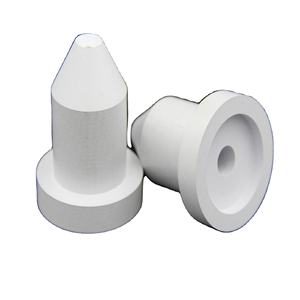
Alumina Ceramic Nails
Mechanical strength and wear resistance
Hardness: Vickers hardness 1500-2017 HV, second only to diamond, wear rate as low as 0.001 mg/m, suitable for high friction scenarios (e.g., bearings, cutting tools); compressive strength: >2000 MPa, can withstand heavy loads, but note that the tensile strength is lower (300-400 MPa), to avoid purely tensile working conditions.
Thermal properties
Temperature range: long-term working temperature without load 1500-1700 ℃, coefficient of thermal expansion 5-8.2 × 10-⁶ / ℃, better than ordinary ceramics thermal shock resistance (can withstand 800 ℃ temperature shock); thermal conductivity: 22.4-33 W / (m・K), between the metal and the insulating material, suitable for high-temperature components needing to moderate heat dissipation.
Electrical and Chemical Properties
Insulation: dielectric strength>8.3 kV/mm, volume resistivity>1×10¹⁴ Ω・cm, is the ideal material for high-voltage insulating casing and electronic substrate; corrosion resistance: in addition to hydrofluoric acid and hot concentrated alkali, it has excellent resistance to strong acids (e.g., sulfuric acid), strong bases (e.g., sodium hydroxide), and salt solutions, with a corrosion rate of <0.01 mm/year.
Aluminum oxide ceramic nail specifications
| Specifications |
Details |
| Material Purity |
Alumina (Al₂O₃) content typically ranges from 90% to 99.95%. |
| Hardness |
Vickers hardness (HV) of around 1500-2017, second only to diamond. |
| Density |
Theoretical density of 3.987 g/cm³, bulk density varies with alumina content and ranges from 3.6 to 3.93 g/cm³. |
| Flexural Strength |
Four-point flexural strength of 300-400 MPa at room temperature. |
| Compressive Strength |
Over 2000 MPa, offering excellent load-bearing capacity. |
| Elastic Modulus |
Approximately 393 GPa, providing good rigidity. |
| Fracture Toughness |
About 3-5 MPa·√m, indicating certain resistance to crack propagation. |
| Thermal Properties |
Coefficient of thermal expansion of 5-8.2×10⁻⁶/°C (25-1000°C), thermal conductivity of 22.4-33 W/m·K. |
| Max Working Temp. |
Can operate up to 1500-1700°C without load. |
| Dielectric Properties |
Dielectric strength of over 8.3 kV/mm, dielectric constant of 9.1-9.8 at 1 MHz, volume resistivity greater than 1×10¹⁴ Ω·cm at 25°C. |
| Abrasion Resistance |
Extremely low wear rate, suitable for high-wear environments. |
| Corrosion Resistance |
Chemically inert and resistant to acids and bases. |
|
Application of Alumina Ceramic Nails
Machine building and industrial equipment
Wear-resistant parts: used in the manufacture of bearing balls, sealing rings, and valve spools, in mining machinery, petroleum equipment to resist abrasion of sand and gravel, life expectancy of 5-10 times compared with metal parts; cutting tools: ceramic cutting tool nails used for precision machining, high hardness and not easy to adhere to the metal, suitable for machining of cemented carbide or high silica-aluminum alloys.
Electrical and Power Engineering
High-voltage insulation: used as substation insulators, cable terminal fixings, withstand voltages above 10kV, preventing arc discharge; electronic packaging: ceramic nails for IC substrates, with thermal expansion coefficients matching those of silicon chips (about 7×10-⁶/°C), reducing thermal stress cracking.
Aerospace and Energy
Engine components: turbine blade fixing nails, maintaining connection strength in 1500℃ gas environment, replacing nickel-based alloys to reduce weight; Fuel cells: electrode connectors for solid oxide fuel cells (SOFC), oxidation-resistant and conductive stability.
Medical and Biological Engineering
Implantable devices: high-purity alumina (≥99.5%) ceramic nails for artificial joints, dental implants, biocompatibility certified by ISO 10993, without the risk of metal ion release; medical equipment: non-magnetic fixtures for CT scanners to avoid interference with the imaging field.
Chemical and Environmental Protection
Corrosive environments: chemical reactor liner fixing nails, resistance to hydrochloric acid, sodium hydroxide solution corrosion, reduce the risk of equipment leakage; water treatment: ceramic nails for microfiltration membrane components, water corrosion resistance and smooth surface is not easy to scale, improve filtration efficiency.
Company Profile
Luoyang Tongrun Nano Technology Co. Ltd. (TRUNNANO) is a trusted global chemical material supplier & manufacturer with over 12-year-experience in providing super high-quality chemicals and nanomaterials, including boride powder, nitride powder, graphite powder, ceramic products, 3D printing powder, etc.
The company has a professional technical department and Quality Supervision Department, a well-equipped laboratory, and equipped with advanced testing equipment and after-sales customer service center.
If you are looking for high-quality Ceramic Products please feel free to contact us or click on the needed products to send an inquiry.
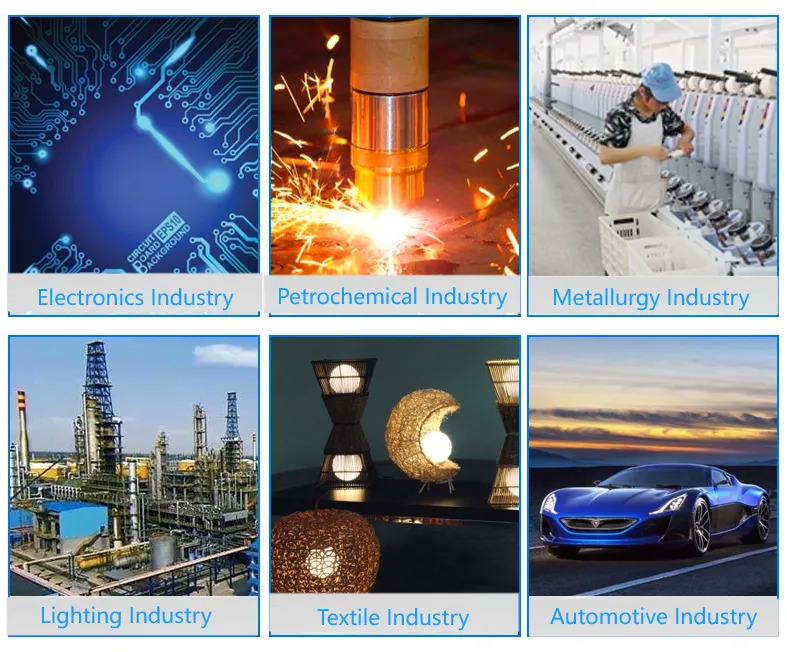
Applications of Ceramic Products
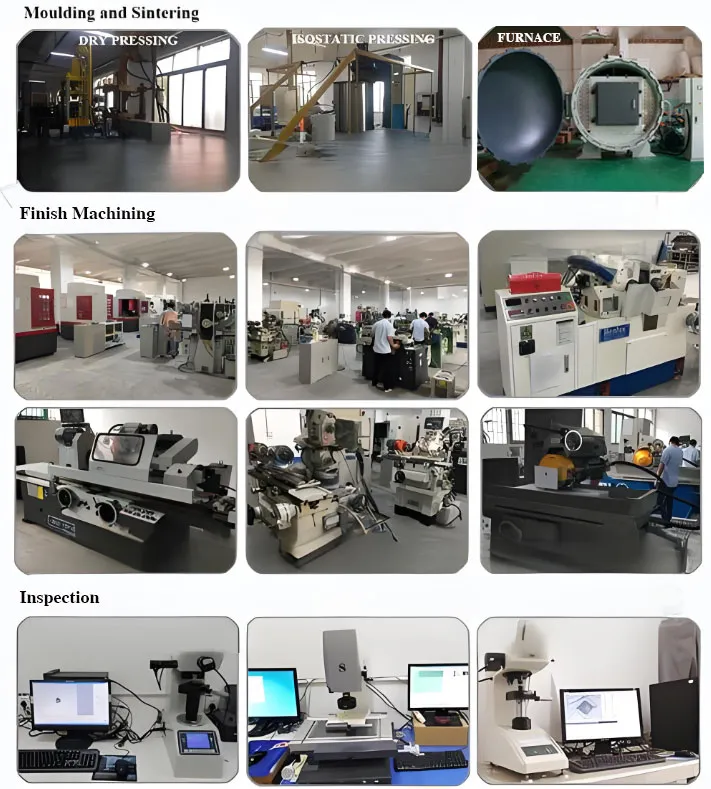
Process of Ceramic Products
Payment Term
T/T, Western Union, Paypal, Credit Card etc.
Shipment Term
By air, by sea, by express, as customers request.
5FAQs of alumina ceramic nails
Q1: How to choose the purity of alumina ceramic nails?
90%-95% purity: for general wear-resistant scenes (such as mechanical seals), low cost and good processability; 99%-99.95% purity: for high temperature (>1400 ℃), high insulation (such as electronic substrates) or medical field, impurity content <0.1%.
Q2: What do I need to pay attention to when installing alumina ceramic nails?
Fit tolerance: metal hole clearance is recommended 0.01-0.03 mm; interference fit is easy to leads to ceramic nail cracking; torque control: manual installation torque ≤ 5 N・m, avoid the use of pneumatic tools, it is recommended to match the ceramic washer damping; high-temperature installation: need to be reserved for thermal expansion gap (calculated by 1.5 × 10-⁵ / ℃), to prevent the rise in temperature leading to extrusion rupture. Prevent the temperature from rising and lead to extrusion rupture.
Q3: How to maintain in a strong corrosive environment?
Regular cleaning: Rinse surface attachments with deionized water to avoid acidic crystalline residues; Coating protection: Customized PVD coatings (e.g., diamond-like coatings) are available to enhance corrosion and abrasion resistance further; Lifespan monitoring: Detect internal cracks through ultrasonic flaw detection, and a comprehensive inspection is recommended every 1-2 years.
Q4: What are the advantages of alumina ceramic nails compared to zirconia ceramic nails?
Cost advantage: 40%-60% lower price for the same specifications, suitable for large-scale replacement of metal parts; high-temperature stability: zirconia is prone to phase change above 1100℃, while alumina can be used stably up to 1600℃; processing convenience: alumina can be directly processed by diamond grinding machine, while zirconia needs laser or EDM processing, which has a longer cycle time.
Q5: Does alumina ceramic nails support aerospace-grade certification?
Certification Capability: We can provide products certified to NASA NHB 5340.21, ASTM C373, etc.; Inspection Report: Includes X-ray Diffraction (XRD), Scanning Electron Microscope (SEM), and Energy Spectrometry (EDS) data to ensure that the composition and structure meet the requirements.