Overview of Alumina Ceramic Rods
Alumina ceramic rods are made of Aluminum Oxide (Al₂O₃) as the core material, which has the characteristics of ultra-high hardness (Moh's hardness grade 9, second only to diamond), high-temperature resistance (1650℃ stable operation), electrical insulation and corrosion resistance. Its performance is directly related to the purity of alumina (common purity 95%-99.5%), which is widely used in industrial scenarios such as mechanical seals, high-temperature furnace components, and electronic insulation. Alumina threaded rods, as a derivative of alumina threaded rods, combine threaded connections with the advantages of ceramic materials and are suitable for precision assembly under high loads and strong corrosive environments.
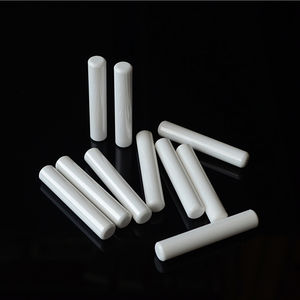
Alumina Ceramic Rods
Mechanical and Friction Properties
Hardness and wear resistance: Vickers hardness ≥1800 HV, wear rate of only 0.002 mg/m, 20 times that of stainless steel rods, suitable for high-speed friction scenarios (e.g., bearing rollers); Strength characteristics: flexural strength ≥350 MPa, compressive strength ≥2000 MPa, but need to pay attention to the impact resistance is weaker (fracture toughness of 3.5-4.5 MPa/m ½), to avoid sudden loading.
Thermal Properties
Temperature limit: 1650℃ (99.5% purity) without load, coefficient of thermal expansion 8.0×10-⁶/K, excellent thermal match with metal parts; thermal conductivity: 20-30 W/m/K, better than zirconia ceramics, suitable for high-temperature structural parts that need to dissipate heat (e.g., kiln support rods).
Electrical and Chemical Properties
Insulation: volume resistivity>10¹⁴ Ω・cm, dielectric constant 10-11 (1 MHz), can be used as an insulating column for high-voltage equipment, withstanding voltage above 10 kV; corrosion resistance: corrosion rate <0.001 mm/year in pH 0-14 range, except for hydrofluoric acid and hot and concentrated alkali, suitable for chemical reactor linings.
Alumina ceramic rod specifications
| Parameter |
Details |
| Material |
High-purity alumina (Al₂O₃) with typical content ≥99.5% |
| Form |
Solid rod |
| Dimensions |
- Diameter: Available in standard sizes (e.g., 5 mm, 10 mm, 15 mm, etc.)
- Length: Customizable (e.g., 50 mm to 500 mm) |
| Tolerance |
±0.1 mm for diameter; ±1 mm for length |
| Hardness |
Vickers hardness ≥1800 HV |
| Density |
3.95 g/cm³ |
| Flexural Strength |
≥350 MPa |
| Compressive Strength |
≥2000 MPa |
| Fracture Toughness |
3.5 - 4.5 MPa·m½ |
| Thermal Properties |
- Thermal Conductivity: 20 - 30 W/m·K
- Coefficient of Thermal Expansion: 8.0 x 10⁻⁶ /K (20 - 1000°C) |
| Electrical Properties |
- Volume Resistivity: >10¹⁴ Ω·cm
- Dielectric Constant: 10 - 11 (1 MHz) |
| Chemical Resistance |
- Excellent resistance to acids and alkalis
- Stable in most chemical environments |
| Surface Finish |
- Standard: Polished to ≤0.5 µm roughness
- Custom options available (e.g., grinding, etching) |
| Color |
White or near-white |
| Applications |
- Mechanical seals
- Wear-resistant components
- Electrical insulators
- High-temperature fixtures
- Chemical processing equipment |
| Packaging |
- Individual rods wrapped in protective film
- Shipped in sturdy cartons to prevent damage |
| Customization |
- Available in custom sizes, shapes, and surface treatments upon request |
|
Application of alumina ceramic rods
Industrial manufacturing and mechanical engineering
Wear-resistant parts: replacing metal rods to manufacture bearings, sealing rings, and gear shafts; in mining machinery, life expectancy increased by 8-10 times, reducing downtime and maintenance; high-temperature structural parts: used in glass furnace support rods (temperature 1600 ℃), metallurgical furnaces, temperature measurement casing, resistance to molten metal erosion.
Electronic and electrical equipment
Insulation support rods: used as insulators in high-voltage switchgear, withstanding 15 kV industrial frequency voltage, avoiding arc discharge; semiconductor equipment: ceramic rods for wafer cutting machines (accuracy ±0.005 mm), preventing metal particles from contaminating wafers and improving lithographic precision.
Chemical and Corrosive Environments
Reactor components: as a stirring shaft, temperature measuring rods, stable in hydrochloric acid/sodium hydroxide solution, replacing titanium alloy to reduce costs by 50%; filtration system: microporous ceramic rods for precision filtration of chemical liquids, with controllable pore sizes (0.1-10 μm), pollution-resistant and easy to clean.
Medical and Biological Engineering
Implantable rods: 99.5% high-purity alumina rods for processing artificial joint stems, biocompatibility certified by ISO 10993, without the risk of metal ion release; medical equipment: non-magnetic support rods for CT scanners to avoid interfering with the magnetic field of the imaging and ensure diagnostic accuracy.
Aerospace and Energy
Engine components: turbocharger ceramic shafts (temperature resistance 1050 ℃), weight reduction of 60% compared with steel shafts, to improve fuel efficiency; new energy field: fuel cell stack ceramic support rods, hydrogen corrosion resistance and balanced thermal conductivity, to ensure the long-term stable operation of the battery.
Company Profile
Luoyang Tongrun Nano Technology Co. Ltd. (TRUNNANO) is a trusted global chemical material supplier & manufacturer with over 12-year-experience in providing super high-quality chemicals and nanomaterials, including boride powder, nitride powder, graphite powder, ceramic products, 3D printing powder, etc.
The company has a professional technical department and Quality Supervision Department, a well-equipped laboratory, and equipped with advanced testing equipment and after-sales customer service center.
If you are looking for high-quality Ceramic Products please feel free to contact us or click on the needed products to send an inquiry.
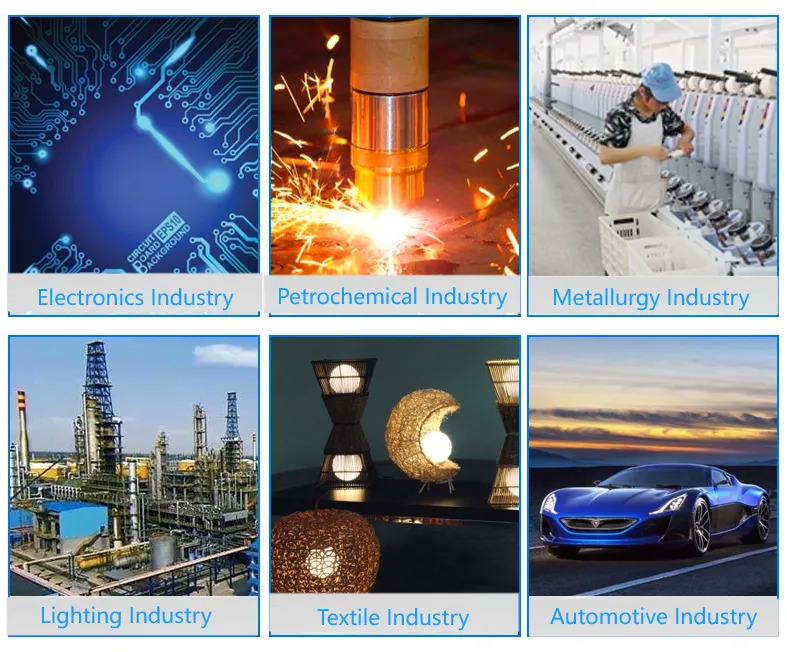
Applications of Ceramic Products
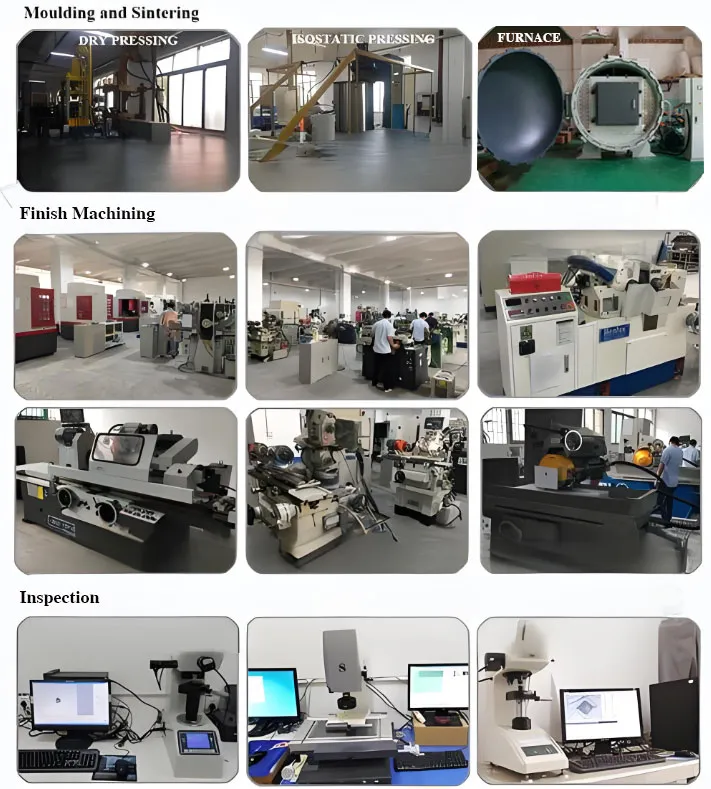
Process of Ceramic Products
Payment Term
T/T, Western Union, Paypal, Credit Card etc.
Shipment Term
By air, by sea, by express, as customers request.
5 FAQs of alumina ceramic rods
Q1: What is the main difference between alumina ceramic rods and threaded rods?
Structural differences: ceramic rods are solid/hollow cylinders, threaded rods have standard threads machined on the surface for removable connections; application scenarios: ceramic rods are focused on static support or wear-resistant transmissions, and threaded rods are used in high-corrosion/high-temperature scenarios (such as flange connections for chemical equipment) that require frequent disassembly.
Q2: Why do I need diamond tools for machining ceramic rods?
Hardness matching: diamond hardness (Mohs 10) is the only one that can effectively cut alumina (Mohs 9), ordinary tungsten carbide tool wear rate > 0.1 mm/min; processing technology: diamond grinding wheel grinding (line speed ≥ 30 m/s), with coolant (deionized water) to reduce the heat of cutting, to avoid thermal cracking.
Q3: How to avoid ceramic rod breakage at high temperatures?
Thermal stress control: Reserve expansion gap (calculated at 1.2×10-⁵/°C) during installation to avoid complete restraint at the fixed end; Gradient temperature rise: 5°C/min rate to the working temperature when first used to eliminate the internal residual stress; Material selection: High temperature (>1400 ℃) scenarios using 99.5% purity rods, fewer glass phases in the grain boundary and >90% strength retention at high temperatures. Less glass phase at the grain boundary, high-temperature strength retention rate >90%.
Q4: How to calculate the connection torque of a threaded rod?
Safe torque: It is recommended to operate at 60%-70% of the torque of metal threaded rods; for example, the maximum torque of ceramic rods with M10 threads is ≤15 N・m; anti-loosening design: ceramic lock nut + spring washer is used, and the use of metal anti-loosening adhesive is prohibited (which may corrode the surface of ceramics).
Q5: Can the ceramic rods be recycled?
Recycling: After crushing, it can be used as abrasive (e.g., polished glass, metal) or as refractory aggregate, with a recycling rate of >95%. Environmental protection: Ceramic rods with plating need to be disposed of by a professional organization, to avoid contamination of soil/water by heavy metals (e.g. Ni, Cr).