Overview of Alumina Ceramic Plates
Alumina ceramic plate is a high-performance ceramic plate with alumina (Al₂O₃) as the main component, which has become a key basic material in the industrial field by virtue of its ultra-high hardness (Mohs hardness grade 9), high-temperature resistance (1700℃ stable work), insulation and corrosion resistance. Its performance is directly related to the purity of alumina (common purity >99%), and it is widely used in electronic packaging, wear-resistant parts of machinery, chemical corrosion-resistant equipment and other scenarios.
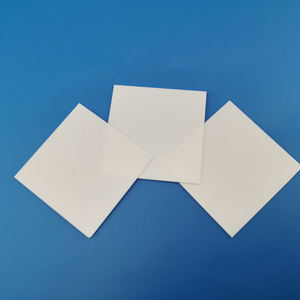 alumina ceramic plates
Mechanical and Wear Resistant Properties
Hardness and wear resistance: Mohs hardness 9, Vickers hardness 1800-2200 HV, wear rate of manganese steel 1/266, suitable for high friction scenarios (e.g., sand mill lining); Strength characteristics: bending strength 350-500 MPa, compressive strength 2000-3000 MPa, can withstand heavy loads but need to avoid impact loads (fracture toughness 3.5-5.0 MPa・m½). Thermal Properties
Thermal properties
Temperature range: operating temperature - 270 ℃ to 1700 ℃, melting point 2072 ℃, coefficient of thermal expansion 7-8 × 10-⁶ / ℃, and silicon chips with excellent thermal match; thermal conductivity: 20-30 W/m・K, suitable for the need to dissipate the heat of the electronic substrate (e.g., power device heat sinks).
Electrical and Chemical Properties
Insulation: dielectric strength 15-20 kV/mm, volume resistivity > 10¹⁴ Ω・cm, dielectric constant 8.4-10 (1 MHz), is the ideal material for high-frequency circuit boards; corrosion resistance: in addition to hydrofluoric acid and hot concentrated alkali, corrosion resistance to strong acids, alkalis, salt solutions, corrosion rate <0.001 mm/year, better than 316L stainless steel.
Alumina ceramic plate specifications
| Specification |
Details |
| Material Composition |
Primarily composed of Al₂O₃ (Oxide of Aluminum) with high purity (typically >99%) |
| Hardness |
High hardness, typically around 9 on the Mohs scale |
| Density |
Approximately 3.95-4.02 g/cm³ |
| Flexural Strength |
350-500 MPa (depending on grade and processing) |
| Compressive Strength |
2000-3000 MPa |
| Fracture Toughness |
3.5-5.0 MPa·m½ |
| Thermal Conductivity |
20-30 W/m·K (varies with purity and microstructure) |
| Thermal Expansion Coefficient |
7-8 x 10⁻⁶/°C |
| Dielectric Strength |
15-20 kV/mm (at room temperature) |
| Dielectric Constant |
8.4-10 (at 1 MHz) |
| Loss Tangent |
< 0.001 (at 1 MHz) |
| Chemical Resistance |
Excellent resistance to acids, alkalis, and salts; chemically inert in most environments |
| Operating Temperature Range |
-270°C to +1700°C (depending on specific application and grade) |
| Surface Finish |
Available in various finishes such as polished, ground, or as-fired (natural surface) |
| Tolerance |
±0.1 mm (standard tolerance; tighter tolerances available with precision machining) |
| Thickness |
0.5 mm to 20 mm (custom thicknesses available upon request) |
| Size |
Standard sizes up to 300 mm x 300 mm; larger sizes available through custom manufacturing |
| Color |
Typically white or off-white; other colors possible with specific additives |
| Applications |
Widely used in electronics (as substrates and insulators), mechanical components (bearings, seals), chemical processing (corrosion-resistant parts), aerospace, and more |
|
Application of alumina ceramic plate
Electronics and semiconductor industry
IC substrate: used as chip carrier, supporting multi-layer wiring and heat dissipation, with dielectric constant as low as 9, suitable for 5G RF module; high-voltage insulating board: used as insulating partition in substation and high-voltage power distribution cabinet, withstanding voltage above 10 kV and preventing arc breakdown.
Mechanical Manufacturing and Wear-resistant Field
Wear-resistant lining plate: used in mining crusher, cement plant powder separator, life expectancy is 10 times higher than manganese steel lining plate, reducing the frequency of downtime for replacement; Precision guide: used as a linear guide in optical testing equipment, surface roughness Ra 0.2 µm, ensuring the testing accuracy ±1 µm.
Chemical and corrosive environments
Reactor lining: replacing titanium for hydrochloric acid and sulfuric acid reactors, reducing costs by 60% and extending service life to more than 8 years; Filter membrane support: microporous ceramic plates (pore size 0.1-10 μm) are used for precision filtration of chemical liquids, resistant to contamination and easy to clean and regenerate.
Aerospace and Energy
Thermal protection plate: used as the thermal protection layer for spacecraft re-entry into the atmosphere, with a temperature resistance of 1600℃ and a weight reduction of 50% compared with metal plates; Fuel cell spacer: used as the electrolyte support layer in Solid Oxide Fuel Cells (SOFCs), with oxidization resistance and high ionic conductivity.
Medical and Optical Field
Company Profile
Luoyang Tongrun Nano Technology Co. Ltd. (TRUNNANO) is a trusted global chemical material supplier & manufacturer with over 12-year-experience in providing super high-quality chemicals and nanomaterials, including boride powder, nitride powder, graphite powder, ceramic products, 3D printing powder, etc.
The company has a professional technical department and Quality Supervision Department, a well-equipped laboratory, and equipped with advanced testing equipment and after-sales customer service center.
If you are looking for high-quality Ceramic Products please feel free to contact us or click on the needed products to send an inquiry.
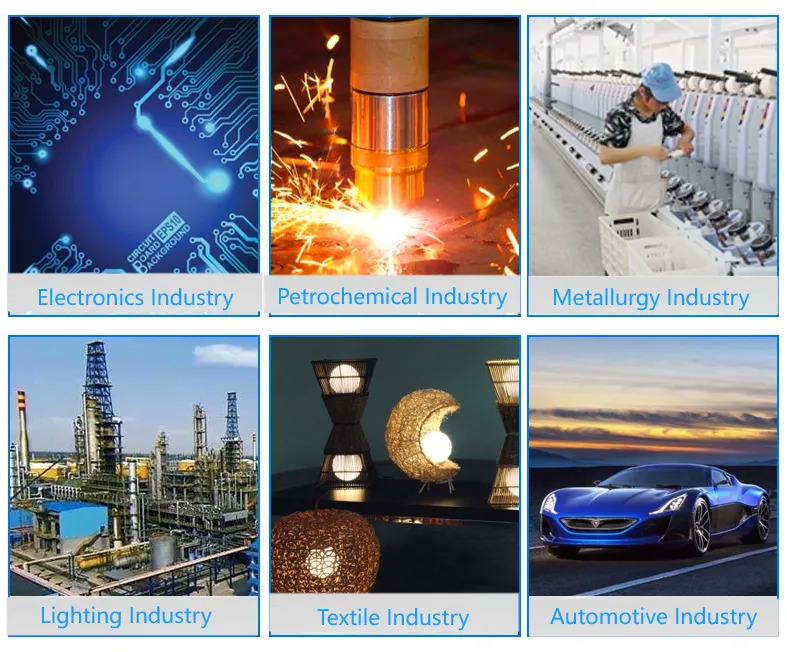
Applications of Ceramic Products
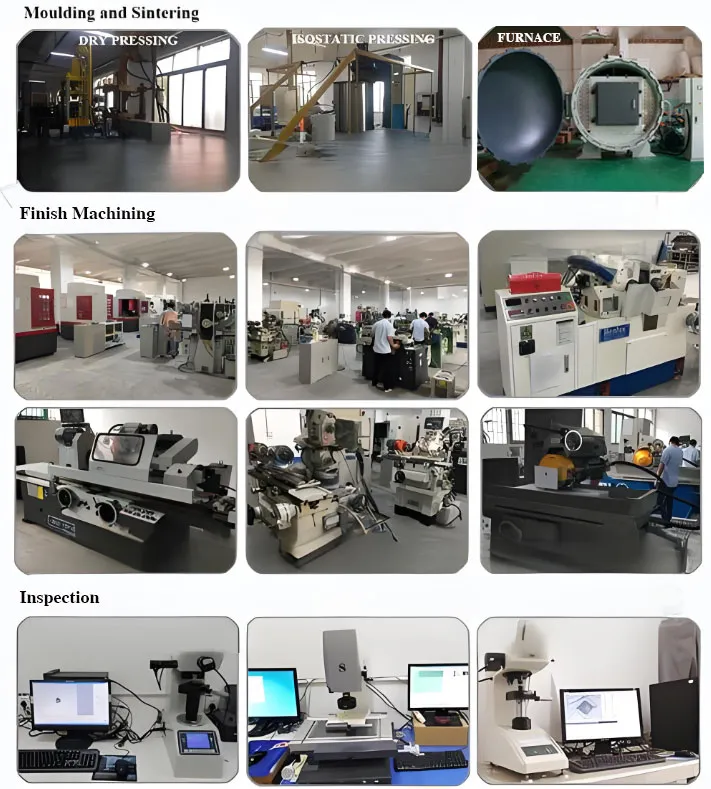
Process of Ceramic Products
Payment Term
T/T, Western Union, Paypal, Credit Card etc.
Shipment Term
By air, by sea, by express, as customers request.
5FAQs of Alumina Ceramic Plate
Q1: What is the main difference between alumina ceramic plates and zirconia ceramic plates?
Hardness: alumina (Mohs 9) > zirconia (Mohs 8.5), more suitable for high wear scenarios; toughness: zirconia (fracture toughness of 9 MPa・m½) > alumina, better impact resistance; cost: alumina cost is 30%-50% lower, more cost-effective.
Q2: How to realize the precision drilling of ceramic plates?
Laser processing: CO₂ laser or fiber laser, the smallest hole diameter of 0.1 mm, suitable for thin plates (<2 mm); ultrasonic processing: with diamond grinding head, hole precision ± 0.01 mm, suitable for thick plates (>5 mm); EDM: need to be conductive coating treatment, suitable for electrically conductive ceramics (such as composite panels with TiC).
Q3: How to fix the ceramic plate under a high-temperature environment?
Metal fixture: Inconel 718 alloy fixture, through the transition fit (gap 0.02-0.05 mm) to avoid thermal stress; ceramic adhesive: the use of aluminate ceramic adhesive (temperature resistance of 1200 ℃), bonding strength> 50 MPa.
Q4: How to clean surface stains?
Organic pollutants: wipe with alcohol or acetone, avoid chlorinated solvents; inorganic stains: 10% dilute hydrochloric acid soaked for 5 minutes and then rinsed with water, applicable to metal ion pollution; stubborn stains: ultrasonic cleaning (frequency 40 kHz) with neutral detergent, avoid physical scratches to damage the surface.
Q5: Are the waste plates recyclable?
Physical recycling: crushed to less than 200 mesh as abrasive, used for metal polishing or glass grinding; chemical recycling: high purity plates (≥99.5%) regenerate Al₂O₃ powder by acid solvent method, purity is restored to 99.8%; environmental protection disposal: plates with heavy metal plating need to be handed over to the hazardous waste treatment plant, and prohibited from being landfilled directly.