Overview of Alumina Ceramic Blocks
Alumina ceramic block is an advanced ceramic material with alumina (Al₂O₃) as its main component and has become a key basic material in the industrial field for its high hardness, wear resistance, corrosion resistance, insulation, and excellent thermal stability and mechanical strength, inspite of the presence of factors such as greater brittleness, which need to be taken into account comprehensively.
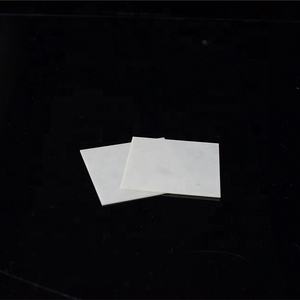
Alumina Ceramic Blocks
Characteristics of Alumina Ceramic Blocks
Ultra-high hardness and wear resistance: Mohs hardness of 9 (second only to diamond), Vickers hardness of 1800-2000 HV, can withstand various forms of wear tests, significantly extending the service life of the equipment.
Excellent Mechanical and Thermal Properties: Flexural Strength: 350-450 MPa; Compressive Strength: >2500 MPa; Operating Temperature: -50°C to 1500°C (Continuous)/1800°C (Intermittent), Low Coefficient of Thermal Expansion (7.5-8.0×10-⁶/° C). C).
Reliable electrical insulation: dielectric strength > 15 kV/mm, dielectric constant 9-10 (1 MHz), stable insulation under complex electric fields such as high frequency and high voltage.
Specification Parameter Table of Alumina Ceramic Blocks
| Specification |
Details |
| Material Composition |
High-purity alumina (Al₂O₃) with typical content >99.5% |
| Density |
3.95–4.00 g/cm³ |
| Hardness |
Mohs hardness: 9; Vickers hardness: 1800–2000 HV |
| Flexural Strength |
350–450 MPa |
| Compressive Strength |
>2500 MPa |
| Tensile Strength |
100–150 MPa |
| Thermal Conductivity |
20–30 W/m·K |
| Thermal Expansion |
7.5–8.0 x 10⁻⁶ /°C (20–1000°C) |
| Dielectric Strength |
>15 kV/mm |
| Dielectric Constant |
9–10 (1 MHz) |
| Loss Tangent |
<0.0002 (1 MHz) |
| Chemical Resistance |
Excellent resistance to acids and alkalis except hydrofluoric acid (HF) |
| Operating Temperature |
-50°C to 1800°C (intermittent); continuous use up to 1500°C |
| Surface Finish |
Available in polished, ground, or as-sintered finishes |
| Tolerance |
±0.1 mm (standard); tighter tolerances available upon request |
| Applications |
Bearings, wear parts, insulators, cutting tools, chemical processing parts |
| Color |
White or off-white |
| Customization |
Available in various sizes and shapes; custom machining services provided |
|
Application areas of alumina ceramic blocks
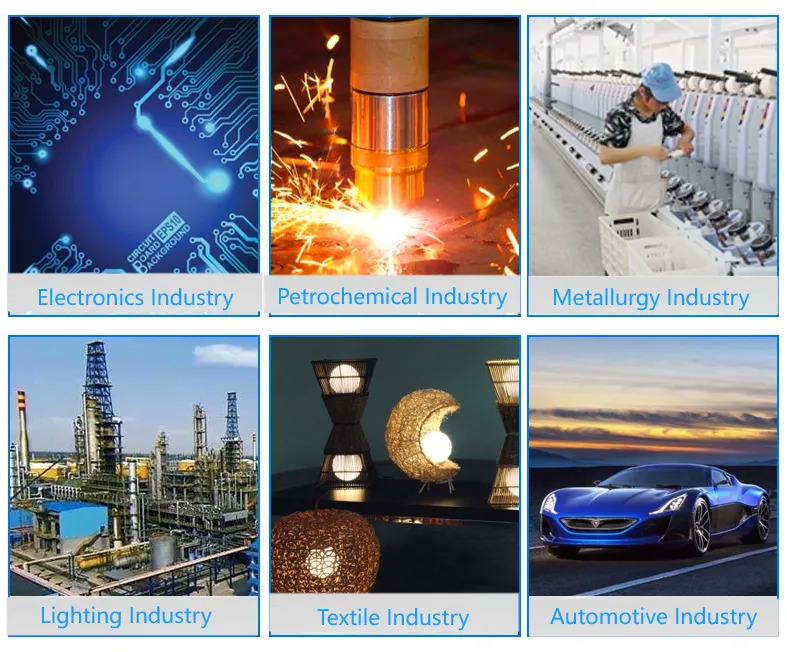
Mechanical engineering: wear-resistant parts such as high-precision bearings, seals, cutting tools, etc., to enhance the durability of equipment.
Electronic industry: insulating parts, circuit substrates and electronic components encapsulation, relying on its stable insulating properties.
Chemical industry: corrosion-resistant pipes, valves, and pump components, suitable for strong corrosive conditions.
Medical industry: biocompatible implantable instruments and surgical tools to meet safety and corrosion resistance requirements.
Aerospace and automotive manufacturing: high-temperature engine components and extreme-environment structural components to cope with high-pressure, high-temperature and other harsh conditions.
Company Profile
Luoyang Tongrun Nano Technology Co. Ltd. (TRUNNANO) is a trusted global chemical material supplier & manufacturer with over 12-year-experience in providing super high-quality chemicals and nanomaterials, including boride powder, nitride powder, graphite powder, ceramic products, 3D printing powder, etc.
The company has a professional technical department and Quality Supervision Department, a well-equipped laboratory, and equipped with advanced testing equipment and after-sales customer service center.
If you are looking for high-quality Ceramic Products please feel free to contact us or click on the needed products to send an inquiry.
Applications of Ceramic Products
Process of Ceramic Products
Payment Term
T/T, Western Union, Paypal, Credit Card etc.
Shipment Term
By air, by sea, by express, as customers request.
5 Frequently Asked Questions about Alumina Ceramic Blocks
Q1: Why does the surface of alumina ceramic blocks have spots, color spots or color differences?
Reason: Metallic impurities (e.g., iron, stainless steel particles) introduced by contact with raw materials or equipment during the production process, deviations in the formulation process, mechanical damage (e.g., light spots caused by surface dents), or environmental pollutants may lead to color abnormalities.
Q2: Why does the alumina ceramic block turn yellow?
Normal sintering should be white; yellowing may be due to the higher purity of alumina, more susceptible to sunlight triggered by irreversible changes in the internal composition, or due to moisture generation of hydrated alumina, and with the prolongation of the light time to deepen the color.
Q3:How difficult is the processing of alumina ceramic block?
Processing difficulty is high: the need to use diamond and other special tools; the traditional process is inefficient, high cost; material brittleness, easy to crack in the processing, the need to strictly control the parameters to avoid stress concentration; high-precision machining needs to rely on precision grinding, polishing and other advanced equipment.
Q4:How is the hardness of alumina ceramic block? What are the characteristics?
Mohs hardness 9, Vickers hardness 1800-2000 HV, hardness second only to diamond, excellent wear resistance, can withstand high-intensity friction and scratching.
Q5: What is the corrosion resistance of alumina ceramic blocks?
In addition to hydrofluoric acid, it has strong resistance to most inorganic acids, alkalis and organic solvents and can maintain stability in a strong corrosive environment, which is an ideal material for chemical equipment.