Silicon Carbide Refractory Plate: An Overview
Silicon carbide refractory plate is a kind of high-performance refractory material made of silicon carbide as the main raw material. It has the advantages of a high melting point, high strength, high wear resistance, good thermal shock stability, and erosion resistance. Silicon carbide refractory plates can maintain stable physical and chemical properties in a high-temperature environment, can effectively extend the service life of the equipment, and improve production efficiency.
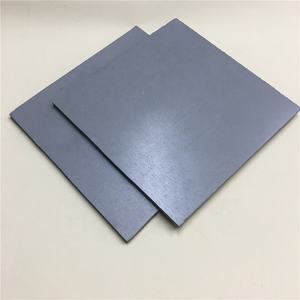
Silicon Carbide Refractory Plate
Features of Silicon Carbide Refractory Plate
High Refractory Performance: Silicon carbide has a high melting point, can withstand high temperatures of more than 1600 ℃, in the high temperature environment can still maintain good structural stability, not easy to soften and deformation, can effectively resist the high temperature flames and slag erosion, suitable for a variety of high-temperature furnace and kiln lining materials.
High Mechanical Strength: The dense structure of silicon carbide refractory plates endows them with high compressive and flexural strength. They can endure the impact and friction of materials within the furnace, resisting cracking and breakage. Even under conditions of frequent loading/unloading and high-temperature operation, they preserve their integrity, reducing the frequency of maintenance and replacement.
Good Thermal Conductivity: Possessing high thermal conductivity, silicon carbide refractory plates can swiftly transfer heat, leading to a more uniform temperature distribution within the furnace. This not only boosts production efficiency and product quality but also diminishes energy consumption.
Excellent Thermal Shock Resistance: Under cyclic conditions of rapid cooling and heating, silicon carbide refractory plates can still maintain good performance. They are not prone to cracking and flaking due to thermal stress, ensuring stable operation in kilns with frequent start-ups and shutdowns and prolonging service life.
Chemical Erosion Resistance: Silicon carbide refractory plates exhibit strong resistance to chemical erosion. They are not easily eroded or corroded, making them suitable for high-temperature equipment handling corrosive media and ensuring the stability and safety of such equipment.
Specifications of Silicon Carbide Refractory Plate
| Items |
Indicators |
| Main component |
SiC ≥ 90% - 99%14 |
| Max. working temperature |
1400 - 1650 ºC14 |
| Refractoriness |
≥ 39 SK14 |
| Refractoriness under load |
≥ 1650 - 1750 ºC (2 kg/cm²)14 |
| Modulus of rupture at room temperature |
≥ 500 kg/cm²14 |
| Modulus of rupture at 1400 ºC |
≥ 100 kg/cm²14 |
| Compressive strength |
≥ 1300%14 |
| Thermal expansion at 1000 ºC |
0.42% - 0.48%14 |
| Apparent porosity |
7% - 15%124 |
| Bulk density |
2.55 - 2.75 g/cm³134 |
| Thermal conductivity at 1000 ºC |
9.1 - 14.5 kcal/m·hr·ºC |
|
Applications of Silicon Carbide Refractory Plate
Owing to its outstanding performance, silicon carbide refractory plate finds application in numerous fields:
Metallurgical Industry: In blast furnaces, silicon carbide refractory plates can be utilized in the furnace belly and cylinder to endure the scouring and erosion of high-temperature molten iron and slag, thereby extending the blast furnace's service life. In steel converters, as a furnace lining material, it resists the impact of high-temperature molten steel and the erosion of the oxidizing atmosphere, enhancing the converter's operation rate. Additionally, in electric furnace steelmaking, silicon carbide refractory plates can be employed in the furnace wall and roof to withstand the radiation of high-temperature arcs and steel splashes.
Chemical Industry: In ammonia conversion furnaces, silicon carbide refractory plates can serve as lining materials to withstand high temperatures, pressures, and the corrosion of gases like hydrogen and nitrogen. In petroleum cracking furnaces, they can resist the scouring and erosion of high-temperature cracking gases, ensuring the furnace body's sealing and stability. Moreover, in various chemical reactors, silicon carbide refractory plates can be used for lining protection to meet the requirements of different chemical reactions, including high temperature and corrosion resistance.
Building Materials Industry: In cement rotary kilns, silicon carbide refractory plates can be applied in the transition and firing belts to withstand the abrasion of high-temperature materials and the erosion of alkaline gases, thereby improving the rotary kiln's operation rate. In glass kilns, they can be used in the pool wall and breast wall to resist the erosion of glass liquid and the scouring of high-temperature flames, ensuring the quality of glass and the kiln's service life.
Company Profile
Luoyang Tongrun Nano Technology Co. Ltd. (TRUNNANO) is a trusted global chemical material supplier & manufacturer with over 12-year-experience in providing super high-quality chemicals and nanomaterials, including boride powder, nitride powder, graphite powder, ceramic products, 3D printing powder, etc.
The company has a professional technical department and Quality Supervision Department, a well-equipped laboratory, and equipped with advanced testing equipment and after-sales customer service center.
If you are looking for high-quality Ceramic Products please feel free to contact us or click on the needed products to send an inquiry.

Applications of Ceramic Products
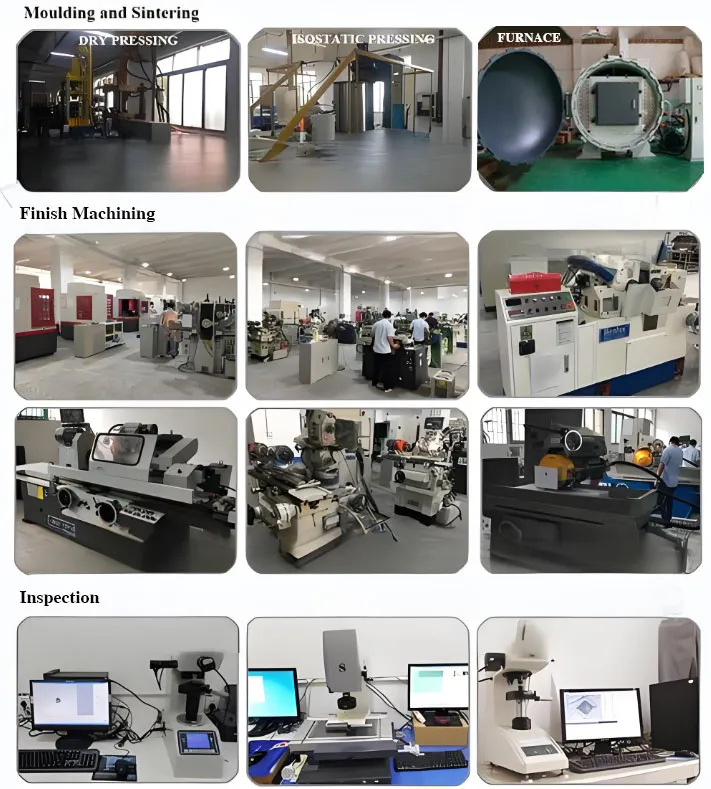
Process of Ceramic Products
Payment Term
T/T, Western Union, Paypal, Credit Card etc.
Shipment Term
By air, by sea, by express, as customers request.
5 FAQs of Silicon Carbide Refractory Plate
Q1: What is the thermal conductivity of a silicon carbide refractory plate?
The thermal conductivity of silicon carbide is 10-14 times higher than that of clay products, reaching 16.3-16.7W/m・K at 350°C. This enables it to transfer heat quickly and evenly, reducing the temperature difference inside the furnace and improving heating efficiency. For instance, using a Silicon Carbide Shelter in a ceramic kiln can shorten the firing time by over 30%.
Q2: What is the corrosion resistance of the silicon carbide refractory plate?
Silicon carbide exhibits excellent corrosion resistance to most acids (e.g., sulfuric acid, hydrochloric acid) and neutral salts. However, it is prone to oxidation in strong oxidizing atmospheres (e.g., oxygen, water vapor, CO₂), resulting in the formation of a SiO₂ layer on the surface. Therefore, in oxidizing environments, it should be used with an antioxidant coating (such as ZS-1021 high-temperature resistant sealer), which can reduce the oxidation rate by over 95%.
Q3: What are the specific applications of Silicon Carbide Refractory Sheet in the metallurgical industry?
Blast Furnace: Used in the furnace belly and cylinder, it resists high-temperature iron wash, with a service life of over 10 years, which is 3-5 times that of traditional clay bricks.
Converter: As a furnace lining material, it withstands the impact of high-temperature molten steel. Japan's Nippon Steel & Sumitomo Metal Corporation increased its service life from 200 times to 600 times.
Electric Furnace: Silicon carbide plates are used for furnace walls and roofs, withstanding high-temperature arc radiation and reducing maintenance frequency.
Q4: How to choose silicon carbide refractory panels for the chemical industry?
In ammonia conversion furnaces, reactive sintered silicon carbide plates should be chosen for their high density and strong thermal shock resistance. In contrast, recrystallized silicon carbide plates are more suitable for petroleum cracking furnaces due to their better corrosion resistance and high-temperature stability. Care should be taken to avoid using them in environments containing hydrofluoric acid or molten alkali metals.
Q5: How to install a silicon carbide refractory plate?
Substrate Treatment: Ensure the installation surface is flat, free of oil and dust. Apply a high-temperature-resistant binder (e.g., phosphate cement) if necessary.
Fixing Method: Use bolts or a mortise and tenon structure for fixation. Bolts should be matched with heat-insulating gaskets to prevent heat conduction.
Seam Treatment: Leave a 2-3mm expansion gap, filled with ceramic fiber wool or vermiculite powder to prevent thermal stress cracking.
Modular Installation: Some products support quick dismantling designs (e.g., double-connected pillar structure) for convenient local replacement.