Silicon Carbide Desulfurization Nozzle: An Overview
Silicon Carbide Desulfurization Nozzle is a key component used in desulfurization systems. It is usually made of silicon carbide material, with high strength, high hardness, high temperature, wear and corrosion resistance and other excellent performance. With reasonable design, it can make the desulfurization agent sprayed evenly atomized, which is widely used in the field of flue gas desulfurization in electric power, chemical industry and other industries.
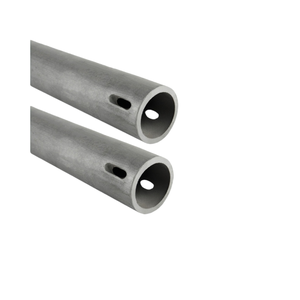
Silicon Carbide Desulfurization Nozzle
Features of Silicon Carbide Desulfurization Nozzle
High Abrasion Resistance: Silicon carbide itself is extremely hard, second only to diamond. In the process of desulfurization, it can withstand the high-speed flow of solid-containing liquid droplets, not easy to wear, extending the service life of the nozzle, reducing the frequency of maintenance and replacement due to nozzle wear.
Strong Corrosion Resistance: Silicon carbide exhibits good chemical stability and strong resistance to the acids present in desulfurization agents. It maintains stable performance in harsh chemical environments, preventing corrosion from affecting the spray effect and the structural integrity of the nozzle.
Excellent Spraying Effect: after precise design and processing, the silicon carbide desulfurization nozzle can achieve uniform spray distribution, so that the desulfurization agent is in full contact with the flue gas, and improve the efficiency of desulfurization. The spray angle and droplet size can be customized according to different desulfurization process requirements to meet the needs of various application scenarios.
Good Insulation: Silicon carbide possesses excellent insulation properties, which are vital in some FGD systems with electrical performance requirements. It prevents equipment failures or safety hazards caused by electrical issues.
Specifications of Silicon Carbide Desulfurization Nozzle
| Item |
Unit |
Data |
| Chemical composition (SiC) |
% |
≥90 |
| Maximum service temperature |
℃ |
1500 |
| Refractoriness |
SK |
≥39 |
| Refractoriness under load at T2 |
℃ |
≥1750 |
| Modulus of rupture at room temperature |
kg/cm² |
≥500 |
| Modulus of rupture at 1400℃ |
kg/cm² |
≥100 |
| Compressive strength |
kg/cm² |
≥1300 |
| Thermal expansion at 1000℃ |
% |
0.42 - 0.48 |
| Apparent porosity |
% |
7 - 8 |
| Bulk density |
g/cm³ |
2.70 - 2.75 |
| Thermal conductivity |
kcal/m·hr·℃ |
13.5 - 14.5 |
| Density |
g/cm³ |
>3.02 |
| Open porosity |
% |
<0.1 |
| Coefficient of thermal expansion |
K⁻¹×10⁻⁶ |
4.5 |
| Acid - proof and alkaline |
- |
Excellent |
|
Applications of Silicon Carbide Desulfurization Nozzle
Power Industry: Thermal power plants are key application sites. During coal-fired power generation, a large amount of flue gas containing sulfur dioxide is produced. Installing silicon carbide desulfurization nozzles in the desulfurization tower enables fine mist spraying of desulfurization agents like limestone slurry. This allows full contact and chemical reactions with flue gas, effectively removing sulfur dioxide and ensuring flue gas emissions meet environmental standards, thereby reducing atmospheric pollution.
Chemical Industry: Many chemical production processes generate sulfur-containing waste gases, such as petroleum refining and sulfuric acid production. Silicon carbide desulfurization nozzles can accurately spray desulfurization agents into the reaction area according to specific working conditions and waste gas characteristics, achieving efficient desulfurization. This ensures chemical production emissions meet standards and protects equipment from corrosive damage caused by acidic gases.
Iron and Steel Industry: In iron and steel smelting, silicon carbide desulfurization nozzles play an indispensable role in coke oven gas desulfurization and sintering machine flue gas desulfurization. They ensure uniform spraying of desulfurization liquids, promoting full desulfurization reactions, reducing sulfur content in flue gas, minimizing environmental pollution, and aiding steel companies in achieving green production.
Waste Incineration Industry: Waste incineration produces flue gas containing sulfur dioxide and other pollutants. Silicon carbide desulfurization nozzles atomize desulfurization agents sprayed into the flue gas, effectively removing sulfur oxides and protecting the surrounding environment and residents' health. They ensure safe and environmentally friendly operation of waste incineration plants.
Company Profile
Luoyang Tongrun Nano Technology Co. Ltd. (TRUNNANO) is a trusted global chemical material supplier & manufacturer with over 12-year-experience in providing super high-quality chemicals and nanomaterials, including boride powder, nitride powder, graphite powder, ceramic products, 3D printing powder, etc.
The company has a professional technical department and Quality Supervision Department, a well-equipped laboratory, and equipped with advanced testing equipment and after-sales customer service center.
If you are looking for high-quality Ceramic Products please feel free to contact us or click on the needed products to send an inquiry.

Applications of Ceramic Products
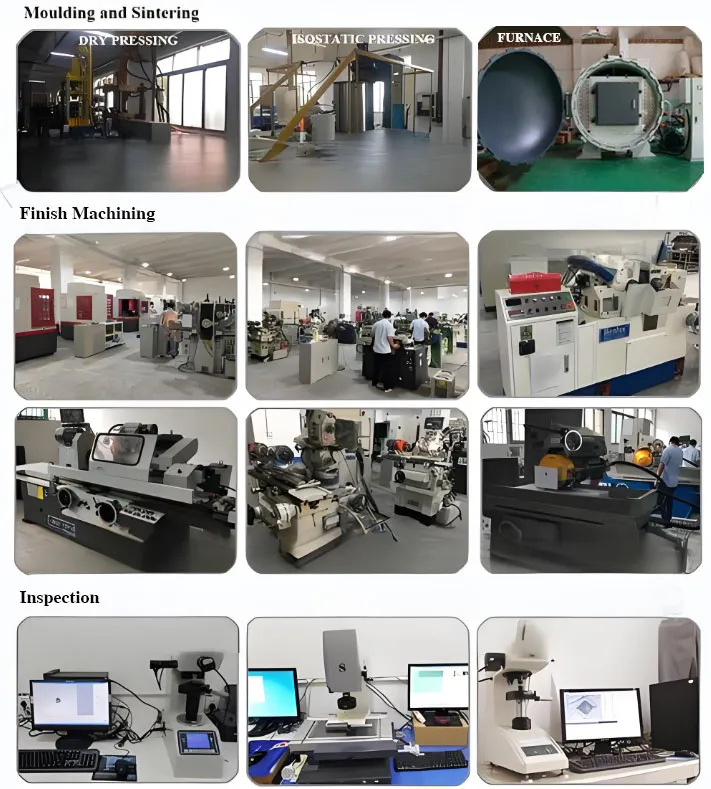
Process of Ceramic Products
Payment Term
T/T, Western Union, Paypal, Credit Card etc.
Shipment Term
By air, by sea, by express, as customers request.
5 FAQs of Silicon Carbide Desulfurization Nozzle
Q1: Why Choose Silicon Carbide Desulfurization Nozzles?
Silicon carbide, second only to diamond in hardness, offers wear resistance 5-10 times higher than ordinary metals. Its excellent chemical stability resists long-term erosion from limestone slurry and acidic flue gas. With high-temperature resistance (up to 1400℃) and thermal shock resistance (no rupture during rapid cooling and heating), it maintains stable performance in complex working conditions.
Q2: What's the Difference Between Silicon Carbide Nozzles and Others (Ceramic and Metal)?
Ceramic Nozzle: Brittle and prone to rupture from particle impact or sudden temperature changes, leading to a shorter lifespan.
Metal Nozzle: Poor corrosion resistance, easily corroded in acidic environments, and insufficient wear resistance.
Silicon Carbide Nozzle: Superior overall performance, especially in wear, corrosion, and high-temperature resistance, far exceeding traditional materials. It boasts a service life of 5-10 years.
Q3: How to Select the Right Type of Silicon Carbide Desulfurization Nozzle?
Hollow Cone Nozzle: Suitable for scenarios requiring large coverage, such as desulfurization towers in power plants, with a spray angle of 60°-120°.
Solid Cone Nozzle: Uniform droplet distribution, ideal for high-solid-content slurries with strong anti-clogging ability.
Connection: Threaded, flanged, or clamped connections should match the piping system.
Flow Rate and Pressure: Calculated based on the desulfurization tower size and slurry circulation. Typical working pressure ranges from 0.2-0.5MPa.
Particle Passage: Choose models with larger diameter runners (e.g., spiral nozzles) to avoid clogging from slurry impurities.
Q4: Are There Differences in Nozzle Selection Across Industries?
Electric Power Industry: Prefers hollow cone bidirectional nozzles for simultaneous upward and downward spraying and large coverage.
Chemical Industry: Requires resistance to strong corrosive media. Reaction-sintered silicon carbide nozzles are recommended for their lack of internal separation parts and anti-clogging ability.
Iron and Steel Industry: Coke oven gas desulfurization requires small-angle jet nozzles to enhance impact and prevent slurry sedimentation.
Q5: What Precautions Are Needed When Installing Silicon Carbide Desulfurization Nozzles?
Sealing Treatment: Use high-temperature resistant sealing rings to prevent slurry leakage. Bolts should be evenly tightened to avoid bias during flange connections.
Direction Adjustment: Nozzles should be installed vertically downward to ensure uniform spray coverage and prevent angular deviations that may reduce local desulfurization efficiency.
Anti-loosening Measures: In high-vibration environments, apply anti-loosening adhesive to threaded connections or use clamps for fixation.