Overview of the Silicon Carbide Beam
Silicon carbide beam is a high-performance structural component with silicon carbide as its main component. It is characterized by high strength and high hardness, and can withstand large loads. At the same time, it has good resistance to high temperature, oxidation and corrosion, and can maintain stable performance under the harsh environment of high temperature.
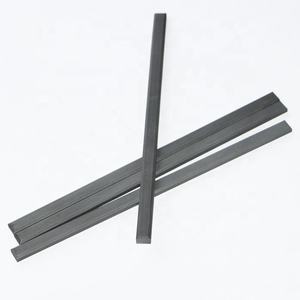
Silicon Carbide Beam
Features of the Silicon Carbide Beam
High Mechanical Strength: The stable crystal structure of silicon carbide beams gives them high strength and hardness, and they can withstand large external forces and loads without easy deformation or fracture, and can be used in occasions where they are required to support heavy loads or bear large stresses.
Good High-Temperature Resistance: Silicon carbide beams exhibit outstanding high-temperature resistance, maintaining good mechanical properties and chemical stability in high-temperature environments. They can endure temperatures as high as 1600°C or even higher, resisting softening and melting at high temperatures. This makes them ideal for high-temperature industrial furnaces, glass kilns, and other high-temperature equipment.
Strong Oxidation and Corrosion Resistance: A dense oxide film forms on the surface of silicon carbide beams, preventing further oxidation. In the atmospheric environment and contact with many corrosive media, they demonstrate good resistance to oxidation and corrosion, withstanding acids, alkalis, and other chemical substances to extend their service life.
Low coefficient of thermal expansion: Silicon carbide beams have a low coefficient of thermal expansion, good dimensional stability in the case of rapid changes in temperature, not easy to crack, this characteristic makes it stable performance in the process of frequent warming and cooling thermal cycle, can be used for high-temperature equipment components with high precision requirements.
Specifications Table of the Silicon Carbide Beam
| Parameter |
Typical Value |
| Material |
Silicon carbide (content ≥88%)2 |
| Max. Working Temperature |
1300 - 1900 ºC24 |
| Density |
2.7 - 3.2 g/cm³124 |
| Apparent Porosity |
≤17%126 |
| Hardness at 20 ºC |
1800 - 2000 kg/mm²2 |
| Compressive Strength |
≥1300 Mpa2 |
| Flexural Strength |
250 - 400 Mpa (room temperature); 100 - 300 Mpa (high temperature)24 |
| Thermal Expansion Coefficient |
(20 - 1000 ºC) 4.0 - 4.8×10⁻⁶/K6 |
| Thermal Conductivity |
13.5 - 70 W/mK246 |
| Size |
Cross - sectional dimensions and lengths can be customized according to requirements, with lengths generally up to 4000 mm |
| Compressive Strength |
≥1300 Mpa2 |
|
Applications of the Silicon Carbide Beam
Metallurgical Industry: In the ironmaking blast furnace, silicon carbide beam can be used as the supporting structural parts, because of its high strength and high temperature resistance, it can withstand the heavy pressure of high temperature charge, and at the same time, resist the high temperature erosion inside the furnace, to ensure the stability of the structure of the blast furnace. In the lining of steel converters, silicon carbide beams can be used to reinforce the structure, enhance the thermal shock resistance and erosion resistance of the converter, and extend its service life.
Chemical Industry: They are used to manufacture the supporting parts of various chemical reactors, capable of withstanding high temperatures, high pressures, and the corrosion of chemical media during the reaction process. In oil cracking furnaces, silicon carbide beams can function as the support and fixing device for furnace tubes.
Electronic Industry: In high-temperature diffusion furnaces for semiconductor manufacturing, silicon carbide beams support silicon wafers or other semiconductor materials. Their high-temperature stability and low impurity content prevent contamination of semiconductor materials and ensure product quality. During the sintering process of electronic ceramics, silicon carbide beams serve as load-bearing brackets, providing stable support for ceramic products and ensuring the smooth progress of the sintering process.
Company Profile
Luoyang Tongrun Nano Technology Co. Ltd. (TRUNNANO) is a trusted global chemical material supplier & manufacturer with over 12-year-experience in providing super high-quality chemicals and nanomaterials, including boride powder, nitride powder, graphite powder, ceramic products, 3D printing powder, etc.
The company has a professional technical department and Quality Supervision Department, a well-equipped laboratory, and equipped with advanced testing equipment and after-sales customer service center.
If you are looking for high-quality Ceramic Products please feel free to contact us or click on the needed products to send an inquiry.
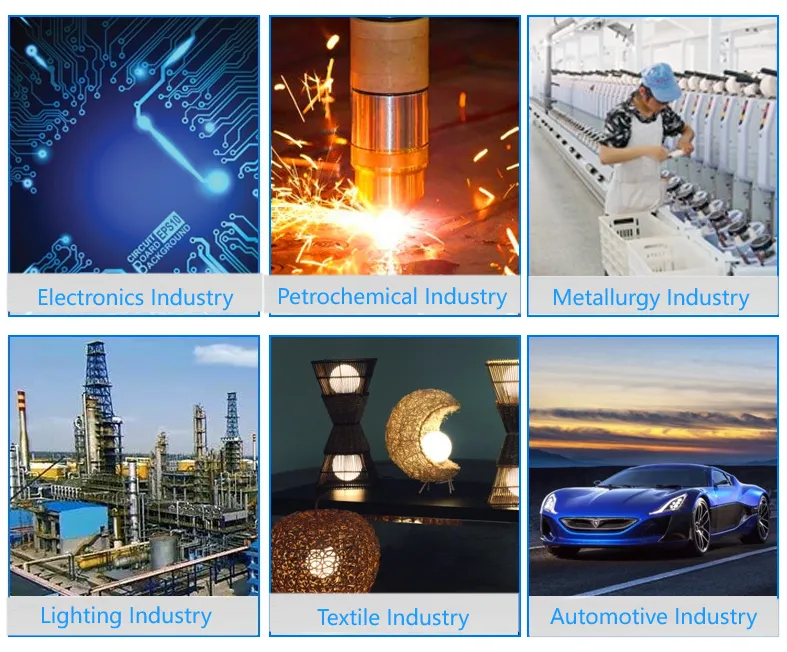
Applications of Ceramic Products
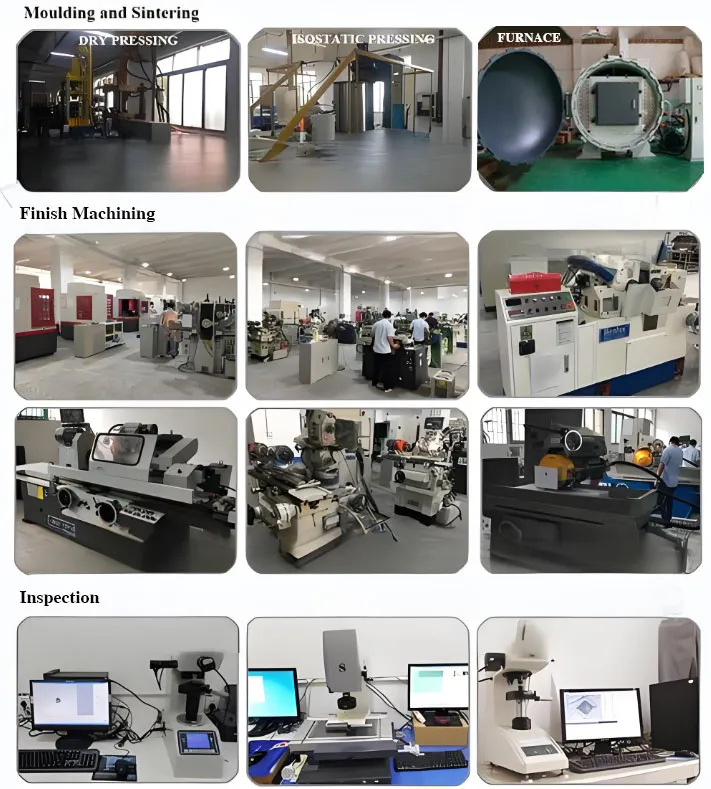
Process of Ceramic Products
Payment Term
T/T, Western Union, Paypal, Credit Card etc.
Shipment Term
By air, by sea, by express, as customers request.
5 FAQs of Silicon Carbide Beam
Q1: What are the advantages of silicon carbide beams over alumina ceramics?
Silicon carbide beams significantly outperform alumina ceramics in the following ways:
High-Temperature Resistance: The long-term use temperature of alumina ceramics generally does not exceed 1200°C, whereas silicon carbide beams can reach over 1600°C.
Lifespan: The lifespan of silicon carbide rollers is more than 10 times that of alumina, and the price is only 20-25% of that of recrystallized silicon carbide.
Q2: How can silicon carbide beams avoid contamination in semiconductor manufacturing?
The semiconductor industry demands a high degree of purity. To prevent contamination, silicon carbide beams must be made from low-impurity raw materials (e.g., high-purity silicon carbide powder) and precision machined (e.g., CNC milling) to ensure no metal residue on the surface. Additionally, during the production process, molds containing iron, aluminum, and other impurities should be avoided to prevent impurity diffusion at high temperatures from contaminating silicon wafers.
Q3: What do I need to pay attention to when installing silicon carbide beams?
Mechanical Stress: Avoid violent impact or uneven load to prevent brittle fracture.
Thermal Expansion: Reserve an expansion gap of 0.5‰-0.7‰ to prevent structural deformation due to thermal expansion and contraction at high temperatures.
Dimensional Accuracy: Check the beam size before installation to ensure it matches the equipment interface, avoiding localized stress concentration due to tolerance.
Environmental Cleanliness: Keep the installation area dry to prevent dust accumulation or corrosive gases.
Q4: How to maintain Silicon Carbide beams to prolong service life?
Regular Inspection: Conduct monthly checks for cracks, abrasion, or deposits on the beam surface and promptly clean any attached slag or chemicals.
Avoid Rapid Cooling and Heating: During the kiln's start-up and shutdown, raise and lower the temperature gradually to prevent thermal shock damage.
Load Control: Use strictly within the rated load capacity to avoid overloading and permanent deformation.
Chemical Protection: Take protective measures after contact with corrosive media.
Q5: What are the production processes of silicon carbide beams?
Reaction Sintering: Silicon carbide powder is mixed with carbon powder, molded, and then a dense structure is formed through a high-temperature silicon infiltration reaction. This method is cost-effective but limits the maximum use temperature to around 1380°C.
Pressureless Sintering: Densification is achieved at high temperatures by adding sintering additives (e.g., B, C). This process results in excellent performance but is more expensive.
Recrystallization: Recrystallization of silicon carbide particles occurs at high temperatures (>2000°C), suitable for applications requiring high purity and high-temperature resistance.