Silicon Carbide Mechanical Seal Ring: An Overview
Silicon Carbide Mechanically Sintered Seal Ring is a high-performance sealing element. It is made of silicon carbide powder through the sintering process, and has the advantages of high hardness, good abrasion resistance, high temperature resistance and strong corrosion resistance. Silicon Carbide Mechanical Sintered Seal Ring has a compact structure and can maintain good sealing performance under high speed, high pressure and other severe working conditions.
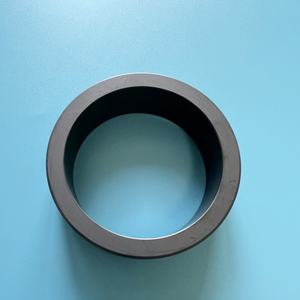
Silicon Carbide Mechanical Seal Rings
Key Features of Silicon Carbide Mechanical Seal Rings
Hardness and Wear Resistance: Silicon carbide itself is extremely hard, second only to diamond. The sintered seal ring has excellent abrasion resistance and can withstand high-speed friction and particle scouring, which significantly extends the service life of the seal ring and reduces the number of repairs and downtimes caused by seal wear.
High-Temperature Resistance: These seal rings are engineered with a high melting point and exceptional thermal stability. This enables them to retain their structural integrity and operational performance even in extremely high-temperature environments, making them ideal for use in equipment that operates at elevated temperatures.
Corrosion Resistance: They exhibit outstanding resistance to a broad spectrum of chemical media, including acids, alkalis, and salts. This robust resistance ensures that the seal rings can maintain reliable sealing performance in highly corrosive environments, safeguarding against leakage and maintaining the integrity of the system.
Low coefficient of friction: Silicon Carbide mechanical sintered sealing rings have a low coefficient of friction, which reduces the energy consumption of the equipment during operation, and at the same time reduces the abrasion of the sealing surfaces, thus improving the reliability and efficiency of the seals.
High thermal conductivity: Silicon carbide mechanical sintered sealing ring has good thermal conductivity, which can quickly dissipate the heat generated by friction, avoiding high sealing surface temperature due to heat accumulation, thus ensuring the stable performance of the sealing ring, and reducing the sealing failure caused by thermal deformation.
Specifications of Silicon Carbide Mechanical Seal Rings
| Property |
Typical Value |
Unit |
| Material |
Sintered silicon carbide (SSiC), reaction - bonded silicon carbide (RBSiC) |
- |
| Density |
3.0 - 3.21 |
g/cm³ |
| Hardness |
Mohs hardness 9.5, Vickers hardness 2500 - 3500 |
kg/mm² |
| Thermal Conductivity |
120 - 270 |
W/m·K |
| Coefficient of Thermal Expansion |
4.0 - 4.5×10⁻⁶ (20 - 1000℃) |
/℃ |
| Operating Temperature |
Up to 1600 |
℃ |
| Bending Strength |
300 - 700 |
MPa |
| Tensile Strength |
300 - 600 |
MPa |
| Chemical Resistance |
Excellent resistance to most acids, bases, and salts |
- |
| Electrical Resistivity |
>10¹² |
Ω·cm |
| Thermal Shock Resistance |
Able to withstand rapid temperature changes up to 1000℃ |
- |
| Porosity |
Very low, typically less than 1% |
% |
| Crystal Structure |
α - SiC (hexagonal), β - SiC (cubic) |
- |
| Impurity Content |
Depends on application; high - purity grades available |
- |
| Dimensional Tolerance |
±0.05 mm or tighter, depending on precision requirements |
mm |
| Color |
Typically black or dark gray |
- |
| Shape |
Circular, can be customized according to requirements |
- |
| Surface Finish |
Rough, polished, or other treatments available |
- |
|
Applications of Silicon Carbide Mechanical Seal Rings
Petrochemical Industry: Ensures safe sealing of corrosive, flammable, and explosive media in equipment such as pumps and reactors during petroleum refining and chemical raw material production, preventing leakage and environmental pollution.
Power Industry: Adapted to high-speed rotation and high-pressure differential conditions in boiler feed pumps, circulating water pumps of thermal power generation, and hydraulic turbines of hydroelectric power generation, ensuring long-term stable equipment operation.
Mechanical Manufacturing: Effectively seals lubricating oil, hydraulic oil, and other media in machine tools, compressors, etc. The low friction coefficient reduces energy consumption, while high hardness and wear resistance accommodate frequent start-stop cycles and varying workloads.
Aerospace Field: Maintains reliable sealing performance in critical components like aviation engines under extreme conditions of high temperature, speed, and pressure.
Company Profile
Luoyang Tongrun Nano Technology Co. Ltd. (TRUNNANO) is a trusted global chemical material supplier & manufacturer with over 12-year-experience in providing super high-quality chemicals and nanomaterials, including boride powder, nitride powder, graphite powder, ceramic products, 3D printing powder, etc.
The company has a professional technical department and Quality Supervision Department, a well-equipped laboratory, and equipped with advanced testing equipment and after-sales customer service center.
If you are looking for high-quality Ceramic Products please feel free to contact us or click on the needed products to send an inquiry.
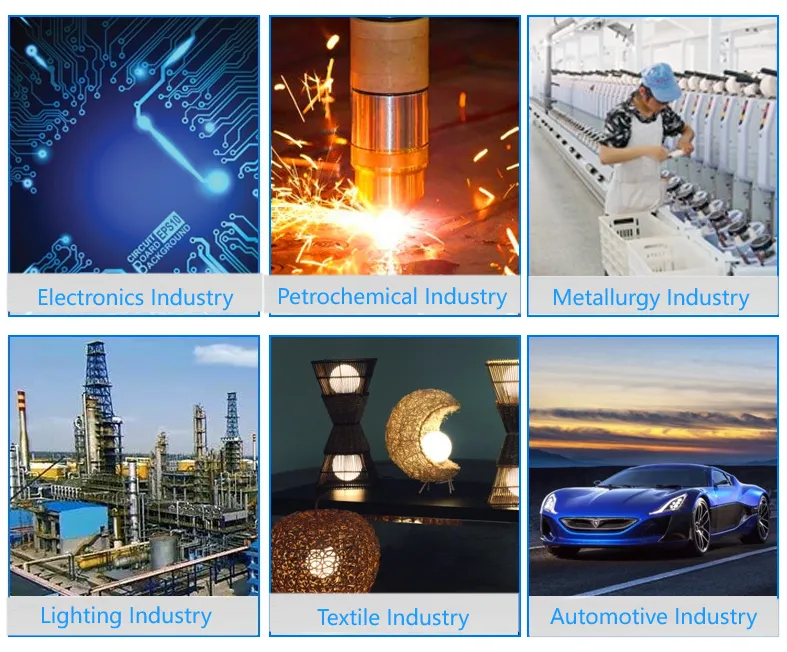
Applications of Ceramic Products
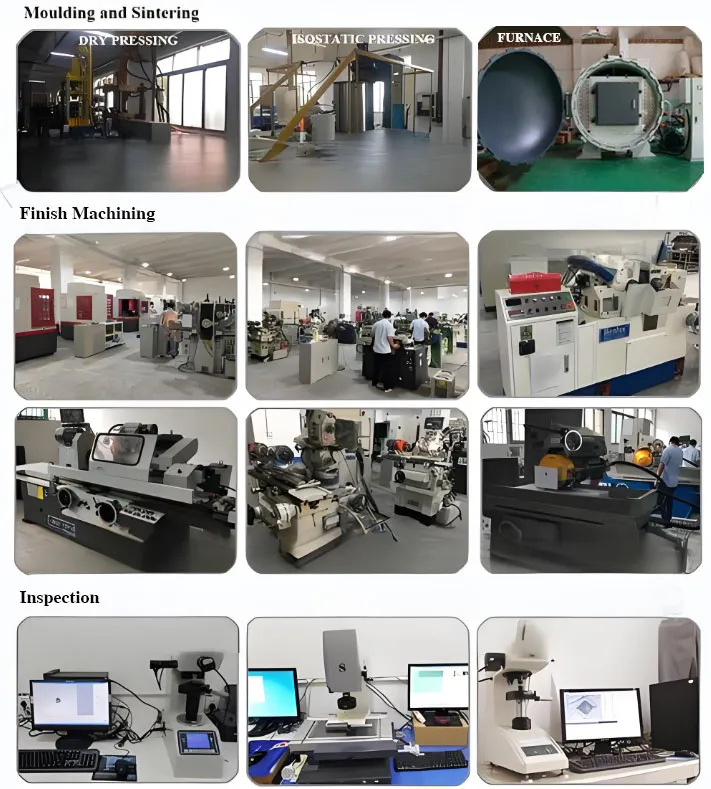
Process of Ceramic Products
Payment Term
T/T, Western Union, Paypal, Credit Card etc.
Shipment Term
By air, by sea, by express, as customers request.
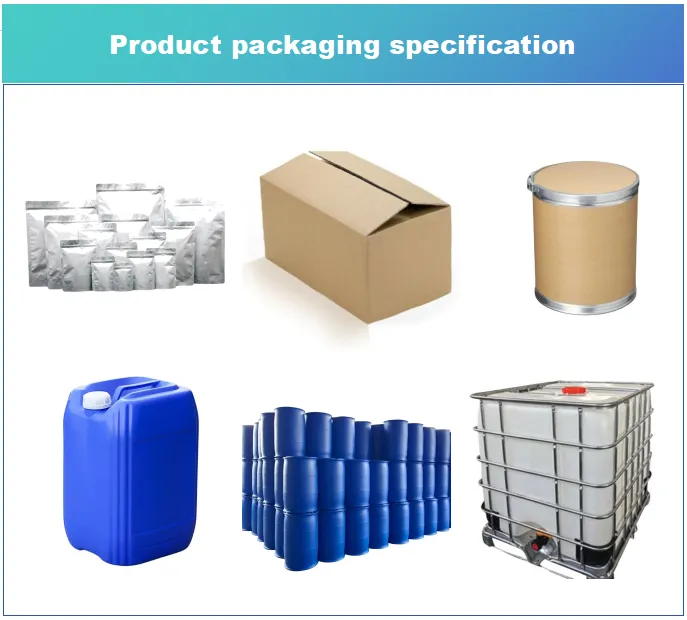
5 FAQs About Silicon Carbide Mechanical Seal Rings
Q1: What distinguishes pressureless sintering from reaction sintering in silicon carbide?
Pressureless Sintering: High purity (≥99%), high density (3.1g/cm³), excellent corrosion resistance, suitable for strong acids, alkalis, and high-purity media.
Reaction Sintering: Contains free silicon, lower cost, but less corrosion resistance, suitable for moderately corrosive environments.
Q2: How can silicon carbide seal rings be customized?
Customization is available for size (e.g., diameter over 500mm), shape (e.g., shaped rings), and additions like graphite particles to enhance self-lubrication, such as graphite-containing pressureless sintered silicon carbide for dry friction or hard-hard pairing scenarios.
Q3: What advantages does silicon carbide have over other materials like ceramics and tungsten carbide?
Ceramics: Lower hardness (HRA85-90) brittleness; silicon carbide offers twice the flexural strength (300-400 MPa).
Tungsten Carbide: High density (15-16g/cm³) and poor thermal conductivity; silicon carbide is lighter (3.1g/cm³) with three times higher thermal conductivity, making it more suitable for high-speed rotating equipment.
Q4: What should be noted during the installation of silicon carbide seal rings?
Avoid over-tightening; install according to the manufacturer's recommended torque (e.g., M10 bolt torque ≤15N・m).
Prevent lateral loads; ensure the perpendicularity deviation between the shaft and seal ring is <0.05mm.
For high-temperature conditions, reserve an expansion gap (e.g., 0.04mm/m for every 100℃ expansion).
Regular Cleaning: Use neutral cleaners (e.g., distilled water) and soft cloths to avoid acidic or alkaline solvents.
Q5: How should silicon carbide seal rings be maintained?
Wear Inspection: Measure the sealing surface thickness with a micrometer; replace if wear exceeds 0.1mm.
Lubrication Management: Use high-temperature resistant lubricants (e.g., silicone oil) and avoid dry friction.