An Overview of Ceramic Pads
Ceramic pads are a kind of pad made of ceramic material. It has excellent characteristics such as wear resistance, high temperature resistance and corrosion resistance. Its surface is not easy to scratch and has a long service life. It also maintains stable performance in a high-temperature environment and is not easily deformed. At the same time, it has strong resistance to acid and alkali, and other chemicals. Commonly used in industrial production, such as electronic components manufacturing, machining and other fields, play a heat insulation, insulation, support and other roles, for equipment and process to provide reliable auxiliary support.
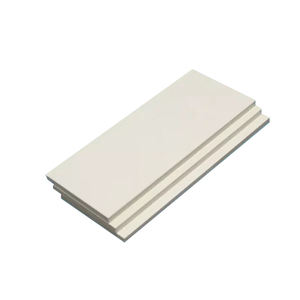
Ceramic Pads
Features of Ceramic Pads
Ceramic pads are high-performance industrial aids with the following unique features:
High-temperature resistance: Ceramic materials inherently have a very high melting point, typically exceeding 1500 ℃, with some special ceramics capable of withstanding temperatures above 2000 ℃. In high-temperature conditions, ceramic pads will not soften, deform, or combust. They can maintain stable physical properties, providing reliable support and isolation for high-temperature processes.
Strong corrosion resistance: Ceramic pads are highly resistant to most chemicals. Whether in acidic, alkaline, or organic solvent environments, it is difficult for them to be corroded. This enables them to be used for extended periods in harsh chemical environments, such as in the chemical and pharmaceutical industries.
High hardness and excellent wear resistance: Ceramic materials are extremely hard, second only to diamond and a few other materials. The surface of ceramic pads is smooth and hard, making it resistant to scratching and abrasion. Even under frequent friction conditions, they can maintain a good surface condition, thereby extending their service life.
Excellent insulating properties: Ceramic is a good electrical insulating material. In high-voltage and high-current environments, ceramic pads can effectively prevent current conduction, avoiding the occurrence of short-circuits and leakage accidents, and ensuring the safety of equipment and operators.
Good thermal stability: Ceramic pads have a low coefficient of thermal expansion. They will not deform or crack due to thermal expansion and contraction, enabling them to adapt to temperature fluctuations in the working environment and maintain dimensional and shape stability.
Environmentally friendly and non-polluting: Ceramic materials are non-toxic and harmless. They do not release harmful substances and meet environmental requirements. During use, they will not cause pollution to the surrounding environment and products, making them suitable for areas with high hygiene requirements, such as food processing and medical equipment.
Low density and lightweight: Compared to metal materials, ceramic pads have low density and are relatively lightweight. This makes them easy to install and handle, reduces the overall weight of equipment, and enhances operational flexibility.
Specifications Table of Ceramic Pads
| Parameter |
Description |
| Material |
Type of ceramic material used |
| Density (g/cm³) |
Mass per unit volume of the ceramic pad |
| Hardness (Mohs or Vickers) |
Resistance to scratching or indentation |
| Thermal Conductivity (W/m·K) |
Ability to conduct heat |
| Thermal Expansion Coefficient (10⁻⁶/K) |
Rate of expansion per degree of temperature change |
| Dielectric Strength (kV/mm) |
Maximum electric field strength the material can withstand without breakdown |
| Dielectric Constant (εr) |
Measure of the material's ability to store electrical energy |
| Flexural Strength (MPa) |
Ability to withstand bending forces |
| Surface Roughness (Ra, µm) |
Smoothness of the pad surface |
| Thickness (mm) |
Thickness of the ceramic pad |
| Size (Length × Width, mm) |
Dimensions of the pad |
| Color |
Appearance of the ceramic material |
| Operating Temperature Range (°C) |
Temperature range within which the pad can function effectively |
| Chemical Resistance |
Resistance to chemical attack |
| Surface Treatment |
Any additional surface coatings or treatments |
| Packaging |
How the pads are packaged |
|
Applications of Ceramic Pads
Electronics Industry: In the electronics industry, ceramic pads are commonly used in circuit board manufacturing and chip packaging. Its high insulation and excellent heat dissipation properties can prevent current leakage between electronic components, while quickly exporting heat to ensure the stable operation of electronic equipment. For example, in semiconductor manufacturing, used for wafer processing fixtures and carrier plates, its heat resistance and chemical stability to ensure high-precision processing.
Chemical Industry: The chemical industry has a significant demand for corrosion-resistant materials, and ceramic pads excel in this regard. They are used as liners in chemical reactors and conveying pipelines, capable of withstanding the erosion of strong acids and alkalis. This reduces the damage caused by chemicals to equipment and enhances production safety. In battery manufacturing, for example, ceramic pads are used for slitting and assembling battery wafers, preventing metal dust contamination and the risk of short circuits.
Food Processing and Medical Equipment: In food processing and medical equipment, the non-toxic and non-hazardous nature of ceramic matting makes it ideal. They are used in food baking molds, insulation for medical devices, and more, ensuring food safety and medical device cleanliness requirements. Meanwhile, in the aerospace industry, ceramic matboards are used for engine heat shields, support components for high-temperature sensors, and their lightweight and high-strength properties meet the requirements of aerospace materials.
Aerospace Industry: In the aerospace industry, ceramic pads are used for engine heat shields and support components for high-temperature sensors. Their lightweight and high-strength properties meet the material requirements of the aerospace industry.
Automotive Industry: In the automotive industry, ceramic pads are used for thermal insulation and insulation of engine peripheral parts, such as exhaust pipe gaskets and ignition system components, enhancing the durability and safety of vehicles. Additionally, ceramic pads are often used in the battery packs of new energy vehicles as an insulation and heat dissipation medium between battery modules to prevent the risk of thermal runaway.
Company Profile
Luoyang Tongrun Nano Technology Co. Ltd. (TRUNNANO) is a trusted global chemical material supplier & manufacturer with over 12-year-experience in providing super high-quality chemicals and nanomaterials, including boride powder, nitride powder, graphite powder, ceramic products, 3D printing powder, etc.
The company has a professional technical department and Quality Supervision Department, a well-equipped laboratory, and equipped with advanced testing equipment and after-sales customer service center.
If you are looking for high-quality Ceramic Products please feel free to contact us or click on the needed products to send an inquiry.

Applications of Ceramic Products
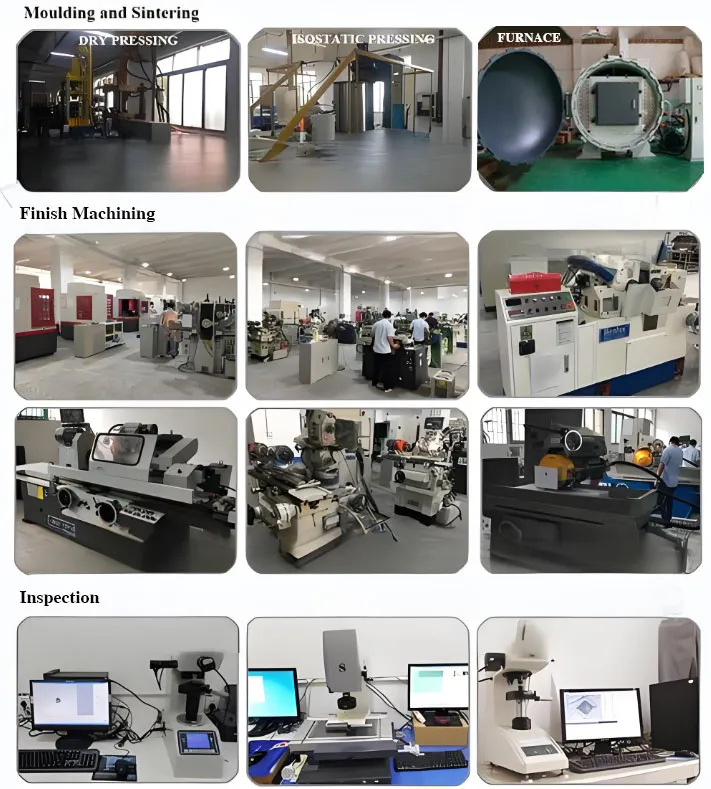
Process of Ceramic Products
Payment Term
T/T, Western Union, Paypal, Credit Card etc.
Shipment Term
By air, by sea, by express, as customers request.

5 FAQs About Ceramic Pads
Q1: How to Choose the Material of Ceramic Pads?
The selection of ceramic pad materials should be based on the application scenario and requirements. For instance, if heat dissipation and insulation are the priorities, alumina ceramics can be chosen. If higher thermal conductivity and strength are required, aluminum nitride ceramics are recommended. In high-impact environments, ceramic-rubber composite liners or impact-resistant ceramic liners can be considered.
Q2: What Are the Installation Methods for Ceramic Pads?
The installation of ceramic pads mainly includes three common methods: bonding, stud welding, and dovetail groove mounting. Bonding involves using high-temperature inorganic adhesives; stud welding is suitable for vibration and high-temperature environments; and dovetail groove mounting is designed to prevent the ceramic pads from falling off.
Q3: What Should Be Paid Attention to During the Installation of Ceramic Pads?
When installing ceramic pads, ensure that the installation surface is flat and clean, and use the appropriate method to secure them to prevent loosening. In high-temperature environments, use high-temperature resistant adhesives or suitable fixing methods. Consider the matching of thermal expansion coefficients to avoid damage caused by thermal stress, and take care to prevent the ceramic pads from being impacted during installation.
Q4: How to Clean and Maintain Ceramic Pads?
Regularly clean the surface of ceramic pads to remove dust and debris. Wipe them with a soft cloth dipped in water or mild detergent, avoiding the use of hard objects that could scratch the surface. For stubborn stains, special cleaning agents can be used. Store ceramic pads in a dry and well-ventilated place, avoiding collisions and drops.
Q5: What Should I Do If Ceramic Pads Are Cracked?
If ceramic pads develop cracks, the course of action depends on the size and location of the cracks. Small cracks can be partially repaired, while large cracks or those affecting performance require replacement of the ceramic pads.