Ceramic Resistor Core Overview
A ceramic resistor core is an important electronic component. It usually consists of a ceramic substrate and a resistive material. The ceramic substrate has good insulation, high temperature resistance and mechanical stability, and provides a stable support platform for the resistive material. Resistive materials are affixed to the ceramic substrate via specialized processes to form a resistive layer with a predefined resistance value. These resistor cores are extensively utilized in electronic circuits for functions such as current limitation and voltage division. With stable performance, high reliability, and the ability to work properly in a variety of complex environments, these resistor cores are an indispensable basic component of modern electronic equipment.

Ceramic Resistor Core Tapes
Types of Ceramic Resistor Core Tapes
Ceramic resistor core tapes primarily fall into the following categories:
Different types of ceramic resistor cores leverage their unique characteristics to fulfill diverse application requirements in electronic circuits.
Features of Ceramic Resistor Cores
A ceramic resistor core is a ceramic-based resistive element core with a number of distinctive features. Firstly, it has excellent insulating properties. The ceramic material itself is a good insulator, which can effectively isolate the current and ensure the safety and stability of the resistor in a high-voltage environment. Secondly, the ceramic resistor core has excellent high-temperature resistance and is able to work stably at higher temperatures and is not susceptible to performance changes due to temperature rise, which makes it suitable for high-temperature environments or high-power applications.
In addition, ceramic resistor core also has good mechanical strength and chemical stability, is not easily affected by external environmental factors (such as humidity, corrosive gases, etc.), long service life. The wide range of resistance values, from a few ohms to millions of ohms, can meet the needs of different circuits. At the same time, the ceramic resistor core temperature coefficient is small, resistance value with the temperature change of the magnitude is low, ensuring the stability under different temperature conditions.
Ceramic resistor cores are also notable for their compact size and light weight, facilitating integration into a variety of miniaturized electronic devices. These attributes make ceramic resistor cores widely applicable in electronic circuits, including power supply circuits, signal processing circuits, and temperature compensation circuits. They are among the essential foundational components in modern electronic technology.
Ceramic Resistor Core Specifications Table
|
Applications of Ceramic Resistor Cores
In electronic equipment, it is commonly used in power supply circuits to limit current and divide voltage to ensure that the components in the circuit work within a safe current and voltage range. For instance, thermally sensitive ceramic resistor cores (such as PTC and NTC types) are employed in temperature measurement and temperature compensation. NTC thermistors are often integrated into temperature sensors to monitor ambient temperature in real time. When abnormal current increases occur, their resistance rises rapidly, limiting the current flow and safeguarding circuits from damage. PTC thermistors are utilized for overcurrent protection.
Moreover, ceramic resistor cores are broadly applied in communication equipment, automotive electronics, home appliances, and other fields. In communication base stations, they are used for filtering and signal conditioning; in automotive electronic systems, they support engine control units and sensor signal processing; in home appliances like televisions and refrigerators, they are employed for power management and temperature control. Their high-temperature resistance, excellent stability, and high reliability enable stable operation in various complex working environments.
Company Profile
Luoyang Tongrun Nano Technology Co. Ltd. (TRUNNANO) is a trusted global chemical material supplier & manufacturer with over 12-year-experience in providing super high-quality chemicals and nanomaterials, including boride powder, nitride powder, graphite powder, ceramic products, 3D printing powder, etc.
The company has a professional technical department and Quality Supervision Department, a well-equipped laboratory, and equipped with advanced testing equipment and after-sales customer service center.
If you are looking for high-quality Ceramic Products please feel free to contact us or click on the needed products to send an inquiry.

Applications of Ceramic Products
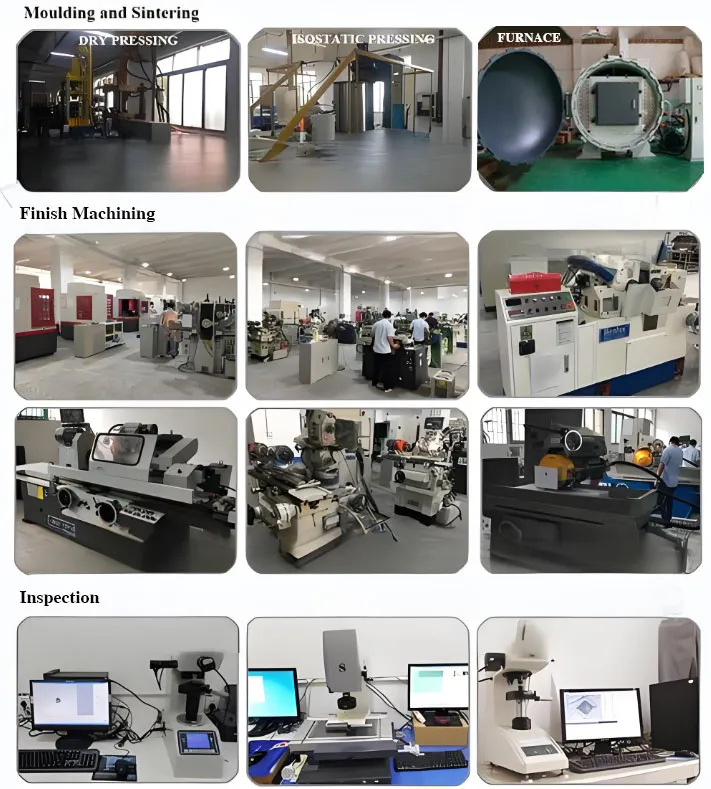
Process of Ceramic Products
Payment Term
T/T, Western Union, Paypal, Credit Card etc.
Shipment Term
By air, by sea, by express, as customers request.

Top 5 FAQs About Ceramic Resistor Cores
Q1: What are the applications of ceramic resistor cores?
Q2: Are ceramic resistor cores adjustable?
The adjustability of ceramic resistor cores varies by type. Fixed ceramic resistor cores have a resistance value determined during manufacturing that cannot be altered, while variable ceramic resistor cores allow resistance adjustment through external forces such as rotation or sliding.
Q3: How safe and reliable are ceramic resistor cores?
Ceramic resistor cores provide high safety and reliability, evident in the following aspects:
Q4: What advantages do ceramic resistor cores have over other types of resistor cores?
Q5: What materials are used in ceramic resistor cores?
Ceramic resistor cores are primarily manufactured from high-quality materials such as high-purity Aluminum Oxide (Al₂O₃), typically with purity levels of 99.5% or 95%. These materials exhibit excellent thermal conductivity, insulation properties, and resistance to thermal fluctuations, ensuring the reliability and stability of resistors.