Overview of Metallized Ceramic Insulators
Metallized ceramic insulators are advanced composite materials that integrate ceramics and metals through specialized processes. These materials combine the high insulation, temperature resistance, and corrosion resistance of ceramics with the conductivity, weldability, and well-matched thermal expansion coefficients of metals. Typically, metallized ceramic insulators are manufactured using surface metallization techniques, such as the Mo-Mn method, which enables reliable connections between ceramics and metals through processes like brazing. Widely used in electronic packaging, aerospace, power electronics, and other fields, metallized ceramic insulators ensure the high reliability and stability of equipment. For example, they are employed in power device packaging and vacuum electronic device electrode connections.
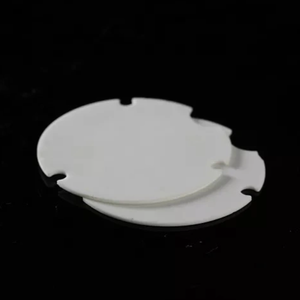
Metallized Ceramic Insulators
Features of Metallized Ceramic Insulators
Excellent electrical insulation properties, the ceramic matrix itself has a very high resistivity and dielectric strength, can be in the high-voltage, strong electric field environment to effectively block the current leakage, to ensure the reliability of the insulation of the device, this characteristic makes it in the power electronics, precision instruments and other insulation requirements of the field of the strict requirements of the indispensable.
Metallized ceramic insulators also offer high mechanical strength and reliability. The high hardness and compressive strength of ceramics provide robust support for devices, while the metallization layer enhances interfacial bonding and adds weldability and processability. This makes it easier to connect the insulators to other metal parts through processes such as brazing and sintering, forming complete electronic packaging structures.
Furthermore, metallized ceramic insulators have excellent chemical stability. The ceramic matrix is resistant to acid and alkali corrosion, as well as molten metal erosion, making it suitable for harsh chemical environments. The metallization layer can also be protected through surface treatments (e.g., plating) to resist environmental erosion and extend the device's lifespan.
Finally, metallized ceramic insulators are highly flexible in design. Various types of ceramics (e.g., alumina, aluminum nitride) and metal systems (e.g., copper, molybdenum, tungsten) are available for different applications. By adjusting the thickness, composition, and process parameters of the metallization layer, the electrical, thermal, and mechanical properties of the material can be precisely regulated to meet a wide range of engineering requirements.
Specifications Table of Metallized Ceramic Insulators
|
Applications of Metallized Ceramic Insulators
In the field of electronic packaging, metallized ceramic insulators are a core material for power semiconductor devices, such as Insulated Gate Bipolar Transistors (IGBTs) and Metal-Oxide Semiconductor Field-Effect Transistors (MOSFETs).
In the aerospace and defense sectors, metallized ceramic insulators are used in the manufacture of high-temperature sensors in aircraft, radar modules, and satellite communication equipment. These insulators can withstand extreme temperature variations (e.g., -200°C to +500°C) and strong vibrations. They also maintain stable insulation and conductivity in high-vacuum and radiation environments, ensuring the normal operation of avionics equipment under complex conditions.
In energy and power systems, metallized ceramic insulators are crucial components in high-voltage power transmission and distribution equipment, new energy vehicle charging piles, and nuclear fusion devices.
In advanced manufacturing and precision instruments, metallized ceramic insulators are used in photolithography machines, electron beam welding equipment, and other precision devices. Their low outgassing rate and high airtightness ensure the stability of vacuum environments. Additionally, their high-precision dimensional control and surface flatness meet the requirements of nanoscale manufacturing processes.
In the medical electronics field, metallized ceramic insulators are used in the high-voltage power supply modules of advanced imaging equipment (e.g., CT, MRI). Their radiation resistance and long life ensure the safety and imaging accuracy of the equipment during long-term use.
Overall, metallized ceramic insulators continue to drive performance breakthroughs in core devices across various fields through material and process innovations.
Company Profile
Luoyang Tongrun Nano Technology Co. Ltd. (TRUNNANO) is a trusted global chemical material supplier & manufacturer with over 12-year-experience in providing super high-quality chemicals and nanomaterials, including boride powder, nitride powder, graphite powder, ceramic products, 3D printing powder, etc.
The company has a professional technical department and Quality Supervision Department, a well-equipped laboratory, and equipped with advanced testing equipment and after-sales customer service center.
If you are looking for high-quality Ceramic Products please feel free to contact us or click on the needed products to send an inquiry.

Applications of Ceramic Products
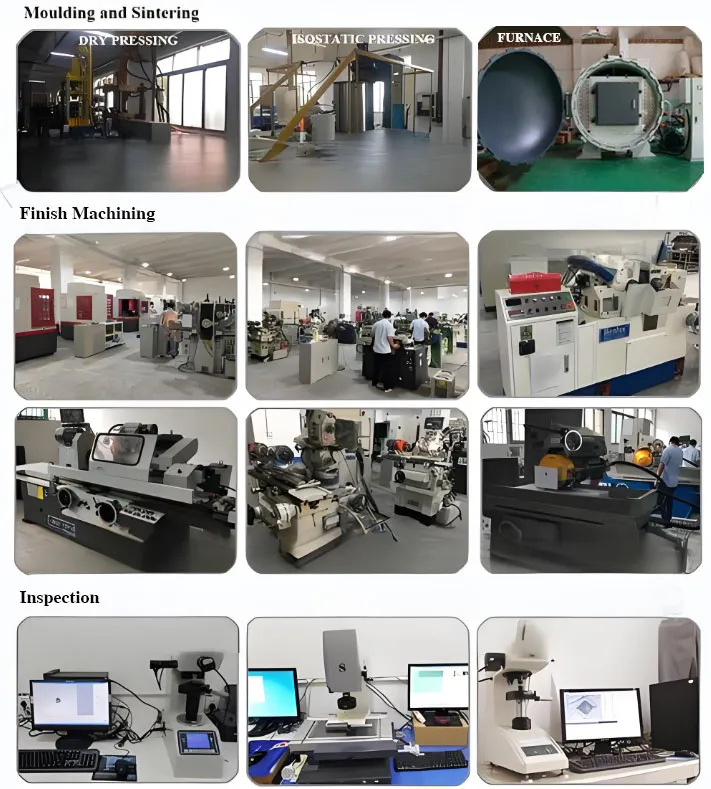
Process of Ceramic Products
Payment Term
T/T, Western Union, Paypal, Credit Card etc.
Shipment Term
By air, by sea, by express, as customers request.
5 FAQs of Metallized Ceramic Insulators
Q1: How are the insulating properties of metallized ceramic insulators ensured?
Ceramics are inherently excellent insulating materials with high resistivity and dielectric strength. Metallized ceramic insulators enhance these properties by optimizing the ceramic formulation, increasing sintering temperatures, and reducing grain boundaries. The strong bonding between the metallized layer and the ceramic also prevents leakage caused by interfacial defects.
Q2: How is the coefficient of thermal expansion of metallized ceramic insulators matched with other materials?
Ceramic and metal materials with similar coefficients of thermal expansion are selected based on specific application requirements. For example, aluminum nitride ceramics, which have a thermal expansion coefficient close to that of silicon, can be used for applications involving silicon chips. Suitable metallization layer materials, such as molybdenum and tungsten, are also chosen for their matching thermal expansion coefficients. Additionally, the overall thermal expansion properties can be fine-tuned by adjusting the thickness, composition, and process parameters of the metallization layer.
Q3: What are the common metallization processes used for metallized ceramic insulators?
Common processes include the Mo-Mn method, which involves coating the ceramic surface with a mixture of refractory metal powder (Mo) and a small amount of low-melting-point Mn, followed by sintering to form the metallized layer. Other methods include active metal brazing, which forms a strong bond between ceramics and metals through chemical reactions; Direct Bonded Copper (DBC), which achieves metallization through the direct bonding of copper and ceramics at high temperatures; and magnetron sputtering, which deposits metal atoms onto the ceramic surface in a vacuum environment to form a metallization layer.
Q4: How to ensure the bonding strength of the metal to the ceramic during the metallization process?
First, the ceramic surface must be thoroughly cleaned and pre-treated to remove impurities, increase surface roughness, and enhance the contact area between the metal and ceramic. Choosing the appropriate metallization process and material is also crucial. For example, in active metal brazing, the active metal can form a strong chemical bond with the ceramic surface. Controlling process parameters, such as temperature, time, and atmosphere, and performing necessary post-treatments like annealing, can further improve the bonding strength.
Q5: What are the specific applications of metallized ceramic insulators in power electronics?
Metallized ceramic insulators are extensively used in the packaging of power semiconductor devices, such as IGBTs and MOSFETs. They serve as insulating supports and conductive connectors, using the high insulation properties of ceramics to isolate high-voltage circuits. The metallization layer ensures a reliable electrical connection between the chip and external pins, while its good thermal conductivity allows for rapid heat dissipation during chip operation.