Product Overview
Carbon-coated tin (C@Sn) composite anode material features a typical core-shell structure with metallic tin as the inner core and amorphous hard carbon as the outer shell. The particles present as spherical-like nano-powders. The carbon layer enhances electrical conductivity while buffering the volume expansion (suppression rate exceeding 50%) of tin-based materials during sodium intercalation/deintercalation, effectively solving the issues of short cycle life and pulverization fall off commonly found in pure tin anodes. This material delivers both high specific capacity and excellent cycling stability, positioning it as a high-capacity sodium-ion battery anode material that can replace conventional hard carbon anodes for high-energy-density battery systems.
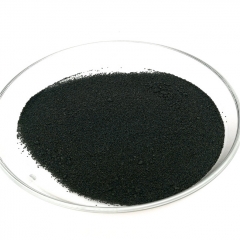
Carbon-Coated Tin
Features
Exceptional Capacity Advantage
Theoretical specific capacity reaches 994 mAh/g, with practical capacity (~700 mAh/g) far exceeding that of traditional hard carbon anodes (~300 mAh/g), significantly boosting battery energy density.
Robust Structural Design
The carbon shell effectively buffers the 150%–250% volume expansion of tin-based materials during charge/discharge cycles, suppressing particle pulverization and detachment, thereby greatly extending cycle life.
Superior Electrical Conductivity
The carbon layer forms a continuous conductive network, reducing electrode internal resistance and enhancing rate performance (1C capacity: 460 mAh/g; 10C retention: 260 mAh/g).
Excellent Compatibility
The manufacturing process is fully compatible with existing sodium-ion battery production lines, requiring no major equipment modifications. The material can be used as a direct replacement or in composite formulations.
Performance Benchmark
Compared to pure tin anodes, our C@Sn delivers significantly improved cycling stability and initial Coulombic efficiency (83% vs. 75%). Versus hard carbon anodes, it offers outstanding capacity superiority (700 vs. 300 mAh/g).
Technical Parameters
Physical Properties
|
Parameter |
Specification Range |
Typical Value (Qualified) |
|
Tin Content (wt%) |
15 – 50 |
25 |
|
Carbon Content (wt%) |
50 – 85 |
75 |
|
Particle Size D50 (nm) |
50 – 200 |
100 |
|
Carbon Shell Thickness (nm) |
18 – 30 |
20 |
|
Specific Surface Area (BET, m²/g) |
50 – 200 |
120 |
|
Tap Density (g/cm³) |
0.8 – 1.2 |
1.0 |
|
Metal Impurities (Fe/Cu/Pb, ppm) |
< 10 |
< 8 |
|
Sodium Residue (ppm) |
300 – 400 |
≤ 350 |
|
Crystal Structure |
Tetragonal Sn + Amorphous C |
No impurity phases |
Electrochemical Performance (Half-cell, vs Na⁺/Na, 0.01–2.0 V)
|
Parameter |
Specification Range |
Typical Value |
|
0.1C Initial Discharge Capacity (mAh/g) |
600 – 750 |
700 |
|
0.1C Initial Charge Capacity (mAh/g) |
500 – 620 |
580 |
|
Initial Coulombic Efficiency (%) |
80 – 85 |
83 |
|
0.2C Capacity after 100 Cycles (mAh/g) |
450 – 550 |
520 |
|
0.5C Capacity Retention after 500 Cycles (%) |
≥ 80 |
82 |
|
1C Rate Capacity (mAh/g) |
400 – 500 |
460 |
|
10C Rate Capacity (mAh/g) |
200 – 300 |
260 |
|
Sodium Intercalation Volume Expansion (%) |
150 – 250 |
200 |
Electrode Formulation Recommendations
Electrode active material loading: 1.5 – 3.0 mg/cm²
Electrode compacted density: 1.0 – 1.4 g/cm³
Recommended electrode formulation (active material : conductive additive : binder): 80–90 : 5–10 : 5–10
Recommended electrolyte: 1 M NaPF₆ in EC/DMC with 5% FEC additive
Applications
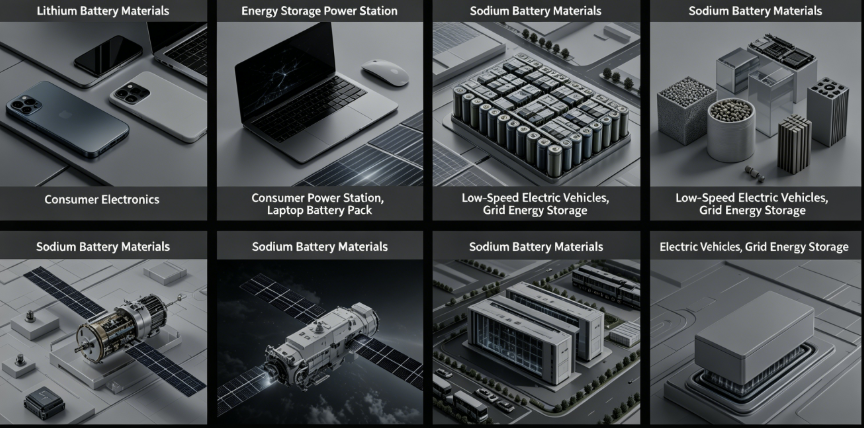
Energy Storage Batteries
Large-scale grid energy storage, commercial & industrial storage, and residential energy storage—particularly suited for high-energy-density applications.
Low-Speed New Energy Vehicles
Power batteries for electric two-wheelers, three-wheelers, and similar vehicles, balancing cost and driving range.
Consumer Electronics
Small digital devices, wearable electronics, and backup power supplies requiring high safety and long endurance.
Specialty Power Sources
Industrial backup batteries, outdoor portable power supplies, and rail transit auxiliary power supplies with wide-temperature and high-rate requirements.
R&D & Scientific Research
High-energy sodium-ion battery system development, fundamental and applied research on novel composite anode materials (e.g., C@Sn combined with other carbon materials).
About Us
TRUNNANO is a leading supplier of high-performance battery materials for lithium-ion and sodium-ion batteries. Our portfolio includes nano cathodes, silicon-carbon anodes, hard carbon, and specialty additives. With strict quality control and consistent purity, we deliver reliable solutions for 3C electronics, power tools, and energy storage systems. Committed to innovation, TRUNNANO drives the future of energy storage with cutting-edge materials and dedicated customer support.
Packaging
Option 1 – Bulk Bag (Ton Bag)
Net weight: 300 kg/bag
Outer bag: 780 × 780 × 600 mm
Inner liner: 830 mm (W) × 650 mm (H)
Storage & handling: Keep dry; store on pallets; max stack height: 2 layers
Option 2 – Carton + Aluminum Laminated Film / PE Bag
Net weight: 20 kg/carton (4 × 5 kg bags)
Inner packaging: 5 kg/bag in aluminum-laminated film or PE bag
Carton dimensions: 600 × 500 × 400 mm
PE bag dimensions: 600 × 400 mm
Storage & handling: Keep dry; store on pallets; max stack height: 3 layers
Transport & Storage
Store in a dry, well-ventilated area free from contaminants.
Handle with care during transport to avoid damage to inner sealed bags. Do not place heavy or sharp objects on cartons to prevent packaging damage.
FAQ
Q1: How does C@Sn compare to conventional hard carbon anodes?
Our C@Sn anode delivers more than double the practical capacity (~700 mAh/g vs. ~300 mAh/g), significantly improving energy density while maintaining good cycling stability through the protective carbon shell.
Q2: What is the volume expansion suppression rate?
The carbon coating suppresses volume expansion by over 50%, reducing the expansion from 300%–400% (pure tin) to 150%–250%, effectively preventing electrode pulverization.
Q3: Can this material be directly used in existing sodium-ion battery production lines?
Yes, the manufacturing process is compatible with standard sodium-ion battery production equipment, requiring no major modifications.
Q4: What electrolyte is recommended for optimal performance?
We recommend 1 M NaPF₆ in EC/DMC with 5% FEC additive to stabilize the SEI film and enhance cycling performance.
Q5: Is C@Sn suitable for high-rate applications?
Yes, the conductive carbon network enables excellent rate performance, with 1C capacity at 460 mAh/g and 10C capacity maintained at 260 mAh/g.
Q6: What tin content is available?
We offer tunable tin content ranging from 15% to 50% by weight to meet different performance requirements. Please contact us for customized specifications