Product Overview
This product is manufactured from high-quality anthracite coal as the carbon precursor through high-temperature carbonization, activation and pore-forming, purification, and surface modification processes. The high-strength three-dimensional aromatic carbon network of anthracite is well preserved after carbonization at approximately 500°C, and the resulting porous carbon material retains high mechanical strength and density after activation. By precisely controlling activation process parameters (activator ratio, carbonization temperature, etc.), this product enables accurate design and control of specific surface area, pore size distribution, and pore volume.
Anthracite-based porous carbon anode materials combine high specific surface area, abundant and controllable pore structures, good electrical conductivity, and excellent chemical stability. They are widely applicable as high-performance anodes in lithium-ion batteries, sodium-ion batteries, and other new energy applications, and also serve as ideal porous carbon scaffolds for next-generation silicon-carbon composite anodes.

Anthracite-Derived Porous Carbon
Key Advantages
|
Advantage |
Description |
|---|---|
|
Significant Cost Advantages |
Using anthracite as precursor ensures abundant raw material supply, low cost, and production costs far below those of biomass-based and resin-based porous carbons, particularly suitable for cost-sensitive sodium-ion battery applications. |
|
Highly Controllable Pore Structure |
Through chemical or physical activation methods, the specific surface area, pore volume, and micropore/mesopore ratio can be precisely tuned to meet the differentiated pore structure requirements of various battery systems. |
|
High Capacity Output |
Through structural optimization and heteroatom doping modification, anthracite-based porous carbon/hard carbon anode materials deliver high specific capacity and excellent first-cycle Coulombic efficiency in both lithium-ion and sodium-ion batteries, effectively improving cell energy density. |
|
Excellent Structural Stability |
Derived from the native three-dimensional aromatic carbon framework of anthracite, the product retains high mechanical strength and intact particle structure after activation. The low volume expansion rate during cycling contributes to extended cycle life. |
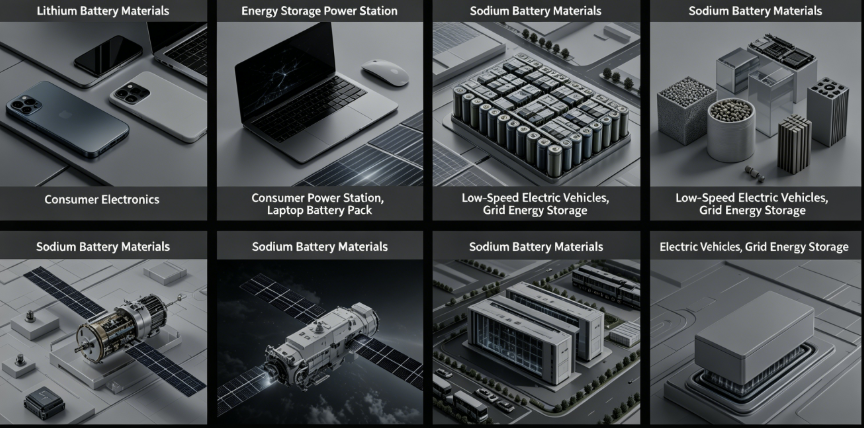
Applications
CVD silicon-carbon composite anode scaffold material
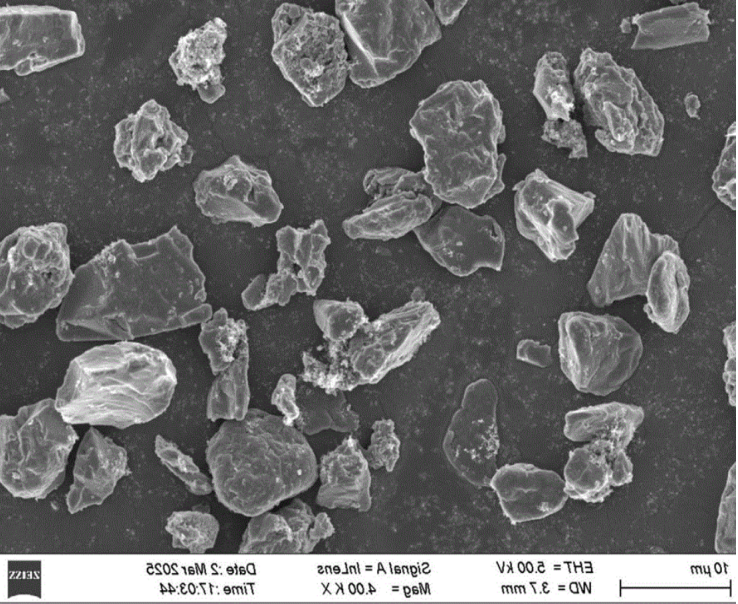
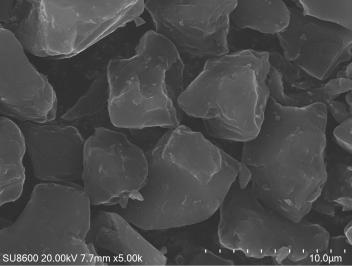
Particle morphology
Technical Specifications
|
Parameter |
Unit |
Specification |
Typical Value |
Test Method |
|---|---|---|---|---|
|
Particle Size |
|
|
|
Laser Diffraction (BT-9300S) |
|
Dmin |
μm |
≥ 1.7 |
1.84 |
|
|
D10 |
μm |
≥ 4.8 |
5.05 |
|
|
D50 |
μm |
8.5 ± 0.5 |
8.48 |
|
|
D90 |
μm |
≤ 14 |
12.87 |
|
|
Dmax |
μm |
≤ 22 |
18.47 |
|
|
Tap Density (TAP) |
g/cm³ |
≥ 0.34 |
0.42 |
BT-300 Automatic Tap Density Tester |
|
Specific Surface Area (SSA) |
m²/g |
1900–2200 |
2100.4 |
BET Nitrogen Adsorption |
|
Pore Volume |
cm³/g |
≥ 0.8 |
0.98 |
BET Nitrogen Adsorption |
|
Average Pore Size |
nm |
≤ 2.1 |
1.87 |
BET Nitrogen Adsorption |
|
Micropore Ratio |
% |
≥ 80 |
83.78 |
BET Nitrogen Adsorption |
|
Moisture Content |
% |
≤ 2.0 |
1.45 |
Forced Air Drying Oven |
|
pH Value |
— |
6.0–8.0 |
6.78 |
pH Meter |
Trace Element Impurities
|
Element |
Unit |
Specification |
Typical Value |
Test Method |
|---|---|---|---|---|
|
Zn |
ppm |
≤ 50 |
— |
ICP-OES |
|
Ni |
ppm |
≤ 50 |
13.7 |
ICP-OES |
|
Fe |
ppm |
≤ 150 |
51.8 |
ICP-OES |
|
Cr |
ppm |
≤ 50 |
11.3 |
ICP-OES |
|
Ca |
ppm |
≤ 100 |
19.2 |
ICP-OES |
|
Al |
ppm |
≤ 100 |
1.9 |
ICP-OES |
|
Na |
ppm |
≤ 50 |
11.2 |
ICP-OES |
|
K |
ppm |
≤ 300 |
288.2 |
ICP-OES |
|
Ash Content |
% |
≤ 0.3 |
0.15 |
Thermogravimetric Analysis |
Packaging
The porous carbon product shall be first sealed in a 650mm × 950mm plastic bag, then placed into a composite outer bag. Standard net weight is 5.0 ± 0.02 kg per bag. Custom packaging is available upon request.
Storage & Transportation
Storage: Store in a dry, well-ventilated area free from contaminants (recommended conditions: temperature ≤ 45°C, humidity ≤ 85%).
Stacking: Products should be stacked neatly and orderly with clearly identifiable batch numbers and production dates.
Transportation: Handle with care to avoid package damage. Any product spilled from damaged packaging shall not be returned to the container and should be discarded.
About Us
TRUNNANO is a leading supplier of high-performance battery materials for lithium-ion and sodium-ion batteries. Our portfolio includes nano cathodes, silicon-carbon anodes, hard carbon, and specialty additives. With strict quality control and consistent purity, we deliver reliable solutions for 3C electronics, power tools, and energy storage systems. Committed to innovation, TRUNNANO drives the future of energy storage with cutting-edge materials and dedicated customer support.
Frequently Asked Questions (FAQ)
Q1: What is the primary application of this anthracite-based porous carbon?
A1: This product is primarily used as a high-performance anode material for lithium-ion and sodium-ion batteries. It also serves as an ideal porous carbon scaffold for CVD-deposited silicon-carbon composite anodes, providing the necessary pore structure to accommodate silicon volume expansion during cycling.
Q2: How does this product compare to biomass-based or resin-based porous carbons?
A2: Anthracite-based porous carbon offers significant cost advantages due to abundant and low-cost raw materials. It provides comparable or superior electrochemical performance with better structural stability, making it particularly attractive for cost-sensitive applications such as large-scale energy storage systems.
Q3: What is the typical specific surface area range?
A3: The specific surface area is precisely controlled between 1900 and 2200 m²/g (BET method), with a typical value of approximately 2100 m²/g, ensuring abundant active sites for ion storage and rapid charge/discharge kinetics.
Q4: Can the pore structure be customized?
A4: Yes, through precise control of activation parameters (activator ratio, temperature, duration), the pore structure including specific surface area, pore volume, and micropore/mesopore ratio can be tailored to meet specific customer requirements.
Q5: What is the recommended storage condition?
A5: The product should be stored in a dry, well-ventilated area at temperatures ≤ 45°C and humidity ≤ 85%. Once the package is opened, the remaining material should be resealed promptly to prevent moisture absorption.
Q6: Is this product suitable for sodium-ion battery anodes?
A6: Yes, this product is specifically designed for sodium-ion battery applications. Its unique disordered carbon structure with abundant micropores provides excellent sodium-ion storage capacity and high first-cycle Coulombic efficiency.
Q7: What is the ash content specification?
A7: The ash content is strictly controlled to ≤ 0.3%, with typical values around 0.15%, ensuring high purity and minimizing unwanted side reactions during battery operation.
Q8: Can I request custom packaging?
A8: Yes, custom packaging options are available. Please contact our sales team to discuss your specific requirements.