Overview of Elementary Substances
An elementary substance is a pure chemical substance composed of atoms of the same chemical element. As one of the most fundamental forms of matter, elementary substances serve as the cornerstone of modern industry. With their diverse physical and chemical properties, they play an irreplaceable role in numerous industrial fields—ranging from aerospace and electronics manufacturing to energy storage and everyday consumer goods.
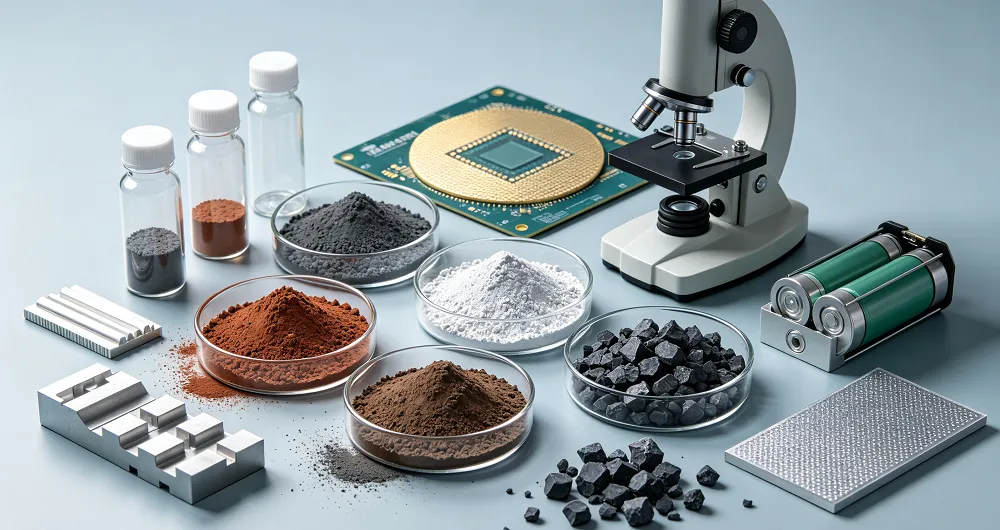
Elementary Substance
Classification and Key Characteristics of Elementary Substances
Based on their properties, elementary substances are generally classified into three main categories: metals, non-metals, and metalloids (or semi-metals). Each category possesses distinct performance advantages.
Metallic elementary substances are renowned for their excellent electrical and thermal conductivity, as well as their mechanical strength.
Electrical and Thermal Conductivity: Copper and aluminum are excellent conductors of both electricity and heat, making them core materials in wire and cable manufacturing, as well as in radiators and heat exchangers. Although silver is more expensive, it has the highest electrical and thermal conductivity among all metals and is often used in high-end precision instruments.
Strength and Toughness: Iron and titanium exhibit high strength and good toughness. Iron is the foundational material for building structures and heavy machinery, while titanium—owing to its high specific strength and corrosion resistance—is widely used in aerospace and biomedical implants.
Non-metallic elementary substances exhibit more diverse properties.
Lightweight and High Strength: Graphene, composed of carbon atoms, is one of the lightest and strongest materials known to date, holding great promise in high-tech fields such as aerospace and flexible electronics.
Chemical Activity and Stability: Oxygen is a reactive gas essential for sustaining life and combustion processes. In contrast, noble gases such as helium and argon are chemically very stable and are commonly used as shielding gases in welding and as fill gases in specialized lighting.
Metalloid (semi-metal) elementary substances exhibit unique semiconducting properties.
Silicon and germanium are typical metalloids. Their electrical conductivity lies between that of conductors and insulators and can be precisely controlled through doping. This property makes them the core materials for manufacturing transistors, integrated circuits, and solar cells, laying the foundation for the modern electronics industry.
In addition, other elementary substances possess special advantages:
Optical and Catalytic Properties: Gold and silver have excellent light reflectivity and are used in precision mirrors and decorative coatings. Pt and Pb, due to their strong catalytic activity, play critical roles in petrochemical refining and automotive exhaust treatment systems.
Magnetic Properties: Iron, cobalt, nickel, and their alloys exhibit significant ferromagnetism and are fundamental materials for manufacturing electric motors, generators, and data storage devices such as hard disk drives.
Allotropes: Carbon can form multiple allotropes, including diamond (the hardest natural substance) and graphite (a soft, lubricating conductor). This structural diversity endows carbon-based materials with a wide range of applications, from cutting tools to battery anodes.
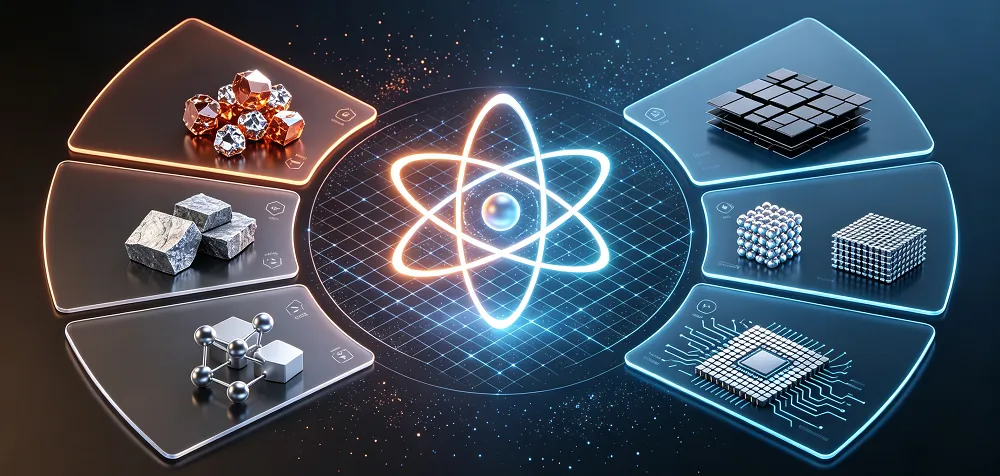
Applications of Elementary
Typical Specifications and Applications of Elementary Powders
The following table lists the technical parameters of some common elementary powders for reference:
|
Chemical Name |
Chemical Formula |
Purity (≥%) |
Particle Size (μm) |
Appearance |
Main Applications |
|---|---|---|---|---|---|
|
Boron Powder |
B |
95 |
1-100 |
Brown to black |
Nuclear reactor control rods, glass manufacturing, refractory materials |
|
Copper Powder |
Cu |
99 |
1-150 |
Reddish to brown |
Electronics industry, catalysts, powder metallurgy alloys |
|
Iron Powder |
Fe |
98 |
1-200 |
Gray to black |
Metallurgical reducing agents, magnetic materials, flame cutting |
|
Aluminum Powder |
Al |
99 |
1-100 |
Silver-white |
Aerospace fuels, coatings, welding materials |
|
Nickel Powder |
Ni |
99 |
1-150 |
Dark gray |
Battery electrodes, catalysts, high-temperature alloys |
|
Zinc Powder |
Zn |
98 |
1-100 |
Light gray |
Anti-corrosion coatings, batteries, metallurgical displacement agents |
Direct Applications of Elementary Powders
Metal powders are not only raw materials for powder metallurgy products but can also be applied directly in many scenarios:
Energy and Propulsion: Ultra-fine aluminum powder is used as solid fuel for rockets; magnesium and aluminum powders are used in explosives and fireworks.
Manufacturing and Processing: Iron powder is used in electrodes and flame cutting processes; aluminum, magnesium, and iron powders serve as deoxidizers and metallothermic reducing agents.
Electronics and Magnetics: Iron-based alloy powders are used in magnetic components for clutches, magnetic tapes, and photocopiers.
Catalysis and Chemistry: Nickel, iron, and cobalt powders are used as chemical catalysts; iron and copper powders are used in electrochemical deposition.
Decoration and Protection: Aluminum and copper powders are used in paint pigments and surface decoration; zinc powder is used for anti-corrosion coatings on steel structures.

Company Introduction:
Luoyang Trunnano Tech Co., Ltd provide different kinds of elementary powders, such as amorphous boron powder, graphite powder, nano diamond powder, tungsten powder, iron powder, nano silver powder, nano copper powder, bismuth powder, cobalt powder, etc. Send us an email or click on the needed products to send an inquiry.
Payment Term:
T/T, Credit Card, Western Union, Paypal etc.
Shipment Term:
By courier, by air, by sea, as customers request.
Storage conditions:
1) Store in a dry environment at room temperature.
2) Avoid damp and high temperature.
3) Use immediately after opening the inner packing bag.

FAQs:
What are monomaterials?
The properties and uses of monomaterials are mainly determined by their internal structure, in particular the way in which the atoms are arranged and the number of electrons in their outermost layers. These properties influence the material's physical attributes such as hardness, melting point and electrical conductivity as well as its chemical activity. For example, diamond and graphite are both composed of carbon atoms, but due to their different atomic arrangements they exhibit very different physical properties, leading to their own unique areas of application.
What factors determine the properties and uses of monomaterials?
Monomaterials have a profound impact on our daily lives. From the steel used in construction to the aluminum pots used in cooking to the silicon wafers in smartphones, monomaterials are everywhere. In addition, gaseous elements such as nitrogen (N₂) and oxygen (O₂) make up the air we breathe, while mercury (Hg) was once used to make thermometers.
How do monomaterials affect everyday life?
Monomaterials are used in a wide range of applications. Metallic monomers are used to make structural materials, electronics and tools; non-metallic monomers such as oxygen (O₂) are essential for biological respiration and are involved in combustion processes; metalloids such as silicon (Si) are a key component of modern computer chips; and inert gases such as helium (He) are used to protect the environment from oxidation or other reactions, and are used for soldering or special lighting.
What are the applications of monomaterials?
Monomaterials can be divided into three main categories: metals, non-metals and metalloids (or semi-metals). Metals usually have good electrical and thermal conductivity, such as copper (Cu); non-metals vary greatly in physical properties, such as carbon (C) can form two different forms of graphite and diamonds; metal-like properties between metal and non-metal, such as silicon (Si) in the electronics industry as semiconductor materials.
What are the types of monomaterials?
Monatomic materials are pure substances composed of atoms of the same element that cannot be further broken down by chemical means. These elements are the basic building blocks that make up all substances, such as iron (Fe), oxygen (O), and gold (Au).
Ask a quotation by clicking the following products