Overview of Carbon Fiber powder CAS 308063-67-4:
Carbon fiber powder is a powdery material processed from carbon fibers, which has excellent properties such as lightweight, high strength, high temperature resistance, and electrical and thermal conductivity. It is widely used in composite materials, conductive materials, friction materials, and other fields. Carbon fiber powder is a powdery material processed from carbon fibers, which has excellent properties such as lightweight, high strength, high temperature resistance, and electrical and thermal conductivity. It is widely used in composite materials, conductive materials, friction materials, and other fields
1. Basic characteristics
Ingredients: Mainly containing carbon (over 90%), made by crushing and grinding polyacrylonitrile (PAN), asphalt or adhesive based carbon fibers.
Form: Black powder, particle size usually between 1-100 microns (customizable).
Density: about 1.7-2.0 g/cm ³, much lower than metals.
Conductivity/Thermal Conductivity: Has good electrical and thermal conductivity.
Chemical stability: resistant to acid and alkali corrosion, anti-oxidation (requires protective atmosphere at high temperatures).
The performance of carbon fiber powder mainly depends on its raw materials (such as PAN based, asphalt based, or recycled carbon fiber), preparation process, and surface treatment method. The following are its core performance parameters and characteristics:
1. Physical properties
Density: 1.7-2.0 g/cm ³, much lower than metals (such as aluminum's 2.7 g/cm ³), suitable for lightweight applications.
Particle size distribution: usually 1-100 μ m (customizable at the nanoscale), affecting dispersibility and composite effect.
Specific surface area: 10-500 m ²/g (higher after activation treatment), related to adsorption and catalytic performance.
Color: Black powder with light absorption properties.
2. Mechanical properties
High strength: The tensile strength can reach 500~3000 MPa (depending on the raw material and fiber length).
High modulus: The elastic modulus is about 200-600 GPa, which is close to the mechanical properties of graphene.
Brittle: The powder form has no ductility and requires composite material design to avoid brittle fracture.
3. Thermal properties
High temperature resistance: It can withstand temperatures above 2000 ℃ in an inert atmosphere, and begins to oxidize at around 350-600 ℃ in an oxidizing environment (air).
Thermal conductivity: The thermal conductivity coefficient is about 5-400 W/(m · K) (asphalt based carbon fiber powder has higher thermal conductivity).
Low thermal expansion coefficient: about -1~1 × 10 ⁻⁶/K, excellent dimensional stability.
4. Electrical properties
Conductivity: The resistivity is about 10 ⁻³~10 ⁻Ω· m, close to graphite, suitable for conductive composite materials.
Electromagnetic shielding: It can absorb or reflect electromagnetic waves, with a shielding efficiency of 60-100 dB (depending on the filling amount).
5. Chemical properties
Corrosion resistance: acid, alkali, and organic solvents (excluding concentrated nitric acid/strong oxidants).
Surface activity: Inert surface, but after oxidation (such as nitric acid treatment), carboxyl/hydroxyl groups can be introduced to enhance hydrophilicity.
6. Functional characteristics
Adsorption: The high specific surface area version can adsorb gases or impurities (such as for water treatment).
Lubrication: The layered structure reduces the friction coefficient (μ ≈ 0.1~0.3) and is used as a lubricating additive.
Biocompatibility: Some medical grade carbon fiber powders can be used as human implant materials.

| Product Name | Tensile strength | Density | Particle Size | Resistivity | Linear expansion coefficient | Purity |
| Carbon Fiber powder | 3500Mpa | 1.75g/cm3 | 1500mesh | 1.5*10^-3 Ω /cm3 | 0.1*10^-6 1C | 99.9% |
Packing & Shipping of Carbon Fiber powder :
We have many different kinds of packing depending on the quantity of Carbon Fiber powder.
Carbon Fiber powder packing: vacuum packing, 100g, 500g, or 1kg/bag, 25kg/barrel, or as you request.
Carbon Fiber powder shipping: could be shipped out by sea, by air, or by express as soon as possible once payment is received.
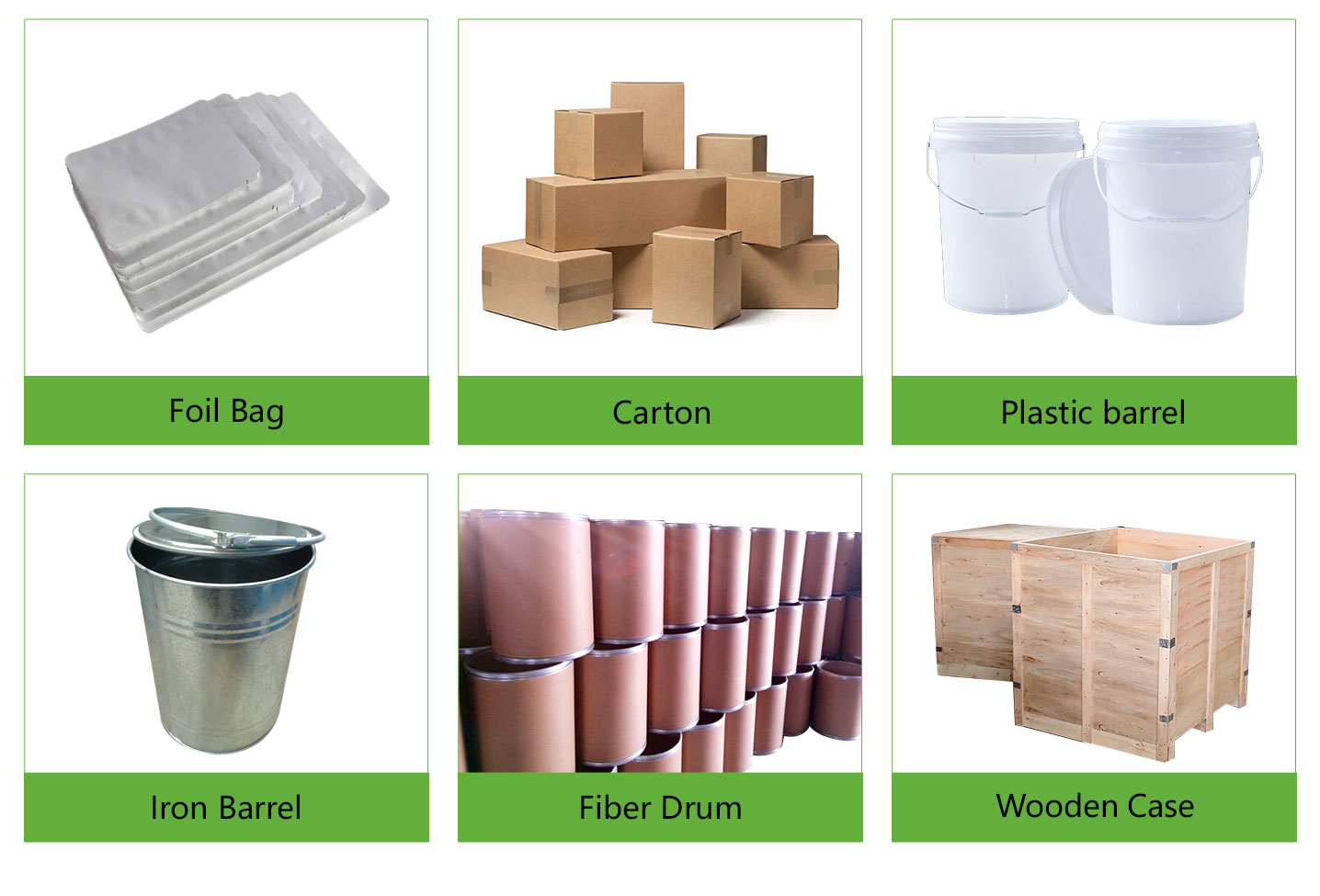
Packing & Shipping
Hexagonal Carbon Fiber powder supplier
Luoyang Tongrun Nano Technology Co. Ltd. (TRUNNANO) is a trusted global chemical material supplier & manufacturer with over 12 years of experience in providing super high-quality chemicals and Nanomaterials, including boride powder, nitride powder, graphite powder, sulfide powder, 3D printing powder, etc.
If you are looking for high-quality Carbon Fiber powder powder, please feel free to contact us and send an inquiry.
FAQs of Carbon Fiber powder
Q: What is carbon fiber powder used for?
A: Milled carbon fibre is a black filler powder made from finely ground carbon fibres. It can be added to casting resins, tooling resins, thermoplastics, paints, adhesives and coatings to improve tensile strength, dimensional stability and electrical conductivity.
Q: Is carbon fiber safe for the body?
A: However, we do know that inhaling carbon fibre dust is harmful – especially when you work with it regularly. Just because it might not be as bad as asbestos doesn't mean that it's safe. The known potential health risks (even without asbestos style issues) are already severe enough to warrant protection.
Q: Why is carbon fiber so expensive?
A: Because carbon fibre is relatively new to the market, research is ongoing to cut the costs of its production – unlike many metals and plastics, which utilise a production refined over decades and even centuries. The manufacturing process is lengthy and complex, requiring skilled engineers to complete.
Carbon fiber powder Properties |
|
| Other Names | Carbon fiber powder |
| CAS No. | 308063-67-4 |
| Compound Formula | NA |
| Molecular Weight | NA |
| Appearance | NA |
| Melting Point | N/A |
| Boiling Point | N/A |
| Density | N/A |
| Solubility in H2O | N/A |
| Electrical Resistivity | N/A |
| Poisson's Ratio | N/A |
Carbon fiber powder Health & Safety Information |
|
| Signal Word | Warning |
| Hazard Statements | H319-H335 |
| Hazard Codes | Xi |
| Risk Codes | 36/37 |
| Safety Statements | 26-36 |
| RTECS Number | ED7800000 |
| Transport Information | N/A |
| WGK Germany | 3 |