Product Overview
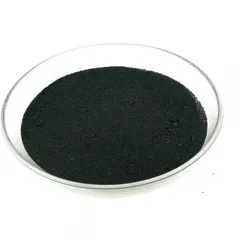
Our biomass hard carbon is produced from widely available renewable precursors through high-temperature carbonization, purification, and surface modification processes. The disordered turbostratic structure, abundant nano-pores, and intrinsic defects enable efficient sodium and lithium storage, making it the preferred anode material for sodium-ion batteries. By precisely controlling carbonization temperature, heating rate, and purification steps, we achieve tailored microstructures (interlayer spacing, closed pore ratio) and surface chemistry. Biomass-derived hard carbon offers abundant feedstock sources, controllable ash content, and well-developed pore structures, delivering excellent electrochemical performance.
Biomass Hard CarbonKey Advantages
Abundant Resources & Cost Advantage
Sourced from biomass waste or renewable materials—widely available and low-cost.
Rich Pore Structure & High Sodium Storage Capacity
The unique disordered structure and nano-pores enable ultra-high reversible capacity with excellent rate capability from 0.1C to 2C.
Leading Initial Coulombic Efficiency (ICE)
Through optimized carbonization and pore engineering, our hard carbon achieves ICE of 85%–92%, with select grades reaching 92%–93%.
Exceptional Cycling Stability
Optimized interlayer spacing and disordered structure provide outstanding structural integrity, sustaining long-term charge–discharge cycles without collapse.
Technical Specifications
| Parameter |
Unit |
Specification |
Test Method / Instrument |
| Particle Size – D10 |
µm |
2.0 – 4.0 |
Laser Diffraction Particle Size Analyzer |
| Particle Size – D50 |
µm |
6.0 – 8.0 |
Laser Diffraction Particle Size Analyzer |
| Particle Size – D90 |
µm |
10.0 – 14.0 |
Laser Diffraction Particle Size Analyzer |
| Particle Size – D100 |
µm |
≤ 25.0 |
Laser Diffraction Particle Size Analyzer |
| Moisture |
% |
≤ 0.5 |
Moisture Analyzer |
| pH Value |
– |
7.0 – 11.0 |
pH Meter |
| Ash Content |
% |
≤ 0.2 |
Muffle Furnace Calcination |
| Tap Density |
g/cm³ |
≥ 0.65 |
Tap Density Tester |
| Compacted Density |
g/cm³ |
1.0 ± 0.1 |
Compaction Density Tester |
| Specific Surface Area (BET) |
m²/g |
≤ 5 |
BET Surface Area Analyzer (Static Method) |
| Initial Charge Capacity (0.1C/0.1C, 0–2.5 V) |
mAh/g |
300 ± 10 |
Neware Battery Test System |
| Initial Coulombic Efficiency |
% |
≥ 90 |
Neware Battery Test System |
Notes:
NMP-based coin cell formulation: HC : SP : PVDF = 92 : 4 : 4 (by weight).
Aqueous formulation recommended: HC : SP : CMC : SBR = 94 : 2 : 1.5 : 2.5 (by weight).
Morphology
Irregular block-shaped primary particles with a bimodal distribution, allowing fine particles to fill voids between larger ones.
(Image: SEM micrograph)
Typical Initial Charge/Discharge Curves
Test conditions: 0.1C constant current, 0–2.5 V, 25 °C, electrolyte: 1 mol/L NaPF₆ in EC/DEC.
(Image: GCD curves)
Applications
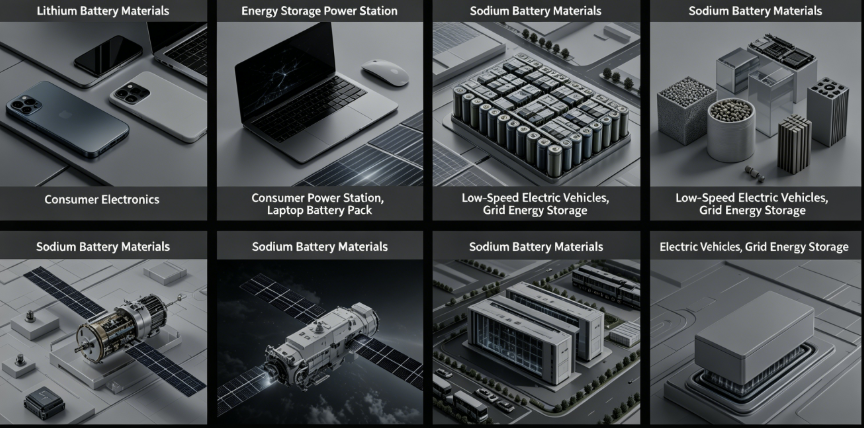
Sodium-ion batteries for e-bikes, low-speed electric vehicles, and large-scale energy storage systems (grid frequency regulation, commercial & industrial storage).
Cost-sensitive sodium-ion battery applications.
In lithium-ion systems, recommended for blending with synthetic or natural graphite anodes to improve fast-charging capability and cycle stability.
Packaging
Option 1 – Bulk Bag (Ton Bag)
Net weight: 300 kg/bag
Outer bag: 780 × 780 × 600 mm
Inner liner: 830 mm (W) × 650 mm (H)
Storage & handling: Keep dry; store on pallets; max stack height: 2 layers
Option 2 – Carton + Aluminum Laminated Film / PE Bag
Net weight: 20 kg/carton (4 × 5 kg bags)
Inner packaging: 5 kg/bag in aluminum-laminated film or PE bag
Carton dimensions: 600 × 500 × 400 mm
PE bag dimensions: 600 × 400 mm
Storage & handling: Keep dry; store on pallets; max stack height: 3 layers
About Us
TRUNNANO is a leading supplier of high-performance battery materials for lithium-ion and sodium-ion batteries. Our portfolio includes nano cathodes, silicon-carbon anodes, hard carbon, and specialty additives. With strict quality control and consistent purity, we deliver reliable solutions for 3C electronics, power tools, and energy storage systems. Committed to innovation, TRUNNANO drives the future of energy storage with cutting-edge materials and dedicated customer support.
Transport & Storage
Store in a dry, well-ventilated area free from contaminants.
Handle with care during transport to avoid damage to inner sealed bags. Do not place heavy or sharp objects on cartons to prevent packaging damage.
FAQ
Q1: What is the difference between hard carbon and graphite?
Hard carbon has a disordered, non-graphitizable structure with larger interlayer spacing, enabling high sodium storage. Graphite is ordered and primarily used for lithium-ion anodes.
Q2: Can this product be used directly in lithium-ion batteries?
Yes, but we recommend blending it with synthetic or natural graphite to balance fast-charge performance and cycle stability.
Q3: What is the recommended electrolyte for sodium-ion testing?
1 mol/L NaPF₆ in EC/DEC (ethylene carbonate / diethyl carbonate) is commonly used.
Q4: How should the material be stored long-term?
Store in a dry, sealed container away from moisture and contaminants. Avoid exposure to air for extended periods.
Q5: Is the material available in customized particle sizes or packaging?
Yes, please contact our technical sales team for customization options.
Q6: What is the typical shelf life?
At least 12 months when stored under recommended conditions.