Product Overview
Our coal-based hard carbon is produced from anthracite precursor through a carefully designed process including pre-carbonization, activation, carbonization, and coating to enhance capacity and kinetics. With a unique porous structure and innovative surface modification, this material delivers high capacity and long cycle life, achieving a reversible specific capacity of ≥260 mAh/g. Coal-based hard carbon stands out as one of the most competitive hard carbon precursors due to its low cost and high carbon yield, offering an economically viable path for sodium-ion battery industrialization.
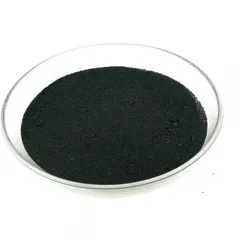 Coal-Based Hard Carbon
Significant Cost Advantage & Stable Supply
Abundant coal reserves and low raw material costs address the high cost and supply instability challenges of biomass-based routes. This is one of the most economical anode material solutions for sodium-ion battery commercialization.
Excellent Batch-to-Batch Consistency
Unlike biomass-based hard carbon, which suffers from natural feedstock variability, coal-based hard carbon uses standardized industrial raw materials, ensuring high product consistency and reliability.
High Carbon Conversion Yield
Coal offers a carbon yield of up to 90%, significantly higher than biomass-based routes, along with valuable by-product co-generation.
Technical Specifications
| Parameter |
Unit |
Value |
| Particle Size – D10 |
µm |
> 1.1 |
| Particle Size – D50 |
µm |
5.5 ± 1.0 |
| Particle Size – D90 |
µm |
< 12.0 |
| Particle Size – Dmax |
µm |
< 20.0 |
| Compacted Density |
g/cm³ |
> 1.05 |
| Specific Surface Area (BET) |
m²/g |
≤ 8.0 |
| Specific Capacity |
mAh/g |
≥ 260.0 |
| Initial Coulombic Efficiency (ICE) |
% |
≥ 90.0 |
Applications
Suitable as an anode material for sodium-ion batteries in the following systems:
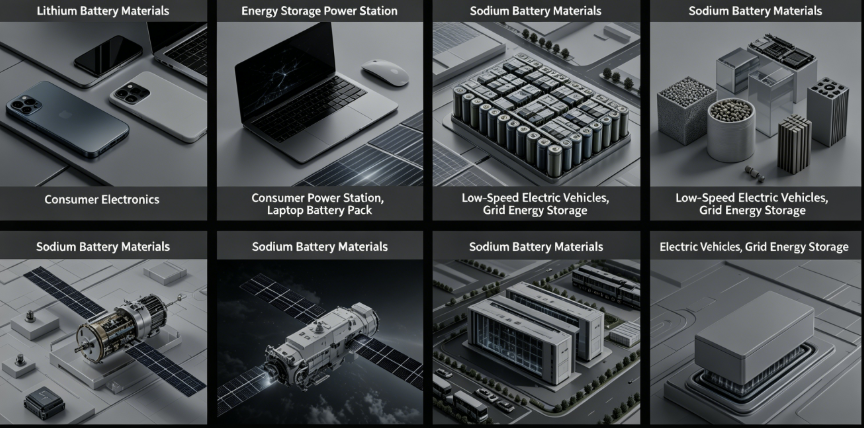
Large-Scale Energy Storage Stations (grid energy storage, commercial & industrial storage) – excellent cycle stability and cost-effectiveness perfectly match storage demands.
Start-Stop Power Supplies – high rate capability and wide operating temperature range (–40 to 80 °C).
Electric Two-Wheelers / Low-Speed Electric Vehicles – combining low cost with long service life.
Backup Power / UPS – high reliability and long floating-charge life.
Grid Peak Shaving – well-suited for large-scale storage and grid regulation applications.
About Us
TRUNNANO is a leading supplier of high-performance battery materials for lithium-ion and sodium-ion batteries. Our portfolio includes nano cathodes, silicon-carbon anodes, hard carbon, and specialty additives. With strict quality control and consistent purity, we deliver reliable solutions for 3C electronics, power tools, and energy storage systems. Committed to innovation, TRUNNANO drives the future of energy storage with cutting-edge materials and dedicated customer support.
Packaging & Storage
Store in a clean, dry, well-ventilated warehouse at ambient temperature (10–35 °C), protected from sunlight, rain, and moisture.
Keep under vacuum-sealed conditions. After opening, handle in an environment with relative humidity ≤ 30%.
Avoid contact with corrosive substances, oxidizers, strong acids, and strong alkalis.
Recommended shelf life: 12 months from the date of production under sealed storage conditions. Periodic quality inspections are recommended within this period.
If the vacuum packaging is opened and not fully used, the remaining material must be immediately placed in a dry environment and re-sealed under vacuum. Use within 48 hours of opening is recommended.
Transport
This product is a black powder solid and is not classified as a dangerous chemical.
Protect from moisture, humidity, rain, and direct sunlight during transport. Prevent packaging damage.
Handle with care – avoid dropping, heavy stacking on cartons, severe vibration, impact, or compression.
Suitable for transport by road, rail, sea, or air.
Do not ship together with oxidizers, strong acids, or corrosive materials.
In case of spillage due to packaging damage, use an explosion-proof vacuum cleaner for cleanup to minimize dust generation.
FAQ
Q1: How does coal-based hard carbon compare to biomass-based hard carbon?
Coal-based hard carbon offers superior batch-to-batch consistency, higher carbon yield (~90%), and lower cost, while biomass-based materials can vary significantly due to natural feedstock differences.
Q2: What is the recommended electrolyte for testing?
1 mol/L NaPF₆ in EC/DEC (ethylene carbonate / diethyl carbonate) is commonly used for sodium-ion half-cell testing.
Q3: Can this material be used in lithium-ion batteries?
While designed primarily for sodium-ion systems, it may be blended with graphite for certain lithium-ion applications. Please consult our technical team for specific recommendations.
Q4: What is the maximum operating temperature for this anode material?
The material supports a wide temperature range from –40 °C to 80 °C in battery systems.
Q5: How should I handle the material after opening a vacuum-sealed bag?
Use the material within 48 hours and promptly reseal the remaining powder under vacuum in a dry environment (RH ≤ 30%).
Q6: Is the material available in custom particle size distributions?
Yes, we offer customization options. Please contact our sales team to discuss your specific requirements.