We use cookies to improve your online experience. By continuing browsing this website, we assume you agree our use of cookies.
Industry News

What is Silicon Nitride?

Views : 595
Author : Trunnano
Update time : 2022-03-15 10:39:42
What is Silicon Nitride?
Silicon nitride is an inorganic substance with the chemical formula Si3N4. It is an important structural ceramic material with high hardness, lubricity, wear resistance, atomic crystal, and oxidation resistance at high temperature. Moreover, it can also resist the shock of cold and heat. It can be heated to more than 1000 ℃ in the air, and it will not be broken when it is rapidly cooled and then heated again. It is precisely because of the excellent properties of silicon nitride ceramics that people often use it to manufacture mechanical components such as bearings, gas turbine blades, mechanical seal rings, and permanent molds. If the heat-receiving surface of engine components is made of silicon nitride ceramics that are resistant to high temperature and difficult to transfer heat, it can not only improve the quality of engines, save fuel, but also improve thermal efficiency. Such engines have been developed in China, the United States, Japan and other countries.
The main features of Silicon Nitride
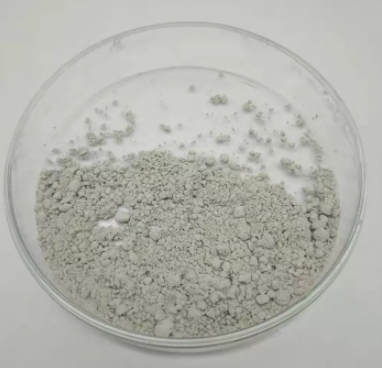
The relative molecular mass is 140.28. Grey, white or off-white. It is a high temperature insoluble compound, has no melting point, and has strong high temperature creep resistance. The softening point of reaction sintered silicon nitride without binder is above 1800 ° C; hexagonal system. The crystals are hexahedral. The density of Si3N4 prepared by reaction sintering method is 1.8~2.7g/cm3, and the density of Si3N4 prepared by hot pressing method is 3.12~3.22g/cm3. The Mohs hardness is 9~9.5, the Vickers hardness is about 2200, and the microhardness is 32630MPa. Melting point 1900 ℃ (under pressure). It usually decomposes at about 1900°C under normal pressure. Specific heat capacity 0.71J/(g·K). The heat of formation is -751.57kJ/mol. The thermal conductivity is (2-155) W/(m·K). The coefficient of linear expansion is 2.8~3.2×10⁻⁶/℃(20~1000℃). not soluble in water. Soluble in hydrofluoric acid. The temperature at which oxidation starts in the air is 1300~1400℃. The specific volume resistance is 1.4×10⁵ ·m at 20°C and 4×10⁸ ·m at 500°C. The elastic modulus is 28420~46060MPa. The compressive strength is 490MPa (reaction sintered). At 1285 ℃, it reacts with dicalcium dinitride to form calcium silicide, and at 600 ℃, the transition metal is reduced, and nitrogen oxides are released. The bending strength is 147MPa. It can be prepared by heating silicon powder in nitrogen or by reacting silicon halide with ammonia. The resistivity is 10^15-10^16Ω.cm. Can be used as high temperature ceramic raw materials.
Silicon Nitride Properties
Other Names silicon (IV) nitride, α-Si3N4, SiN, trisilicon tetranitride, Si3N4 powder
CAS No. 12033-89-5
Compound Formula Si3N4
Molecular Weight 140.28
Appearance White to Gray Powder
Melting Point 1900 °C
Boiling Point N/A
Density 2.2-3.5 g/cm3
Solubility in H2O Insoluble
Electrical Resistivity 11 to 12 10x Ω-m
Specific Heat 720 to 800 J/kg-K
Poisson's Ratio 0.24 to 0.27
Thermal Conductivity 12 to 31 W/m-K
Thermal Expansion 2.5 to 3.2 µm/m-K
Young's Modulus 140 to 310 GPa
Exact Mass 139.943 g/mol
The applications of Silicon Nitride
1. Silicon nitride ceramic materials have high thermal stability, strong oxidation resistance and high dimensional accuracy of products. Since silicon nitride is a covalent compound with high bond strength and can form an oxide protective film in the air, it also has good chemical stability. It is oxidized, and is not infiltrated or corroded by many molten metals or alloys such as aluminum, lead, tin, silver, brass, nickel, etc., but can be corroded by molten liquids such as magnesium, nickel-chromium alloy, and stainless steel.1. Silicon nitride ceramic materials can be used for high-temperature engineering components, advanced refractory materials in metallurgical industry, corrosion-resistant components and sealing components in chemical industry, and cutting tools and cutting tools in machining industry.
Since silicon nitride can form a strong bond with silicon carbide, aluminum oxide, thorium dioxide, boron nitride, etc., it can be used as a bonding material for modification with different ratios.
2. Silicon nitride can also be used in solar cells. After the silicon nitride film is coated by the PECVD method, it can not only be used as an anti-reflection film to reduce the reflection of incident light, but also, during the deposition process of the silicon nitride film, the hydrogen atoms of the reaction product enter the silicon nitride film and the silicon wafer. Played the role of passivation defects. The atomic ratio of silicon nitride to silicon nitride here is not strictly 4:3, but fluctuates within a certain range according to different process conditions, and the physical properties of the film corresponding to different atomic ratios are different.
3. For ultra-high temperature gas turbines, aircraft engines, electric furnaces, etc.
The main supplier of Silicon Nitride
Luoyang Trunnano Tech Co., Ltd (TRUNNANO) is a professional nitirde powder supplier with over 12 years of experience in chemical products research and development. We accept payment via Credit Card, T/T, West Union, and Paypal. Trunnano will ship the goods to customers overseas through FedEx, DHL, by air, or by sea.
If you are looking for high-quality boron carbide powder, please feel free to contact usand send an inquiry.
 
 
RNDKOREA | Sodium Silicate | Potassium Silicate | Spherical Alumina | Spherical SiO2 Powder | Zinc Sulfide ZnS Powder | 3D Printing Powder | Concrete foaming agent | Concrete Superplasticizer | Boron Nitride Powder | Nano Silicon Powder | CuO Powder | Cu2O Cuprous Oxide Powder | Cr2O3 Powder