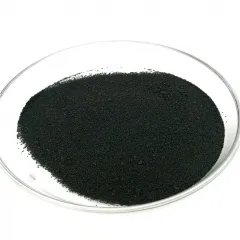
What is copper oxide?
Copper oxide is an inorganic substance. Copper oxide chemical formula is CuO. It is a black oxide of copper. Slightly bisexual and slightly hygroscopic. Insoluble in water and ethanol, easily soluble in acid, thermally stable, decomposed into oxygen at high temperature.
What does copper oxide do?
Copper oxide is used in rayon, ceramics, glaze and enamel, battery, petroleum desulfurizer, insecticide, hydrogen production, catalyst, green glass, etc.
It can be used as organic synthesis catalyst, analytical reagent (for nitrogen determination), oxidant, catalyst and petroleum desulfurizer, and can also be used for the determination of carbon in organic compounds.
Used as a colorant for glass, enamel and ceramic industry, anti-wrinkle agent for paint and polishing agent for optical glass. Used in the manufacture of dyes, organic catalyst carriers and copper compounds. It is also used in rayon manufacturing industry and as a desulphurizer for grease. It is used as the raw material for the manufacture of other copper salts and for the manufacture of artificial gems.
Copper Oxide CuO powder
Nano copper oxide uses:
It is widely used as an important inorganic material in the fields of catalysis, superconductivity, ceramics and so on.
Used as catalyst and catalyst carrier as well as electrode active material.
Used as a colorant for glass and porcelain, an optical glass polish, a catalyst for organic synthesis, a desulfurizer for oil, and a hydrogenating agent.
Make artificial gems and other copper oxides.
It is used in the manufacture of rayon, gas analysis and determination of organic compounds.
It can also be used as the burning rate catalyst of rocket propellant. Nano-sized copper oxide powder has better catalytic activity and selectivity than large-size copper oxide powder.
Is CuO a copper oxide?
Yes. There are two different forms of copper oxide: cupric oxide (CuO) and cuprous oxide (Cu2O).
The key difference between them lies in the oxidation state of copper: CuO contains copper in the +2 oxidation state (Cu²⁺), while Cu₂O contains copper in the +1 oxidation state (Cu⁺). This difference leads to distinct properties: CuO is black, more stable, and has a monoclinic crystal structure, while Cu₂O is red to reddish-brown, less stable (prone to oxidizing to CuO), and has a cubic crystal structure. Both are insoluble in water, but their solubility in other solvents and chemical reactivity also differ slightly.
Technical Parameter of Copper Oxide CuO Powder:
| Item |
-200mesh CuO powder of Nuclear cdh857 |
| Chemical Property(%) |
Physical Property |
CuO |
So42 |
Fe |
Cl |
Ni |
Pb |
Loose Density (g/cm3) |
Partical Size
(mesh) |
shape |
99.27 |
0.08 |
0.022 |
0.013 |
0.0024 |
0.04 |
1.54 |
-200 |
Powder |
What is copper oxide called?
Cupric oxide, or copper (II) oxide. Its CAS number is 1317-38-0, and it is also commonly known as black copper oxide in industry.
How is copper oxide prepared?
There are several common methods to prepare copper oxide, suitable for different purity and application needs:
1. Copper powder or copper wire oxidation method: Copper powder is oxidized in air to obtain crude copper oxide powder, which is then reacted with sulfuric acid and reduced with iron to get pure copper powder. The pure copper powder is then oxidized and roasted to produce copper oxide powder.
2. Copper salt thermal decomposition method: High-purity copper oxide can be prepared by thermal decomposition of copper salts such as copper nitrate, basic copper carbonate, and copper sulfate. For example, heating basic copper carbonate will decompose it into copper oxide, carbon dioxide, and water.
3. Ammonium carbonate leaching method: Various copper compounds are leached with ammonium carbonate solution, and the leachate is heated to release ammonia, precipitating hydrated copper oxide, which is then calcined to remove water and obtain copper oxide.
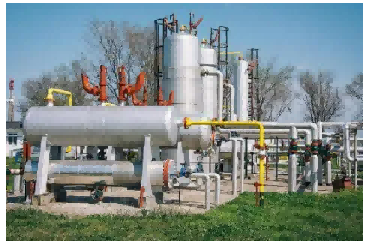
Produce Copper Oxide
• Inhalation: If inhaled, move the person to a well-ventilated area immediately. Seek medical attention if breathing difficulties occur.
• Skin Contact: Remove contaminated clothing and wash the affected area thoroughly with soap and water.
• Eye Contact: Rinse the eyes carefully with water for several minutes. If contact lenses are worn, remove them first, and seek medical advice if irritation persists.
• Ingestion: Rinse the mouth thoroughly, do not induce vomiting, and seek prompt medical attention.
• Environmental Protection: Copper oxide is very toxic to aquatic life with long-lasting effects. It should be kept away from drains, waterways, and soil to avoid environmental contamination.
Copper Oxide Industry Trends
In recent years, the global copper oxide industry has developed steadily, driven by downstream application expansion and technological upgrading. In China, the output of copper oxide was about 19.8 million tons in 2024, and it is expected to reach 21.2 million tons in 2025, with a compound annual growth rate of about 6.8%. The main production areas are Jiangxi, Hunan, Guangdong, and Jiangsu, with leading enterprises accounting for about 55% of the market share.
In 2026, the demand structure of copper oxide will continue to optimize: the demand for electronic-grade copper oxide in semiconductor packaging and conductive pastes is expected to increase by 9.2% year-on-year; the demand in the catalyst field will grow by about 7.5% driven by environmental regulations; the demand for high-purity copper oxide in the new energy field (especially lithium battery cathode precursor materials) will become a new growth pole, with the market volume expected to exceed 38,000 tons. In terms of price, affected by high raw material costs and tight supply of high-end products, the average annual price of copper oxide is expected to rebound to 63,000–65,000 yuan/ton in 2026.

Application of Copper Oxide
Q2: Can copper oxide be reduced to copper? A2: Yes. Copper oxide can be easily reduced to metallic copper or cuprous oxide by hydrogen, carbon, carbon monoxide, or more electronegative metals (such as zinc and iron). For example, in a hydrogen atmosphere, CuO starts to reduce at about 250℃ and can be completely converted to metallic copper at 400℃.
Q3: What is the difference between industrial-grade and electronic-grade copper oxide? A3: Industrial-grade copper oxide usually has a purity of 98%–99.5%, mainly used in metallurgy, pesticides, and ceramics; electronic-grade copper oxide has extremely strict control over impurity content (heavy metals such as iron and lead need to be controlled at ppm or even ppb level), and is widely used in semiconductor manufacturing and electronic pastes.
Copper Oxide Price
The price is influenced by many factors including the supply and demand in the market, industry trends, economic activity, market sentiment, and unexpected events.
If you are looking for the latest CuO powder price, you can send us your inquiry for a quote. (sales3@nanotrun.com)
Copper Oxide Supplier
Luoyang Tongrun Nano Technology Co. Ltd. (TRUNNANO) is a trusted copper oxide manufacturer and copper oxide supplier with over 12-year-experience. We ship our goods all over the world.
If you are looking for high-quality copper oxide, please feel free to contact us and send an inquiry. (sales3@nanotrun.com)