In the realm of high-performance ceramics, spherical aluminum nitride (AlN) has emerged as a game-changer, bridging the gap between traditional powder-based materials and engineered solutions for extreme environments. Its unique combination of spherical morphology and intrinsic properties—exceptional thermal conductivity, electrical insulation, and thermal shock resistance—makes it indispensable in industries ranging from electronics to aerospace. This article delves into the synthesis, characterization, and transformative applications of spherical AlN, revealing how its geometry enhances performance and unlocks novel functionalities.
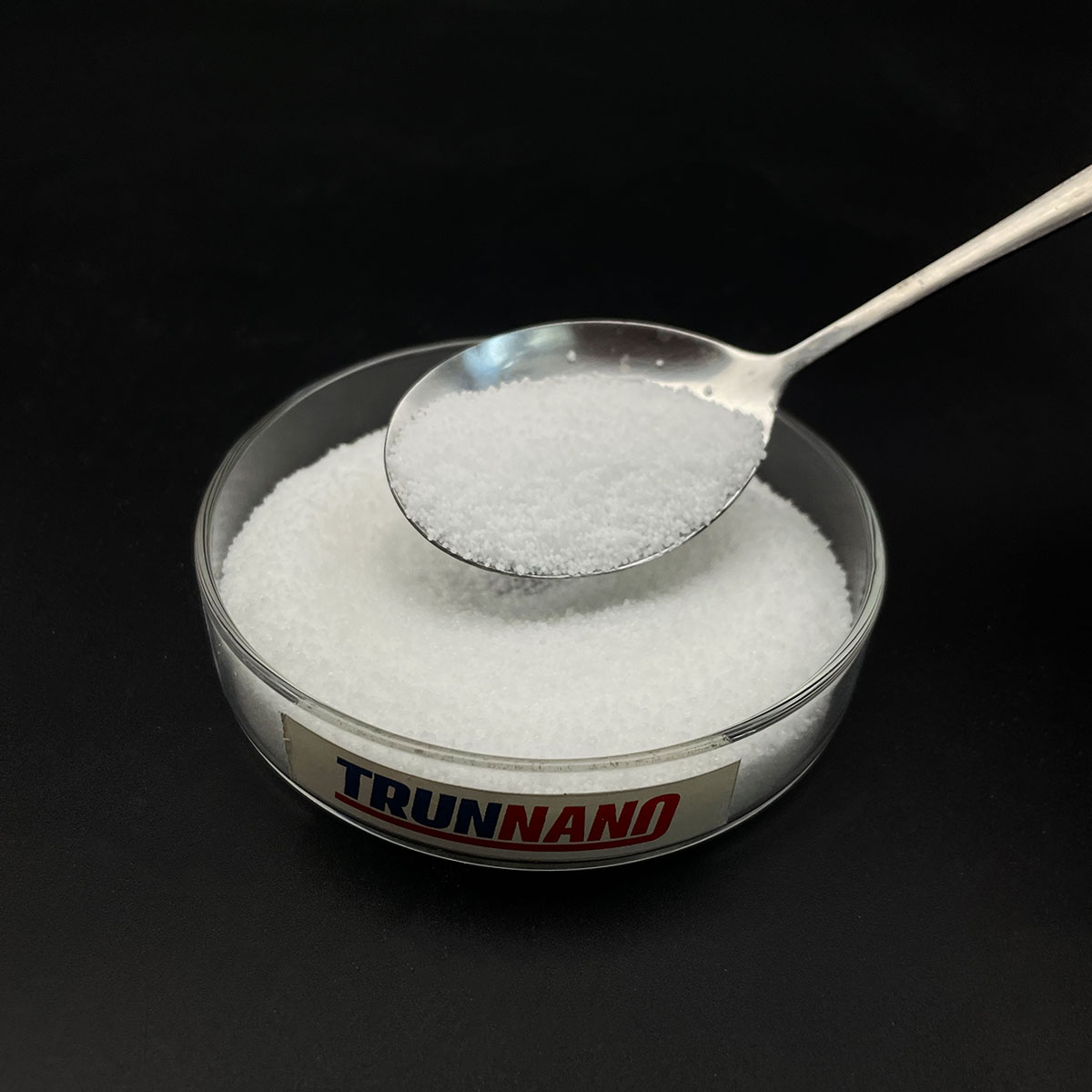 Spherical aluminum nitride
1. Synthesis of Spherical AlN: Precision Engineering at the Nanoscale
The production of spherical AlN demands innovative approaches to control particle shape while preserving chemical purity and crystallinity. Three primary methods dominate industrial and research landscapes: plasma spraying, carbothermal reduction with shape-directing agents, and aerosol synthesis.
1.1 Plasma Spraying: Melt Quenching for Perfect Spheres
1.1.1 High-Temperature Vaporization
In this method, aluminum powder is injected into a plasma torch operating at 10,000–20,000 K, where it vaporizes into atomic aluminum. Simultaneously, nitrogen gas is introduced, facilitating the reaction:
2Al(g) + N2(g) → 2AlN(s)
The molten AlN droplets are propelled onto a cooled substrate, where rapid solidification forms near-perfect spheres with diameters ranging from 1–100 μm.
1.1.2 Advantages and Limitations
Plasma spraying yields particles with high sphericity (>95%) and low oxygen content (<0.5 wt%), critical for thermal conductivity. However, the process is energy-intensive, with operational costs exceeding $500/kg, limiting its use to premium applications.
1.2 Carbothermal Reduction with Shape-Directing Agents: Tailoring Morphology
1.2.1 Template-Assisted Growth
This method combines aluminum oxide (Al2O3), carbon black, and a spherical template (e.g., silica or polystyrene beads) in a nitrogen atmosphere at 1600–1800°C. The reaction proceeds via:
Al2O3 + 3C + N2 → 2AlN + 3CO
The template directs AlN nucleation, resulting in core-shell structures that are later etched to release hollow or solid spheres.
1.2.2 Surface Modification for Dispersion
Post-synthesis, particles are coated with silane coupling agents (e.g., γ-aminopropyltriethoxysilane) to reduce agglomeration in polymer matrices. This step enhances filler-polymer adhesion in composites, boosting thermal conductivity by 30–50%.
1.3 Aerosol Synthesis: From Vapor to Spheres in One Step
1.3.1 Ultrasonic Nebulization
A precursor solution containing aluminum isopropoxide and urea is atomized into droplets (1–10 μm) using ultrasonic transducers. These droplets are carried by nitrogen into a furnace, where they undergo pyrolysis and nitridation:
Al(OC3H7)3 + 3CO(NH2)2 + 6N2 → AlN + 9CO2 + 6NH3 + 3C3H6
The resulting particles exhibit narrow size distributions (D50 ± 10%) and high purity (>99.5%).
1.3.2 Scalability Challenges
While aerosol synthesis offers precise control, its throughput is limited to 1–2 kg/h per reactor, making it unsuitable for mass production.
2. Structure-Property Relationships: Why Sphericity Matters
The spherical shape of AlN particles profoundly impacts their performance, particularly in composites and coatings, where interfacial interactions dictate macroscopic behavior.
2.1 Enhanced Packing Density: Minimizing Void Space
2.1.1 Random Close Packing
Spherical particles achieve a maximum packing density of 64% in random arrangements, compared to 52% for irregular powders. This reduces porosity in sintered ceramics, lowering thermal resistance (Rth) by 40% in power electronic substrates.
2.1.2 Flowability in Automated Processes
Spherical AlN exhibits a Hausner ratio (tapped density/bulk density) of 1.1–1.2, enabling seamless integration into robotic dispensing systems for LED packaging. Irregular particles, with ratios exceeding 1.4, often cause clogging and inconsistent filling.
2.2 Thermal Conductivity: Beyond Intrinsic Limits
2.2.1 Reduced Phonon Scattering
In spherical AlN, the absence of sharp edges minimizes grain boundary scattering of phonons, the primary heat carriers. Composites filled with 30 vol% spherical AlN achieve thermal conductivities of 8–12 W/m·K, surpassing those with angular particles (5–7 W/m·K).
2.2.2 Anisotropic Heat Dissipation
When aligned in magnetic or electric fields during molding, spherical AlN forms chains that create preferential heat pathways. This anisotropy boosts in-plane thermal conductivity by 200% in thin-film devices.
3. Applications: Revolutionizing High-Tech Industries
Spherical AlN’s unique properties have spurred innovation across sectors demanding efficient thermal management and reliability under extreme conditions.
3.1 Electronics: Cooling the Digital Age
3.1.1 High-Power LED Packaging
As LED junction temperatures rise above 150°C, efficiency drops by 50%. Spherical AlN-filled epoxy resins in heat sinks reduce temperatures by 30°C, extending device lifespan from 20,000 to 100,000 hours.
3.1.2 5G Base Station Modules
Gallium nitride (GaN) transistors in 5G amplifiers generate 10x more heat than silicon counterparts. Spherical AlN substrates with through-silicon vias (TSVs) dissipate 500 W/cm², enabling compact, high-efficiency designs.
3.2 Aerospace: Surviving the Thermal Frontier
3.2.1 Hypersonic Vehicle Nose Cones
At Mach 5+, air friction generates surface temperatures exceeding 2000°C. Spherical AlN coatings, deposited via plasma spraying, withstand thermal shock cycles (ΔT = 1000°C/s) without cracking, protecting underlying carbon-carbon composites.
3.2.2 Rocket Engine Thrust Chambers
Copper-spherical AlN composites combine high thermal conductivity (400 W/m·K) with low coefficient of thermal expansion (CTE ≈ 7 ppm/°C), matching that of Inconel alloys. This minimizes stress during ignition/shutdown cycles, preventing fatigue failure.
3.3 Energy Storage: Enabling Next-Gen Batteries
3.1.1 Solid-State Electrolytes
Spherical AlN particles (50–100 nm) in sulfide-based electrolytes reduce interfacial resistance by 80%, enabling lithium-metal anodes to cycle at 3 mA/cm² without dendrite growth. This could double the energy density of electric vehicle batteries.
3.1.2 Thermal Runaway Mitigation
In lithium-ion cells, spherical AlN-filled silicone pads absorb and dissipate heat during short circuits, delaying thermal runaway by 5–10 minutes—critical for evacuation in electric aircraft.
4. Challenges and Future Directions: Paving the Way for Scalability
Despite its promise, spherical AlN faces hurdles in cost, purity, and integration, which researchers are addressing through interdisciplinary innovation.
4.1 Cost Reduction: From Lab to Factory
4.1.1 Raw Material Optimization
Aluminum nitride’s high cost ($200–500/kg) stems from nitrogen’s low reactivity. Using ammonia as a nitrogen source in carbothermal reduction cuts costs by 30%, but requires scrubbers to neutralize toxic byproducts.
4.1.2 Energy-Efficient Synthesis
Microwave-assisted plasma reactors reduce energy consumption by 60% compared to conventional systems, lowering production costs to $80/kg at pilot scale.
4.2 Purity Enhancement: Eliminating Impurities
4.2.1 Oxygen Control
Even trace oxygen (0.1 wt%) forms aluminum oxynitride (AlON) phases, reducing thermal conductivity by 50%. Vacuum sintering at 1900°C under 10^-3 Pa pressure minimizes oxygen incorporation, achieving purities >99.9%.
4.2.2 Heavy Metal Removal
For biomedical applications, inductively coupled plasma mass spectrometry (ICP-MS) screens for lead and cadmium, ensuring compliance with ISO 10993 biocompatibility standards.
4.3 Advanced Manufacturing: 4D Printing and Beyond
4.3.1 Shape-Memory Composites
Spherical AlN particles embedded in shape-memory polymers enable self-deploying heat sinks for satellites. Upon exposure to solar radiation, the polymer expands, aligning AlN spheres to form thermal conduits.
4.3.2 Neural Interface Coatings
In brain-machine interfaces, spherical AlN coatings on platinum electrodes reduce tissue heating during stimulation, enabling safer long-term implantation. Early trials show a 70% reduction in glial scar formation compared to uncoated electrodes.
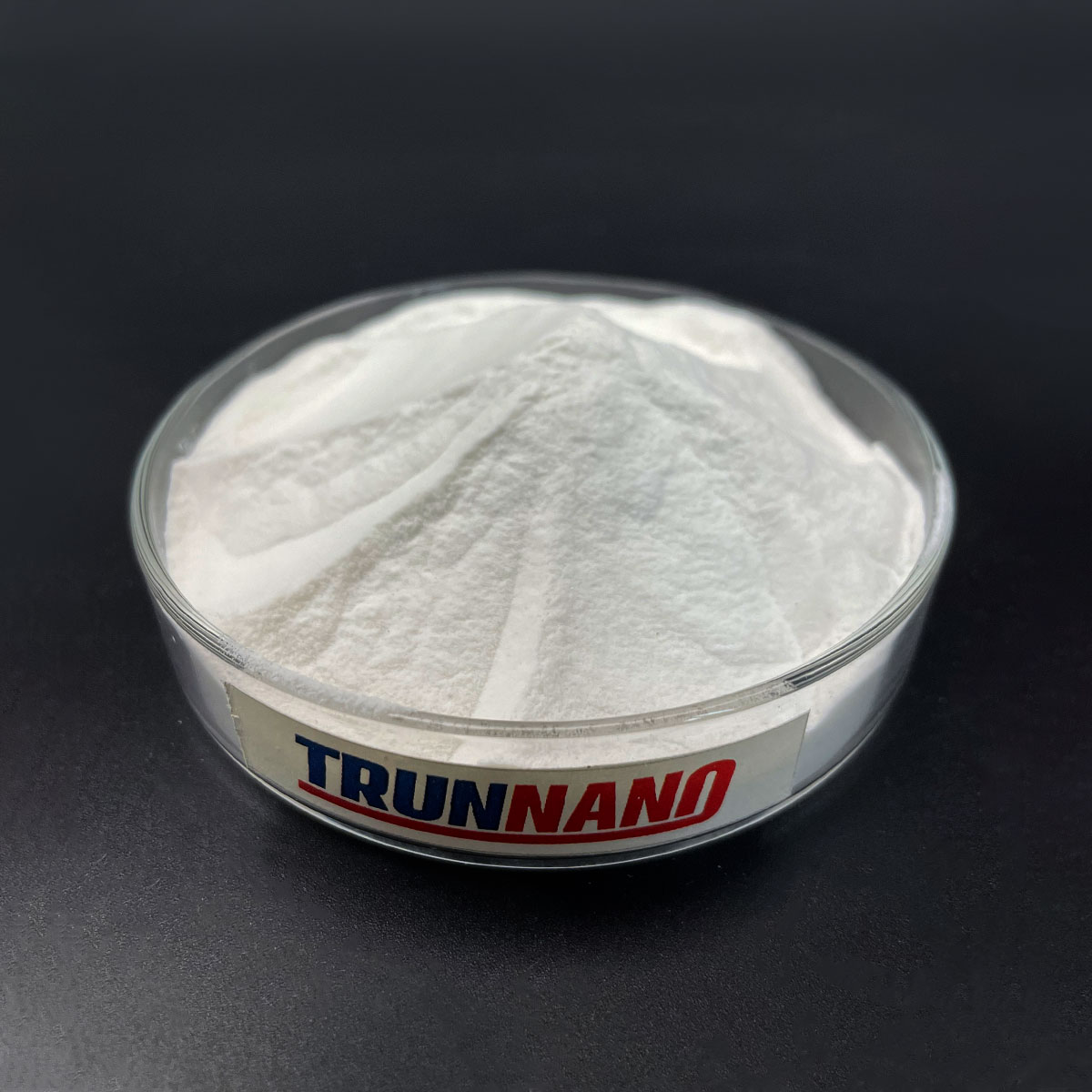 Spherical aluminum nitride
5. Conclusion: A Material Shaping Tomorrow’s Technologies
Spherical aluminum nitride represents a paradigm shift in ceramic engineering, where geometry is as critical as chemistry in defining performance. Its synthesis methods, once confined to laboratories, are now scaling to industrial volumes, driven by demand in 5G, electric vehicles, and hypersonic travel. As researchers tackle cost and purity challenges, spherical AlN is poised to become ubiquitous in systems where thermal management is non-negotiable. By harnessing its unique properties, we are not just improving existing technologies—we are enabling innovations that were once the realm of science fiction, from self-cooling smartphones to interplanetary spacecraft. The future of high-performance materials is spherical, and aluminum nitride is leading the charge.
6. Supplier
TRUNNANO is a globally recognized spherical aluminum nitride manufacturer and supplier of compounds with more than 12 years of expertise in the highest quality nanomaterials and other chemicals. The company develops a variety of powder materials and chemicals. Provide OEM service. If you need high quality spherical aluminum nitride, please feel free to contact us. You can click on the product to contact us. (sales5@nanotrun.com)
Tags: spherical aluminum nitride, Aluminum Nitride, al nitride