In the global manufacturing industry, the performance of core components directly determines the efficiency, precision, and service life of equipment, and even affects the core competitiveness of enterprises. Bearings, known as the "heart" of mechanical equipment, and cutting tools, regarded as the "teeth" of material processing, are widely used in aerospace, automotive manufacturing, precision machining, energy, petroleum drilling, and other key fields. With the continuous upgrading of industrial requirements, traditional metal materials have gradually been unable to meet the harsh working conditions of high speed, high temperature, corrosion resistance, and wear resistance. Ceramic materials represented by Silicon Nitride (Si₃N₄), Zirconium Carbide (ZrC), and Aluminum Oxide (Al₂O₃) have become the preferred materials for high-performance bearings and cutting tools due to their excellent comprehensive properties, winning the favor of global buyers and engineers.
This blog will conduct an in-depth comparative analysis of the performance of Silicon Nitride, Zirconium Carbide,e and Aluminum Oxide in bearings and cutting tools, clarify their advantages, disadvantages, and applicable scenarios, and provide professional reference for global buyers, engineers,s and procurement personnel to choose the most suitable material solutions. Whether you are engaged in high-end precision manufacturing or cost-sensitive industrial production, you can find the optimal material match here, helping your enterprise reduce production costs, improve processing efficiency,cy and enhance market competitiveness.

Silicon Nitride Nozzle
Before diving into performance comparison, it is necessary to have a basic understanding of the three ceramic materials. All three are advanced structural ceramics with high hardness, high temperature resistance,nce and corrosion resistance, but due to differences in chemical composition and crystal structure, their performance characteristics and application scenarios are quite different, which also determines their positioning in the global market.
Silicon Nitride (Si₃N₄) is a covalent bond ceramic material with a dense crystal structure, known as the "king of structural ceramics". It has excellent mechanical properties, thermal stability,lity, and corrosion resistance, and is currently one of the most mature and widely used ceramic materials in high-performance bearings and cutting tools. With the continuous advancement of sintering technology, its cost performance has been continuously improved, becoming the first choice for high-end equipment manufacturers worldwide.
Zirconium Carbide (ZrC) is a transition metal carbide ceramic with extremely high hardness and melting point. It has excellent wear resistance, thermal conductivity, and chemical stability, and is especially suitable for extreme working conditions such as ultra-high temperature and heavy load. Although its application is limited by the complex sintering process and relatively high cost, it has irreplaceable unique advantages in some special high-end fields such as aerospace and nuclear energy.
Aluminum Oxide (Al₂O₃), also known as alumina, is the most widely used and mature ceramic material in the market. It has the advantages of high hardness, good chemical stability, low cost, and a mature production process, with stable supply and high cost performance. It is widely used in medium- and low-end bearings and cutting tools. It is the preferred material for cost-sensitive industrial scenarios, accounting for a large share of the global mid-range market.
Bearings are key components that support mechanical rotation, reduce friction, and ensure rotation precision. Their performance is directly affected by material hardness, wear resistance, thermal stability, corrosion resistance, and toughness. Choosing the right bearing material can significantly reduce equipment maintenance frequency and extend service life. The following is a detailed comparison of the three materials in bearing applications, and a comprehensive performance comparison table is attached for your quick reference:
|
Performance Indicator |
Silicon Nitride (Si₃N₄) |
Zirconium Carbide (ZrC) |
Aluminum Oxide (Al₂O₃) |
|---|---|---|---|
|
Vickers Hardness (HV) |
1400-1600 |
1800-2200 |
1200-1400 |
|
Long-term Service Temperature (℃) |
1200 |
2000 |
≤800 |
|
Fracture Toughness (MPa·m¹/²) |
6-8 |
3-5 |
3-4 |
|
Corrosion Resistance |
Excellent (resists most strong corrosives except HF) |
Good (easily oxidized above 1000℃ in an oxidizing environment) |
Good (poor resistance to strong acids and alkalis) |
|
Friction Coefficient |
0.001-0.005 (lowest) |
0.05-0.10 |
0.10-0.15 |
|
Applicable Scenarios |
High-speed, high-temperature, corrosive environments |
Ultra-high temperature, heavy-load, non-oxidizing environments |
Normal temperature, light-load, cost-sensitive scenarios |
|
Cost Performance |
High (excellent comprehensive performance) |
Medium (high performance but high cost) |
High (low cost, mature process) |
Hardness and wear resistance are the core indicators of bearing materials, which determine the service life of bearings under long-term high-speed rotation and load. Zirconium Carbide has the highest hardness among the three materials, with a Vickers hardness of 1800-2200 HV, second only to diamond and cubic boron nitride, and its wear resistance is extremely excellent. It can maintain good surface integrity even under heavy load and low-speed rotation conditions, making it suitable for bearings in heavy-duty equipment such as large-scale machinery and nuclear reactors.
Silicon Nitride has a Vickers hardness of 1400-1600 HV, which is slightly lower than Zirconium Carbide, but its friction coefficient is extremely low (0.001-0.005), close to that of graphite. It can achieve stable operation under oil-free or low-lubrication conditions, and its wear rate is two orders of magnitude lower than that of bearing steel, which is very suitable for high-speed bearings. For example, in machine tool spindle bearings, Silicon Nitride ceramic bearings have a service life 5 times longer than traditional metal bearings, and the service life under non-lubrication conditions can reach 20,000 hours, greatly reducing maintenance costs for enterprises.
Aluminum Oxide has a Vickers hardness of 1200-1400 HV, which is the lowest among the three materials. Its wear resistance is also inferior to Silicon Nitride and Zirconium Carbide. Under high-speed and heavy-load conditions, the wear speed is relatively fast, which is more suitable for light-load, low-speed, and non-abrasive working environments, such as small precision bearings in household appliances, general machinery,y and food processing equipment. Due to its low cost, it is the most widely used ceramic bearing material in the global mid-range market.
Bearings in high-temperature equipment (such as aerospace engines, high-temperature furnaces, and petroleum drilling equipment) need to maintain stable performance under high-temperature conditions. Zirconium Carbide has the best high-temperature resistance, with a melting point of up to 3530℃, and can maintain structural integrity and mechanical properties in an environment of 2000℃ for a long time. It is suitable for ultra-high temperature bearings in aerospace, nuclear energy, and other fields, such as protective coatings for rocket nozzles and high-temperature bearing components in nuclear reactors, which is an irreplaceable material in extreme high-temperature scenarios.
Silicon Nitride has good high-temperature stability, with a long-term service temperature of 1200℃ and a short-term tolerance temperature of up to 1600℃. Its thermal expansion coefficient is very small (3.2×10⁻⁶/K), close to that of cast iron, which can withstand rapid temperature changes without cracking or deformation. It is suitable for high-temperature bearings in high-speed motors, gas turbines,s and other equipment. Compared with Aluminum Oxide, Silicon Nitride has better thermal shock resistance, which can avoid bearing failure caused by temperature fluctuations, and is widely used in high-end equipment in automotive and aerospace fields.
Aluminum Oxide has a melting point of 2072℃, but its mechanical strength decreases significantly when the temperature exceeds 1000℃, and its thermal shock resistance is poor. It is easy to crack when encountering rapid temperature changes. Therefore, it is not suitable for high-temperature bearing applications, and is mainly used in normal temperature or low-temperature environments (below 800℃), such as bearings in ordinary machinery and household appliances, which can meet the basic use needs and control costs effectively.
In some harsh environments (such as the chemical industry, marine equipment, and petroleum drilling), bearings need to resist the erosion of corrosive media such as acids, alkalis, and salts. Silicon Nitride has the best corrosion resistance among the three materials. Except for hydrofluoric acid, it can resist the erosion of 95% concentrated sulfuric acid, 35% concentrated hydrochloric acid,d and other strong corrosive media. The corrosion rate after soaking for 1000 hours is less than 0.01mm/year, which is suitable for bearings in chemical equipment, marine equipment,nt, and other corrosive environments, effectively extending the service life of equipment in harsh environments.
Zirconium Carbide has good chemical stability and can resist the erosion of most acids and alkalis, but it is easily oxidized in an oxidizing environment above 1000℃, which limits its application in high-temperature oxidizing environments. However, in non-oxidizing corrosive environments (such as nuclear reactors), it has excellent corrosion resistance, which is the preferred material for bearings in special corrosive scenarios.
Aluminum Oxide has good corrosion resistance, is slightly soluble in strong acids and alkaline solutions, but insoluble in water. It can resist the erosion of general corrosive media, but its corrosion resistance to strong acids and alkalis is worse than that of Silicon Nitride and Zirconium Carbide. It is suitable for bearings in general corrosive environments, such as food processing, medical equipment, ent and other fields, which can meet the basic corrosion resistance requirements and reduce procurement costs.
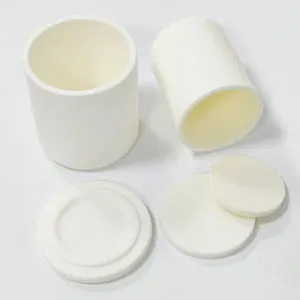
Aluminum Oxide Gaskets and Rings
Bearings are often subjected to impact loads during operation, so the toughness and impact resistance of materials are crucial to avoid bearing damage. Silicon Nitride has the best toughness among the three materials, with a fracture toughness of 6-8 MPa·m¹/². Its unique grain structure gives it excellent impact resistance, which can withstand certain impact loads without breaking, and is suitable for high-speed and high-impact bearing applications, such as bearings in automotive turbochargers and aerospace engines. Its excellent toughness makes it the most widely used high-end ceramic bearing material in the global market.
Zirconium Carbide has a fracture toughness of 3-5 MPa·m¹/², which is lower than that of HAN Silicon Nitride. It is brittle and easy to break under impact loads, so it is not suitable for bearing applications with large impact loads, and is mainly used in static load or low-impact ultra-high temperature bearings, such as high-temperature bearings in nuclear reactors.
Aluminum Oxide has a fracture toughness of 3-4 MPa·m¹/², which is the lowest among the three materials. It is brittle and easy to crack under impact loads. It is suitable for light-load, low-impact bearing applications, such as precision bearings in small machinery and instruments. Although its toughness is not excellent, it can fully meet the use needs of light-load scenarios and has obvious cost advantages.
Cutting tools are core components for material processing, and their performance directly affects processing efficiency, processing precision, and tool life. The key performance indicators of cutting tool materials include hardness, wear resistance, high-temperature red hardness, toughness,s and chemical inertness. Choosing the right cutting tool material can improve processing efficiency, reduce tool replacement frequency,cy and reduce production costs. The following is a detailed comparison of the three materials in cutting tool applications:
Hardness and wear resistance determine the service life of cutting tools and the processing efficiency of materials. Zirconium Carbide has the highest hardness among the three materials, and its wear resistance is extremely excellent. It can be used to process high-hardness materials such as hardened steel, tungsten carbide, ide, and high-temperature alloys. Even under high-speed cutting conditions, it can maintain good sharpness and reduce tool wear, which is suitable for high-precision and high-efficiency cutting of hard materials. Its hardness advantage makes it an ideal material for cutting tool inserts and wear-resistant coatings, and it is widely used in high-end precision processing fields such as aerospace.
Silicon Nitride has high hardness and wear resistance, and its wear resistance is better than that of Aluminum Oxide. It is suitable for processing cast iron, high-temperature alloys, titanium alloys, and other difficult-to-process materials. The cutting speed of Silicon Nitride ceramic tools can reach 800-1200 m/min, which is 3-5 times that of traditional metal tools, and the tool life is significantly longer than that of metal tools. For example, in the processing of automotive engine cylinder block cast iron, the service life of Silicon Nitride ceramic tools is increased by more than 2 times, the cutting speed is increased by 40%, and the overall processing cost is reduced by about 30%, which is favored by automotive manufacturers worldwide. In addition, Silicon Nitride ceramic tools can also realize "turning instead of grinding", further improving processing efficiency and reducing energy consumption.
Aluminum Oxide has good hardness and wear resistance, but it is lower than Silicon Nitride and Zirconium Carbide. It is suitable for processing non-ferrous metals (such as aluminum and copper), cast iron, and other materials with low hardness. It is not suitable for procehardrdness materials, because the wear speed is fast and the tool life is short. However, due to its low cost, it is widely used in general cutting tools, such as turning tools, milling tools, and drills in ordinary machining, and is the most commonly used ceramic cutting tool material in the global mid-range market.
High-temperature red hardness refers to the ability of cutting tools to maintain hardness and sharpness at high temperatures generated during cutting. Zirconium Carbide has the best high-temperature red hardness, and can maintain good hardness and cutting performance at 1800℃, which is suitable for ultra-high temperature cutting of high-temperature alloys, ceramics,s and other materials. It is widely used in aerospace, nuclear energy, and other fields to process high-temperature resistant components, such as cutting of rocket engine parts and nuclear reactor components, which can ensure processing precision and efficiency under ultra-high temperature conditions.
Silicon Nitride has good high-temperature red hardness, and can maintain stable hardness and cutting performance at 1200℃. It is suitable for high-speed cutting of high-temperature alloys, titanium alloys, and other materials. Its low thermal conductivity can reduce the heat transfer to the tool handle, avoid tool deformation, and improve processing precision. In the high-speed dry cutting of nickel-based alloy blades in aerospace engines, Silicon Nitride ceramic tools maintain sharpness far better than cemented carbide tools, effectively reducing surface cracks and improving the qualification rate of parts, which is an important material for aerospace precision processing.
Aluminum Oxide has poor high-temperature red hardness. When the temperature exceeds 1000℃, its hardness decreases significantly, and it is easy to soften and wear, which limits its application in high-speed and high-temperature cutting. It is mainly used in low-speed and normal-temperature cutting, such as cutting of non-ferrous metals and ordinary cast iron, which can meet the basic processing needs and control production costs effectively.

Silicon Nitride Tubes
Cutting tools are often subjected to impact loads during cutting, so the toughness and impact resistance of materials are crucial to avoid tool chipping and damage. Silicon Nitride has the best toughness among the three materials, with good impact resistance and fracture toughness, which can withstand the impact load during cutting without chipping. It is suitable for intermittent cutting, heavy-duty cutting,g and other scenarios, such as milling of cast iron parts and turning of large workpieces. In the micro-finishing of medical titanium alloy implants, Silicon Nitride ceramic tools have good dimensional control, enabling one-time forming of complex-shaped implants and significantly improving production efficiency. Its excellent toughness and processing performance make it the preferred material for high-end cutting tools in the global market.
Zirconium Carbide has poor toughness and is brittle. It is easy to chip and break under impact loads, so it is not suitable for intermittent cutting and heavy-duty cutting. It is mainly used for continuous cutting of hard materials, such as continuous turning of hardened steel and high-temperature alloys. Its application is limited by its brittleness, and it is often used as a coating material to improve the wear resistance of tools rather than as a whole tool material, which can give full play to its hardness advantage while making up for its toughness defect.
Aluminum Oxide has general toughness and impact resistance, which is better than Zirconium Carbide but worse than Silicon Nitride. It is suitable for light-load and continuous cutting, such as turning of non-ferrous metals and drilling of ordinary materials. It is easy to chip under heavy-duty and intermittent cutting conditions, which limits its application in heavy-duty machining. However, due to its low cost and mature process, it is still widely used in general machining fields, meeting the basic cutting needs of enterprises.
Chemical inertness refers to the ability of cutting tool materials to avoid chemical reactions with the processed materials at high temperatures, so as to avoid tool wear and processing quality degradation. Silicon Nitride has excellent chemical inertness, and does not react with most metals (such as iron, aluminum, copper) and non-metals at high temperatures. It can avoid chemical wear and improve tool life and processing precision. It is suitable for processing a variety of materials, especially difficult-to-process materials such as high-temperature alloys and titanium alloys, which is a versatile high-end cutting tool material.
Zirconium Carbide has good chemical inertness and does not react with most processed materials at high temperatures, but it is easily oxidized in an oxidizing environment above 1000℃, which will affect its cutting performance. Therefore, it is more suitable for cutting in non-oxidizing environments, such as cutting high-hardness materials in vacuum or inert gas environments.
Aluminum Oxide has general chemical inertness and will react with some high-temperature alloys and strong corrosive materials, resulting in accelerated tool wear. It is suitable for cutting non-ferrous metals, cast iron, and other materials with stable chemical properties, which can meet the basic cutting needs and have obvious cost advantages.
Through the in-depth comparison of the three ceramic materials in bearings and cutting tools, we can clearly see their respective advantages and applicable scenarios, which can help global buyers make more rational purchase decisions:
Silicon Nitride (Si₃N₄) has the most comprehensive performance, with excellent wear resistance, thermal stability, corrosion resistance, and toughness. It is suitable for most high-performance bearing and cutting tool applications, especially high-speed, high-temperature,e and corrosive environments. It is the preferred material for high-end equipment manufacturers, and can help enterprises improve product quality and reduce maintenance costs. It is the most cost-effective choice among high-end ceramic materials.
Zirconium Carbide (ZrC) has outstanding advantages in ultra-high temperature and wear resistance, but its toughness is poor, and the sintering process is complex, resulting in relatively high cost. It is suitable for special ultra-high temperature, heavy-load, and high-hardness processing scenarios, such as aerospace, nuclear energy,y and other high-end fields. If your enterprise is engaged in special high-end manufacturing, zirconium carbide is an irreplaceable material.
Aluminum Oxide (Al₂O₃) has the advantages of low cost, mature production process, and stable supply. Its performance is relatively general, but it can fully meet the needs of medium and low-end bearings and cutting tools. It is suitable for cost-sensitive industrial scenarios, such as ordinary machining, household appliances, and other fields. It is the most economical choice for enterprises to control production costs.
Luoyang Tongrun Nano Technology Co. Ltd. (TRUNNANO) Luoyang City, Henan Province, China, is a reliable and high-quality global chemical material supplier and manufacturer. It has more than 12 years of experience providing ultra-high quality chemicals and nanotechnology materials, including Hexagonal boron nitride, nitride powder, Advanced Ceramics, sulfide powder, and 3D printing powder. If you are looking for high-quality and cost-effective Advanced Ceramics, you are welcome to contact us or inquire any time.